Published : 05 Oct 2020, 12:50 PM
Updated : 17 Oct 2022, 11:14 AM


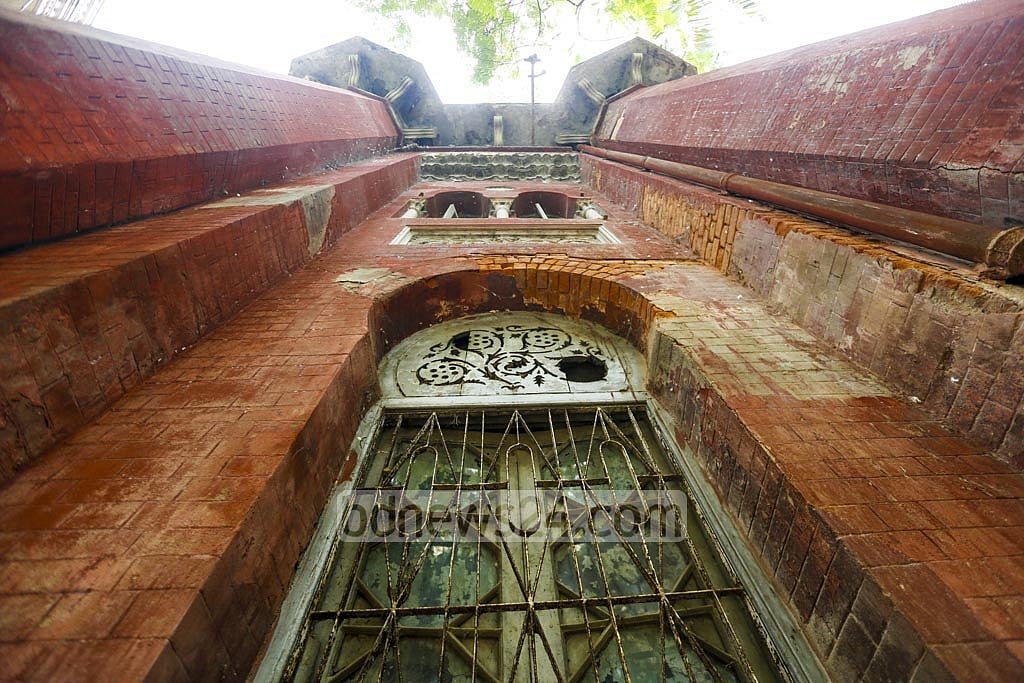
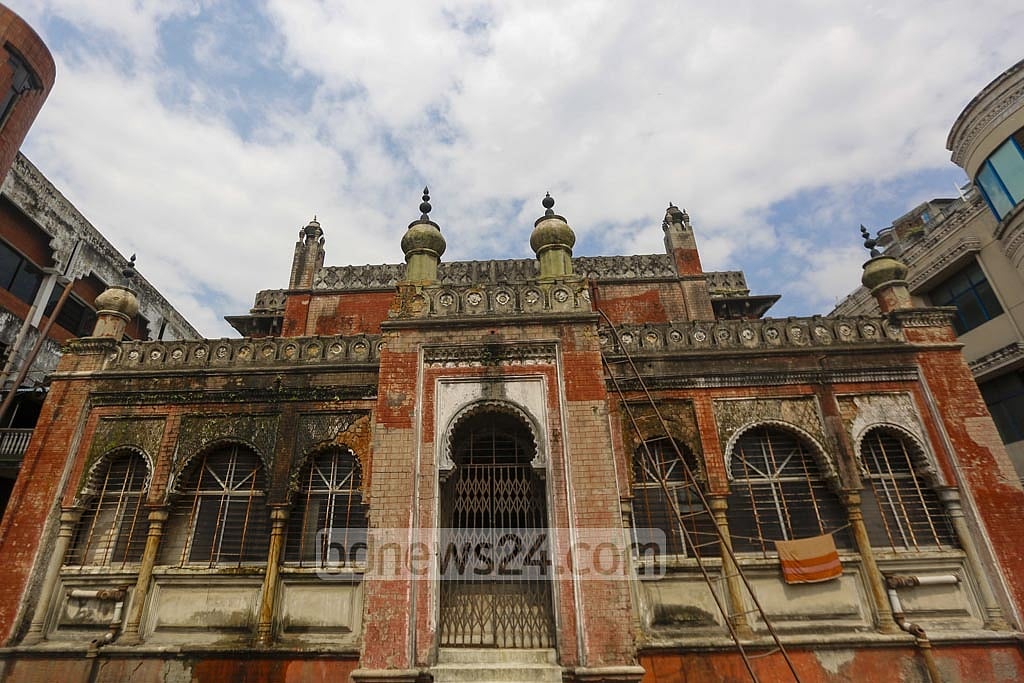
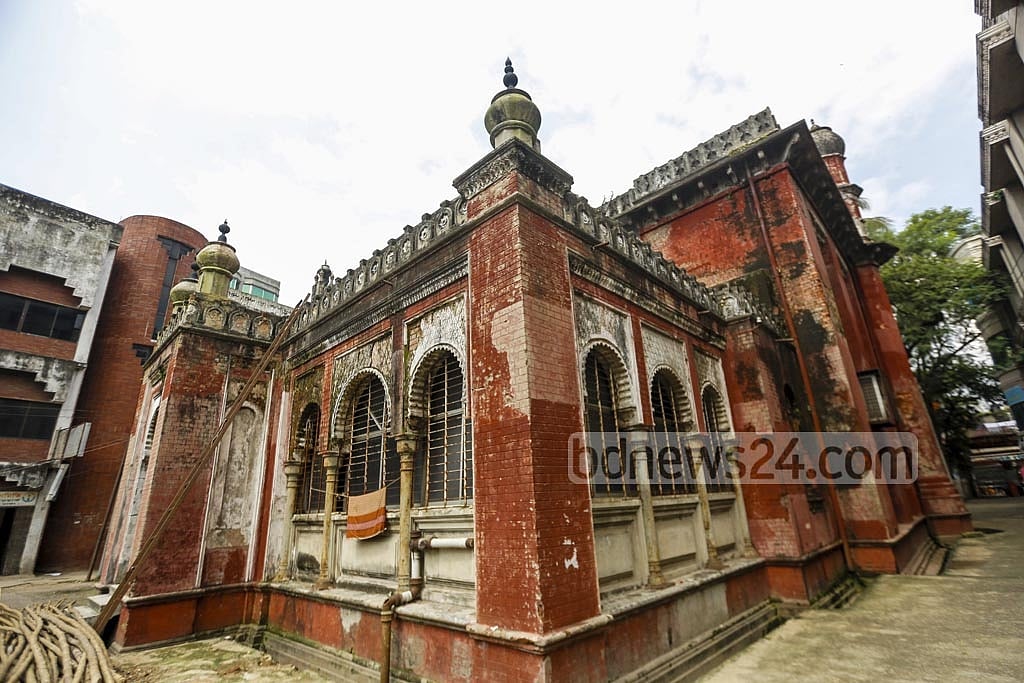
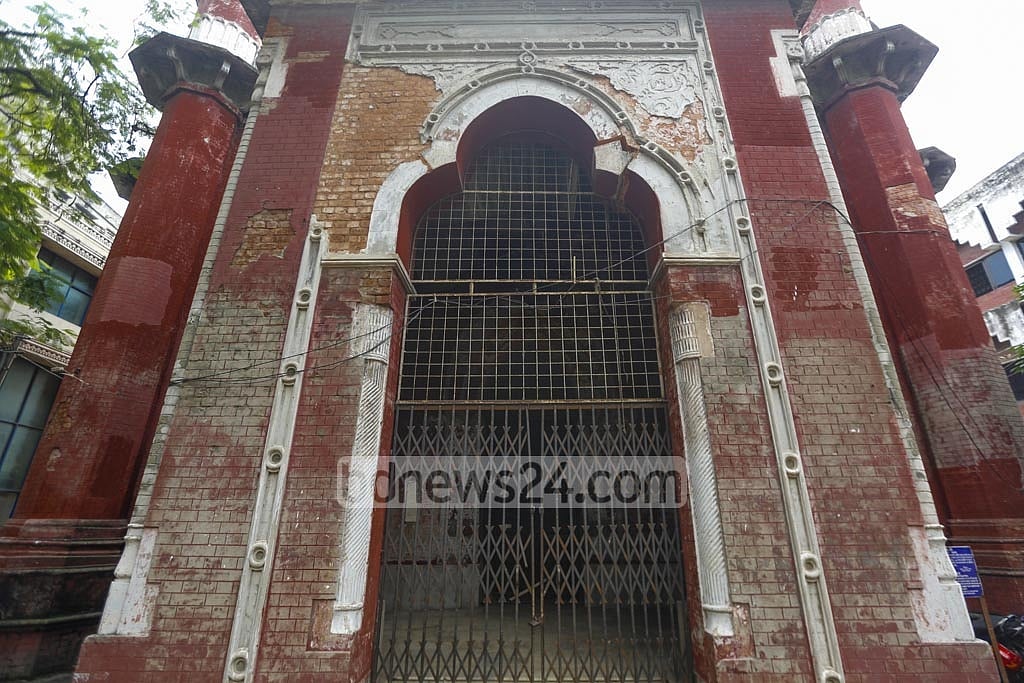
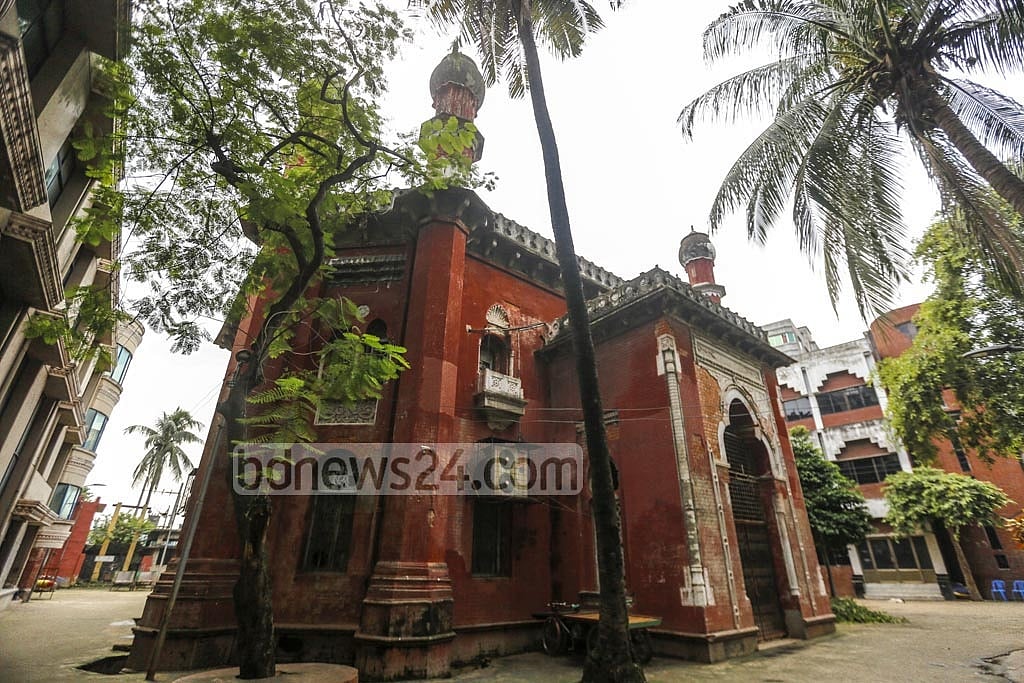
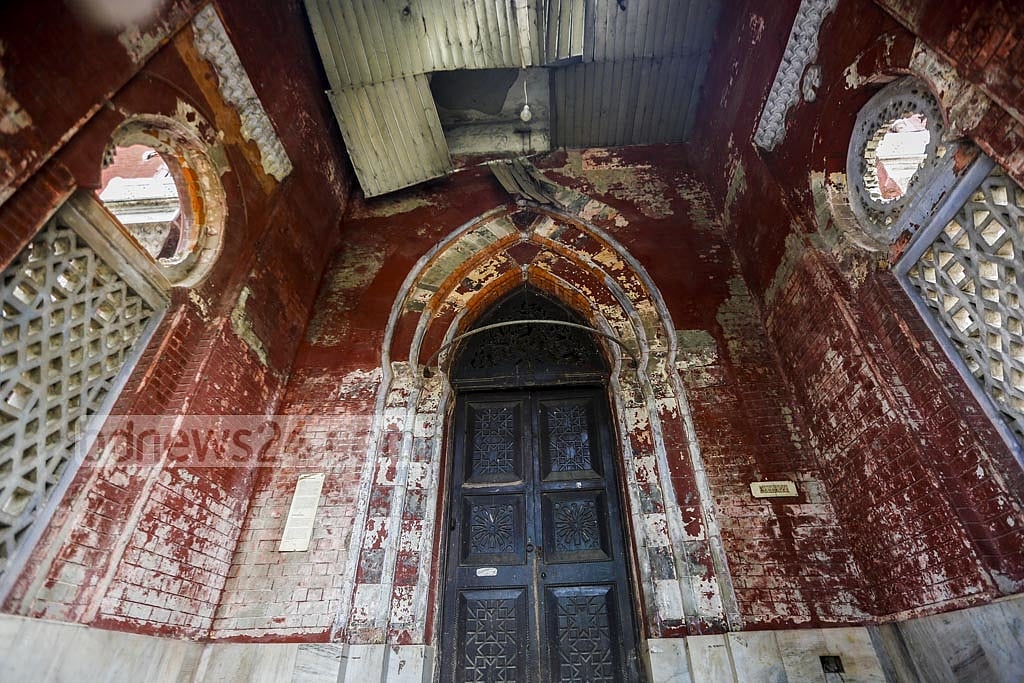
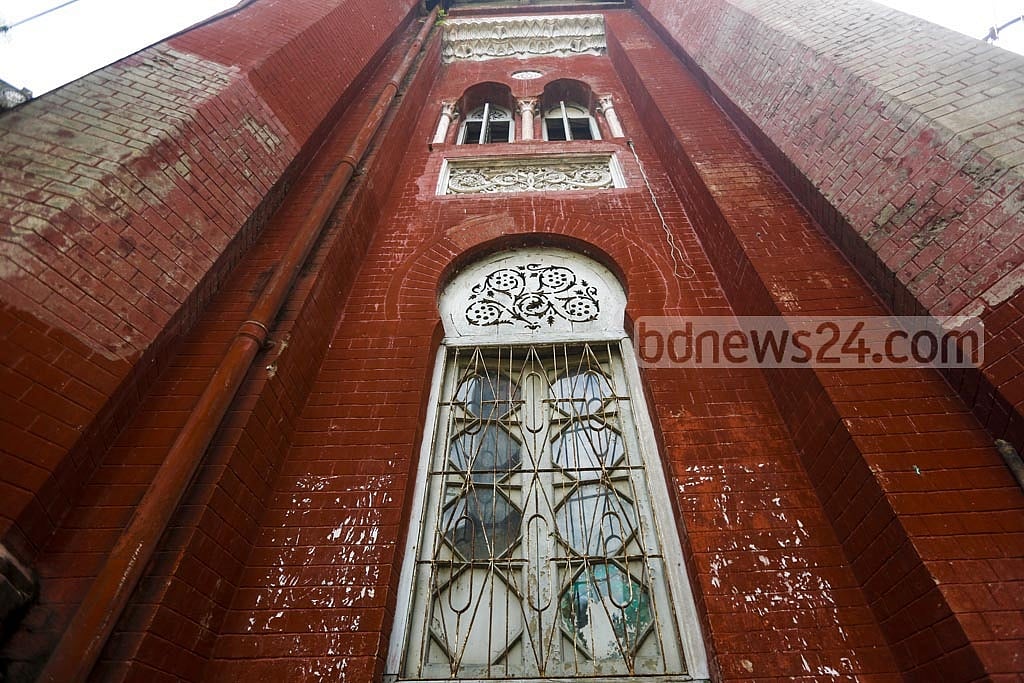
Dhaka Municipality had arranged a citizen reception for poet Rabindranath Tagore on Feb 7, 1926 in Lalkuthi.
Theatrical performances had played out on a big stage to the right of the main building. Many notable and famed actors in the country had graced the stage with their performances.
With the old days gone, Lalkuthi now stands devoid of its old grandeur. It now exists as a relic of the past locked down in a vulnerable state. Shops and businesses have encroached upon its premises.
Photo: Mahmud Zaman Ovi
The back section of Lalkuthi building was transformed into a public library in the past. Many rare books by foreign publishers were available there. The library was later shifted to the second floor of Farashganj Diabetic Samity in 2017 when the structure became weak, saidlibrarian Jahidul Amin, who has been working there since 2007.
“The place was being used as a public library since 1882. But as the building turned old, it started posing risks to everyone and hence the library was shifted. There are many important foreign books available in the library which caters to university students doing research.”
Some of the books were donated by Raja Ram Mohan Roy, he said.
Photo: Mahmud Zaman Ovi
“We want to restore Dhaka’s heritage and as part of it, we need to renovate Lalkuthi. We’ve already initiated our programme.”
“We’ll hold cultural programmes here and will try to remove the pier so that the building becomes visible from the river, said Taposh. We’ll demolish the illegal structures encroaching the Lalkuthi premises and restore our heritage.”
Arifuzzaman Prince, who has been working as the caretaker of the building since 2005, said: “When the stage broke in 2015, we appealed to the city corporation for its repair. But no initiative was taken. Recently, DSCC mayor has taken an initiative for the renovation of Lalkuthi. It’s a great move indeed.”
Many eminent actors performed here on this stage when it was in use, he said.
Photo: Mahmud Zaman Ovi
The stage can be again used for theatrical performances after renovation, Arifuzzaman said, adding the authorities are planning to hold a Baishakhi fair and other programmes in the premises to celebrate the next Pahela Baishakh.
“The renovation work will soon begin so that the building is ready before the next Pahela Baishakh.”
The public library will also be shifted back to its old place, he said.
“The Buckland Bund in the old days used to attract visitors. People came and spent time here in a good environment. But the entire neighbourhood turned into a commercial site during the 90s, spoiling the beauty of the place.”
Administrative officers and urban planners have begun the demarcation of Lalkuthi following the mayor’s press briefing, said Arifuzzaman.
Photo: Mahmud Zaman Ovi
“The government can evict my shop if it wants. But we are small traders. Where shall we go if they don’t provide us with an alternative?”
Lalkuthi has lost much of its splendour over the years. People visit the gyms, commercial places or the port around it, but not the hall.
“I have been selling tea in Old Dhaka, especially in the Sadarghat area, for many years. I conduct my business mostly in front of Lalkuthi but don’t know much about it. I don’t see people going inside the red building but I see them visiting the building next to it for exercising,” said Lokman Hossain, a hawker.
“Lalkuthi and Ruplal House are two heritage sites near Sadarghat which are dipping into gradual oblivion due to the lack of conservation,” Ishita Sarker, a student of Jagannath University, told bdnews24.com.
Photo: Mahmud Zaman Ovi
Mayor Fazle Noor Taposh had focused on preserving festivals, archaeological and natural sites in his election manifesto and planned to renovate around 40 heritage sites in the city.
As part of the effort, Prof Sufi Mostafizur Rahman of the Archaeology Department at Jahangirnagar University has been nominated as a member of the expert team to work on the matters.
“As a team of experts, we’ll inspect the site and do a survey. We’ll follow the archival record and try to bring back the old look,” Sufi told bdnews24.com.
He applauded the DSCC’s initiative to renovate other heritage sites in Dhaka, including Chhoto Katra, Boro Katra and Sadarghat.
Photo: Mahmud Zaman Ovi
Northbrook Hall was originally built as a town hall during the British period when Governor-General and Viceroy of India Thomas George Baring Northbrook visited Dhaka in 1874.
The construction of the building was completed in 1879. King of Bhawal Raja Rajendra Narayan Roy Chowdhury had donated Tk 10,000 to build it. The hall was inaugurated on May 25, 1880. The road adjacent to the structure was named Northbrook Hall Road.