Home
+
Published : 10 Mar 2017, 07:32 PM
“Even after being informed before the test we could not stop it because some teachers were leaking the question papers on Facebook when they get those hours before the tests,” he said.
"We are in such an environment that we can neither reveal everything nor tolerate. But we will not allow this anymore. We truly need teachers with high moral values," he said.
The minister's remarks came at an anti-corruption human-chain programme organised by the Anti-Corruption Commission in front of the National Press Club in Dhaka on Friday amid widespread criticism over recent leaks during SSC tests.
When bdnews24.com reported the leaks of several questions papers obtained through WhatsApp messaging app and the social media during the tests, the education minister first said those tests would be cancelled if the leaks were proved.
But no action was taken even after informing the officials before a test later.
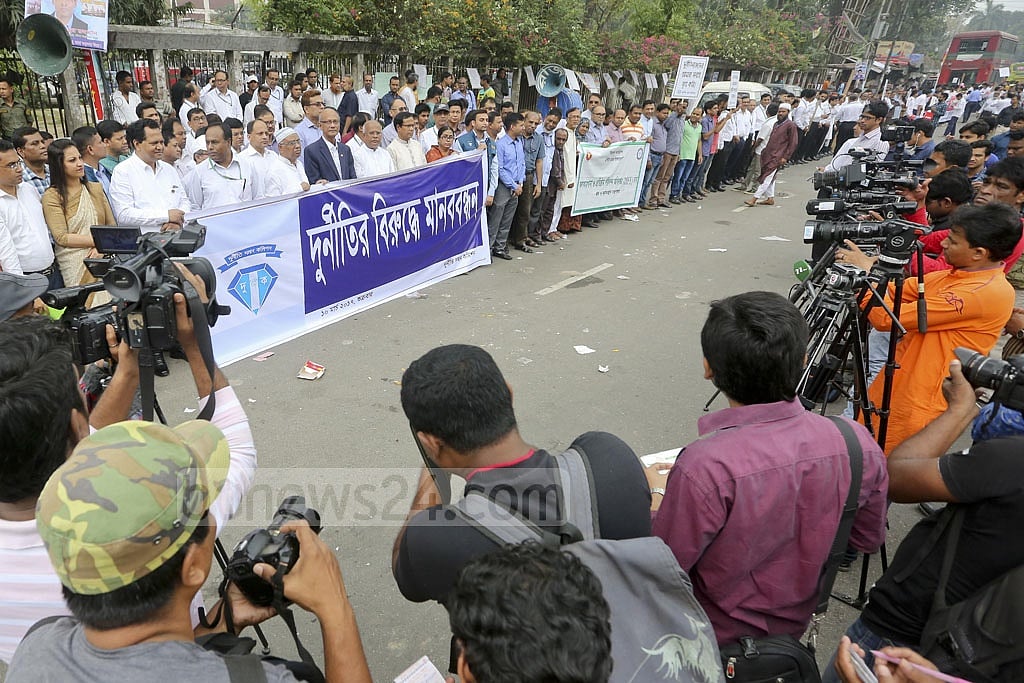
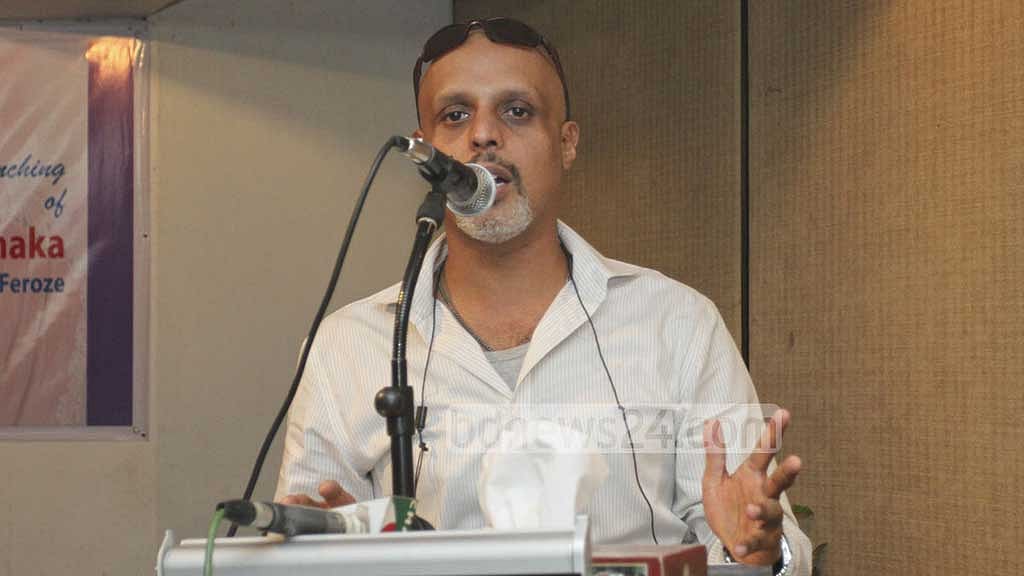
At the ACC programme, Education Minister Nahid said: "This time reports of some incidents of question paper leaks were published.
"The question papers were not leaked when those were sent to different districts. Those appeared on Facebook in the wee hours. You can check those with the question papers used in the tests to know the truth," Nahid said.
He said the question papers appeared on the social media when the ministry became 'tensionless' after timely sending those to the teachers.
"We are bound to give the questions two hours before the exams because those have to be carried to rural areas. Upazilas are the lowest level where we keep the question papers. Then who are leaking the question papers?" he asked.

Speaking about corruption, Nahid admitted there were corruptions in his ministry, but not in the offices that are directly linked to the ministry.
He said ACC's measures to free the education sector from corruption was 'effective' and hoped the commission would continue the activities.
ACC Chairman Iqbal Mahood emphasised anti-corruption campaign at schools, saying it would not be possible to stop corruption without change the people's mindset.
He said 54 percent cases prosecuted by the ACC saw the accused people convicted last year.
According to him, bank, health, education, passport and land are the sectors with the highest number of corruption incidents.
The ACC organised the human-chain programme at all 64 districts.