Home
+
Published : 12 Apr 2017, 10:37 PM
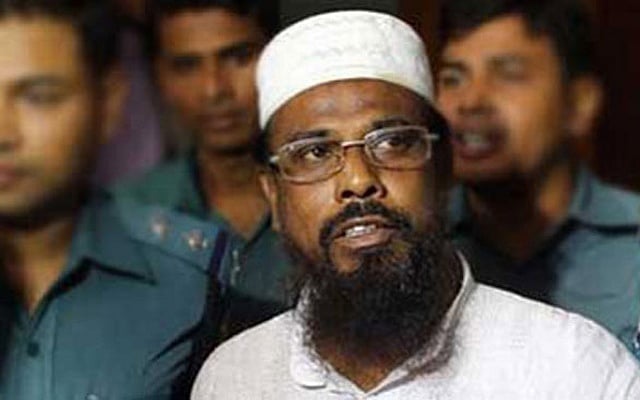
The top leader of Harkat-ul-Jihad al-Islami in Bangladesh, executed at Kashimpur Central Jail, organised 13 terror attacks in his country, leaving around 600 injured.
Awami League chief Sheikh Hasina, now in her second straight term as prime minister, was the biggest target of his attacks. But the 2004 grenade attack on the then British envoy Anwar Choudhury in Sylhet took him to the gallows.
His father Noor Uddin Munshi was a leader of the Muslim League at Gopalganj’s Kotalipara Upazila during Bangladesh’s struggle for freedom.
Noor was shot dead for committing atrocities during the 1971 war, said freedom fighter Siraj Munshi of his village, Hiron. A Pakistani flag fluttered on their house even after Bangladesh was born.
The second of ten siblings, Hannan or Mufti Abdul Hannan Munshi rose to prominence. His madrassa studies that began in Tungipara took him to India and Pakistan, and then to Taliban battles against the Soviet army in Afghanistan.
His specialty lay in his combat training and the experience he got from training and planning terror attacks, Abdul Kahar Akhand, CID additional deputy inspector, had told the BBC.
He was trained in bomb-making, military assaults and provided recruits these trainings, said the investigator.
It is believed that he got indoctrinated into militancy while studying Fiqh or Islamic jurisprudence in Karachi after he migrated there in 1988.
He joined the Taliban fighting the Red Army in Pakistan’s borders with Afghanistan, and despite a long spell of being injured, finished his studies.
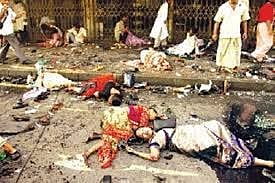
Victims of the 2004 grenade attack on an Awami League rally in Dhaka.
Hannan rose swiftly through the ranks of a central leader. But he began as a publication secretary for HuJI in Kotalipara, his hometown. He also set up a cadet madrasa in a nearby village.
He also set up a factory, the Sonar Bangla soap factory, in an area for cottage industry in Gopalganj.
It was there in 2000, police discovered bomb-making materials, and linked it to two 76-kilogram bombs, one remote-controlled, they found in Kotalipara where then prime minister Sheikh Hasina was meant to address a mass rally.
Hannan before that planned the 1999 bombing of a gathering by cultural group Udichi. Ten died in what was Bangladesh’s first terror attack. But the discovery of the soap factory sent him on the run.
He would then go on to organise the attacks on a church in Muksudpur’s Baniarchar, 2001 Bangla New Year celebration in Ramna Park, a Dhaka rally of the Communist Party of Bangladesh in 2001 and several more.
In 2004, a grenade attack on an Awami League rally left 25 dead and scores injured including current Prime Minister Sheikh Hasina in Dhaka.
“He wanted to establish an Afghan-styled rule of Islam here. He first used locally-made bombs, then managed to get grenades from Pakistan,” CID detective Kahar had said.
Accused in 17 cases, he confessed and testified to his involvement following his arrest from his house in Badda in 2005. He was handed death for the Ramna bombing along with seven others.
Family
Some hours before his execution at Kashimpur Jail, Mufti Hannan was visited by two of his brothers, who were also behind bars.
One of them, Md Anis, is on trial for the bombs planted in Kotaliparha. Another Md Mohibullah is serving a life sentence for the same case for which his brother was hanged.
Mufti Hannan had five brothers and four sisters. His other brother, Kamruzzaman Motin Hannan Munshi, spoke to bdnews24.com at Gopalganj.
He said he did not know his brother’s age, and his madrasa degree also did not mention a birthdate. Hannan had four children, two sons and two daughters, with wife Zakia Parvin Ruma.
The daughters studied in a girls’ madrasa and lived with their mother at their home village. Zakia Parvin refused to comment on her husband. Hannan’s eldest son studied in a Jessore college. The younger son was in a madrasa in Dhaka.
“My son Mufti Hannan studied in the madrasa system. He earned the highest degree,” said his mother Rabeya Begum.
“I thought my son was in the path of Islam. I don’t know what he has done. He never did anything bad in front of me. But he is the government’s enemy.
“I don’t mind that the government punished him. I just want the innocent people of my family to be left alone. That’s the demand I’ll make.”