Home
+
Published : 27 Mar 2021, 12:52 PM
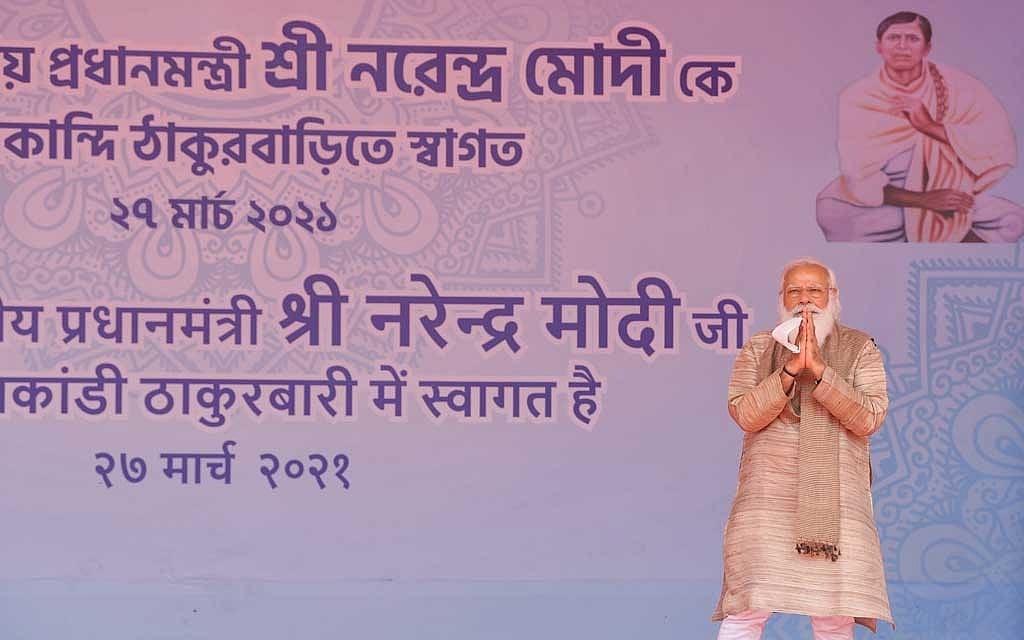
“After coming here, I feel the same way as the members of the Matua community do,” Modi said from a dais, addressing the leaders of the community.
“This place is a pilgrimage site for the spiritual relationship between India and Bangladesh,” he said.
Matua Mahasangha, as it is known, is a religious reformation movement with a considerable number of adherents both in Bangladesh and in India’s West Bengal. The movement was launched as a reformation by the followers of Harichand Thakur. Matua is a sect of folk Hinduism.
Modi headed out to the Matua temple after paying tribute to Bangabandhu Sheikh Mujibur Rahman at his final resting place in Tungipara on the second day of his Bangladesh visit.
Modi reached the mausoleum complex at 11:30 am on Saturday where he was greeted with flowers by his Bangladesh counterpart Sheikh Hasina, accompanied by her younger sister Sheikh Rehana. Later, Modi laid a wreath at the tomb of the architect of an independent Bangladesh.
Speaking at Orakandi. https://t.co/3ryP7Hucsi
— Narendra Modi (@narendramodi) March 27, 2021
Modi kickstarted the second day in Bangladesh with morning prayers at the Jeshoreshwari temple in Satkhira. The temple, dedicated to the Goddess Kali, is a famous Hindu pilgrimage site in Ishwaripur, a village in Shyamnagar Upazila of the southwestern district.
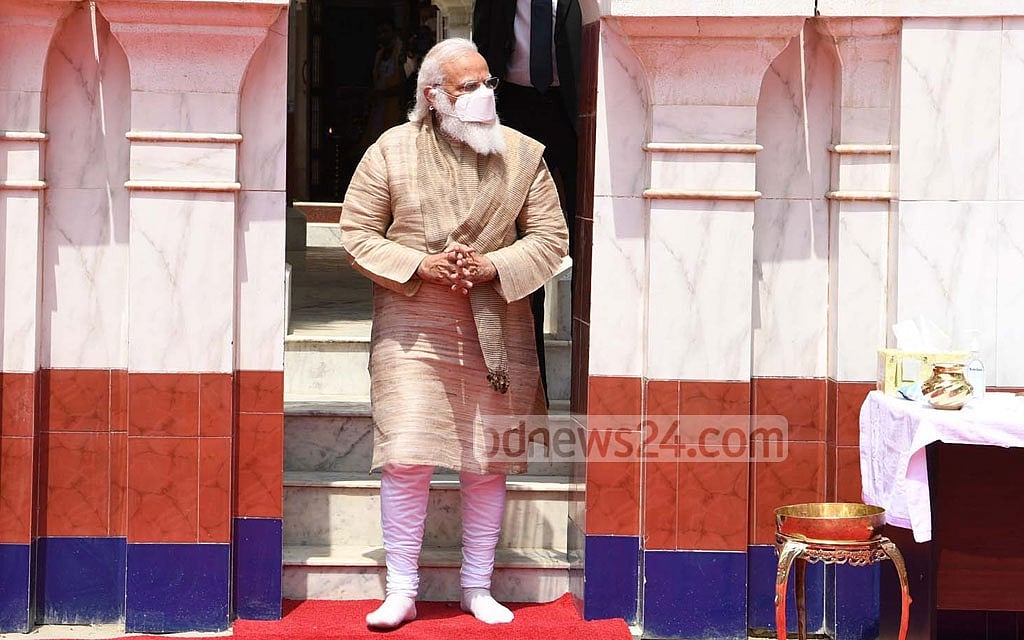
The temple is believed to have been built by a Brahmin, named Anari, in the latter part of the 12th century. It was built as a 100-door temple, which was later renovated by Lakshman Sen, the ruler from the Sena dynasty of the Bengal region, in the 13th century. Bengal zamindar Pratapaditya rebuilt the temple in the 16th century.
Modi arrived in Shyamnagar by helicopter on Saturday morning and reached the temple site by car. Devotees greeted him with their hands folded in a traditional posture as the sounds of conch shells and women’s ululation reverberated.
After the ritual at the Jeshoreshwari temple, Modi continued his journey to Tungipara of Gopalganj district to visit the mausoleum of Bangabandhu.
Modi arrived in Dhaka on Friday on a two-day visit to Bangladesh and attended the twin celebrations of the country’s 50 years of independence and Bangabandhu’s birth centenary.
MODEL OF GROWTH AND CHANGE
During his visit to Orakandi temple, Modi said Bangladesh is a strong force of growth and change with India as a partner in its endeavour.
“India is moving ahead today together with everyone, helping in everyone’s growth united in their beliefs. Bangladesh is a partner in this.
“Bangladesh has presented a strong example of growth and change to the world today. India is your companion in this effort.”
“I firmly believe that our two countries will fulfil our goals in this crucial time of the 21st century with the blessing of the Sri Sri Harichand Thakur and the inspiration of Guruchand Thakur,” Modi said.
After saying his prayers at Harichand Thakur and his son Guruchand Thakur’s temple, Modi took part in a discussion with the leaders of Matua community.
“I’ve been waiting for this sacred moment on this day for many years. I was keen to come here when I arrived in Bangladesh for the first time in 2015 as the prime minister. My desire has been fulfilled today. I have always received love and affection from the followers of Sri Sri Harichand Thakur, and have been intimate with their family members.”
Modi continued: “India and Bangladesh want to see the development of the world more than their own growth and progress. Both countries desire stability, love and pace in place of unrest, terrorism and instability. This is a lesson taught to us by Sri Sri Harichand Thakur. Harichandji dedicated his life for the values the world speaks of today.”
He went on: “I bring greetings from 1.3 billion of your Indian brothers and sisters in Bangladesh’s national ceremony. I congratulate you on Bangladesh’s 50 years of independence.
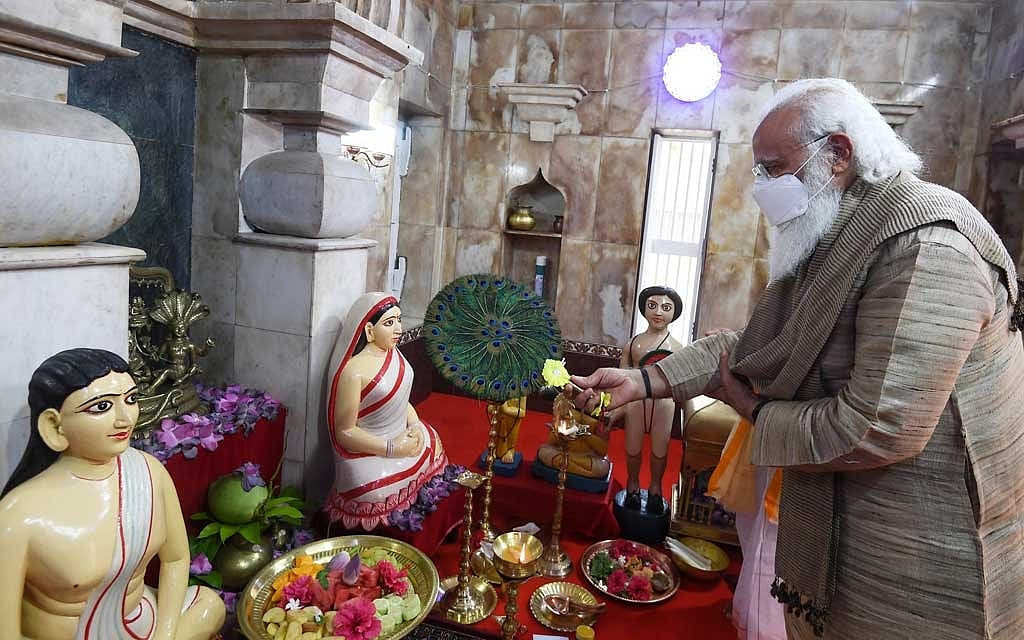
On paying tribute to Bangabandhu’s mausoleum in Tungipara, Modi said, “Sheikh Mujibur Rahman’s leadership, vision and faith in the people of Bangladesh is exemplary.”
“The inspiration of Sri Sri Harichand Thakur is very important to resolve the similar kinds of challenges Bangladesh and India face today. The two nations should join up in their fight to overcome these challenges. It is our duty and the path to welfare of the two nations.’
On the coronavirus pandemic, the Indian prime minister said, “Both India and Bangladesh have shown their capabilities during the coronavirus pandemic. Both the countries are strongly facing the pandemic, combating it together. India considers it a duty to deliver the vaccines to Bangladeshi citizens.”
The Matua community consists of more than 50 million followers in India and Bangladesh combined. Around 30 million of them live in West Bengal.