Home
+
Published : 03 Nov 2021, 04:04 PM
On Nov 3, 1975, four leaders of the wartime national government—acting president Syed Nazrul Islam, prime minister Tajuddin Ahmad and cabinet ministers M Mansur Ali and AHM Quamruzzaman—were brutally killed inside Dhaka’s Central Jail.
They were murdered while in state custody as the country saw sweeping changes in politics in the chaos that followed Bangabandhu’s assassination.
The day has since been memorialised as Jail Killing Day. A museum has been set up in the old Central Jail to honour the four leaders.
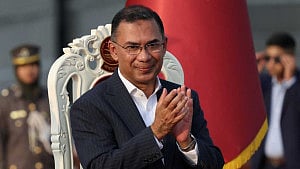
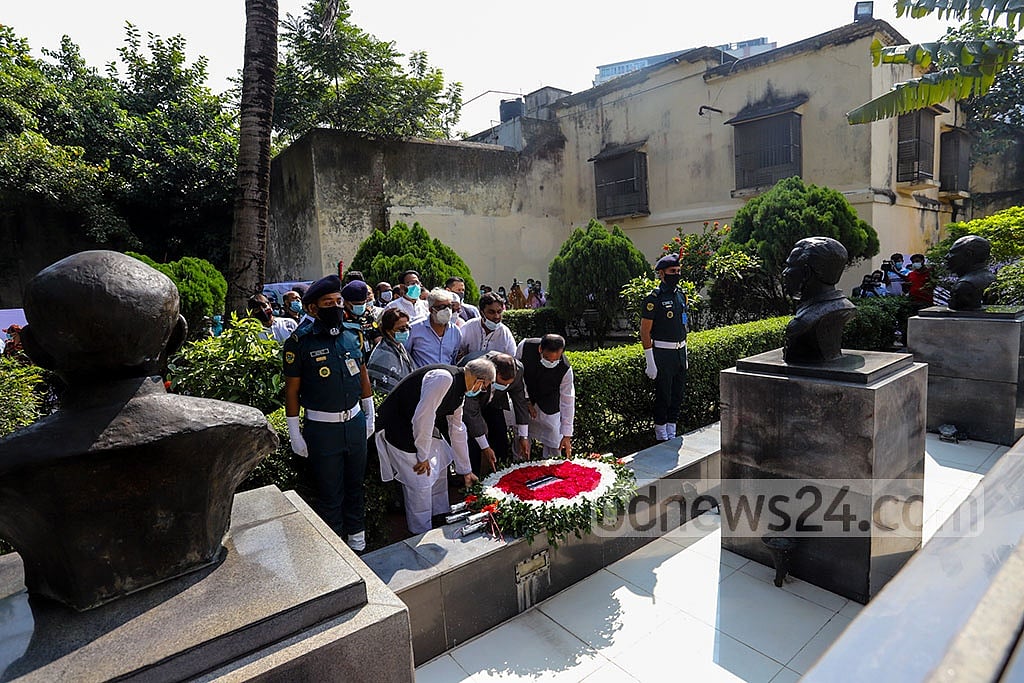
“Two gruesome murders mark the dark chapter of the history of Bangladesh. One was the assassination of Bangabandhu on Aug 15 and the other was the Jail Killings on Nov 3. Everyone knows who were responsible for the killings. Many murderers have faced justice and these people will face the same fate,” the home minister said after he paid his tribute to four national leaders by placing wreaths on their murals at old Central Jail on Wednesday.
“A jail should be the safest place in the world. People are well aware of how (the criminals) defied the law and committed murder. The case over Bangabandhu’s went to trial and the verdict has been partially executed,” said Kamal.
“We’re searching for those convicts who are at large. Their death sentences will be executed whenever we get a hold of them. We’re trying our best to execute the verdict.”
While the minister was present at the venue, a man told the minister that his father was killed inside the jailhouse in 1977 and he is yet to get justice for it.
“In 1977, many people were killed in the name of the army coup. The families of those who were killed couldn’t even find their bodies. Now they’re coming to this jail seeking justice,” he said in response.
Those families have filed a writ petition to the High Court and the government is waiting for the High Court order on it, Kamal said. “We want all perpetrators to be punished.”
Tajuddin Ahmad’s son Tanjim Ahmad Sohel Taj, daughter Simin Hossain Rimi and Rezaul Karim, son of Captain M Mansur Ali were all present at the event.
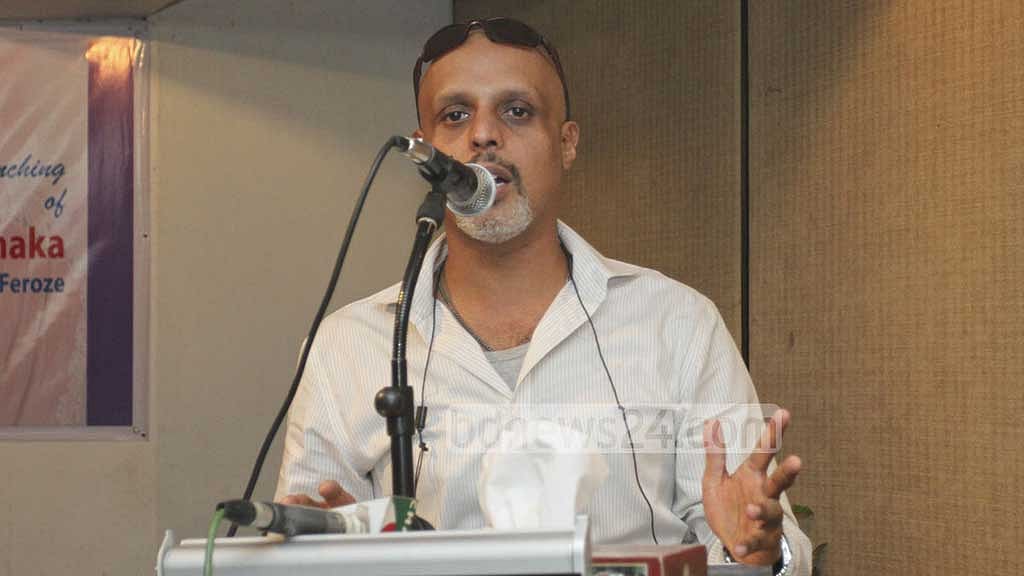
“In addition to seeking punishment for the killers, I wish we could portray the biographies of our leaders in our textbooks more vividly. It would have been inspirational for the new generation and help them to build a golden Bangladesh,” said Sohel Taj.
“The killers of Bangabandhu and the leaders in jail are mostly the same people. All we demand now is an independent commission in addition to the judicial system (for the trial), which is quite common in other countries,” said Simin Hossain Rimi.
“They (the killers) entered the jail, killed and walked out? Is it so easy? We need an independent judicial commission to uncover the masterminds behind the killing.”
The murders of four national leaders did not go to trial for 21 years after the killings. The Awami League reopened the case after it formed the government in 1996.
The chargesheet was submitted on Oct 15, 1998, against 23 accused, 23 years after the case was filed.
On Oct 20, 2004, Dhaka Metropolitan Sessions Judge Md Motiur Rahman sentenced three fugitives - Risaldar Moslem Uddin, Shah and Mridha - to death.
The court also sentenced 12 army officers to life imprisonment, including Syed Farook Rahman, Sultan Shahriar Rashid Khan, Bazlul Huda and AKM Mohiuddin Ahmed, who had been given the death sentence in the Bangabandhu killing case. Six others were acquitted.
In 2008, the High Court exonerated Shah and Mridha of the crime following an appeal, but it upheld Moslem Uddin's death penalty.
Rahman, Rashid, Huda and Mohiuddin were also acquitted. But their death sentences in the Bangabandhu killing case were carried out in January 2010.
The High Court upheld the sentences of eight military officers – Khandkar Abdur Rashid, Shariful Haque Dalim, MHM B Nur Choudhury, AM Rashed Choudhury, Ahmed Shariful Hossain, Abdul Majed, Kismat Hashem and Najmul Hossain Ansar.
All of them are still absconding.
Apart from Shariful Hossain, Kismat Hashem and Najmul Hossain, the others had also been given the death sentence in the Bangabandhu killing case.
After the Awami League came to power, the state on Sep 14, 2009 appealed against the High Court’s verdict in the Jail Killing case.
On Jan 11, 2011, an appellate bench led by then Chief Justice ABM Khairul Haque accepted the appeal.