Published : 16 Oct 2023, 01:31 AM
Updated : 16 Oct 2023, 01:58 AM


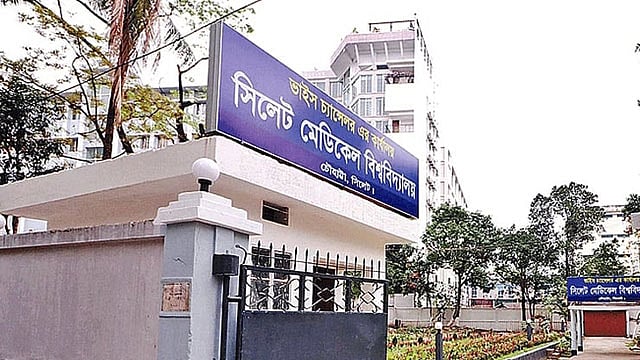
The launch of Sylhet Medical University in 2018 was plagued by allegations of corruption and irregularities in the hiring process, particularly in the excessive appointment of personnel. Five years later, little has changed at the higher education facility.
The absence of a well-defined statute has further complicated matters, making it difficult for the university authorities to employ permanent staff as mandated by the regulations set forth by the University Grants Commission.
Of the 242 employees, only three, including the vice chancellor and registrar, are receiving payments regularly. The rest have not been paid their wages for the last 11 months.
Those who were appointed on an ad-hoc basis are still regularly working though their terms have already ended. The rules stipulate that their terms cannot be extended.
Another 29 people were freshly appointed on an ad-hoc basis on Oct 2 amid staff protests over resolving the manpower issues and demands for appointments. Many of those previously laid off were not among the new recruits.
Of the 57 people who were appointed on a permanent basis illegally, 15 have moved the High Court to demand salary and allowances. Staff members under the daily wage board have also started protests.
“Another 29 employees were newly appointed on an ad-hoc basis amid our movement. But none of those who are part of the protests have been appointed,” said Nadim Simanta, member secretary of the university’s employees council.
“Many of us applied for appointments. I can’t understand why this is happening,” he said, mentioning that many of the previous recruits were made permanent.
AKM Fazlur Rahman, the university registrar, said the UGC rules allow the university to employ 112 permanent employees, but that recruitment has not been possible without a statute.
“The terms of those who were appointed on an ad-hoc basis previously cannot be extended due to the rules and instruction from the ministry. And additional people were appointed in different positions outside the posts needed for the university’s operation.”
“Of the 172 people [who were appointed], 13 received daily wages and 159 were employed on an ad-hoc basis. The terms of their employment have expired.”
“I was first recruited on an ad-hoc basis; later the university syndicate temporarily appointed me to carry out emergency tasks while my term was still running. I was acting [registrar] before, but I don’t hold that post any longer.”
The university syndicate approved the employment of 45 others on an ad-hoc basis to run things for now and the appointment of 29 of them has been completed as of Oct 2. The registrar said the others will be appointed as well.
IRREGULAR APPOINTMENTS
The Sylhet Medical University began its journey as the fourth medical university of the country in October 2018. Prof Morshed Ahmed Chowdhury, a former professor of Sylhet MAG Osmani Medical College, was appointed as the first vice-chancellor of the university the following month.
Naimul Haque, a former additional director (finance) of Shahjalal University of Science & Technology was given the responsibility of acting registrar. He then faced criticism for employing more than double the staff noted in the original manpower structure.
According to the rules, the permission of the syndicate is required to recruit staff in UGC approved positions. But the vice chancellor and the acting registrar stepped out of the rules to employ more people.
The UGC and the Anti-Corruption Commission launched a probe into the matter in December 2021. After they found proof of irregularities in the investigation, the court barred Vice Chancellor Morshed and Acting Registrar Naimul from leaving the country in June 2022.
The university halted payment of the employees from December 2022 following the investigation report and instruction from the Ministry of Education.
Prof Morshed went into retirement after his term ran out and Acting Registrar Naimul resigned from his job. Currently, AHM Enayet Hussain is vice chancellor with Fazlur as registrar.
Meanwhile, the Cabinet Division endorsed a revised Sylhet Medical University Act 2023 in July. The law renamed the university as Bangamata Sheikh Fazilatunnesa Mujib University, though the official website of the institution retains its previous name.
NO PERMANENT CAMPUS, NO STUDENTS
With no permanent campus for the students, the university is yet to set its curriculum. All medical, dental and nursing institutions in Sylhet operate under this university.
The administrative activities of the university are carried out at its temporary campus in the Chowhatta area of Sylhet. The Executive Committee of the National Economic Council, or ECNEC, authorised a Tk 20.36 billion project on Jul 18 to establish a permanent campus for the university.
The university authorities are pondering over acquiring 26 acres of land in the Surma area in the southern side of the city to set up a permanent campus. The land can be acquired once a proposal is sent to the Ministry of Land which will require an authorisation from the Prime Minister’s Office to greenlight the project.
Recently, the campus staff appeared disgruntled by the current state of the university as many employees are worried over recruiting new people while issues regarding previous employees are still unresolved.
Many of them complained that they were attending work regularly without pay. They said the matter was brought to the attention of the vice chancellor, who assured them that back pay would be cleared. However, the situation was yet to improve.
APPOINTMENT OF 29 STAFF AMID PROTESTS
The new appointments of 29 people in early October triggered protests by workers already facing issues.
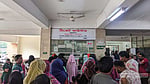
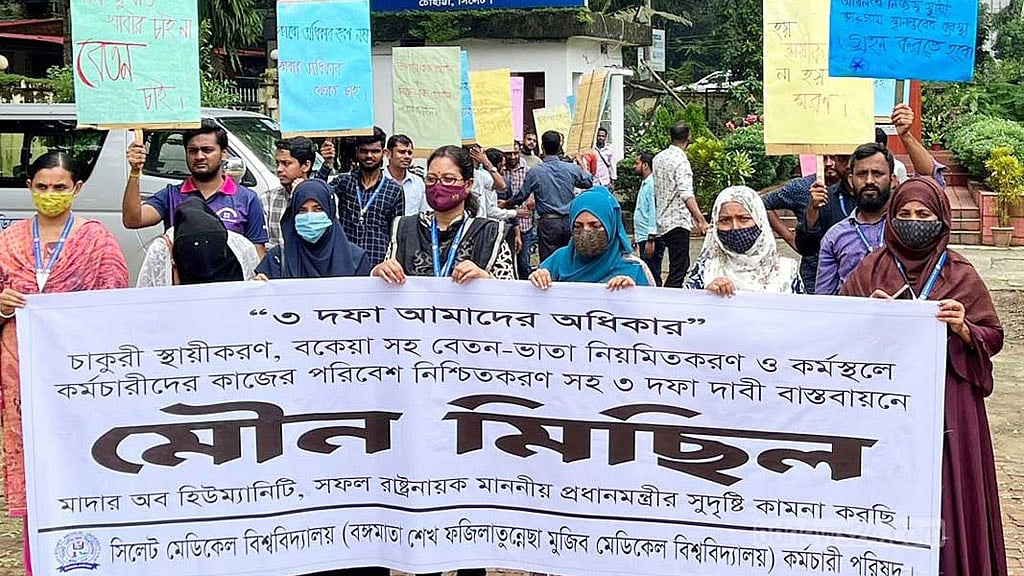
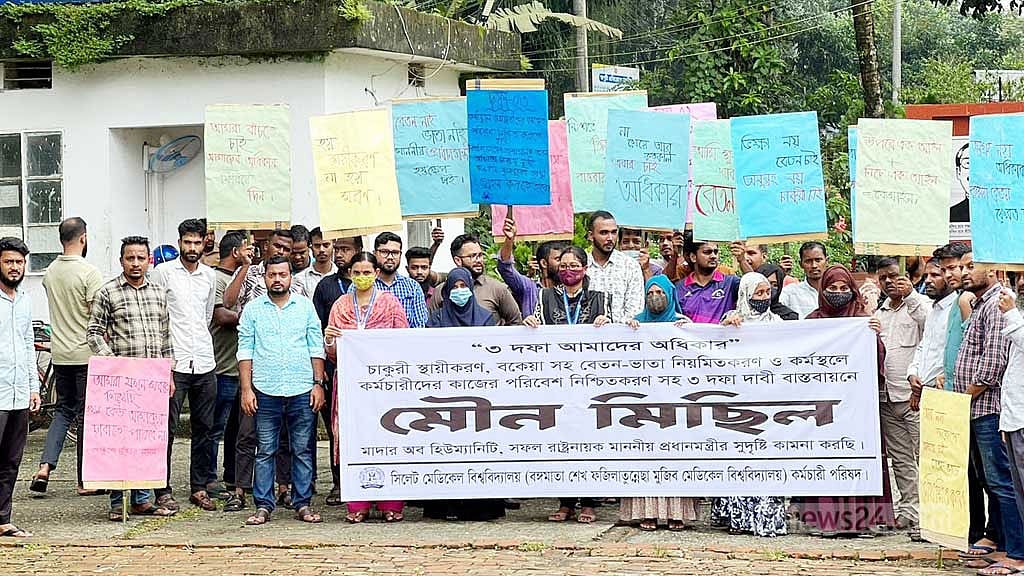
Third-class and fourth-class staff carried out a silent march over permanent jobs, regularising salary and allowance, and ensuring a proper working environment.
Ashraf Ahmed, the convener of Sylhet Medical University employees’ council, said: “Almost 240 employees and staff of the university aren’t receiving salary and allowance for almost a year. The recruitment process is in limbo due to different complications.”
Calling for the attention of Prime Minister Sheikh Hasina, he said the employees were leading “inhuman” lives for many days with no wages. Many of them used to reside in the city with their families before but had to send them off to their hometowns due to the ongoing issues.
The issue should be resolved due to “humanitarian reasons”, he added.
The council’s Member Secretary Simanta said: “We’re holding non-stop protests for our three-point demand. It began with a mass signing programme on Sept 24 and 25. A symbolic halt of work on Sept 27 was followed by a hunger strike on Oct 12.”
The demands include unconditionally making the jobs of staff from all levels permanent, regularising everyone’s salary, ensuring proper working environment and moving the university’s administrative building to its permanent location.
Md Abul Kashem began working as an electrician on a daily-wage basis since the establishment of the university.
He said: “I was told that I would be appointed once a position is created. I’m still working at the campus’s temporary office. But from what I heard, Helal Ahmed, who joined work as office assistant a year and a half after me, was given the position in the ad-hoc recruitment on Oct 2.”
“I’ve worked here without any wage for 11 months. I can’t understand why this would happen; I wasn’t told anything,” Kashem said.
Registrar Fazlur said the terms of those who were previously appointed on an ad-hoc basis ended way before and their terms could not be stretched further as per the rules.
“The university authorities will employ manpower through regular recruitment.”
UGC Secretary Ferdous Zaman confirmed that the university received UGC approval to employ 45 people on an ad-hoc basis to carry out emergency work.
He said the university authorities would have to make a decision on delivering payment to the protesting staff.
“Apart from that, for the 15 people who filed a writ petition with the High Court for payment and appointment, we’ll follow the court’s decision.”
Vice Chancellor Enayet was not available for comment.
[Writing in English by Syed Mahmud Onindo; editing by Shoumik Hassin]