Published : 01 May 2026, 04:07 PM
Updated : 21 Aug 2026, 03:40 PM


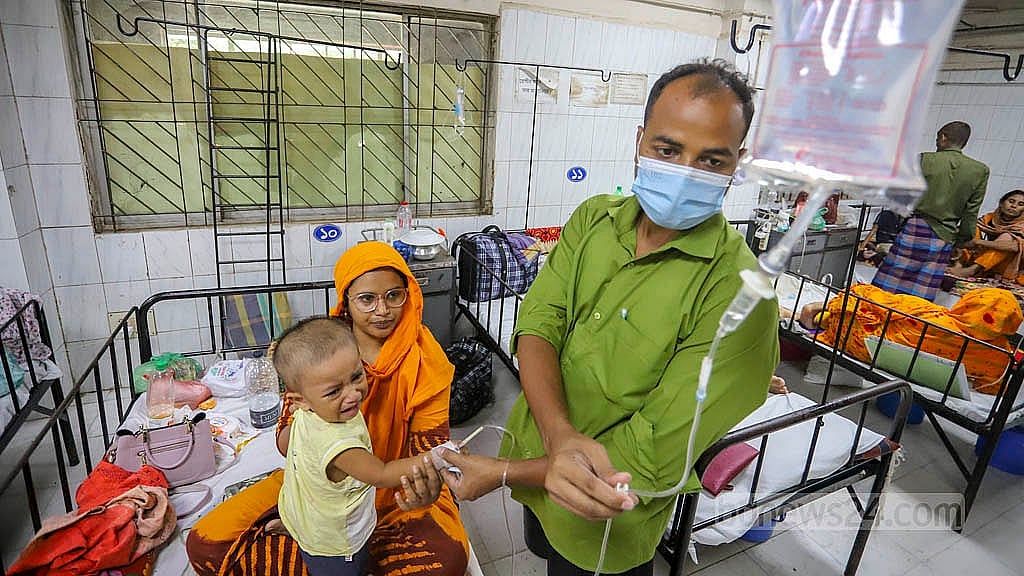
Anjoli Aich, who works as an attendant at a private hospital in Chattogram city’s Mehedibagh, receives Tk 5,400 per month for eight hours of daily work.
Along with occasional small tips, she said facilities such as paid leave and other benefits are largely absent alongside low wages.
Workers across private healthcare institutions in Chattogram, including nurses, ward boys and cleaners, are in a similar situation, according to staff employed in the sector.
While some private hospitals in the city offer a few "facilities”, those in the profession claim most institutions have nothing at all.
They say that because there is no specific wage board for this sector, their salaries and other benefits are dictated by the whims of the institutions.
Anjali told bdnews24.com on Friday that she currently works at a hospital under a contractor.
She noted that she gets only two days of leave if she can work eight hours every day for a full month, all for a monthly salary of Tk 5,400.
She said occasional small tips slightly supplement her income, but paid leave, festival bonuses and other formal benefits are largely absent, with salaries deducted for absence from work and only small allowances provided during festivals.
On how she manages household expenses amid rising costs, Anjali said: “Relatives of patients sometimes give tips, which adds a small amount to my income. I earn something only if I work; otherwise, I would earn nothing.
“I used to work at another hospital where I worked 12 hours a day and had one day off a week. I earned Tk 12,000, though it varies from hospital to hospital.”
Other employees in the same positions at private hospitals claim their salary situation is identical to that of the attendants.
They say that because of the shifting nature of the job, many of them work at multiple hospitals.
Abdun Nur, a ward boy at another private hospital in Chattogram, says his salary is still under Tk 10,000 despite working in hospitals for 15 years.
He said there has been no increment in the past two years, and shift duties require him to work at two hospitals.
“Those who work outsourced jobs are in an even worse situation. They earn around Tk 6,000 to Tk 7,000 and get no leave,” Nur added.
Under the National Pay Scale 2015, ward boys, attendants and cleaners in government hospitals are classified as fourth-class employees and earn between Tk 18,000 and Tk 20,000 in the 20th grade.
Yet in the private sector, many workers doing the same jobs earn less than half of that amount.
Nurses, who play a critical role in healthcare services after doctors, face a similar situation, said Samina Akter, a nurse at another private hospital in Mehedibagh.
She said nurses work shifts of around six and a half hours in the morning, seven and a half hours in the afternoon, and 11 hours at night, earning between Tk 15,000 and Tk 16,000 per month.
Samina added that while government hospitals have a structured pay scale for nurses, the private sector does not.
Senior staff may earn slightly more, while new recruits earn around Tk 12,000 to Tk 13,000, forcing many to work in multiple hospitals.
Under the pay scale, senior staff nurses in government hospitals are placed in the 10th grade and earn between Tk 16,000 and Tk 38,000, with higher pay for nursing supervisors and equivalent posts.
As a result, frustration is growing among non-medical healthcare workers in the private sector over wage disparities.
According to the Private Health Institution Workers Union, there are around 580 private hospitals and diagnostic centres in Chattogram, although the Department of Health lists the number at 290.
Around 12,000 nurses and about 6,000 ward boys and attendants are employed in these facilities.
Mizanur Rahman, general secretary of the union, said workers continue to raise concerns over their rights.
“May Day comes and goes, and everyone talks about their rights. But it feels like we have none,” he said.
He added that workers in the private health sector remain among the most neglected.
Mizanur said very few workers in private hospitals work in a single institution due to shift-based duties that stretch working hours to around 16 hours a day, leaving little time for family life.
“There is no structured pay scale in this sector. Owners fix wages as they please. We have been protesting for a wage structure since 2018,” he said.
He noted that memorandums were submitted to the Department of Labour in 2018 and 2021 demanding a wage board for the sector.
“In October 2022, the labour ministry published a gazette seeking members for wage boards in 14 sectors. We submitted names on behalf of workers, but the process collapsed.
“Similarly, during the interim government period, a list was requested. We provided it, but there has been no update since,” Mizanur added.