Published : 24 Jan 2026, 08:38 AM
Updated : 28 Aug 2026, 01:32 AM


Many of the important recommendations made by the Electoral Reform Commission have not been implemented, according to commission member Jasmine Tuli.
In her view, no major reforms have actually been made in Bangladesh’s electoral system.
The former additional secretary of the Election Commission (EC) said she does not see much change in the culture of violating the electoral code of conduct, adding that the tendency to disobey the law has become “very evident” among political parties.
Tuli made the remarks while speaking on Inside Out, bdnews24.com’s discussion programme.
She said Bangladesh now has no alternative to holding a good election, but the law and order situation has not improved as much as it needs to.
She added that she does not yet see an environment where voters can feel safe.
The expert also discussed recent incidents of code of conduct violations, the EC’s limitations in taking action, the success and failure of postal ballots, and the threat of AI in elections.
The programme was broadcast on bdnews24.com’s Facebook page and YouTube channel on Friday.

REFORM
Following three controversial elections during the Awami League era, demands for reform of the electoral system have intensified, leading the Electoral Reform Commission to place a set of recommendations before the EC.
While the EC has amended the Representation of the People Order (RPO) by incorporating some of those proposals, many of the commission’s key recommendations have either been rejected or only partially accepted, said Tuli.
She said the reform body had proposed several measures aimed at ensuring a fairer electoral process, beginning with the introduction of a “no” vote option.
“But the Election Commission has adopted it only in cases where there is a single candidate.”
She described the provision of a “no” vote in all seats as a “very important” recommendation.
Tuli said the EC has included some matters -- such as a ban on posters in election campaigns -- in the electoral code of conduct.
However, she said recommendations related to political parties and their registration were largely ignored.
“The reform commission proposed that a candidate must be a member of a political party for at least three years to receive its nomination,” she said.
She noted that this requirement had existed when the RPO was issued as an ordinance in 2007–08, but was later removed when it became law in 2009.
“This time as well, it was recommended, but it was not accepted,” she said.
Although the RPO includes a provision for candidate nominations to be selected from a panel recommended by grassroots party units, the former Election Commission official said it has not been implemented in practice.
Tuli also said the commission had recommended that women candidates be required to secure at least 45 percent of the votes cast, but the EC did not take the proposal into account.
She added that political parties have similarly ignored the recommendation for the direct nomination of women candidates to 100 seats.
“At present, around 60 political parties are registered, and 51 are contesting this election,” she said.
“But it appears that 30 or 31 parties have not fielded any women candidates. Some have nominated women, but the numbers are very small.”
Tuli acknowledged that the EC has accepted certain recommendations, including a provision requiring alliance partners to contest elections under their respective party symbols.
“But in reality,” she said, “there has been no major reform in the election system.”

PARTIES ‘STUCK IN OLD PRACTICES’
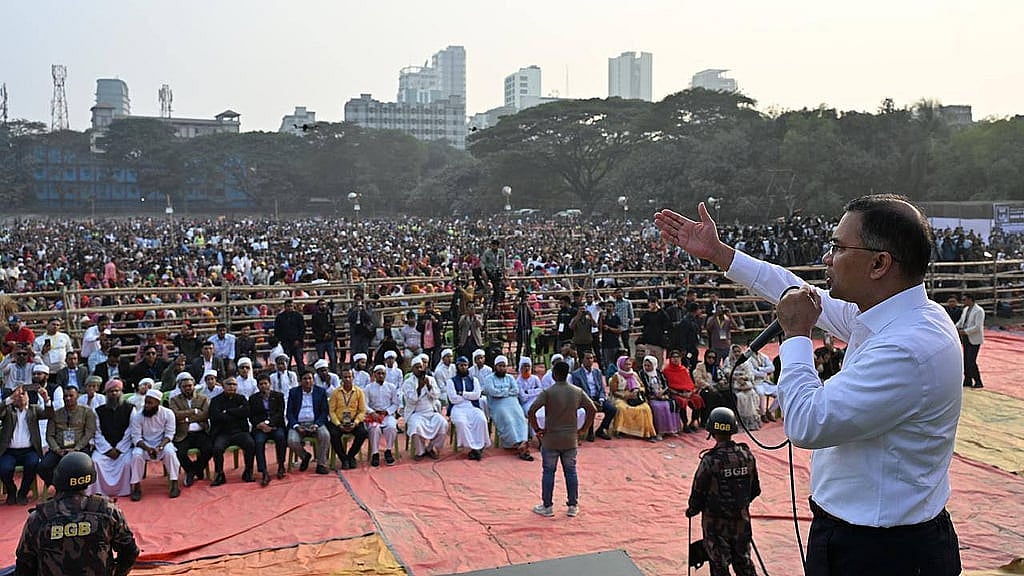
The formal election campaign began on Thursday, but even before its official launch, allegations of widespread violations of the electoral code of conduct have been raised against candidates from almost all political parties.
Tuli, a member of the Election Reform Commission and a former additional secretary of the Election Commission Secretariat, said political parties have continued to breach the rules because they have failed to break away from entrenched political practices.
She said the problem lies not only in the violations themselves, but also in weak enforcement.
“The Election Commission cannot implement the code of conduct the way it is supposed to be implemented,” she said.
“If we look closely, we can see that this is consistent with our political culture.”
Although the official campaign period is scheduled to begin on Jan 22, following the allocation of electoral symbols, many candidates have already begun campaigning since the announcement of the election schedule.
Drawing attention to this issue, Tuli said campaign spending remains another area of concern.
“There is a legal obligation regarding how much money a candidate can spend and how much a political party can spend,” she said.
However, she said the EC has been unable to enforce these laws in practice.
“Every political party breaks it, every candidate breaks it,” the former election official said.
SHOW-CAUSE NOTICES
Allegations of electoral code of conduct violations against independent candidate Rumeen Farhana in the Brahmanbaria-2 constituency have triggered widespread discussion, after the expelled BNP leader questioned why the district administration issued her a show-cause notice.
“The district administrator is the returning officer in that constituency,” Tuli said.
“The returning officer has the authority to take action in cases of election code of conduct violations.”
She said the notice was issued following allegations that Rumeen behaved in an “arrogant and disrespectful” manner towards a magistrate.
Meanwhile, National Citizen Party (NCP) convenor Nahid Islam and the party’s chief coordinator Nasiruddin Patwary were also asked to show cause after banners were put up during campaigning for a “Yes” vote in the referendum, prompting a reaction from the party.
Tuli said Nahid and Patwary were not charged for campaigning for the “Yes” vote itself, but for using the party symbol on banners before the official campaign period had begun.
“They were campaigning for ‘Yes’ and ‘No’, but they could not use the party symbol,” she said.
“The Shapla Koli is their party symbol, and they will contest the parliamentary election with that symbol. Using it before the official campaign period violates the code.”
After the Election Commission issued notices to Nahid and Patwary, NCP spokesperson and head of the party’s Central Election Steering Committee Asif Mahmud Shojib Bhuyain, said BNP Chairperson Tarique Rahman should have been arraigned first for alleged violations of the code of conduct.
Responding to that argument, Tuli said there is no basis for assuming that one violation should excuse another.
“There is no room for thinking that because one candidate got away unfairly, others should also be exempted,” she said.
Drawing a broader parallel, she said accountability cannot be selective.
“Just as I cannot be exempted from trial for a crime I committed because someone else committed a crime,” she said, “I cannot be exempted because of another person’s wrongdoing.”
She added that political parties are free to demand equal enforcement of the law, stressing that no individual or party stands above it.
“As a citizen of the country,” she said, “this is something everyone may expect — that the law applies equally to all.”

PROMISES BEFORE CAMPAIGNING BEGINS
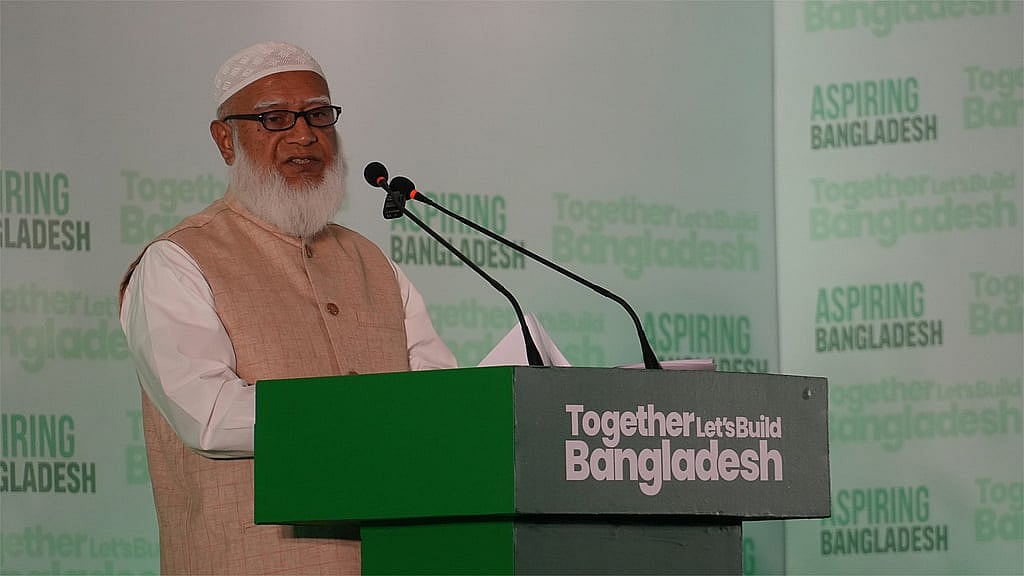
Before the official start of campaigning, BNP chief Tarique visited Korail slum on Tuesday and promised housing for residents.
On the same day, Jamaat-e-Islami chief Shafiqur Rahman said his party would upgrade several large government colleges to universities if elected.
Tuli said promises made directly to voters in exchange for votes before the campaign period could amount to violations.
She distinguished such pledges from party manifestos, which may outline policy commitments.
“If candidates approach voters and promise specific benefits in exchange for votes, that constitutes a breach of the code,” she said.
She noted that current law defines the “pre-election period” as the time between schedule announcement and result publication.
The reform commission had recommended defining the period between parliament’s dissolution and schedule announcement as pre-election time, and the period until polling day as election time, but the EC did not adopt the proposal.
REGISTRATION UNDER PRESSURE SHOWS ‘WEAKNESS’
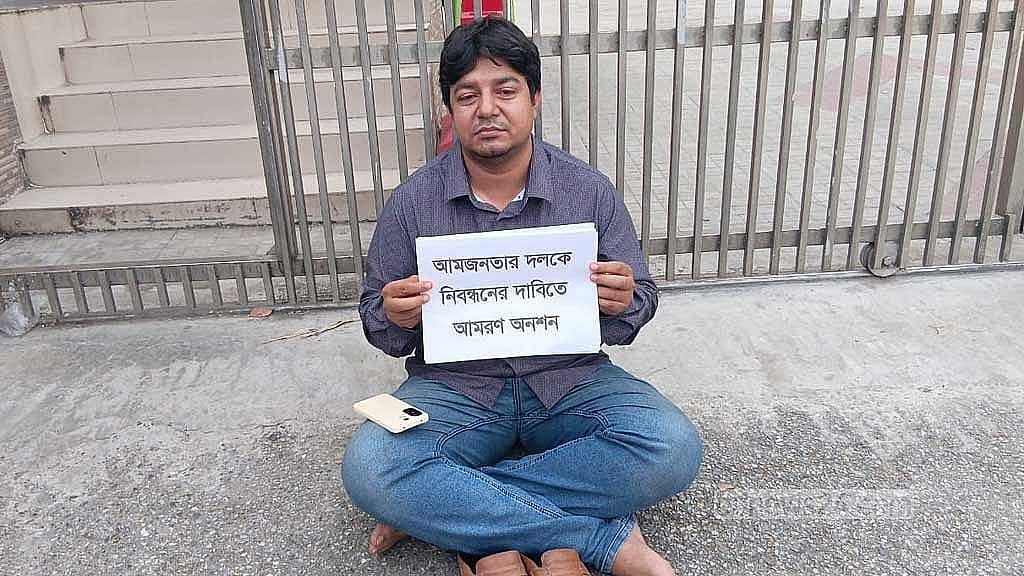
Tuli also addressed the EC’s decision to grant party registration in response to protests or demands.
“If registration is granted because of hunger strikes or pressure, it reflects institutional weakness,” she said.
She added that the law clearly sets out registration criteria, and the commission is accountable only to the constitution and the law.
A CULTURE OF IGNORING LAW
According to Tuli, political parties have developed a culture of selective compliance with election laws.
She said parties routinely ignore provisions such as grassroots-based nominations, and the EC has not consistently sought compliance.
“This is part of our political culture,” she added. “Parties prefer to interpret the law in ways that suit them.”

POSTAL BALLOTS
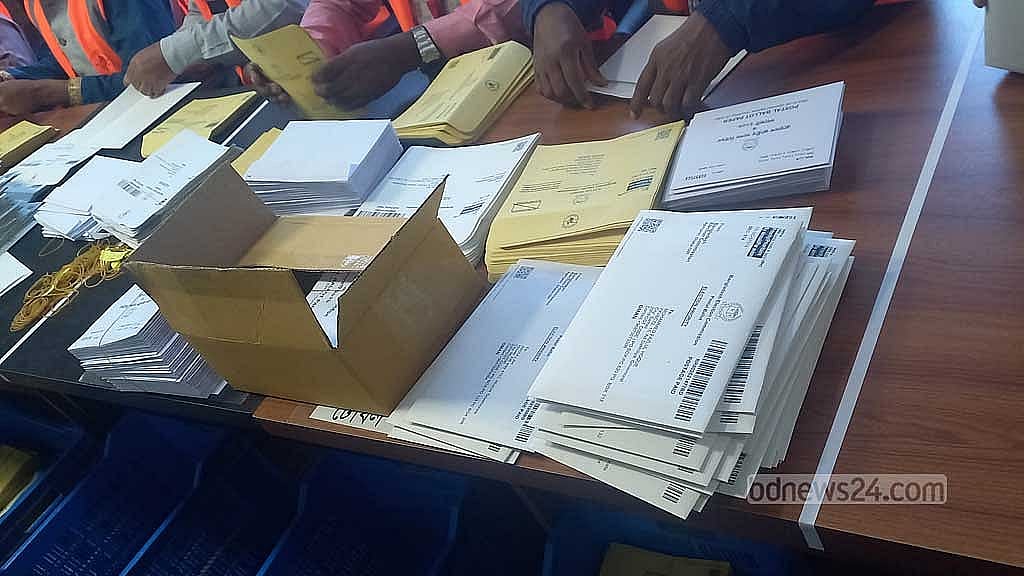
Tuli described the EC’s move to allow expatriate voters to cast ballots by post as “worthy of praise”.
She said a large number of Bangladeshis live abroad -- by some estimates close to 20 million, by others more than 10 million -- contributing to the economy through remittances, yet for years there was little consideration of how they could exercise their voting rights.
She noted that provisions for expatriate voting through postal ballots were included in the RPO as early as 2013, but were never put into practice.
While objections have been raised in some quarters over postal voting, Tuli said the initiative should be viewed in context, as it was being implemented for the first time.
“Since the Election Commission is doing this for the first time, some errors or deviations are likely,” she added. “It is possible that these issues will not arise in the next round.”
‘GOVT INTENT’ KEY TO FAIR POLLS
Drawing on her experience as returning officer in the 2010 Chattogram City Corporation election, Tuli said the Election Commission alone cannot ensure a fair poll.
“A genuine election requires the goodwill of the government,” she said, along with political parties and candidates being compelled to follow the law.
She warned that repeated flawed elections would erode public faith, including confidence in caretaker arrangements.
Referring to past parliamentary elections, she said young people had lost their lives during the July Uprising, underscoring the cost of electoral failure.
“If elections continue to create crises every time, the country will never move forward.”
She said democracy did not end with parliamentary polls alone, stressing that all subsequent stages, including local government elections, must follow proper procedures.
“If Bangladesh wants to move forward on a democratic path, the first and most crucial step is to ensure fair elections,” Tuli said.
“National elections are important, but so are all local government elections, from union councils to city corporations.”
CREDIBLE VOTE ‘ONLY OPTION’
Tuli said Bangladesh cannot move forward by alternating between one “acceptable” election and several “flawed” ones, stressing that there is no alternative to delivering a credible vote.
“This election must gain acceptance. If major questions arise again, people will lose faith even in the idea that elections under a caretaker government can be credible.”
She warned that repeated doubts over elections would further erode trust in the democratic process and weaken confidence in future electoral arrangements.
LAW AND ORDER
Election expert Tuli stressed that maintaining law and order before voting is essential to fulfilling the government’s commitment to a credible election.
She said the current situation still falls short, raising concerns about voter safety.
She warned that an unstable situation could leave voters feeling unsafe when exercising their right to vote.
Referring to the growing influence of “mob culture”, Tuli said it often discouraged people from speaking the truth or acting responsibly.
“Elections bring different forms of disorder. Personal rivalries also surface during this period, which some try to settle through the election process,” she added.
She said political parties bore the greatest responsibility in preventing violence, clashes, seizure of polling centres, obstruction of voters, harassment of candidates, or disruption of campaign activities.
Tuli also stressed the need to ensure the safety of the 1.6 to 1.7 million government officials deployed under the EC during elections.
She warned about the risk of disinformation and misinformation spread through artificial intelligence on social media, describing it as a global problem.
“Technology has positive aspects, but people tend to adopt the negative ones more quickly,” she said, adding that the upcoming election would also be affected.
She acknowledged that the EC lacked the technical capacity to counter such disinformation effectively.
“The Election Commission, candidates, and citizens can do one thing -- verify information before believing it,” she said. “Do not accept everything you hear without checking.”
Tuli said the commission should run awareness campaigns to educate voters about verifying information before sharing or acting on it.