Published : 01 May 2026, 07:40 AM
Updated : 28 Aug 2026, 03:42 AM


Tannery trap: No exit, no alternatives
Work-bound lives: Veteran workers say decades in tanneries leave them with no other skills, making it nearly impossible to switch jobs late in life.
Pay gap persists: Despite a revised minimum wage in November 2024, workers allege earnings remain stuck around Tk 18,000–20,000 with poor enforcement.
Health toll rises: Long-term exposure to chemicals, heavy machinery use have left many workers with chronic illnesses, injuries.
Precarious status: Workers say years of service still do not guarantee permanent status, with many hired through contractors without formal documents.
Safety risks ignored: Protective gear is often unused to maintain work speed, while recent accidents, including a fatal acid burn case, underline ongoing dangers.
Industry dependence: With around 85,000 tannery workers nationwide, many remain bound to the trade despite risks, limited alternatives.
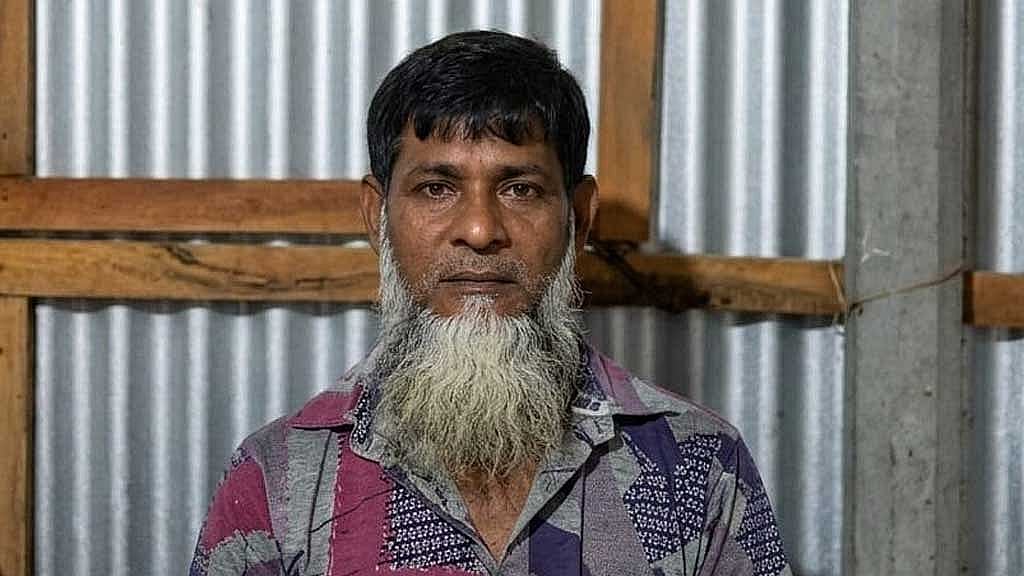
Tannery worker Md Nasir has reached the end of his professional journey still carrying the same identity he took up four decades ago.
In his 60 years of life, he has learned no trade other than processing raw hides, leaving him with neither the time nor the physical capacity to switch careers.
Despite a lifetime of toil, Nasir’s earnings do not reflect his dedication, with barely Tk 18,000 to Tk 20,000 entering his pocket at the end of the month.
He must survive in Dhaka on this sum while sending money home to his family in Barguna.
While he may appear fit at first glance, Nasir’s body has largely given way after he suffered two strokes.
He has lost all his teeth, and though doctors warned him against heavy or risky work, he cannot afford to sit idle if he wants to keep his household running.
Nasir spent 30 years in Hazaribagh before moving to the leather industrial estate in Savar’s Hemayetpur in 2017 when the factories were relocated.
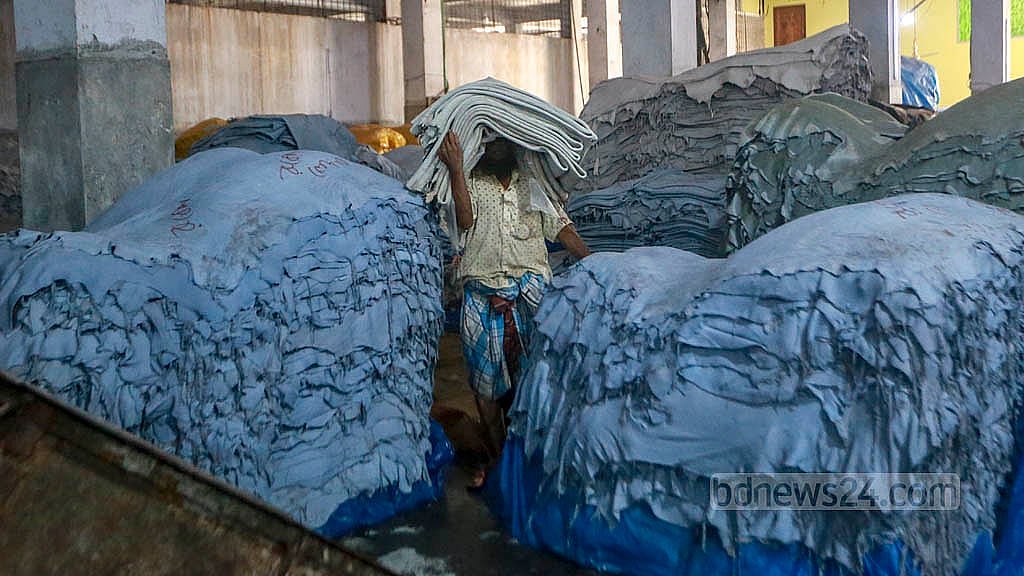
The pungent stench of raw hides from roadside warehouses hits the nose even before entering the Savar leather industrial area, though the interior of the estate is relatively cleaner.
Nasir shared his story at a tea stall within the estate on Monday evening.
Reflecting on his start in the trade, he mentioned that he briefly worked in a garment factory but switched to tanneries in 1986 because he found the work more suitable.
He said he initially worked in large factories but later shifted to contract-based short-term work across different units due to low wages.
On average, he now earns between Tk 500 and Tk 800 a day depending on workload.
He noted that the money is no longer enough to care for his ailing father at home.
“With this little money, it’s no longer enough, but I can’t find any other work with this body. I’ve been doing this job my whole life; it’s the only thing I know how to do,” Nasir added.
Nasir is among many workers who have poured their entire lives into a single profession only to face the end of their careers empty-handed.
Sitting beside him, Abdus Salam, Anwar and Mohammad Billah also described the same struggle.
Billah said it takes 12 to 14 years for a worker to become permanent in a tannery. With his current earnings, he struggles to support a family of six.

When Nasir started in 1986, his monthly salary was a mere Tk 400.
Today, his earnings hover around the minimum wage for the sector, which was last revised in November 2024 to Tk 18,001 for Dhaka and Savar.
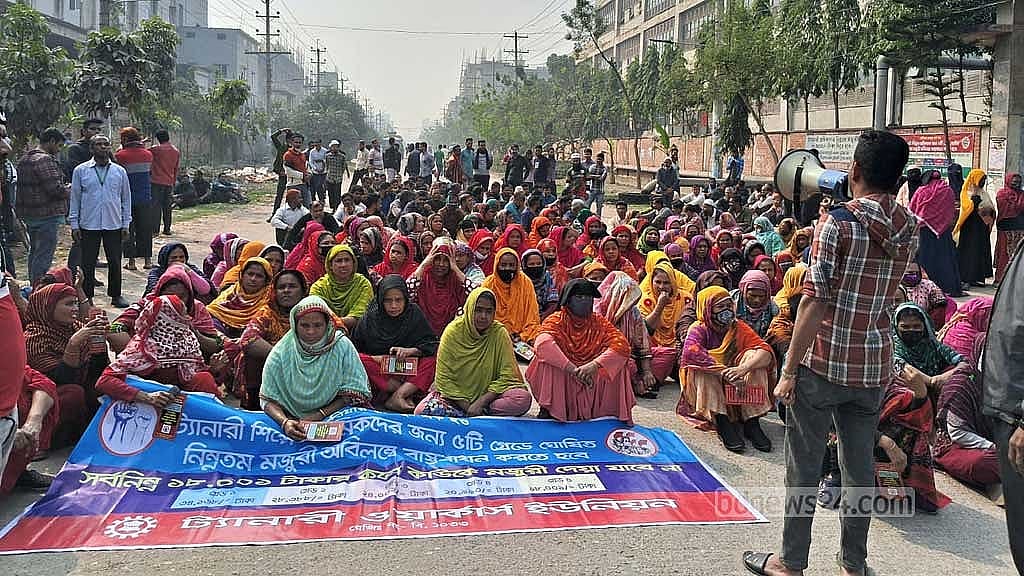
Workers, however, have alleged that these pay scales are not being implemented.
Early last year, labourers in Savar staged protests demanding the enforcement of the minimum wage, though their efforts proved fruitless.
A report by the Canadian Association for Research on Work and Health suggests the leather sector employs 850,000 people in Bangladesh, with 85,000 specifically in tanneries.
Beyond wages, workers face a lack of basic rights, with many operating without appointment letters or ID cards.
They are often treated as temporary staff despite years of service and face exploitation by middlemen, sudden layoffs, and poor waste management.
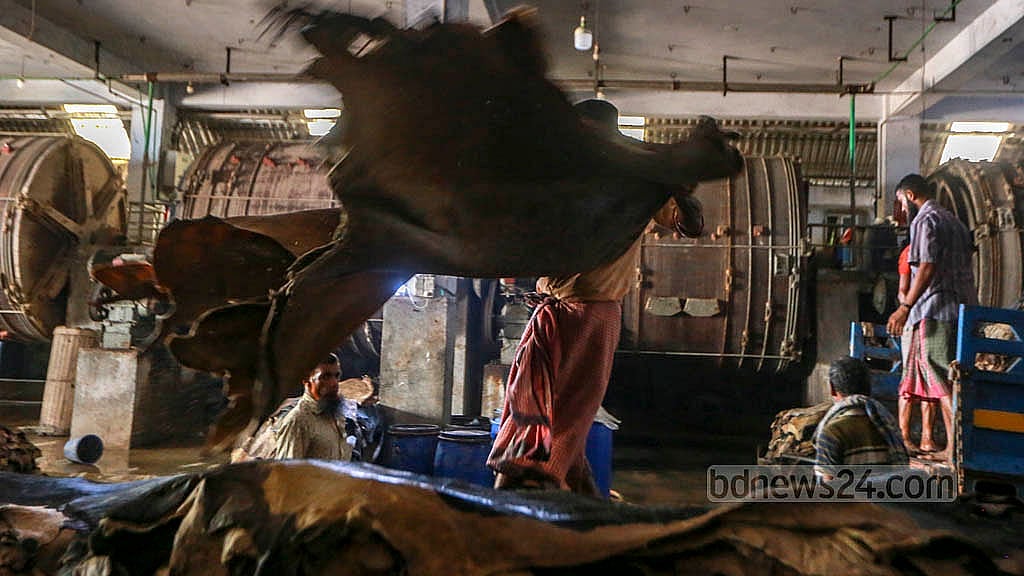
Workers like Nasir, who prepare raw hides for tanning, are constantly exposed to hazardous chemicals in deep tanks.
Despite wearing boots and gloves, chemical-laced water often splashes onto their skin, causing burns, rashes, and chronic itching.
Pointing to his scarred hands, Nasir recalled seeing colleagues succumb to cancer or suffer horrific acid burns.
He admitted that while owners provide masks and gloves, many skip using them to maintain work speed.
The danger is real; a worker named Harun recently died after being burnt by acid while working on a daily basis. Sonet Sarkar, a leather engineer, explained that workers handle toxic substances like sodium sulphide, lime, ammonium salt, and chromium.
They also operate heavy machinery such as rotary drums, vacuum machines, and splitting machines.
The danger is real; a worker named Harun recently died after being burnt by acid while working on a daily basis.
Sonet Sarkar, a leather engineer, explained that workers handle toxic substances like sodium sulphide, lime, ammonium salt, and chromium.
They also operate heavy machinery such as rotary drums, vacuum machines, and splitting machines.
A study published in the journal Nature last year has found that tannery workers in Bangladesh face ongoing health risks due to toxic exposure and limited protection.
The research, conducted on 400 workers in Savar, shows that 87.5 percent are concerned about health risks, while awareness remains low.

Sakhawat Ullah, senior vice-president of the Bangladesh Tanners Association (BTA), said each tannery has a health committee that regularly briefs workers on safety practices.
According to him, chemical use is essential in leather processing and recent accidents have occurred due to failure to follow safety protocols.
Sakhawat said although protective gear is provided, many workers do not use it.
He also said both workers and owners must ensure stricter compliance, noting that some factories still fail to provide proper safety equipment.
NGOs are also working to raise awareness among workers about long-term effects of chemical exposure, he added.
BTA President Shaheen Ahmed said most factories adhere to international standards, though he conceded that some risks are inevitable in chemical-heavy work.
He added that they are working to minimise the damage as much as possible.
Syed Sultan Uddin Ahmmed of the Bangladesh Institute of Labour Studies, meanwhile, argued that hiring temporary workers for permanent roles is “illegal”, as law mandates moving to permanent status after 180 days.
Supreme Court lawyer Sayka Kabir Jiti reminded that working on holidays requires double pay or compensatory leave.
Public health expert Mushtuq Husain said employers should ensure regular health check-ups for workers.
Another expert, Be-Nazir Ahmed, said exposure to tannery chemicals can lead to fungal, bacterial and viral infections. Raw hides can also carry diseases such as anthrax.
He added that chemical fumes and fine particles can enter the respiratory system, causing breathing problems, while long-term exposure to chromium may increase cancer risk.
“Using proper gloves, masks and goggles can significantly reduce these risks,” he said.