Published : 29 Apr 2026, 05:28 AM
Updated : 21 Aug 2026, 03:39 PM


The government is considering making it mandatory for every lawyer in Bangladesh to handle at least 10 percent of their cases free of charge to improve access to justice for the poor.
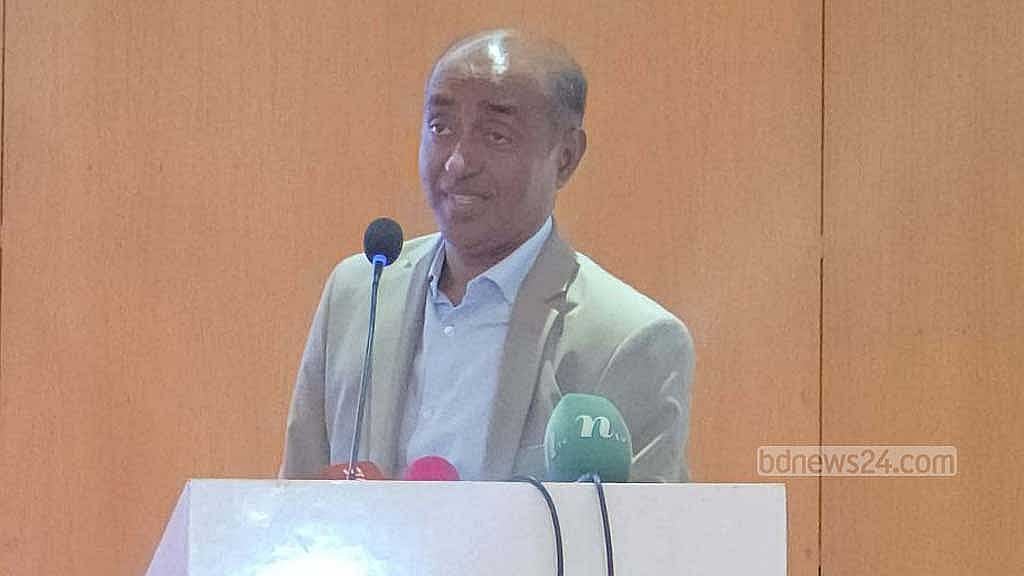
Law Minister Md Asaduzzaman announced the plan on Tuesday, saying the law would be amended if necessary to enforce this obligation as a form of "Zakat", or charity, for the legal profession.
Speaking as the chief guest at a discussion marking National Legal Aid Day 2026 at the Supreme Court auditorium, the minister highlighted the staggering backlog of over 4 million pending cases in Bangladesh.
“We recently learnt that more than 4 million cases are pending, and the number is rising,” he said.
“To reduce this backlog, we must make the legal aid process more effective. Prevention is better than cure; by using mediation and legal aid, we can stop the flow of new cases into the courts,” he added.
The minister expressed frustration over the lack of formal training for the country's nearly 80,000 lawyers compared with other government cadres.
He noted that the absence of a structured system has led to "copy-paste" drafting and a focus on "short-cut income" rather than professional commitment.
“Once a certificate is issued, there is no place to hold the reins,” he remarked.
To address this, the government has partnered with a British law firm and is coordinating with German representatives to introduce compulsory training.
“When we provide these training sessions, we want to attach a condition. Lawyers must maintain ethical standards and handle at least 10 percent of their cases pro bono,” the minister added, specifically calling on senior bar leaders to lead by example.
Attorney General Md Ruhul Quddus Kazal echoed these concerns, noting that top-ranking lawyers are rarely seen providing aid to the destitute.
The law minister described legal aid as a preventive measure to tackle the mounting case backlog.
"If we can prevent disputes from reaching the courts through legal aid and mediation, that will be the preventive measure. Reducing the existing backlog will be the cure."
He also said the government had expanded the scope of legal aid in 2026 by clearly defining eligible recipients and the types of cases covered.
Three new groups have been included.
These are freedom fighters and their family members, victims of enforced disappearance, extrajudicial killings, false cases and political repression during the past 16 years, and those affected by the July Uprising, including families of martyrs, the injured, the permanently disabled, and people facing false cases.