Home
+
Published : 15 Jun 2026, 06:28 PM
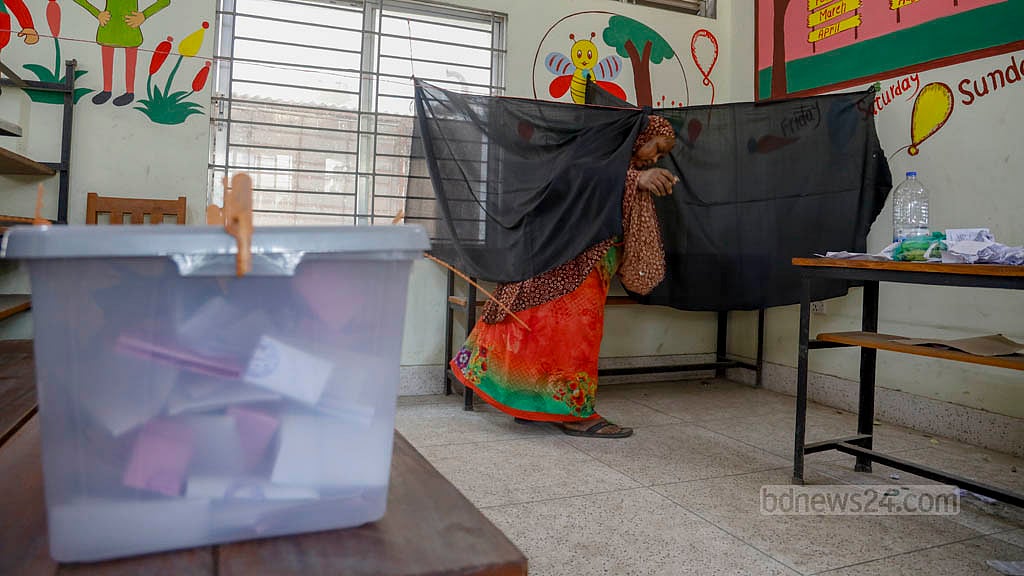
The Commonwealth Observer Group (COG) has termed Bangladesh’s 2026 parliamentary elections and referendum a “democratic milestone”, while urging further reforms to strengthen and safeguard the country’s democratic progress.
The observation and assessment were published in the group's final report, the Commonwealth said in a statement on Monday.
The COG particularly lauded the large-scale rollout of postal voting for diaspora voters and individuals in lawful custody, praising the initiative as a significant step towards reinforcing the inclusivity of the national electoral system.
Headed by Nana Akufo-Addo, the former president of Ghana, the 13-member delegation comprised eminent dignitaries spanning Asia, Africa, the Caribbean, Europe, and the Pacific.
The international observers were deployed across Bangladesh from Feb 4 to 18 to scrutinise the pre-election environment, polling day conduct, and post-election management.
The team consulted a broad spectrum of local stakeholders to gather comprehensive, evidence-based data on the Feb 8 electoral process.
Addressing historical context, the final report acknowledged earlier concerns regarding the independence and executive capacity of the Bangladesh Election Commission (BEC).
These anxieties, the report noted, were partially rooted in controversies surrounding the January 2024 general elections and the previous barring of political parties.
However, for the 2026 cycle, the observer group assessed that the polling, counting, and results management phases were executed professionally.
The COG report also tracked the national referendum on the July Charter, which cleared the legislative hurdle with 61.64 percent public support.
While the referendum was conducted peacefully, the observers noted that public awareness regarding the core substance of the charter remained limited.
The final report threw light on lingering demographic gaps in political inclusion.
Despite women constituting nearly half of the country's population and holding reserved parliamentary seats, they accounted for a mere 4 percent of the total candidates, with only seven female politicians directly elected, it said.
Youth representation similarly fell short; citizens under the age of 35 made up roughly 44 percent of the active electorate but saw low direct participation, it said.
Moreover, the COG observed that while the media landscape during the campaign trail was noticeably more open than in previous election cycles, existing legal constraints and security apprehensions continue to cast a shadow on press freedom.
To build public trust in the state's electoral administration, the group put forward several recommendations.
Chief among these was a call to structurally fortify the institutional independence and operational capacity of the BEC, alongside strengthening state organs to uphold the rule of law.
Upon releasing the document, Commonwealth Secretary-General Shirley Botchwey said: "The 2026 elections and referendum in Bangladesh demonstrate citizens’ commitment to exercising their democratic rights, and we welcome the peaceful manner in which they were conducted."
"The recommendations in this report are offered with the objective of further strengthening democratic institutions and electoral processes as Bangladesh creates the conditions for an inclusive and united country responsive to the aspirations of all its people," she added, urging the interim authorities to engage all cross-sections of society to address the gaps. "As always, the Commonwealth stands ready to support these efforts."
The final evaluation report has been officially transmitted to the Bangladesh government, the BEC, major political parties, and other relevant stakeholders.