Home
+
Published : 15 Aug 2014, 10:49 AM
Over the past two decades, Khaleda has been celebrating her birthday on Aug 15 -- the National Mourning Day -- which has drawn bitter criticism from various quarters, particularly the ruling Awami League.
Amid a controversy over her date of birth, the BNP has given two different years of birth of its chief.
At present, the party claims Khaleda was born in 1946. The year is entered in her passport, according to her Press Secretary Maruf Kamal Khan.
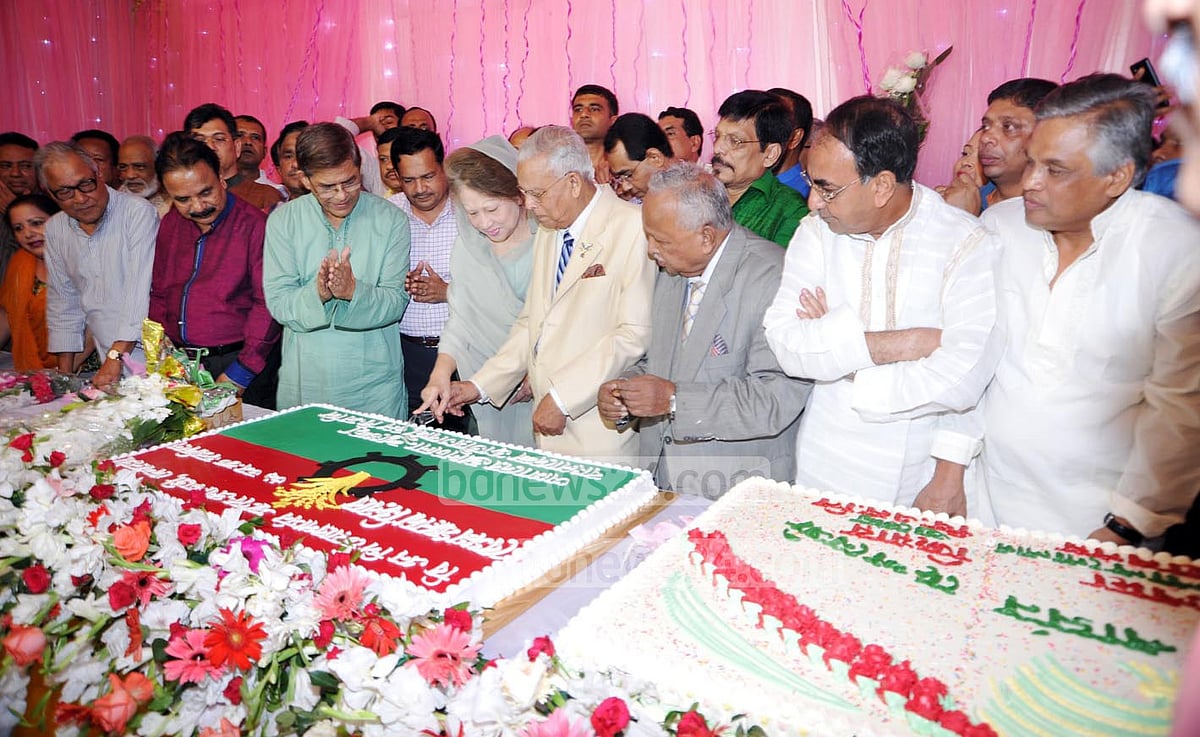
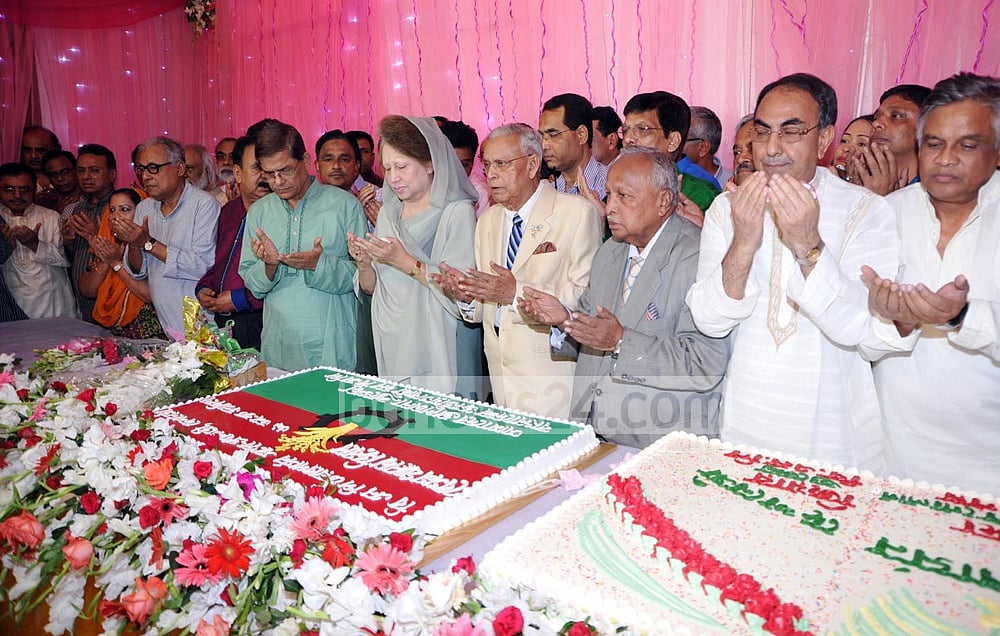
"Begum Khaleda Zia was born on this day in 1946," he told bdnews24.com while cutting a cake on the occasion of the party chief's birthday on early Friday.
However, party's Standing Committee member Goyeshwar Chandra Roy on Thursday said Khaleda was "born on the day in 1945 when the Second World War ended".
"Her parents called her 'Shanti' but later she came to be called 'Putul'," he said.
Khaleda's biography published by the Parliament Secretariat mentions her birth year as 1945. Several biographical books and the Banglapedia also mention Aug 15, 1945 as her birthday.
She mentions Dinajpur in her address, although her father, Eskandar Majumdar, hailed from Feni, and she was born there. Her mother was Tayeba Majumdar.
In August 1960, Khaleda was married to then Pakistan army Capt Ziaur Rahman, who eventually became Bangladesh's president after the assassination of the nation's founding father Bangabandhu Sheikh Mujibur Rahman.
Awami League leaders claim the BNP chief mainly observes her birthday on Aug 15 to celebrate the attempt to turn Bangladesh towards Pakistani ideals after Bangabandhu's assassination.
Despite criticism, Khaleda cut her birthday cake in the early hours of Friday with her party activists.
She entered Bangladesh's political arena after the death of her husband on May 30, 1981. She was first elected the BNP vice chairman and eventually the chairperson in 1984.
During the anti-Ershad movement, Khaleda played a key role as a leader of the 7-party alliance. Political analysts say she created a public base for the BNP "born out of the cantonment".
The BNP chairperson went on to become Bangladesh's first woman prime minister after her party won the 1991 polls.
She became the prime minister for a short time after controversial Feb 15, 1996 general elections.
Khaleda was elected the prime minister in 2001 after the BNP-Jamaat-e-Islami alliance won the 2001 polls.
But her party lost the 2008 elections and she became the Opposition Leader in Parliament.
However, as a result of boycotting the Jan 5 polls, her party lost representation in the House.