Home
+
Published : 19 Jun 2026, 02:54 PM
Joyjatra Awaits Hormuz Clearance
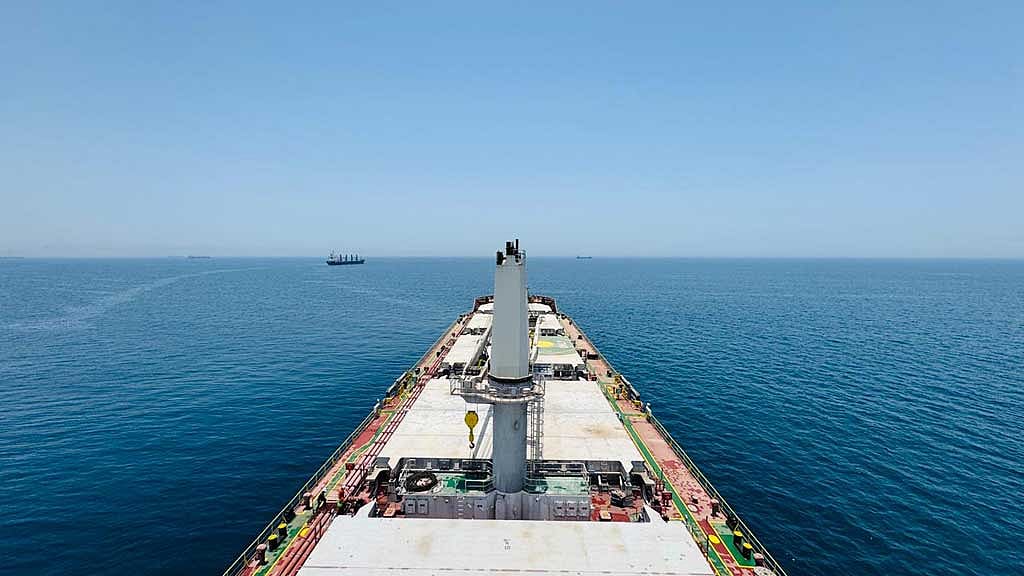
80 miles away: MV Banglar Joyjatra edges closer to the Strait of Hormuz but remains stuck without approval to pass
Strained delay: Nearly three months of disruption leave 31 Bangladeshi seafarers under prolonged uncertainty at sea
Three-tier bottleneck: Clearance requirements, safety concerns and a backlog of waiting vessels slow the ship’s long-awaited transit
A Bangladesh-flagged cargo ship has pulled within striking distance of the Strait of Hormuz after more than three and a half months stranded in the Persian Gulf.
But experts warn it could still be weeks before it gets through.
Bangladesh Shipping Corporation (BSC) Managing Director Mahmudul Malek said on Thursday that the MV Banglar Joyjatra had moved close to the strait and was waiting for permission to cross.
"It will cross once it gets clearance,” he told bdnews24.com. “Approval from the [Islamic Revolutionary Guard Corps] and the Iranian Navy is required. We are in regular contact with the crew. They are all well."
The state-owned vessel, chartered by a Singapore-based firm, docked at Dubai's Jebel Ali Port on Feb 27 -- the day before the US and Israel launched strikes on Iran.
Its 31 Bangladeshi crew members have been stuck in the Gulf ever since.
Following the signing of a US-Iran memorandum of understanding to end hostilities, the ship repositioned on Thursday to within 80 nautical miles of the strait.
Saudi Arabia's three supertankers were among the first vessels to cross Hormuz in the hours after the deal was struck.
Captain Shafiqul Islam, speaking from the ship's anchorage off Sharjah Port on Friday, said the crew were in good health.
"The local authority controlling the strait has not fully opened it yet," he added. "No vessel can cross without IRGC clearance."
At its current position, the Joyjatra is six to seven hours from the strait.
Shipping experts say three obstacles remain.
Bangladesh Merchant Marine Officers Association President Captain Anam Chowdhury said the channel must first be cleared of mines, followed by permission and clearance of the queue of waiting ships.
"There are three layers of mines in the channel," he said. "Only the Iranian authorities know exactly where and how they were placed. Mine-sweeping experts have to work through it first."
He added that a narrow section of the strait may have reopened, but large vessels with a draft of 80 to 90 feet would not be able to navigate it.
"Their turning circle is too wide for that restricted passage.”
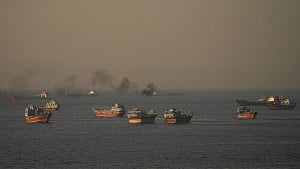
According to Al Jazeera, roughly 550 ships are waiting to cross Hormuz. Under international maritime rules, vessels must also carry out hull cleaning and dispose of accumulated waste before leaving the Gulf, adding further delay.
"All things considered, it could take three to four weeks for Hormuz to fully reopen," Anam said. "And a lot depends on how relations between the signatories develop in the meantime."
He said the roughly 100 Bangladeshi seafarers aboard seven vessels near the strait, including the Joyjatra’s 31-member crew, have been under severe psychological strain after months of waiting.
“We are in regular contact with all of them.”
Carrying 37,500 metric tonnes of fertiliser, the Joyjatra is bound for South Africa once it clears the strait.
This is not the first time the Joyjatra has tried to get through.
On Apr 8, after a ceasefire was announced, the ship lifted anchor from Saudi's Ras al-Khair Port and headed for the strait, only to turn back without clearance.
On Apr 17 it tried again from the UAE's Mina Saqr Port and was once again denied passage.
Earlier still, UAE coast guard personnel had advised the ship not to proceed towards the strait at all.
The Joyjatra entered West Asian waters on Jan 26, carrying 38,800 tonnes of steel coil from Qatar's Mesaieed Port to Jebel Ali, where it berthed at Terminal 10 the following day.
On Feb 28, a missile strike set a fuel reservoir 200 metres from the ship ablaze. A drone strike later hit a port facility nearby as the crew watched missiles and drones cross the skies above them.
After unloading, the ship was due to return to Qatar and then sail to Mumbai -- both routes requiring passage through Hormuz.
Both plans were shelved as the war shut the strait to commercial traffic.