Published : 21 Oct 2025, 06:53 PM
Updated : 21 Aug 2026, 02:37 PM


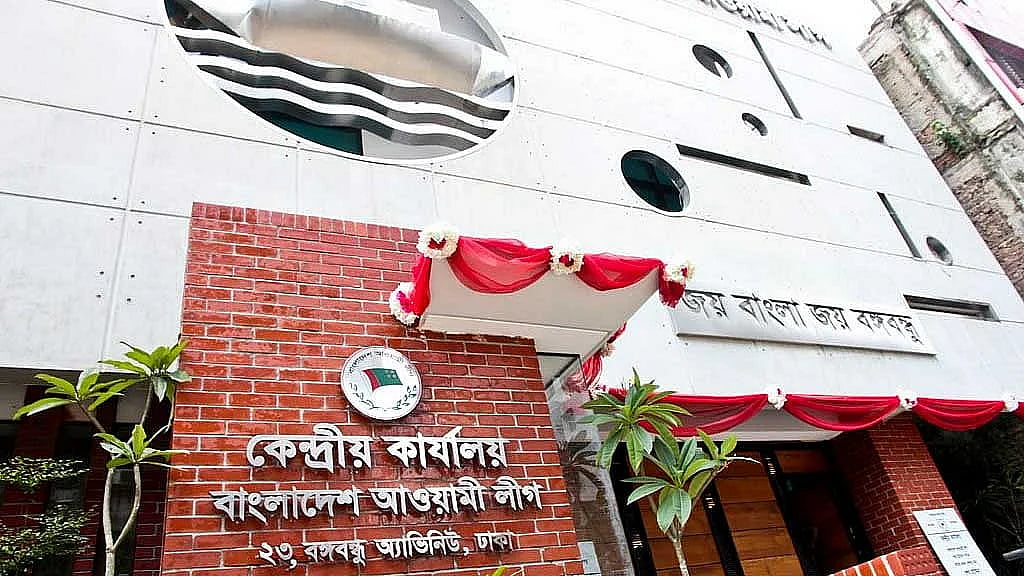
A group of six human rights organisations has called on Bangladesh’s interim government to end its ban on the Awami League's political activities under the Anti-Terrorism Act.
In a joint letter to Chief Advisor Muhammad Yunus on Sunday, the groups claimed the ban “excessively restricts freedom of association, assembly, and expression and has been used to arrest Awami League members and perceived supporters engaged in peaceful activities”.
The six organisations that signed the joint statement are CIVICUS, Committee to Protect Journalists, Fortify Rights, Human Rights Watch, Robert F Kennedy Human Rights, and Tech Global Institute.
The joint statement also pointed to the UN’s 2025 fact-finding report on the violence during the July Uprising, saying that while it found evidence linking top party leaders to serious human rights abuses, it also recommended the interim government should “[r]efrain from political party bans that would undermine a return to a genuine multi-party democracy and effectively disenfranchise a large part of the Bangladeshi electorate”.
The rights organisations said that the government should prevent “arbitrary arrests and detentions” and “facilitate” the dismissal or withdrawal of cases that are politically motivated or infringe on freedom of expression or other rights.
“The interim government should review and dismiss such cases lodged both before and after August 2024 regardless of political affiliation, including for members and supporters of the Awami League who have been charged or detained without credible evidence linking them to a crime."
The rights groups expressed their appreciation or Yunus meeting with human rights organisation on the sidelines of the UN General Assembly in New York, stating that the interim government had taken “critical steps” to restore basic freedoms, initiate legal reforms, and investigate enforced disappearances and other rights abuses.
However, they added that they was “deeply concerned” that the security sector has not seen significant reforms and security force personnel have not been fully cooperative with efforts at accountability and reforms.
The letter provided a list containing 12 total recommendations for swift steps to protect the rights and freedoms of those who live in Bangladesh.
These are:
1. Ensure perpetrators are held accountable for serious abuses during the July Revolution and over the past 15 years.
2. Implement security sector reform, including by disbanding the Rapid Action Battalion (RAB) and limiting the powers of the Directorate General of Forces Intelligence (DGFI).
3. Criminalise enforced disappearances in line with international standards and support the Commission of Inquiry on Enforced Disappearances to fulfil its mandate.
4. Reform the National Human Rights Commission (NHRC) in line with the Paris Principles.
5. Repeal or amend in line with international standards the Cyber Security Ordinance 2025 and abusive laws.
6. Amend in line with international standards the draft Personal Data Protection Ordinance and draft National Data Management Ordinance.
7. Ensure press freedom and protect journalists from arbitrary arrests and detention.
8. Prevent arbitrary arrests and detentions and facilitate the dismissal or withdrawal of all cases that are politically motivated.
9. End the broad ban on Awami League activities under the Anti-Terrorism Act.
10. Lift restrictions on civil society funding and operations and reform the NGO Affairs Bureau.
11. Protect Rohingya refugees from forced repatriation and reduce restrictions on freedom of movement, livelihoods, and education.
12. Fully cooperate with the ongoing investigation of the International Criminal Court (ICC) into the situation in Bangladesh/Myanmar.