Published : 03 Oct 2025, 08:19 AM
Updated : 21 Aug 2026, 01:53 PM


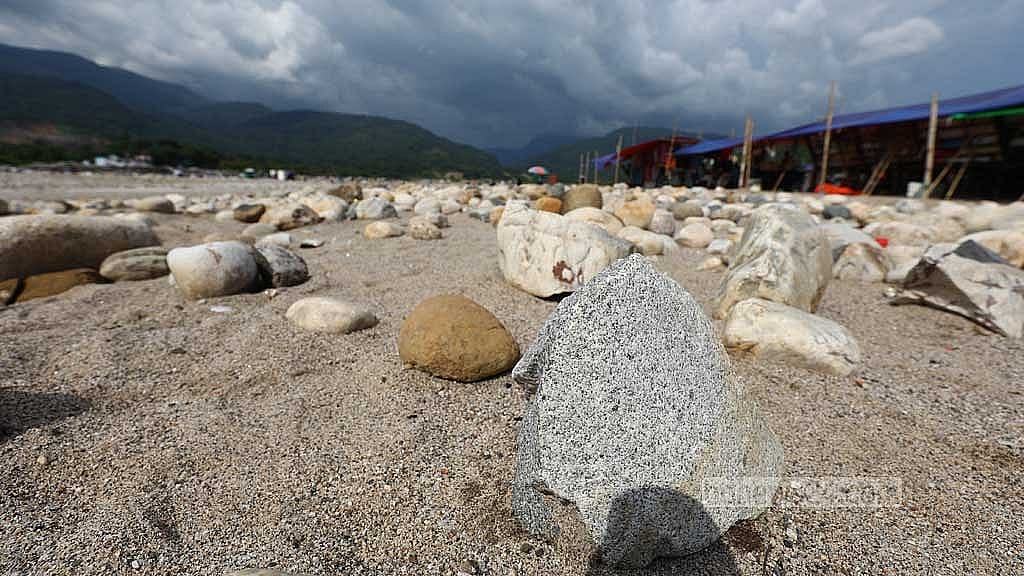
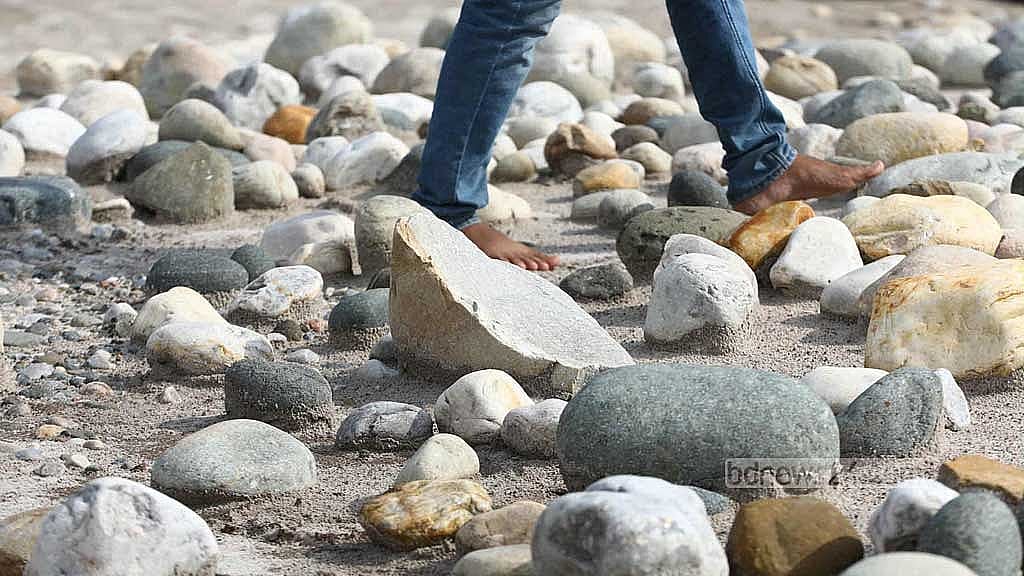
Once a shimmering expanse of white stone and clear water, Sylhet’s Sada Pathor now bears scars of looting and hurried restoration. Broken rocks jut out where tourists once strolled barefoot, turning beauty into hazard and leaving locals torn between hope and lament.
Mehedi Hasan, a visitor from Dhaka, stood on the stony riverbanks of Sada Pathor in Sylhet’s Companiganj, shaking his head. He had been here before, but this time, the place felt different.
“I came three years ago,” he said. “The stones aren’t the same anymore. The beauty has diminished. Now there are too many broken and cut rocks. One wrong step and you could have an accident. I think these should be removed.”
For first-time visitor Md Tomal Sheikh from Mymensingh, however, Sada Pathor still carried a sense of wonder.
“It’s a beautiful place. I splashed in the water and loved it. I want to come again,” he said.
SCARS OF LOOTING
Sada Pathor, one of Sylhet’s most popular tourist destinations, was ravaged after the change of government on Aug 5, when widespread looting stripped away its prized stones. The images sparked outrage across Bangladesh and drove visitors away.
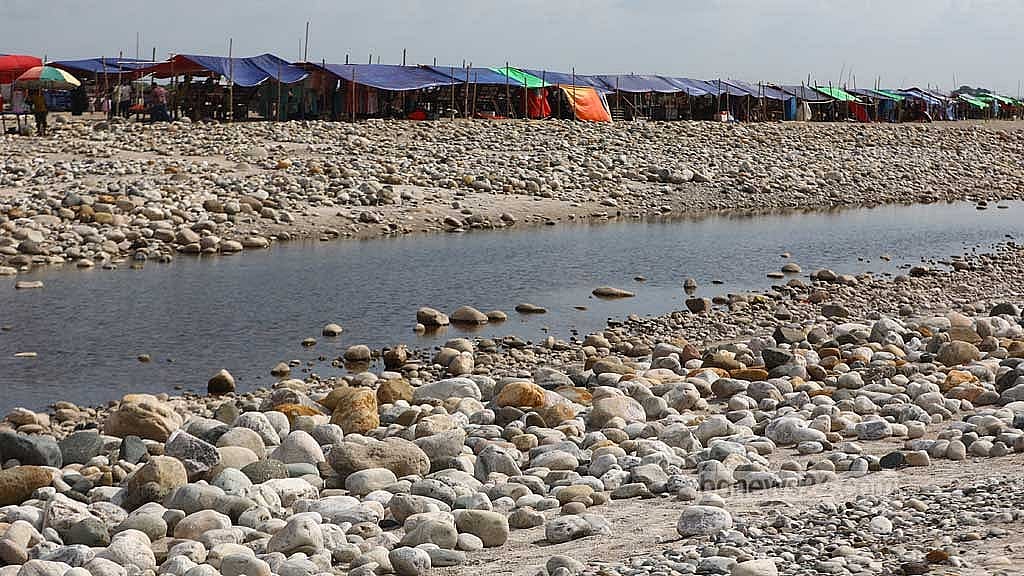
In response, the government began replenishing the site by depositing recovered stones along the Dhalai River. Crowds have returned, but the broken and cut rocks left behind pose hazards, locals warn.
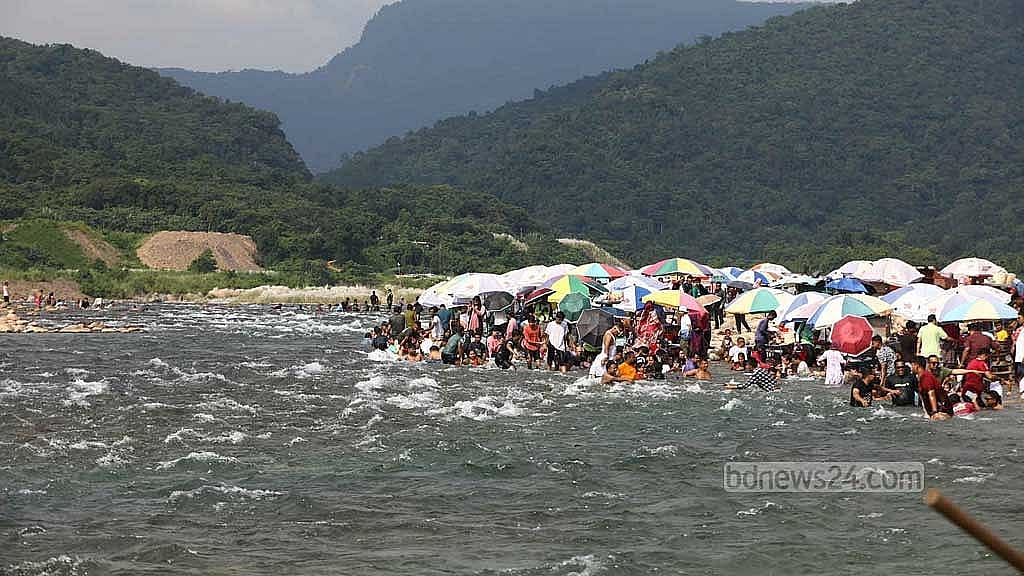
At the Sada Pathor Boat Station, tourists step off boats into a throng of vendors and horsemen offering rides to the main spot. Families cross sandbars, guiding children carefully across uneven stones that have surfaced as water levels dropped.
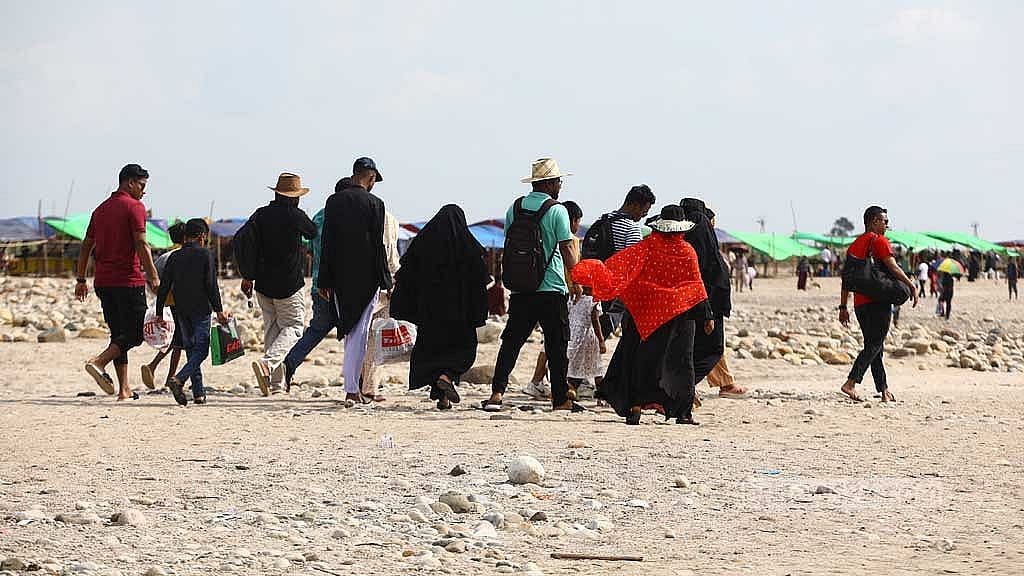
Some wade into the clear pools, splashing each other playfully. Others perch on submerged rocks, gazing at the hills beyond. Yet many of the rocks underfoot are fractured, raising fears of injuries once water rises again.
“The broken stones are risky for tourists,” said Anwar Hossain Sumon, senior vice-president of the Companiganj Photography Society.
“I urge the authorities not to deposit cut rocks here, and to remove those already placed.”
TOURISTS RETURN, TRADE HESITATES
On recent weekends, the boat station has grown busier, with more cars lining up and ferries running trips back and forth. Restaurants and roadside stalls have seen a bump in visitors, but business remains uneven.
“Tourists have increased, but our sales haven’t,” said trader Redwan Ahmed. “In earlier years, this season brought big crowds and strong sales.”
Shopkeeper Lilu Mia at the main spot disagreed: “Business is up a little. Since the stone replacement, tourists have grown. We hope numbers rise further.”
Photographer Md Robiul Islam said, “Over the last week, tourists have risen steadily. Our income depends directly on them. No tourists, no earnings.”
Horseman Kalam and boatman Jashim echoed the sentiment.
“We’ve had more trips, but it’s still not like before,” Jashim said. “Last Friday and Saturday alone, our association’s boats made over 160 trips. It will take time to reach earlier levels.”
ACCOUNTABILITY DENIED
Locals blame opportunistic traders for Sada Pathor’s decline.
“Those who bought the looted stones are responsible,” one said. “If action had been taken early, this wouldn’t have happened. The issue was raised at law-and-order meetings, but no action followed. Twenty to thirty people were involved.”
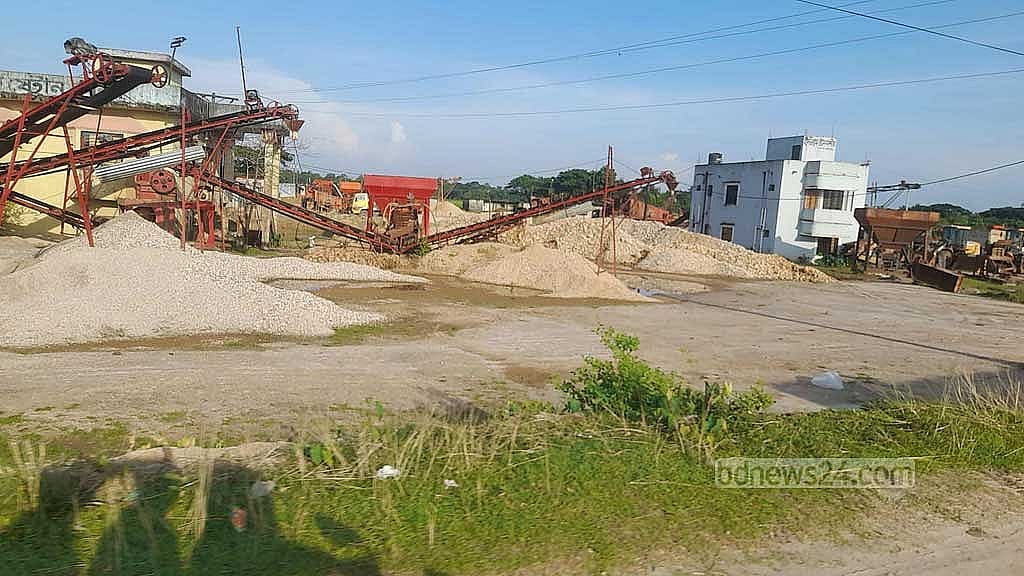
Boatmen, shopkeepers, and photographers say the looted stones were quickly sold to illegal crusher mills. Large boulders were hammered, transported, and later recovered in raids. These broken stones were then dumped back near the riverbank, leaving a legacy of hazards.
Authorities could have separated intact stones from broken ones before redepositing them, they argue.
Sylhet Deputy Commissioner Md Sarwar Alam acknowledged the issue: “Half of the stones placed in the ponds were broken. Rising water may naturally wash some away. But we will remove the broken ones manually.”
“The replacement work is ongoing,” he added. “With water levels low, boats carrying stones get stuck, so we are waiting for levels to rise.”
Around mills in Balaganj, piles of seized stones remain stacked after power supplies were cut to illegal crushers. At Volaganj docks, large caches of recovered stones also await redeployment.
Upazila administrator (UNO) Mohammad Robin Mia said, “We have recovered 30 million cubic feet of stones. Of this, 16 million cubic feet have been redeposited, the rest will follow.”
MASTERPLAN FOR SIX TOURISM HUBS
Beyond stopgap repairs, the government has drafted a masterplan to upgrade six Sylhet tourist centres -- Sada Pathor, Jaflong, Bichanakandi, Utmachhara, and others -- into destinations meeting global standards.
The plan envisions modern roads, sufficient accommodation, sanitation and health services, security, cleanliness, and information centres, all designed to attract global tourists while boosting local economies.
A delegation from the Sylhet Tourism Masterplan Committee toured the sites last week. Headed by Bazlur Rashid, additional secretary of the Water Resources Ministry, the committee includes experts in environmental science, architecture, urban planning, and tourism management, alongside government and private representatives.
Speaking to journalists at Sada Pathor, Rashid said: “The government has taken up a long-term and sustainable masterplan. Our goals are to balance ecology while improving facilities for visitors and creating jobs for local communities. Special emphasis will be on conserving wetlands, rivers, hills, and biodiversity.”
Deputy Commissioner Sarwar Alam, accompanying the team, added: “The government wants to establish Sylhet on the international tourism map. Representatives from four ministries are on the committee to ensure that.”
For now, Sada Pathor stands at a crossroads. Tourists are back, lured by its waters and hills, yet its stones bear scars -- broken, scattered, and unsafe. Traders grumble about poor sales, boatmen count trips with hope, and locals lament missed chances to act earlier.
The masterplan promises transformation, but until fractured rocks are removed and order restored, Sylhet’s white-stone jewel remains caught between its past splendour and its uncertain future.