Published : 18 Dec 2025, 07:33 AM
Updated : 21 Aug 2026, 02:53 PM


In the hills of south-eastern Bangladesh, elections are never only about party symbols or campaign slogans. They are about old agreements and older grievances, about the delicate arithmetic between hill communities and Bengali settlers, and about the shifting postures of regional movements whose silence can matter as much as their participation.
As analysts weigh the coming vote in the Chittagong Hill Tracts, they are watching not only the country’s major political forces but also the manoeuvres of regional parties. In election season, that equation grows more intricate, with the added variable of the “hill–Bengali” vote balance.
The Bangladesh Nationalist Party (BNP) has already announced its candidates for all three parliamentary seats in the vast hill region. In two constituencies, the nominations have come without visible internal resistance. In the third, however, a long-simmering rivalry threatens to resurface as polling day draws closer.
The Jamaat-e-Islami, the National Citizen Party (NCP) and several smaller groups have also become active, campaigning openly around the election.
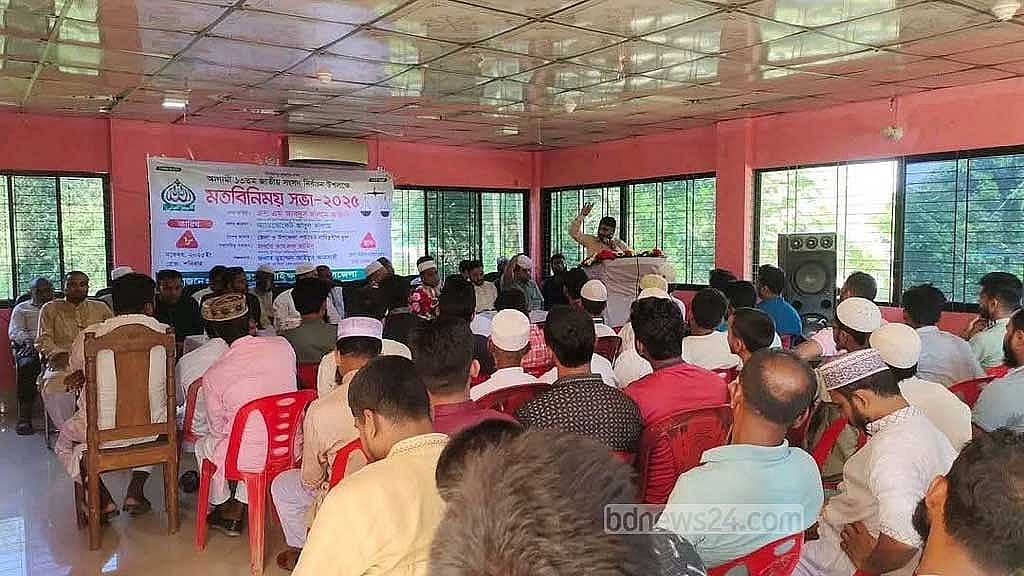
Until recently, two of the most influential regional organisations -- the Parbatya Chattagram Jana Samhati Samiti (JSS) and the United People’s Democratic Front (UPDF) -- had remained publicly non-committal. That silence ended last week, when both confirmed their decision to take part in the vote.
Another powerful regional force, the JSS (MN Larma), has said it will not field candidates directly but will back preferred contenders instead.
CHANGED ELECTORAL EQUATION
Until the regional parties made their intentions clear, the hill constituencies appeared likely to be dominated by the BNP and Jamaat. The announcements by JSS and UPDF have altered that landscape, injecting new uncertainty and raising the prospect of tight, three-way contests.
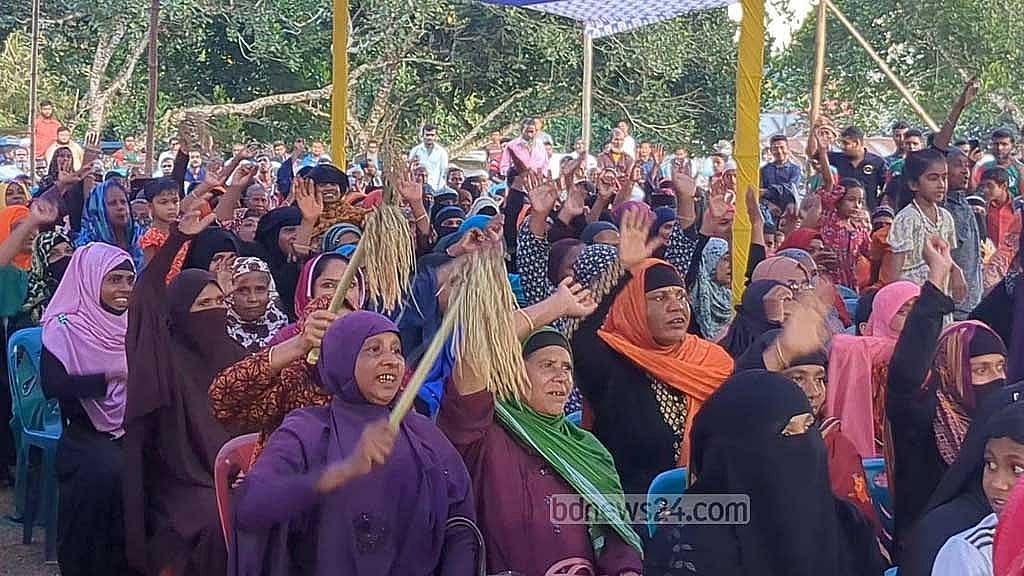
History reinforces that uncertainty. Beyond the Awami League and BNP, JSS has previously won seats in the hills. UPDF, meanwhile, continues to demonstrate its ability to mount strong challenges at the ballot box.
In the coming election, the three hill seats may shift from relatively straightforward two-way fights to complex triangular battles in some areas.
The hill–Bengali vote balance will be central to that outcome, and analysts say the BNP may face the greatest challenge, even as it hopes for a sweeping national victory in an election without the Awami League.
The BNP’s nominees are Dipen Dewan, a central committee assistant secretary for religious affairs, in Rangamati; district BNP Convenor Saching Pru Jerry in Bandarban; and Khagrachhari unit President Wadud Bhuiyan.
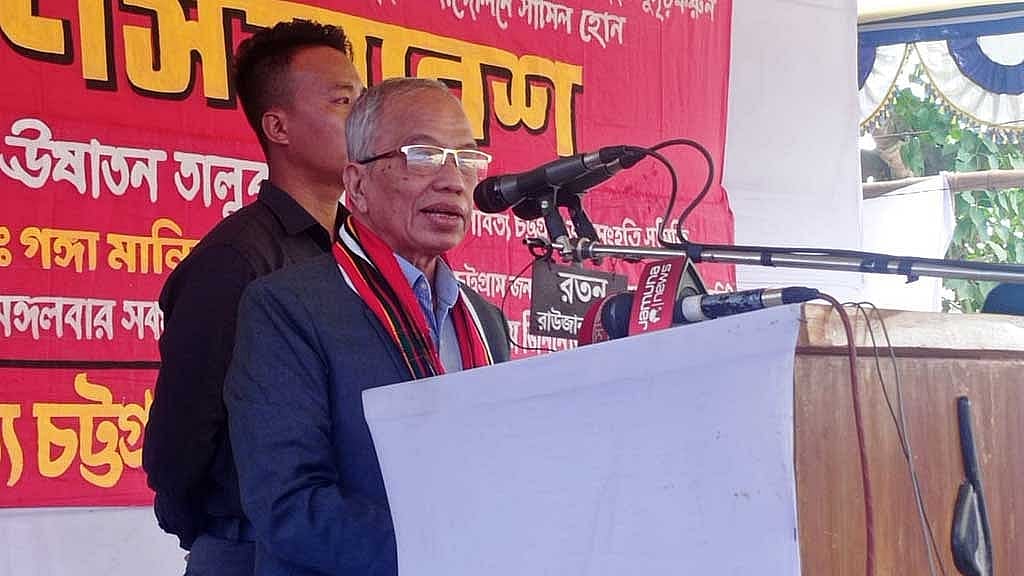
As debate over the election intensified, the JSS led by Santu Larma formally announced its participation at a rally on Dec 2, marking the 28th anniversary of the Chittagong Hill Tracts Peace Accord, held at the Kumar Sumit Roy Gymnasium in Rangamati.
That day, the party’s vice-president and former lawmaker Ushatan Talukder said: “There is still uncertainty in the country about elections -- whether they will happen or not. If elections are held, the JSS will take part.”
On Dec 11, Chief Election Commissioner AMM Nasir Uddin announced the schedule for the parliamentary election and a referendum on implementing the July Charter reforms. According to the timetable, nomination papers can be submitted from Dec 12 to Dec 29, scrutinised between Dec 30 and Jan 4, with withdrawals allowed until Jan 20. Polling is set for Feb 12.
The following day, Dec 12, the UPDF also confirmed it would contest the election.
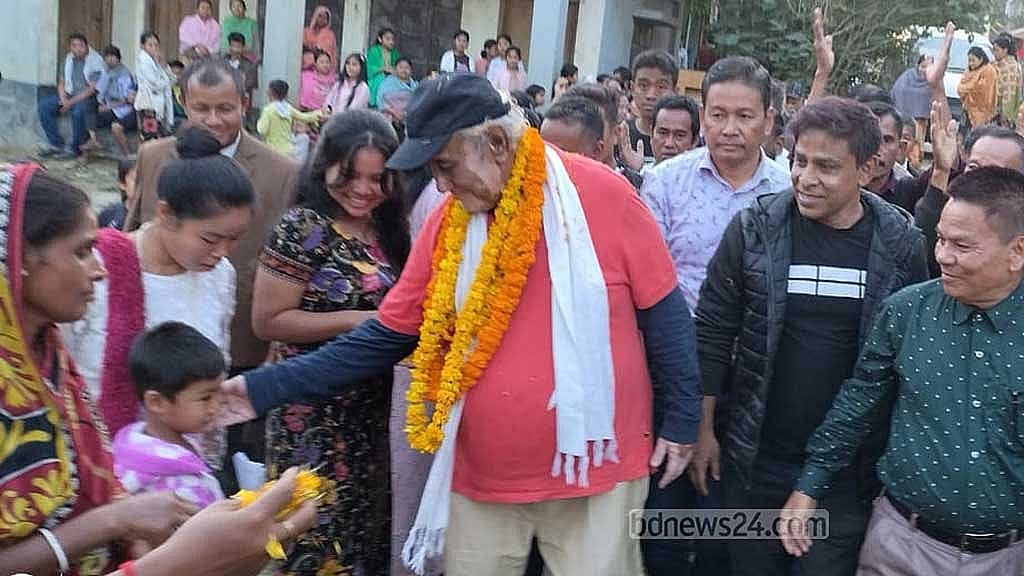
In a statement, party President Praseet Bikash Khisa said: “As a democratic party, the UPDF contested the parliamentary elections held in 2001, 2008, 2014 and 2018, and in the same way will participate in the next election.”
A ‘THREE-PRONGED’ BATTLEFIELD
In Bandarban, the BNP’s candidate Saching has been criss-crossing the constituency since his nomination was finalised, engaging with voters at social and religious events and completing visits to seven Upazilas.
Yet activists identified with rival Mamaching–Jabed Reza faction of the BNP have been conspicuously absent from party campaigning. Several events have demanded that Saching’s nomination be cancelled in favour of district BNP Member Secretary Jabed, who is a former municipal mayor.
The district BNP has been divided since 1991 over two influential figures from the Bohmong Royal Family: Saching and Mamaching. Some party veterans argue that this split cost BNP the seat in June 1996.
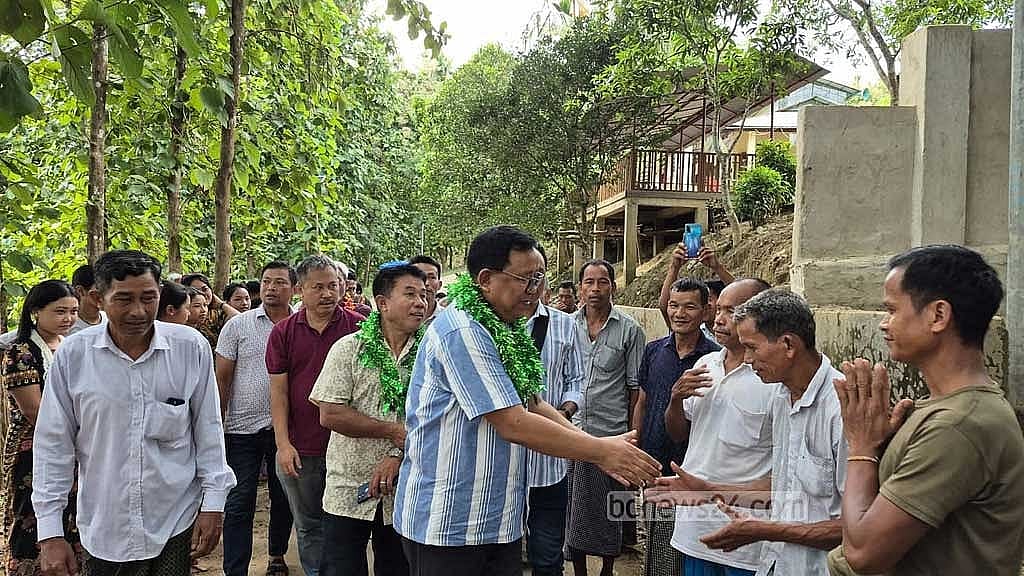
After Saching was nominated, those internal tensions have again surfaced. He is the son of the 15th Bohmong Raja, a title for the chief, while Mamaching is the daughter-in-law of the 13th Bohmong Raja -- related as aunt and nephew.
In February this year, following directives from the BNP’s central leadership, a five-member convening committee was formed to bridge the divide. Saching was made convenor, Jabed the member secretary, with Mamaching included as a member.
Saching was elected an MP in the sixth parliamentary election on Feb 15, 1996, and has since served as chairman of both Bandarban Sadar Upazila and the Bandarban Hill District Council. His late father, the 15th Bohmong Raja Aung Shwe Prue Chowdhury, also won the seat as a BNP candidate in 1988.
In this constituency, the BNP faces pressure from within and competition from former ally Jamaat. If the JSS fields a candidate, the challenge could deepen further. The BNP has a solid vote base here, but the Awami League, which is banned from engaging in political activities, also commands significant support, and where that vote shifts could prove decisive.
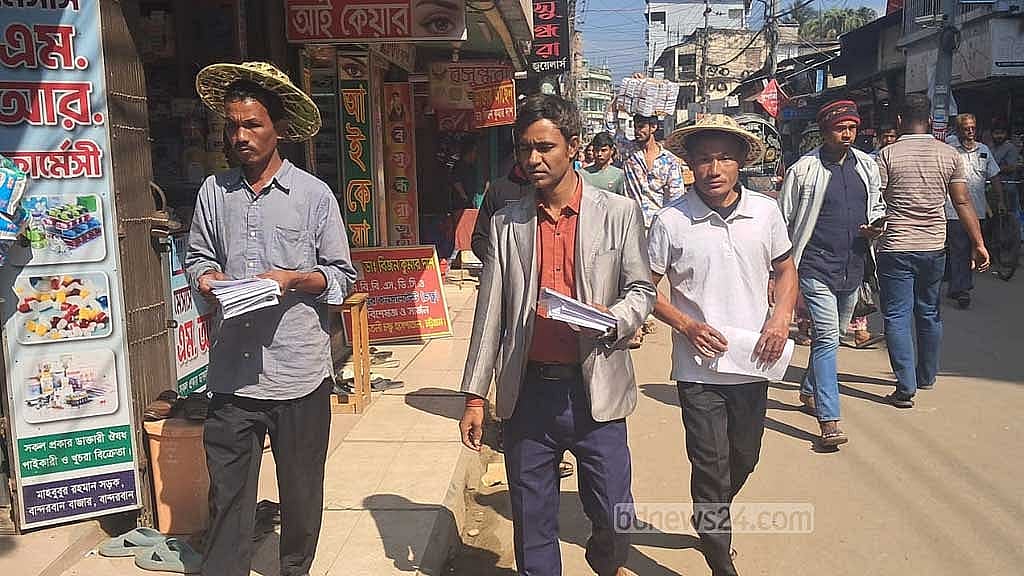
District Jamaat deputy chief and Hill District Council member Abul Kalam has been campaigning actively, particularly in Bandarban town, Lama and Naikhongchhari. The Ganosamhati Andolon has named district General Secretary Ripon Chakraborty as its candidate, and he too is campaigning across Thanchi, Ruma, Naikhongchhari and Bandarban town.
The JSS has yet to announce candidates in any of the three hill seats. In 2008, its Joint General Secretary KS Mong Marma contested Bandarban as an independent and has since remained active in social service initiatives across several Upazilas.
Asked about nominations, a senior JSS leader said: “No party decision has been finalised yet.”
RECALIBRATED CONTEST
Even before his formal nomination, former lawmaker Wadud had been visible across the Khagrachhari hill constituency, meeting voters and building momentum.
Following the announcement of his candidacy and the election schedule, his campaign has intensified. Backed by a large organisational force, he is now going door to door across the district.
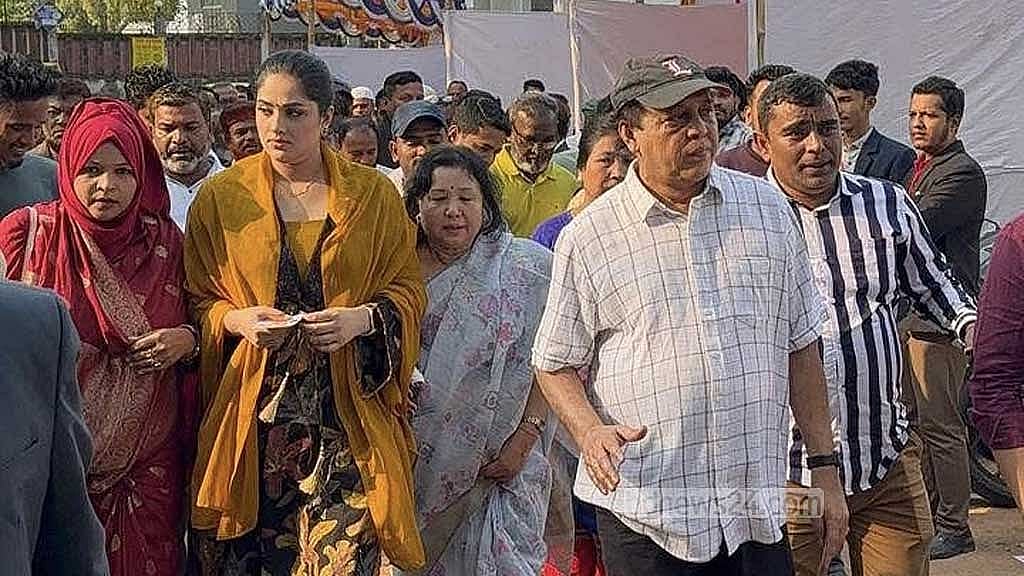
Until the UPDF confirmed its participation in the election, Jamaat’s candidate Yakub Ali was widely seen as Wadud’s primary challenger. Local political analysts say that the equation has now shifted.
They point to UPDF President Praseet’s performance in the 2014 election from this seat, where he finished second. The winner that year was Awami League candidate Kujendra Lal Tripura.
In an election without the Awami League, analysts argue, the entry of Praseet -- or another comparably strong UPDF candidate -- would make the outcome far harder to predict. While the BNP retains a solid vote bank here and has a history of winning competitive races, certainty is elusive.
Khagrachhari district has a population of more than 711,000, with a total of 545,688 voters. Of them, 276,013 are men, and 269,011 are women.
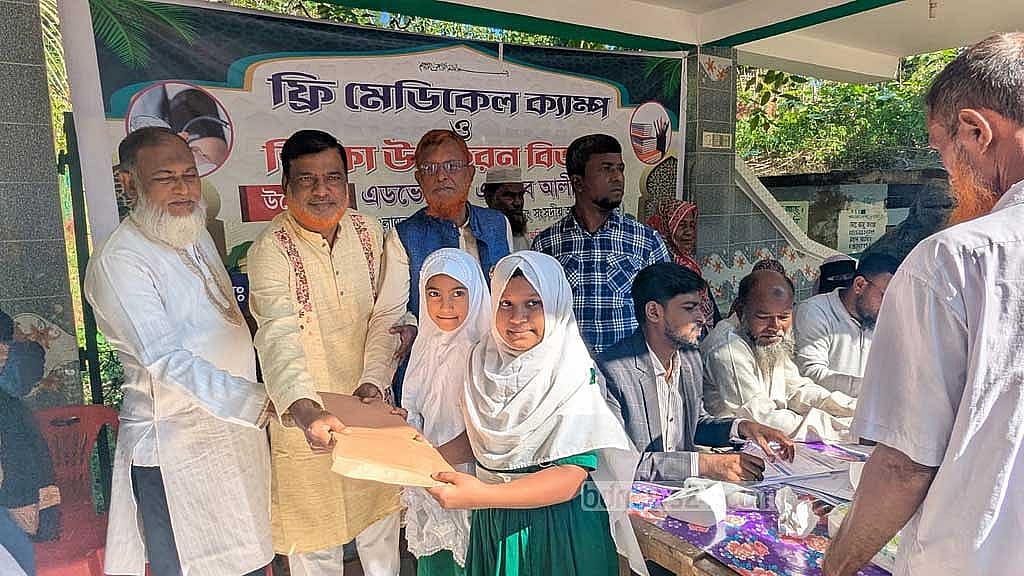
The NCP has nominated Monjila Jhuma, while Islami Andolan Bangladesh has fielded Mohammad Kawsar Azizi. Alongside them, the organisation led by JSS (MN Larma) remains active in the region, though it has reiterated that it does not intend to contest the election directly.
BNP’s Wadud said: “I have been elected before with the people’s votes. People know me. Most of the district’s roads, schools, madrasas, mosques, temples and monasteries were built during my time.
“Both hill and Bengali communities have supported me. Members of the Chakma and Tripura communities have already held separate rallies in my support.”
Jamaat candidate Yakub, meanwhile, is campaigning on pledges of corruption-free governance and communal harmony.
“We want to build a Bangladesh where everyone can practise their faith freely and without fear,” he said. “There should be no anxiety about security. Hill people and Bengalis will live together in harmony -- a country where neither mosques nor temples need guarding.”
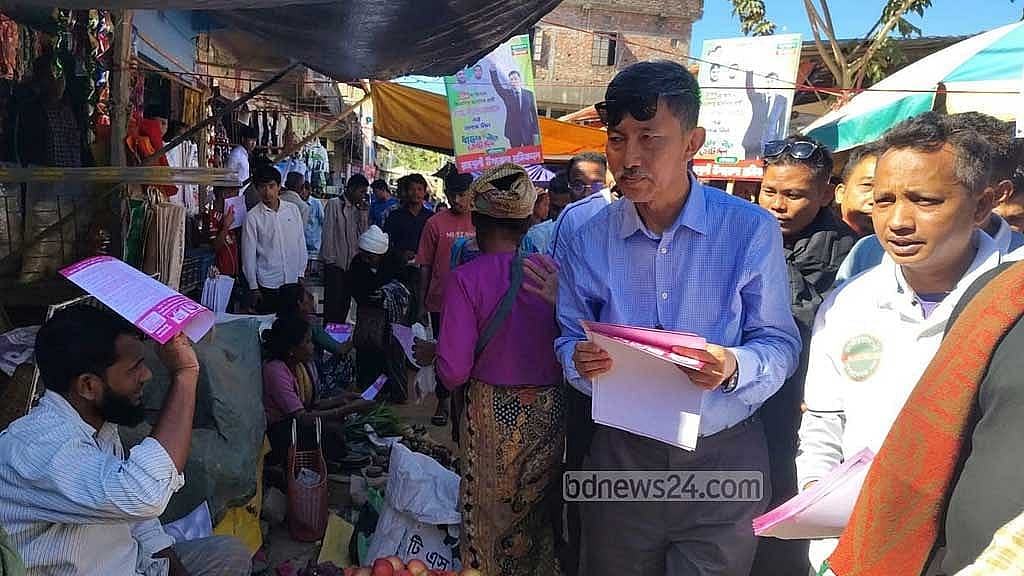
Sudhakar Tripura, organisational secretary of JSS (MN Larma), said: “We are an election-oriented party. But in this election, we will not field a candidate directly. We may support an individual candidate, but not a party.”
‘RETURN OR CHANGE’
In Rangamati, the BNP has nominated Dipen Dewan, while Jamaat has fielded Advocate Mokhter Ahmed. Islami Andolan Bangladesh is contesting with Mohammad Jasim Uddin, the Revolutionary Workers Party with district General Secretary Jui Chakma, and the NCP with Priya Chakma.
Historically, the Awami League has repeatedly won this seat. The BNP’s Maniswapan Dewan secured victory in the 1991 election, while JSS leader Ushatan once won here as an independent candidate.
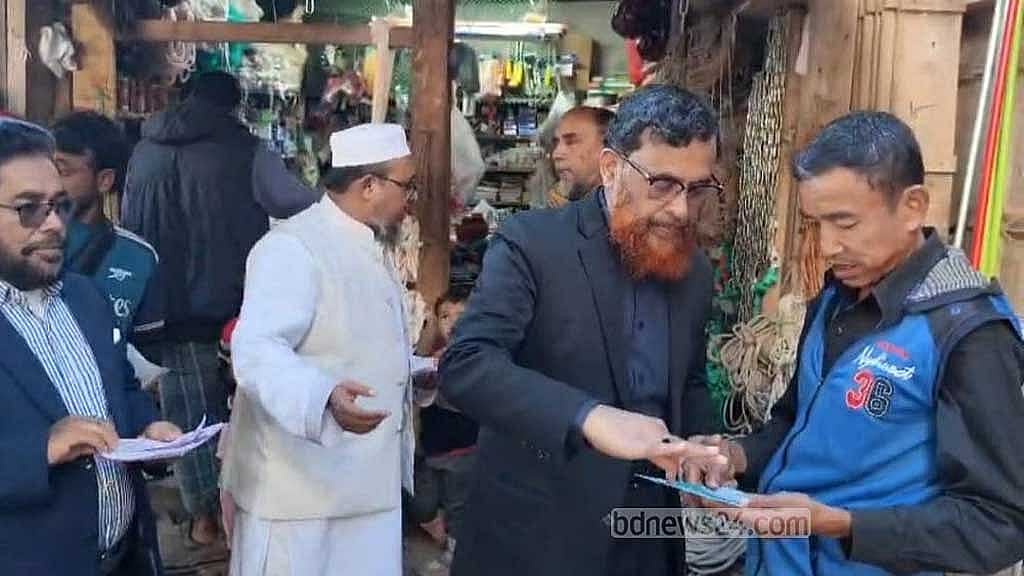
In the changed political landscape, Dipen is entering the electoral fray for the first time as a BNP candidate. Local leaders believe the BNP may find itself directly confronting the JSS’s organisational strength here, alongside the challenge from Jamaat.
If Dipen were to win, it would mark the BNP’s return to the seat for the first time since 1991 -- an opportunity that many within the party see as significant.
The JSS, by contrast, is expected to focus on defending its stronghold. Some observers describe the contest as a struggle between “change and return”.
Both the BNP and Jamaat candidates are campaigning across district and Upazila levels, while other contenders have yet to mount comparable outreach.
Dipen said, “The BNP will work to secure the rights of all communities living in the hills. We will act together so that no group is left behind.”
Jamaat’s Mokhter echoed a similar theme, saying: “Our party will always stand with ordinary people to ensure the fair rights of everyone in the hills.”