Published : 13 Jan 2026, 07:32 AM
Updated : 21 Aug 2026, 03:00 PM


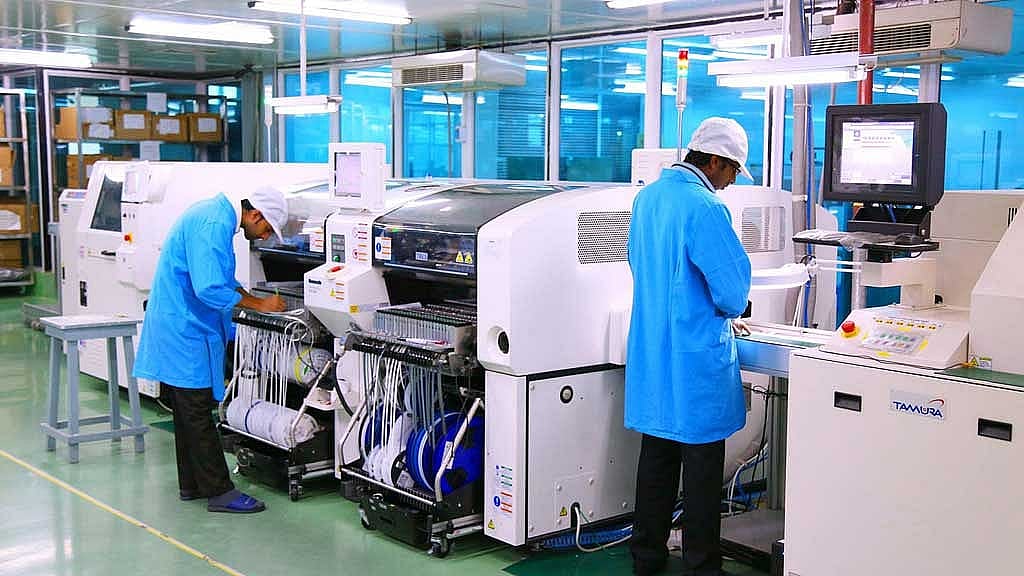
In the bustling halls of an export-oriented garment factory in Ashulia, machines move with almost uncanny precision, slicing and stitching fabric with speed and accuracy no human hand can match.
Where workers once struggled to produce 100 units per hour, artificial intelligence-driven systems now churn out four times that number, transforming productivity overnight.
Yet outside the factory walls, Bangladesh faces a stark reality: while AI accelerates economies globally, the country is dangerously lagging in skilled human resources and structural readiness.
Experts warn that without urgent action, Bangladesh risks losing not only markets but its place in the global supply chain.
Md Abdul Kuddus, the factory manager, reflects on the shift: “Before AI, we learned everything on the job. I started in a sweater factory, then moved to a knitwear facility.
“Whenever new machines arrived, those with some technical understanding had to pick them up themselves. Owners would mostly guide employees, but slowly, everyone learned as we went.”
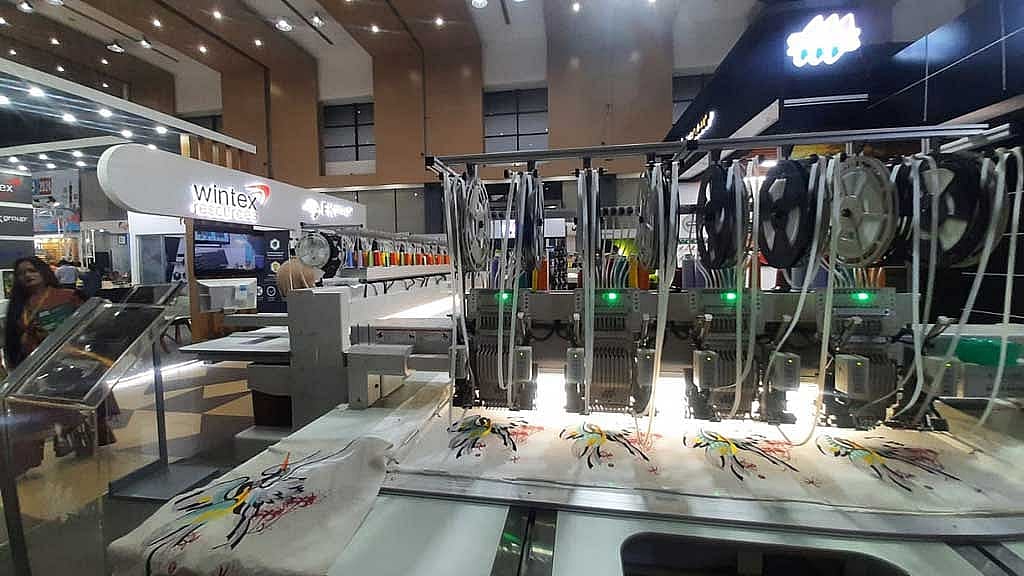
“Before, we needed a dozen hands for what one skilled worker can do now. Now, one switch activates machines that handle hours of work. Errors are caught instantly, waste is minimised, and production flows seamlessly.”
The result benefits both factory owners and workers. “Owners earn more, and workers feel some relief as they complete tasks faster,” he said.
Yet there is a trade-off. Fewer workers are needed, which raises concerns over job losses: “Still, the reality is clear: to remain competitive globally, AI and automation are essential.”
AI’s reach, however, is no longer confined to automation. It analyses trends, predicts market demand, and optimises supply chains, making it the backbone of modern industrial competitiveness. Across the globe, nations that embrace AI grow faster, attract investment, and outpace rivals. Those lagging risk being left behind.
GLOBAL ADOPTION ACCELERATES
AI has become a central driver of global economic change, reshaping productivity, investment, exports, labour markets, and decision-making.
According to a 2024 survey by the US-based McKinsey Global Institute (MGI), 65 percent of companies worldwide regularly use AI. The Stanford AI Index notes that in 2024, 78 percent of companies employed AI in at least one business function, up from 55 percent the previous year.
Countries ahead in AI adoption are investing heavily in skill development, data infrastructure, and policy frameworks.
The Organisation for Economic Co-operation and Development (OECD) has identified four essentials for effective AI use: data, skills, governance, and investment.
India alone trains hundreds of thousands of engineers in AI annually, while Vietnam and Indonesia have restructured national AI policies and education systems to accelerate AI-driven economies.
In contrast, Bangladesh, despite its potential as a South Asian economy, is behind. Analysts attribute this primarily to a shortage of skilled human resources and inadequate structural preparation, rather than the lack of technology itself.
HUMAN CAPITAL BOTTLENECK
A 2024 Elsevier study published in ScienceDirect, titled Practices of artificial intelligence to improve the business in Bangladesh, surveyed 120 companies across 10 sectors. It revealed that 97 percent of firms struggle to find AI-skilled employees.
Similarly, UNESCO’s 2025 AI Readiness Index highlighted gaps in AI competency, research capacity, data infrastructure, cybersecurity, and governance. The consensus: without addressing human resources and structural readiness, AI adoption remains limited.
Shubhra Pal, a PhD candidate at Dalhousie University researching autonomous systems and edge intelligence, warns of looming risks.
Having worked at two Bangladeshi AI startups, he says: “Bangladesh relies heavily on low-cost labour and basic coding freelance work. That market once thrived, but AI now performs these tasks faster and more accurately. Without upskilling freelancers, Bangladesh could lose this market to Vietnam and others.”
The threat extends beyond digital services to manufacturing. Pal points out that China and Vietnam already use AI-driven automated production systems, reducing costs, increasing output, and boosting competitiveness.
“If Bangladesh remains reliant on manual processes, staying competitive in global markets will be extremely difficult. Capabilities will gradually erode.”
Foreign investment is similarly at risk. “Major firms like Google, Microsoft, and Amazon assess talent before investing,” Pal said. “If AI skills are lacking, these investments go elsewhere. Global competition is now AI-savvy countries versus those that are not.”

AGRICULTURAL INNOVATION: DR.CHASHI LEADS THE WAY
Bangladesh’s experience with AI is uneven. In agriculture, successes demonstrate its potential.
Genius Farms’ Dr.Chashi app, launched in 2021, allows farmers to use smartphones to identify crop diseases via AI. Farmers photograph affected plants, and the app identifies pests or diseases, offering recommendations for chemicals and pesticides.
It also forecasts weather up to seven days ahead, guiding sowing, irrigation, and harvesting decisions.
IoT-based soil sensors and spray drones complement the app.
CEO Medina Ali notes, “AI tools like ChatGPT gained mainstream attention globally in 2022–23, but our farmers adopted AI even earlier. Dr. Chashi now has 87,000 registered users, roughly 30 percent of whom are farmers; the rest are students, scientists, and agricultural professionals.”
The impact is tangible: crop yields have risen 12–16 percent, pesticide usage decreased by 25–30 percent, fertiliser by 11 percent, and average time and cost savings reached 33 percent.
“This shows AI helps farmers make timely and accurate decisions, reduce unnecessary costs, and mitigate risk. Agriculture is becoming both tech-driven and profitable,” Ali says.
BANKING AND FINTECH: PROMISE AND CHALLENGES
AI adoption is growing in Bangladesh’s banking sector, particularly for fraud detection, credit risk assessment, customer behaviour analysis, and automated services. Yet skilled human resources remain scarce.
A mid-level manager at a private bank observes, “We have the data, but not the personnel to act on it effectively.”
Many banks have piloted AI projects, but a lack of trained staff delays benefits, raises costs, and slows decision-making.
A 2025 survey by the Bangladesh Institute of Bank Management (BIBM) shows that only 32 percent of banks have formal AI policies; 69 percent consider themselves partially prepared, and 11 percent fully prepared.
Banks agree that AI use is increasingly inevitable, especially for cybersecurity, operational efficiency, and customer protection. Without skilled personnel and proper frameworks, however, objectives are unlikely to be met.
Mobile financial services provider bKash is also using AI. Corporate Communications head Shamsuddin Haider Dalim explains, “AI supports e-KYC, automatic fraud detection, and cyber threat mitigation. Staff skills are continuously enhanced, and awareness of AI is growing. Leveraging this opportunity is essential.”
Analysts stress that these successes underscore one point: technology alone is insufficient. Without trained personnel, proper data management, and supportive policies, AI’s potential is limited.

GOVERNMENT INITIATIVES
Faiz Ahmad Taiyeb, special assistant to the chief advisor on telecommunications and information technology, highlights efforts under the National Digital Transformation Strategy.
AI governance, data management, and human resource development are being tackled in parallel.
“A national AI skills framework is being developed for sectors such as banking, garment manufacturing, telecom, and other production-oriented industries,” he says.
“At the same time, policies for data protection, cybersecurity, and responsible AI usage are being established. These initiatives aim to accelerate economic growth while safeguarding citizens’ rights and trust.”
HIGH STAKES
Analysts warn that Bangladesh’s window to catch up is narrowing. The combination of human resource shortages, structural weaknesses, and slow adoption could diminish export competitiveness, foreign investment, and global market access.
AI adoption in agriculture demonstrates what is possible, while banking shows the limitations of partial adoption. Manufacturing, freelancing, and technology services all face critical inflexion points.
Pal said, “AI is no longer a tool competing with humans. It is the determinant of national competitiveness. Countries with AI-ready infrastructure and talent will dominate the global economy. Bangladesh must urgently invest in people, systems, and governance to avoid falling behind.”