Published : 22 Jun 2026, 04:45 AM
Updated : 08 Sep 2026, 11:24 AM


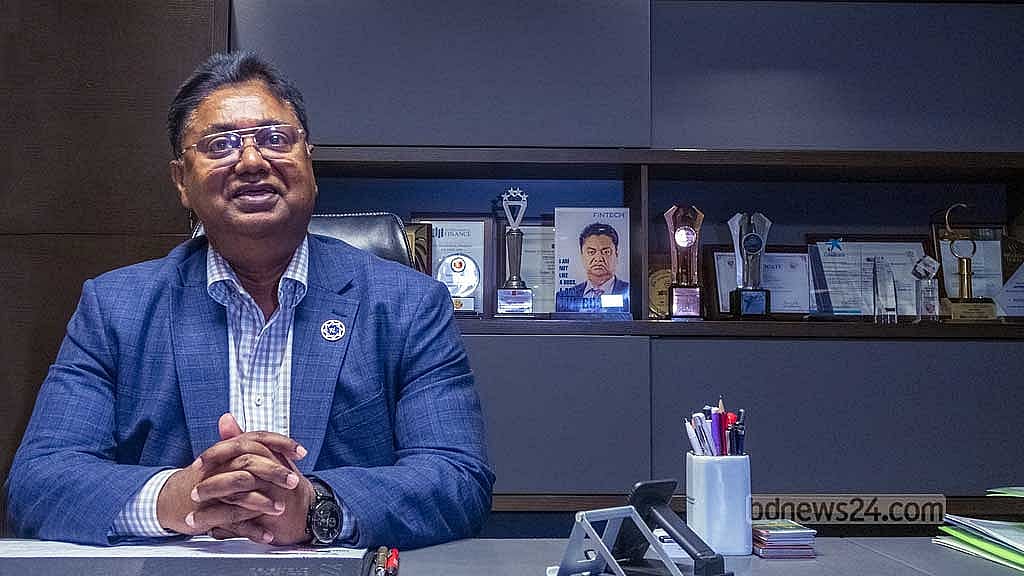
Shahjalal Islami Bank Managing Director Mosleh Uddin Ahmed has said Bangladesh’s banking sector faces deeper challenges now than at any point in recent years, urging stronger regulatory oversight and greater financial awareness to restore confidence.
Speaking on bdnews24.com's discussion programme Chinwag with the Chiefs, Mosleh shared his assessment of the sector’s current challenges and prospects.
Reflecting on changes in the industry over the years, he said the banking sector was more stable when he began his career.
“When we entered the banking sector, we did not see this kind of volatility. The industry was developing and relatively stable,” he said.
“Had we known the situation would reach this point, where bankers are blamed and targeted whenever something goes wrong, I personally would not have chosen this profession.”
Mosleh said many of the sector’s problems can be traced back to the rapid expansion of banks from the early 1990s, when competition intensified.
“The culture of non-performing loans began around that time. The number of banks kept increasing, creating competition similar to what we see in the insurance sector. It is a small country, yet there are 62 commercial banks.”
He argued that a lack of innovation in products and services has contributed to the sector’s difficulties.
“Successive generations of banks have largely competed with one another using the same products and pursuing the same objectives.”
“In my view, the imbalance between maturity and immaturity in the sector has led to many of today's problems.”
Mosleh also linked the current banking crisis to the indiscriminate approval of new banks.
“Banks were opened almost as easily as shops, often without proper consideration of who owned them or where the capital came from,” he said.
“Depositors assumed that because a bank had been licensed by the central bank, their money would be safe. They never imagined a bank could fail to return their deposits. That is what has led to much of the crisis we are seeing today.”
He said regulatory shortcomings had allowed governance failures to take root.
“Many people talk about governance failures, but rules, governance structures and even laws were ignored or broken. A bank deteriorates gradually, and by the time the problems become visible, the damage is often extensive.”
Addressing concerns over confidence in Islamic banks, following recent mergers and complaints from customers of some institutions about difficulties accessing deposits, Mosleh said Shahjalal Islami Bank remains financially sound.
“Our bank does not operate under the influence of any individual. Decisions are taken collectively by the board.”
He said even small lending decisions are not made unilaterally, which is one reason Shahjalal Islami Bank remains in a strong position among Shariah-based banks.
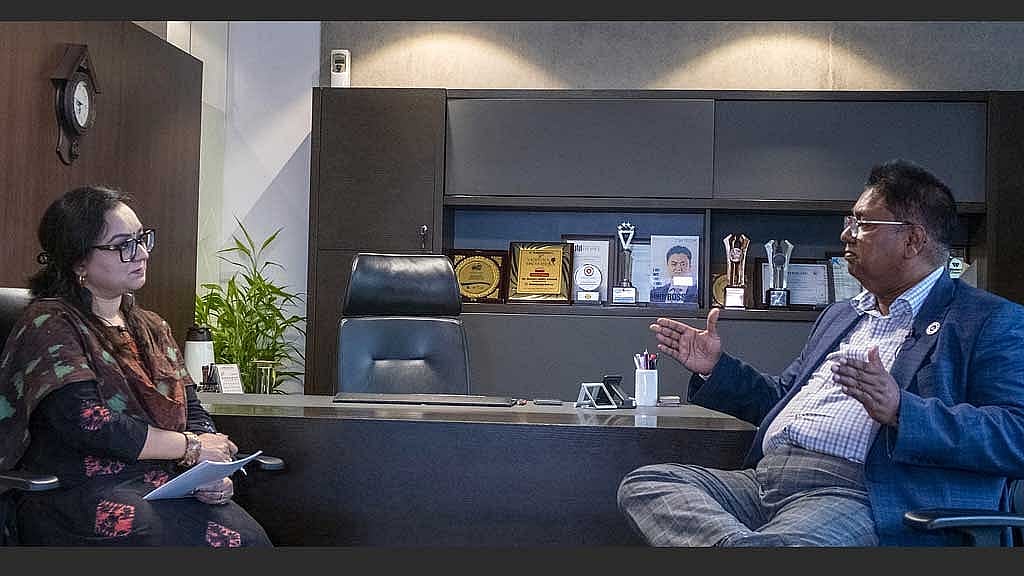
He said the bank is not facing any liquidity pressure and that its investment-to-deposit ratio remains within regulatory limits.
Asked whether public confidence in the banking sector could be restored, Mosleh said customers should differentiate between strong and weak institutions.
“There are good banks as well as bad banks. Depositors need to choose carefully where they place their money. Bangladesh Bank is also working to restore confidence across the sector.”
He said Shahjalal Islami Bank has diversified investments across agriculture, SMEs and other sectors, helping keep its non-performing loan ratio at 4.4 percent.
The bank has also strengthened its recovery and monitoring operations, he added.
On technology, Mosleh said Bangladesh has made significant progress in digital banking.
“The key focus of digital banking today is moving towards cashless transactions.”
Commenting on bank mergers, he argued that combining weak banks alone is unlikely to solve structural problems.
“If one weak bank merges with another weak bank, both remain vulnerable. Mergers do not work that way. They cannot simply be imposed. A successful merger should involve a strong bank and a weak bank. That is how the process is meant to work.”