Published : 21 Jun 2026, 06:38 AM
Updated : 08 Sep 2026, 09:17 AM


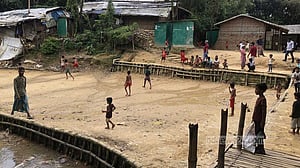
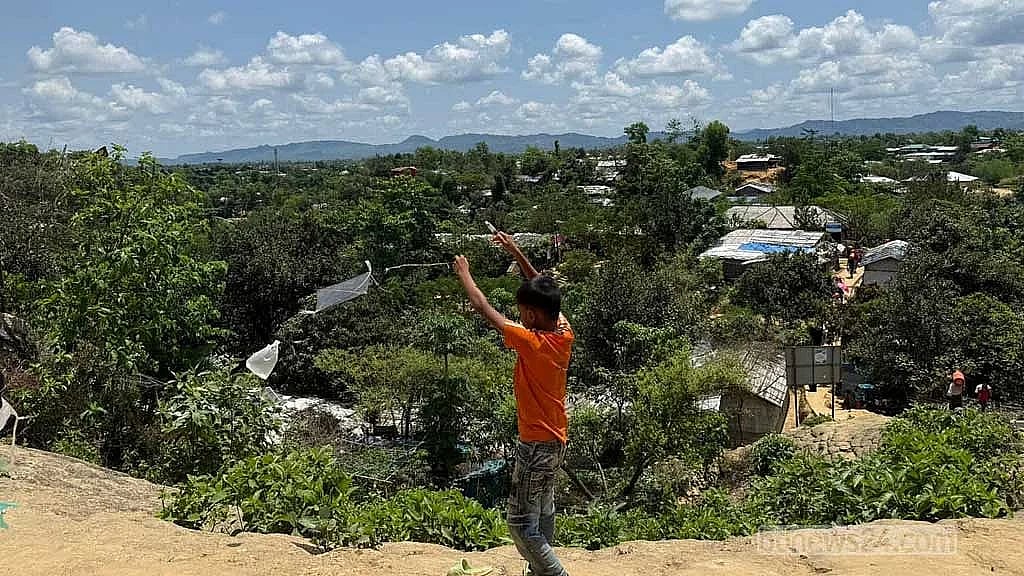
On the morning before World Refugee Day, children were flying small polythene kites at the Kutupalong Rohingya camp in Cox’s Bazar. While the kites soared into the sky, their strings remained tightly bound to the reels held by the children.
Watching them quietly, Rohingya youth leader Mujibur Rahman said: “The lives of millions of Rohingya who have taken shelter in Bangladesh are like these kites. We have dreams, memories and a desire to return home.
“But those dreams remain tied down by the complex knots of war, politics, diplomacy, identity issues and international indifference.”
Mujib was 15 years old when he fled Myanmar's Rakhine State and sought refuge in Bangladesh nine years ago.
At that age, life was very different. He had a home, a village, familiar surroundings and the freedom to move around.
Today, those are only memories. He now lives as a refugee in a camp in Cox's Bazar.
Like him, millions of Rohingya children and young people spend their days amid restrictions, uncertainty and overcrowded conditions.
Another camp resident Abdus Salam said, “My son was 5 years old when he arrived in Bangladesh. Now he is almost 14. He knows the name of his village, but he has no memory of it.”
He paused and looked towards the distant hills in the direction of Myanmar, where his birthplace, land, home and memories remain.
Salam fled to Bangladesh in 2017 alongside more than 700,000 Rohingya after military operations in Rakhine State on Aug 25 that year.
Earlier waves of Rohingya had also sought refuge in Bangladesh.
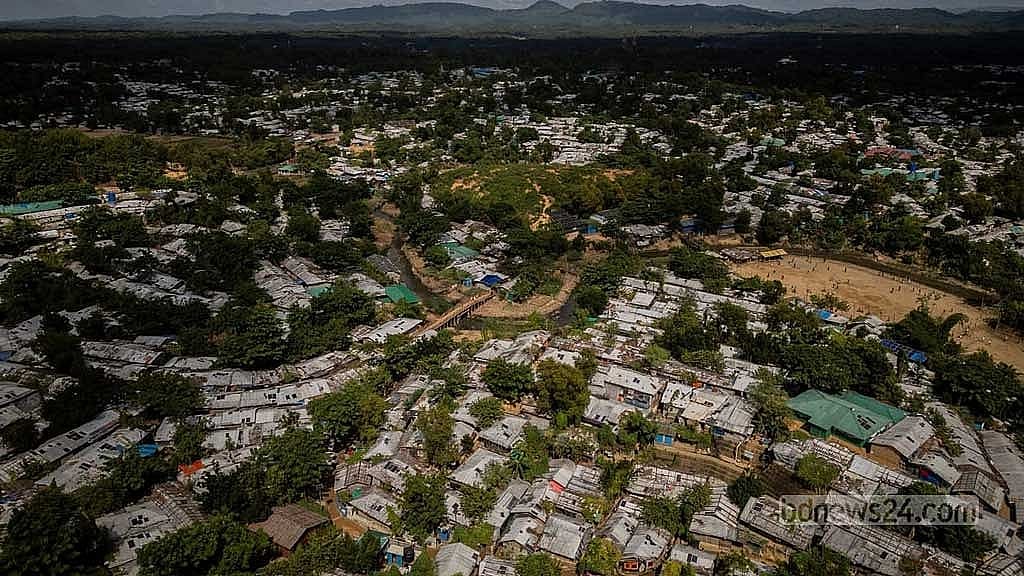
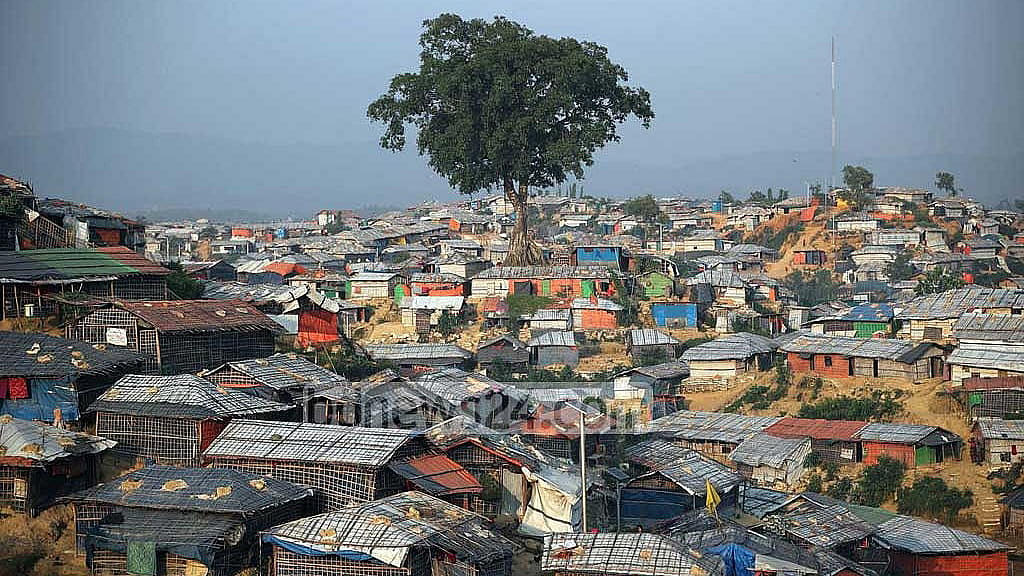
Nearly nine years later, more than 1.5 million Rohingya are living in 33 refugee camps in Cox's Bazar.
As the world marks World Refugee Day on Jun 20, the occasion is more than a symbolic observance for Rohingya refugees.
It serves as a reminder of lost homes, disputed identities and uncertain futures.
Their plight has become one of the world's longest-running refugee crises.
'We Had a Country Too'
Mohammed Zubair, a member of the Arakan Rohingya Society for Peace and Human Rights (ARSPH), spoke to bdnews24.com from the camp.
Expressing grief, frustration and a desire to return home, he said: “Jun 20 is a special day for refugees around the world. On this day, they remember why they became refugees, how they lost their country and who forced them to leave.
“We had a country too. We remember our homeland, homes, land, graveyards, relatives, parents, siblings and children. Many families have been torn apart. Many are no longer alive.”
According to Zubair, the central message of World Refugee Day should be ensuring that no community is forced into displacement again.
“We want to tell the world that we never wanted to become refugees. No one in the world wants to become a refugee.”
Identity Crisis and a Lost Generation
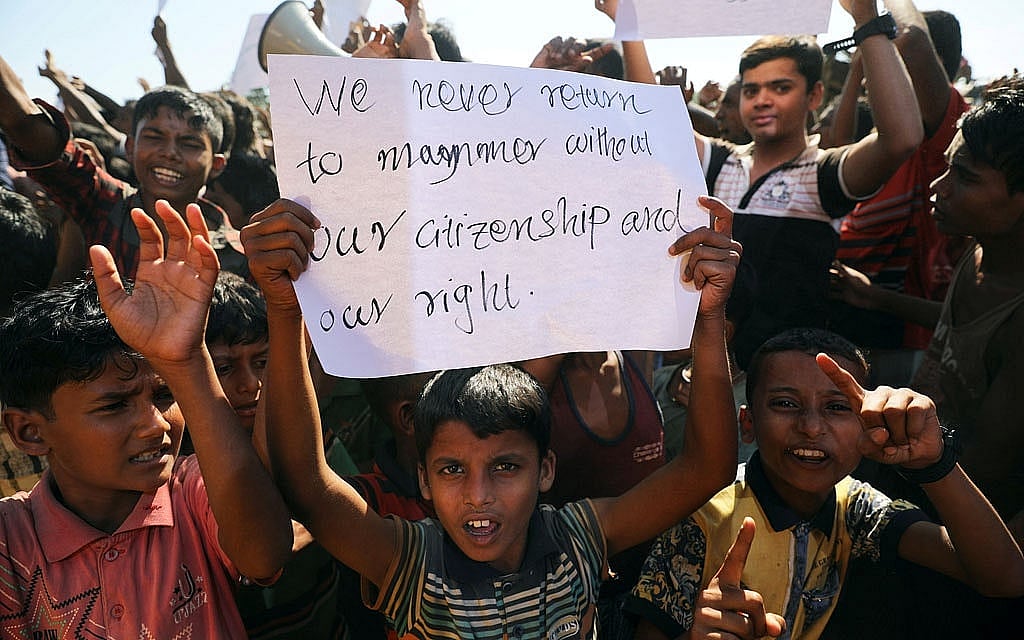
Zubair repeatedly returned to the issue of identity, which he described as being at the centre of the Rohingya crisis.
“We say we are Rohingya. But the Rakhine people call us Bengalis. The Myanmar State does not recognise us as citizens. It denies our identity.”
He added: “How can safe repatriation be possible when a people are not recognised?”
He alleged that Myanmar's military carried out genocide in 2017 and said Rohingya have also failed to find security under the Arakan Army, which has emerged as a powerful force in Rakhine in recent years.
“Even today, the Rakhine and the military are playing their own games. We are being crushed in the middle.”
Reflecting on nearly nine years in the camps, Zubair described camp life as “a prison”.
“In many ways it is worse than prison. People's freedom is limited. Employment opportunities are limited. There are security concerns and uncertainty about the future.”
He added: “We are grateful to Bangladesh for providing us shelter. But we do not want to remain a burden on Bangladesh.”
He said the Rohingya would be willing to return if the international community established a safe zone in Rakhine.
“If the world creates a safe area for us in Rakhine, even if it is a refugee camp, we are ready to go. At least it would be on our own land.”
Meanwhile, an entire generation is growing up in the camps without ever having seen Myanmar.
Children who were 10 years old in 2017 are now young adults. Those who were 15 are now of working age. Yet many still see no clear path to a secure future.
Rising Population Complicates Crisis
According to the Bangladesh government, there are currently around 1.2 million registered Rohingya refugees in the country.
Refugee Relief and Repatriation Commissioner (RRRC) Mizanur Rahman said the situation is worsening steadily.
“In 2017, during the largest influx, around 750,000 people arrived. Now the number of registered Rohingya has crossed 1.2 million. In the past two to two-and-a-half years, around 150,000 more Rohingya have entered Bangladesh,” he said.
He added: “Every year, 25,000 to 30,000 children are born in the camps. So the population is not stable; it is constantly increasing.”
Professor Rahman Nasir Uddin from the Department of Anthropology at Chittagong University believes the actual figure surpasses official statistics.
“In 2017, we spoke of more than 1.1 million Rohingya. Over the past nine years, the population has increased by around 30,000 annually. Even after accounting for deaths, another 200,000 to 250,000 have been added. With a further 150,000 to 200,000 recent arrivals, the total now exceeds 1.5 million,” he said.
He added: “Bangladesh is now the largest host of Rohingya in the world.”
Prof Nasir said: “Bangladesh will not grant them citizenship. Myanmar is not accepting them either. They are growing up in a stateless future.”
He warned: “Long-term frustration may increase risks of social instability, crime, human trafficking and irregular activities.”
Waning Global Attention and Aid Shortfalls
The Rohingya crisis was once at the centre of global attention.
However, conflicts such as the Ukraine war, Gaza war and Iran-Israel tensions have shifted international focus.
Prof Nasir said: “The Rohingya crisis is gradually moving down the list of international priorities.”
Calling for stronger diplomacy, he said Bangladesh has not been able to fully convey that the crisis is not only a national issue but an international responsibility.
Alongside declining attention, financial support for Rohingya refugees is also shrinking.
According to RRRC Mizanur, funding remains one of the biggest challenges.
“The population is increasing every year, but funding is decreasing. As a result, pressure is rising across food, health, education and shelter sectors,” he said.
However, he expressed gratitude to donor countries including the United States, European Union, Australia, Canada, Japan, South Korea and China.
“Without their support, managing such a large crisis would not have been possible,” he said.
Zero Repatriations and No Clear Roadmap
Initial optimism surrounded Rohingya repatriation when Bangladesh and Myanmar signed a repatriation agreement in November 2017, followed by an implementation deal in early 2018.
Prof Nasir said the process initially moved quickly.
“Very swift steps were taken. Agreement in November, taskforce in December, and physical arrangement agreement in January. It then seemed repatriation would begin within two years,” he said.
But that did not happen. The first attempt in 2018 and a second effort in 2019 both failed.
He said Myanmar failed to provide credible assurances on security, citizenship, land and property rights.
“Bangladesh also could not forcibly send anyone back. If Rohingya do not agree, Bangladesh cannot push them back under international humanitarian norms,” he said.
RRRC Mizanur said Bangladesh’s goal has never been to keep the Rohingya permanently.
“Our main objective has never been to keep Rohingya permanently. We want to ensure basic services and send them back to their country with dignity,” he said.
“Nine years are almost over, but not a single person has been sent back so far.”
He cited the ongoing conflict in Rakhine as the main barrier.
“A safe environment is essential for repatriation. That environment does not exist yet,” he said.
According to him, Bangladesh handed over data of around 800,000 Rohingya to Myanmar in 2017–18.
“They verified data for about 250,000 people. But verification and actual repatriation are not the same thing.”
Prof Nasir described the current situation as a “standstill”.
“It is not moving forward, not moving backward. It is a kind of stagnation,” he said.
He added that the process slowed further after the COVID-19 pandemic, followed by Myanmar’s military coup, civil war and political changes in Bangladesh.
“At present, there is no visible roadmap for repatriation,” he said.
Complex Ground Realities in Rakhine State
The political situation in Rakhine is now far more complex than before.
Nasir said: “In 2017, Rakhine was largely under Myanmar’s military control. That reality has changed.”
He questioned whether even a Myanmar government decision could be implemented on the ground.
“Even if Myanmar agrees to repatriation, the question is whether it has the capacity to implement it,” he said.
Large parts of Rakhine are now under the control of the Arakan Army.
“Bangladesh maintains formal relations with Myanmar. But the Arakan Army is not a state. So the actors who control the ground cannot be engaged in formal diplomatic talks.”
What Are the Alternatives?
Repatriation remains the only widely accepted durable solution, but experts are now raising questions about alternatives if it does not happen.
Nasir said: “Bangladesh’s only policy is repatriation. But if it does not happen in five or ten years, what is the alternative plan?”
He suggested third-country resettlement, limited employment opportunities, skills development and new international arrangements.
Countries such as Australia, the United States and some European states could consider humanitarian resettlement, he said.
“At the same time, we need to think about engaging camp residents in some productive work,” he added.
“Keeping 1.5 million people dependent on aid for years is not a long-term solution.”
How Far Away Is Home?
Many of the children who crossed the border to save their lives nine years ago are now young adults.
Some have never seen Rakhine. Others know their villages only through stories told by their parents.
Recalling his life before displacement, Rohingya youth leader Mujibur said he could ride a motorcycle, travel freely and enjoy opportunities that came naturally because it was his own country.
“That was our country, our homeland, our motherland,” he said.
As he compared his childhood in Rakhine with life in the camps, his voice carried a sense of loss.
“The difference is like the sky and the earth,” he said.
According to Mujib, life in Rakhine was peaceful and fulfilling. The natural surroundings, open spaces and fresh air offered a far better environment, even though military operations occasionally created fear and uncertainty.
“For most of the year, we could still live a normal life,” he said.
Camp life, however, is entirely different.
His greatest concern is the future of children growing up in the camps.
In Rakhine, children had vast fields, open spaces and the freedom to grow up naturally. Families had enough land, children played outdoors and grew up close to nature.
The camps offer a starkly different reality.
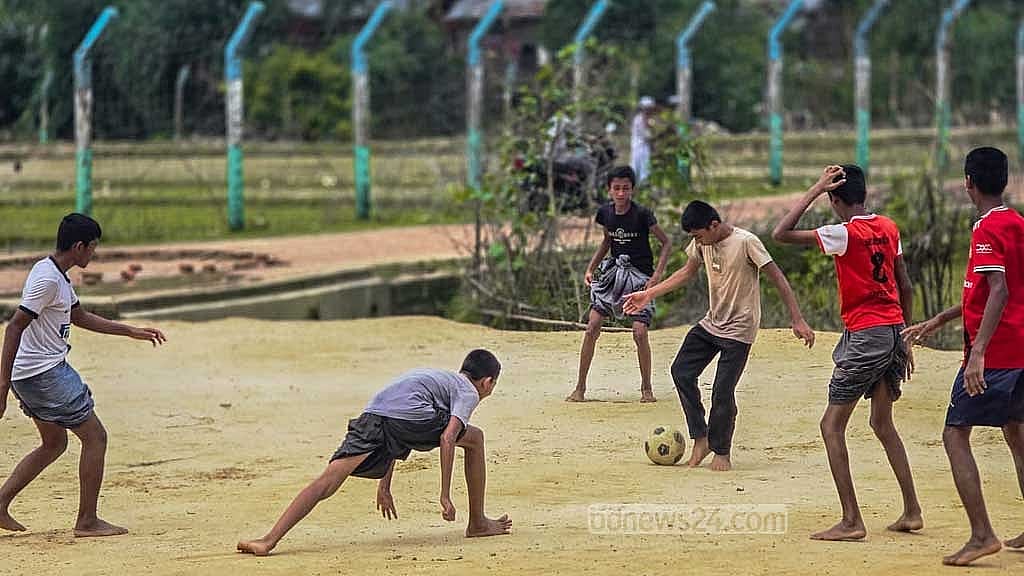
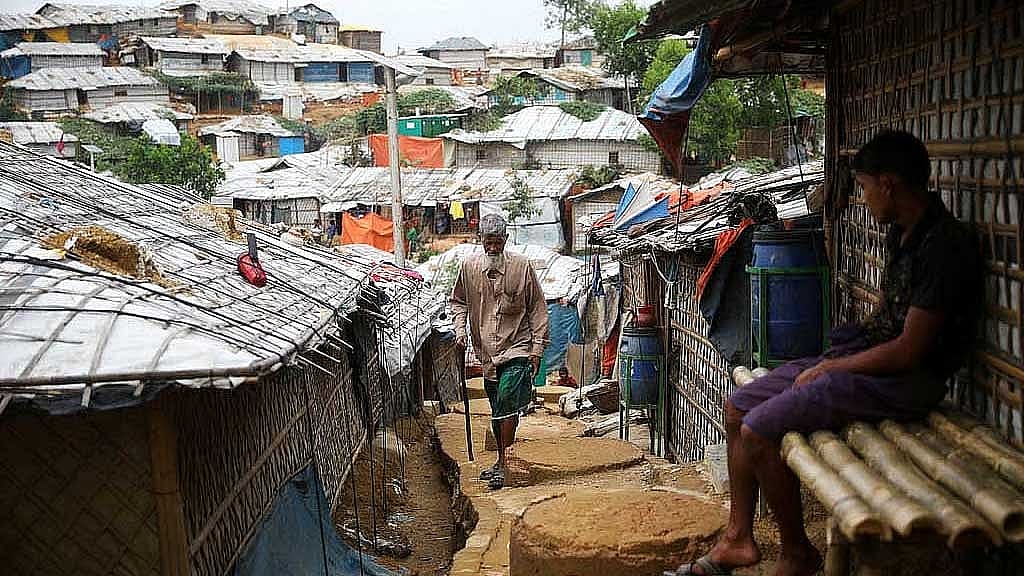
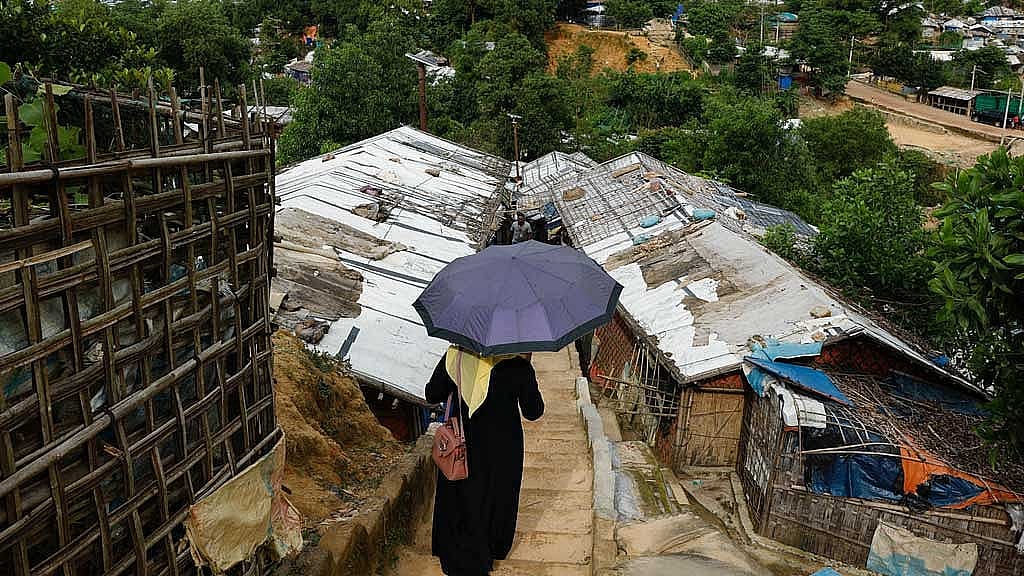
There are no playgrounds and little open space. Shelters stand side by side, leaving barely any room to move.
“Even standing in front of a shelter can create problems. Space is that limited,” Mujib said.
He believes an entire generation is growing up without a clear future.
Asked how he sees the prospects of children and young people in the camps, he answered without hesitation:
“If they remain in the camps and continue living as refugees, there is no future. The future is zero, zero.”
His brief response captures the uncertainty that has defined Rohingya refugee life for nearly a decade.
Yet hope has not disappeared.
Despite years of hardship, restrictions and uncertainty, Mujib continues to hold on to a single dream: returning home.
“Now we have just one goal,” he said.
Asked what that goal was, his answer was simple:
“We want to return to our motherland.”
That remains his dream and life's central ambition.
Like millions of other Rohingya, he continues to wait for a safe, dignified and sustainable return to Myanmar.
Amid the narrow camp lanes, rows of tin-and-tarpaulin shelters and an uncertain future, a small light of hope still burns: that one day they will return to their own country, their own land and their own identity.