Published : 29 Apr 2026, 07:35 AM
Updated : 21 Aug 2026, 03:39 PM


A suspected measles outbreak has swept through the remote hill tracts of Kurukpata Union in Bandarban's Alikadam Upazila, with health officials and local residents pointing to vaccine hesitancy, poor communications and inadequate healthcare access.
Three Mro children have already died in Poamuhuri, a remote settlement near the Bangladesh-Myanmar border, amid a wider nationwide surge in measles infections and deaths among children.
Although samples were not collected from the dead children, health officials say two of them died from other complications, while the third died on the way to hospital after developing measles-like symptoms.
A volunteer working in Mro communities, however, said affected children have been suffering from abdominal pain, diarrhoea, mild fever, vomiting and reddish rashes. Two of the children who died had shown symptoms consistent with measles, the volunteer said.
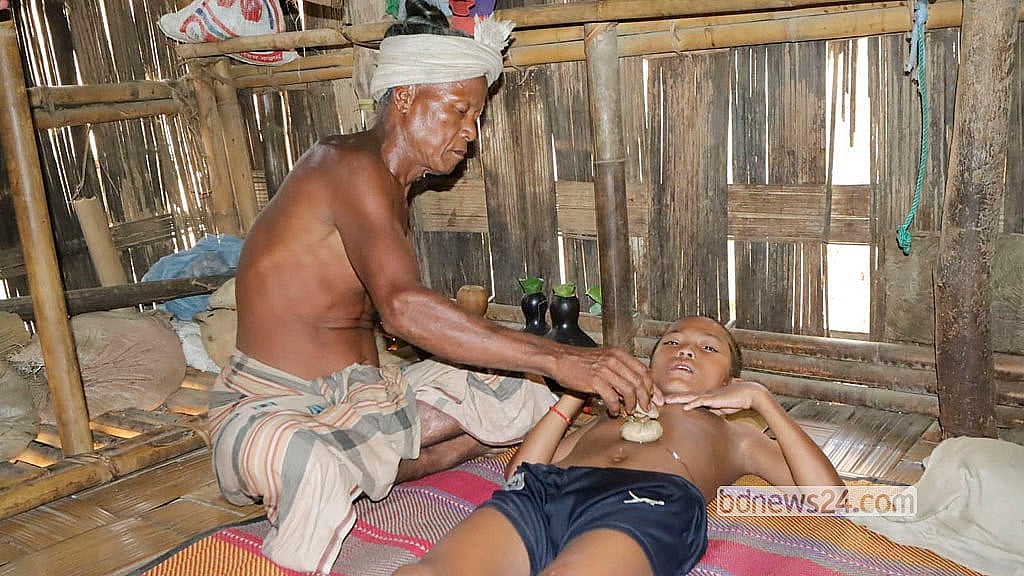
Residents say children in the remote hills are affected by measles-like symptoms almost every year during this season, but the scale of infections is far greater this year.
Health officials believe widespread superstition surrounding vaccination, coupled with the inaccessibility of the area and shortcomings in healthcare outreach, has contributed to the outbreak.
The health authority said on Sunday that a temporary medical camp has been operating at Kurukpata Bazar since Saturday.
So far, 78 suspected measles cases have been identified in the area.
Most patients received primary treatment and returned home, while the others are undergoing treatment at the Alikadam Upazila Health Complex.
‘Symptoms of Measles were Clear’
Residents say two children died with clear measles symptoms in Ringlat Mro Para of Kurukpata Union on Apr 12.
They were 3-month-old Jongrung Mro and 7-year-old Khatong Mro.
A third child, Tummum Mro, a third-grade student and a boarder at the Prennoi Shikkhaloy residential hostel, died on Apr 22 while being taken to the Upazila health complex.
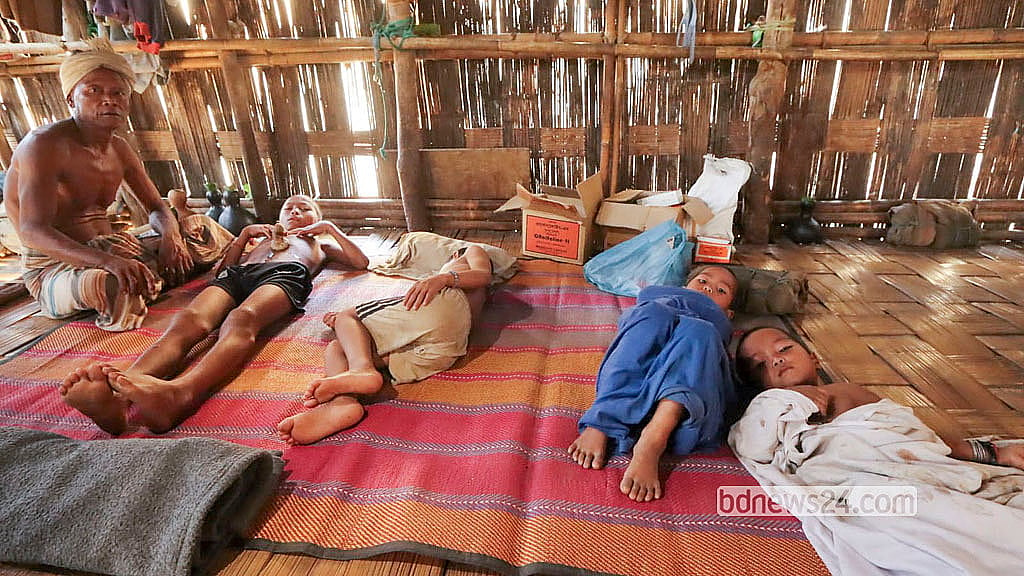
Saknao Mro, a resident who has been assisting affected families since the outbreak began, said the first suspected measles death was reported in early April in Indumukh.
"I did not see that case myself, but two children later died in nearby Ringlat Mro Para. They had clear measles symptoms," he said.
"Some days later, another child died at the hostel. Since then, measles has spread across remote villages. Every year we see cases around this time, but this year's outbreak is far worse," he added.
Uthoinggay Marma, director of the Prennoi Shikkhaloy hostel, said more than 30 students initially developed symptoms after the deaths in Indumukh and Ringlat.
"All of them had stomach pain, diarrhoea, mild fever and reddish rashes. Some also vomited," he said.
He added that a 9-year-old Class III student died while being taken to hospital.
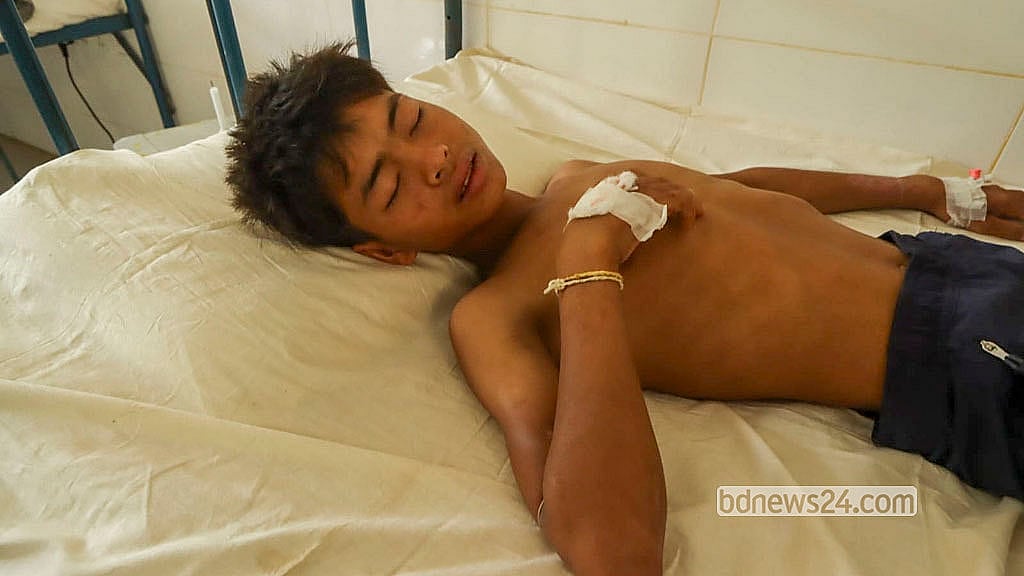
Seven hostel students are still receiving treatment -- four at Alikadam Upazila Health Complex, two at Lama Upazila Health Complex, and one at Cox's Bazar Sadar Hospital.
However, district Civil Surgeon Shahin Hossain Chowdhury said it had not been confirmed that the children died of measles.
"The first two children were only two and three months old. Children of that age do not usually contract measles. They died from pneumonia and other complications," he said.
"As for the third child, he had a fever for several days at home. He died on the way to hospital. Without proper examination, it cannot be confirmed whether measles was the cause."
Vaccine Hesitancy, Poor Access Fuel Recurrent Outbreak
Khamlai Mro, a former leader of the Mro Social Council and a member of the Bandarban District Council, visited Alikadam on Saturday to assess the situation.
He believes low vaccination coverage is the main reason measles repeatedly strikes the remote Kurukpata hills each year.
"To my knowledge, many children in the upper reaches of Kurukpata have never been vaccinated," he said.
"The Mro community has longstanding reservations about vaccines. At the same time, there have been shortcomings in outreach by the health authorities. The remoteness of the area is another major challenge."
He said measles and diarrhoea outbreaks occur in the area almost every year, but many families still decline vaccination.
"That does not mean the authorities should stop trying. Before any vaccination drive, awareness campaigns should be conducted involving local representatives, headmen and karbaris. This is a unique area and requires a special approach."
District Civil Surgeon Shahin Hossain Chowdhury echoed those concerns.
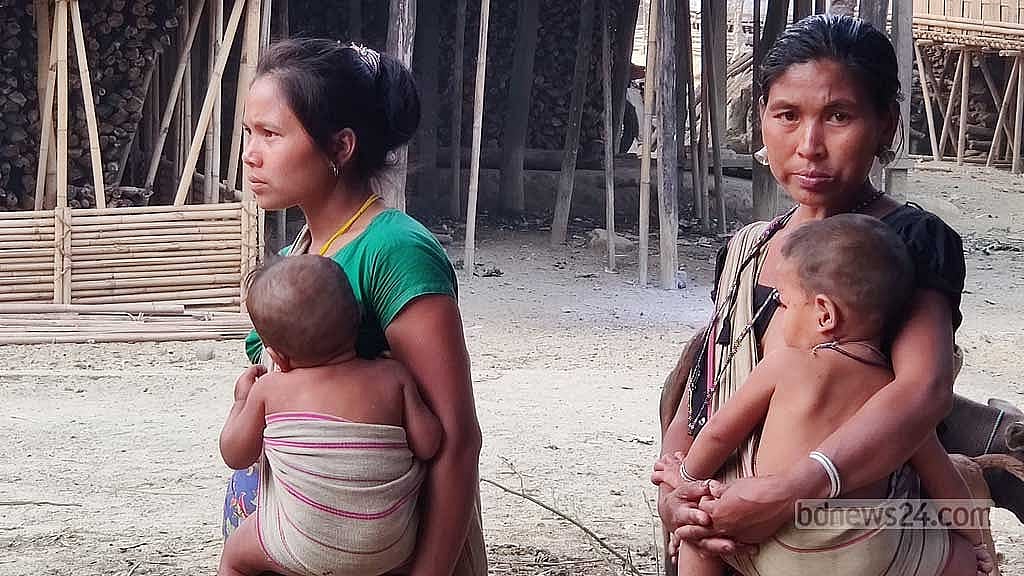
"The outbreak has spread widely this year because people in these remote areas are not sufficiently aware of healthcare," he said.
"Even when our vaccination teams visit, they often do not receive an adequate response. This is also the usual measles season, although the scale is larger this year."
He said representatives from the World Health Organization were also investigating why measles repeatedly affects the same area and community.
The civil surgeon added that vaccine supplies had remained uninterrupted and that treatment and logistical support were continuing with assistance from local representatives, the administration and the Army.
Plans are also under way to raise awareness by engaging union chairmen and traditional hill leaders, he said.
Poverty, Remoteness Compound Crisis
Most patients arriving at the hospital are from remote villages near the Poamuhuri border.
Nearly all are jhum cultivators and live in poverty.
The Mro Youth Organisation has been supporting affected families, helping with hospital admissions, medicines, food and emergency transport for critically ill patients.
Mentab Mro, an activist with the group and a student at Jahangirnagar University, said many parents had never before travelled to the Upazila headquarters.
"Most are poor jhum farmers and arrive with little or no money," he said.
"We are raising funds to help them buy medicines, arrange hospital admission, provide meals and clothing, and transport critically ill patients to other hospitals. Around 20 volunteers are working on this. Some of us have fallen ill ourselves, but public support has been encouraging."
Kurukpata Union Council Chairman Kratpung Mro said the villages where the outbreak began are particularly vulnerable.
"Ringlat Para, where two children died, is a newly established settlement with almost no trees or shade. The heat is intense. Measles has spread from several such villages," he said.
"People in these remote areas are also less aware of healthcare and many children have missed routine vaccinations. All of this has made the outbreak much worse this year."
Temporary Camp Offers Hope
The Directorate General of Health Services (DGHS) has set up a temporary medical camp at a primary school in Kurukpata Bazar.
The facility is staffed by two medical officers, three senior staff nurses and a medical assistant. Divisional health officials visited the camp on Sunday.
It can accommodate around 30 patients, with food and lodging arranged.
Ward-based services are under way, and vaccination has also begun.
Chairman Kratpung said more than 400 children had been vaccinated by Sunday afternoon.
"The area is extremely remote, and news has not yet reached every village," he said.
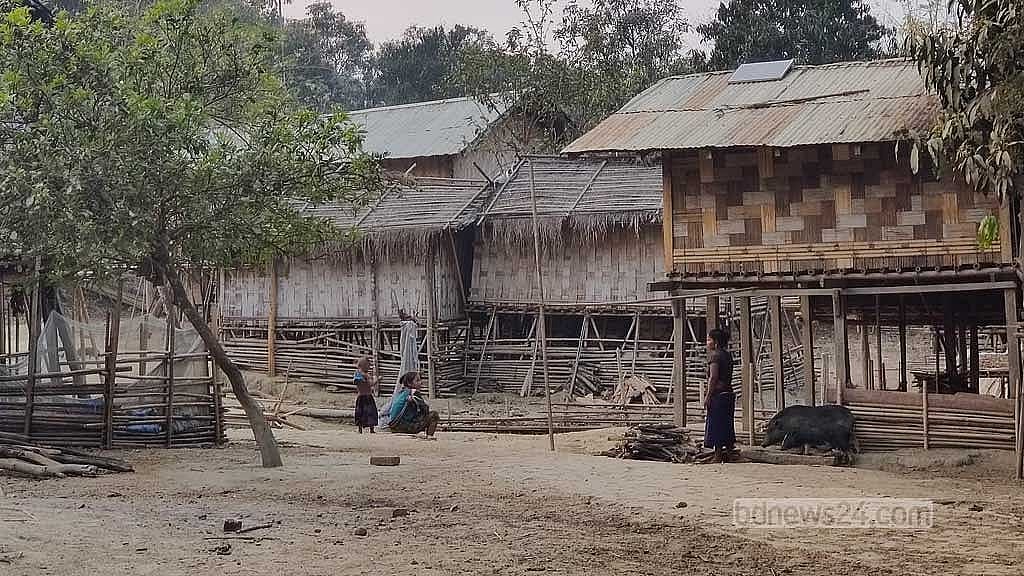
"Children showing symptoms will be admitted here for treatment. The health directorate is working actively, and vaccination is continuing. We hope the situation will soon come under control."
Health officials said patients with measles symptoms would first be treated at the camp, while those in more serious condition would be referred to the Upazila health complex.
Alikadam Upazila administrator (UNO) Md Monjur Alam said most patients were now stable.
"We are considering whether non-government organisations can also be involved," he said.
"In my view, many of these remote villages were not adequately covered by vaccination programmes. Given how isolated they are, vaccination rates are likely to be low," the UNO added.
He said future campaigns must target each village directly.
"It is impossible for families to carry young children on foot for two to three hours. If necessary, vaccinators will need special allocations to reach these settlements."
Authorities are now collecting data on the number of vaccine-eligible children in each village.
At the Kurukpata camp, vaccinations are currently being offered to everyone aged between 9 months and 15 years.