Published : 20 Jan 2026, 07:20 AM
Updated : 21 Aug 2026, 03:02 PM


The streets of Mohakhali buzz with the usual chaos -- tea stalls steaming, rickshaws weaving, workers rushing past. Yet, beneath the ordinary hum, a quiet confusion lingers. Citizens talk about a referendum, but few understand its purpose, the questions it poses, or what a “Yes” or “No” vote will mean for the country’s future.
Shanto Ahmed Ratan, a tea seller, shrugs: “I hear there will be a referendum along with the vote. But I don’t know how it will work, what I’m supposed to vote for, or what happens if I vote Yes or No.”
His uncertainty is widely shared -- not only among low-income workers, but across social classes -- even as the interim government mounts an unusually forceful campaign urging voters to choose one side.
The referendum is being held to seek public approval for implementing reform proposals enshrined in the July National Charter. Yet, weeks before polling day, confusion rather than clarity dominates public understanding.
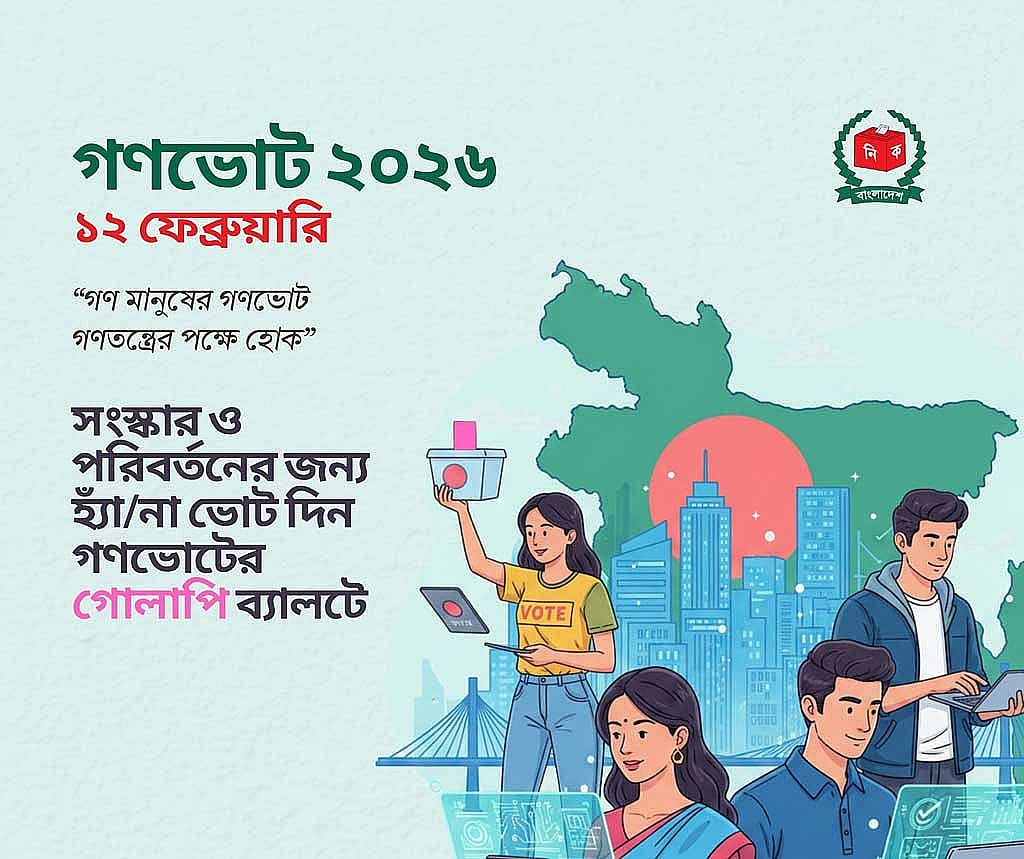
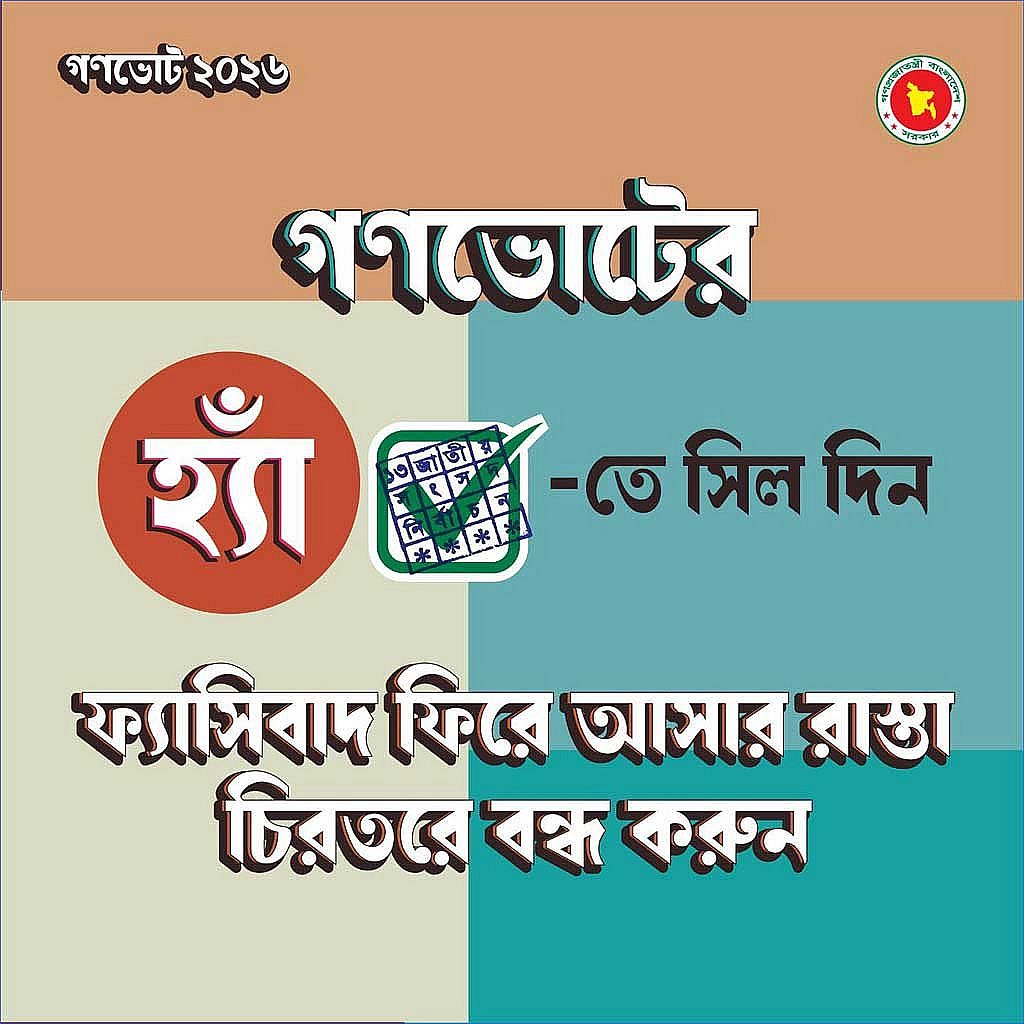
The interim government has left no room for ambiguity about its own preference. Its messaging -- across speeches, videos, posters and social media -- is unequivocal: the nation should vote “Yes”.
That position has triggered a growing debate over whether a government entrusted with overseeing a neutral electoral process should actively campaign for a particular outcome in a referendum.
The debate intensified on Monday evening when Chief Advisor Muhammad Yunus addressed the nation in a video message, explicitly urging voters to support the “Yes” option.
“The key to building a new Bangladesh is now in your hands,” he said. “Stamp 'Yes’ to open the door to a new Bangladesh. Vote ‘Yes’ yourself, encourage everyone you know to do the same, and bring them to the polling centres. Change the country.”
Senior lawyer Shahdeen Malik criticised the campaign, saying the government cannot lawfully advocate for a specific choice in a referendum.
Former secretary AKM Abdul Awal Majumder added that previous governments encouraged participation but did not direct voters toward “Yes” or “No”.
THE FOUR QUESTIONS
Alongside the general election on Feb 12, Bangladesh will hold its fourth referendum since independence. Nearly 130 million voters at home, along with more than a million expatriate voters, are expected to cast their verdict.
The referendum seeks public consent to implement reforms outlined in the Charter. Alongside the parliamentary ballot, voters will receive an additional ballot paper dedicated to the referendum.
The ballot will ask:
“Do you give your consent to the implementation of the July National Charter (Constitutional Reform) Implementation Order, 2025, and the following constitutional reform proposals recorded in the July National Charter?”
Voters will then be presented with four components:
(a) Formation of a caretaker government, Election Commission and other constitutional bodies during election periods, following procedures outlined in the Charter.
(b) Establishment of a bicameral parliament, including a 100-member Upper House formed proportionally based on votes received by parties in the general election, with constitutional amendments requiring approval by a majority of the Upper House.
(c) Mandatory implementation of 30 reform proposals agreed upon by political parties in the Charter, including increased women’s representation in parliament, election of a deputy speaker and key committee chairs from the opposition, limits on the prime minister’s tenure, expanded presidential powers, strengthened fundamental rights, judicial independence and reforms in local government.
(d) Implementation of other reforms described in the Charter, in line with commitments made by political parties.
Voters will express their opinion by marking a single “Yes” or “No” for all four elements combined.
A PUBLIC STRUGGLING TO UNDERSTAND
With just over three weeks remaining before polling day, public understanding of the referendum remains thin.
Tea seller Mozammel Sheikh asked: “I know there will be voting, but what is a referendum?”
Security guard Jaban Ali added: “Will there even be voting? Given the situation in the country, it’s not even clear if voting will happen. I hear about a referendum, but no one has told us what it is or how it works.”
Fellow guard Md Badar Mia was dismissive: “We don’t understand it, and we don’t really care. People come for MP elections -- they recognise faces and symbols.”
The uncertainty is not confined to low-income groups. Employees, students, and private sector workers expressed similar confusion over the questions, the process, and implications of a “Yes” or “No” vote.
WHAT THE GOVERNMENT IS DOING
Despite the confusion, the interim government has intensified its campaign for a “Yes” vote.
Official Facebook pages share graphics urging a “Yes” vote, and videos produced under the Ministry of Cultural Affairs feature July Uprising activists and family members of those killed, explaining why “Yes” is necessary.
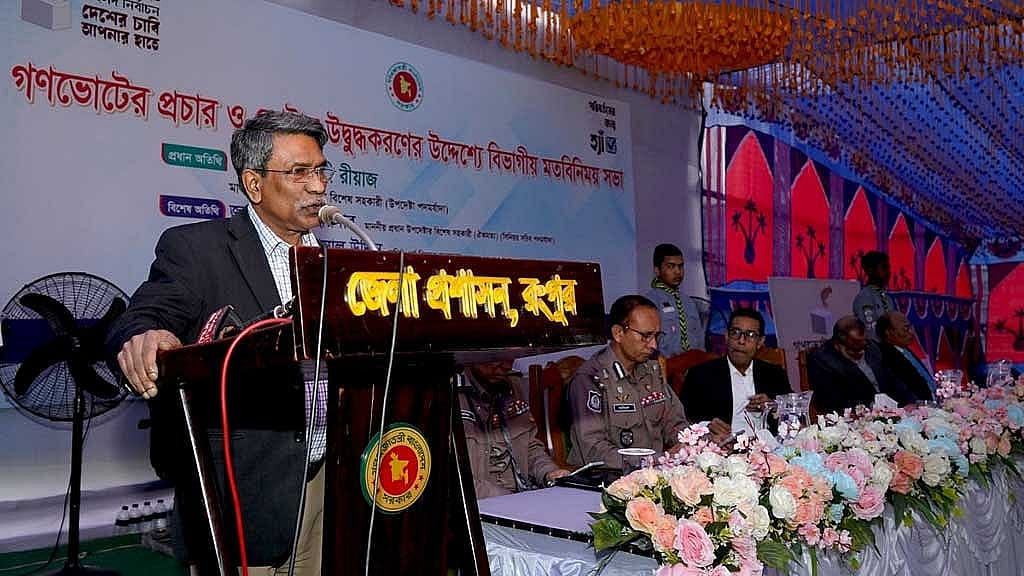
Banks and educational institutions have been directed to promote the referendum, and professionals are expected to serve as presiding officers on polling day. Ali Riaz, special assistant to the chief advisor, has been holding meetings urging officials to campaign for “Yes.”
In his national address, Yunus said: “If you vote ‘Yes’ in the referendum, Bangladesh will be freed from discrimination, exploitation and oppression.
“A ‘Yes’ vote means the government and opposition will work together to form the caretaker government and the Election Commission. The government will not be able to change the Constitution at will; public consent will be required for major changes.
“Deputy speakers and chairs of key parliamentary committees will be elected from the opposition. No individual will be able to remain prime minister for more than 10 years.
“Women’s representation will increase, an Upper House will be formed to balance power, fundamental rights will be better protected, minority languages will receive constitutional recognition alongside Bangla, and power will not be concentrated in the hands of a single prime minister.”
WHAT THE EC IS DOING
The Election Commission has launched an awareness drive. Over 130,000 leaflets and banners are being distributed nationwide, with around 8 million leaflets already printed. Approximately 15,000 large banners will be displayed at public offices and 43,000 smaller banners at polling centres.
QUESTIONS OVER NEUTRALITY
While Jamaat-e-Islami is campaigning for “Yes”, BNP has said it is not responsible for campaigning. BNP Secretary General Mirza Fakhrul Islam Alamgir said: “It is the people’s responsibility to vote -- ‘Yes’ or ‘No’. Whatever the people decide will prevail.”
Election analysts warn government campaigning may compromise neutrality, highlighting that in previous referendums, governments only encouraged participation, not choice.
WHAT THE GOVERNMENT SAYS
Ali Riaz cited European precedents, arguing governments can take a position while accepting the outcome. Law Advisor Asif Nazrul said the campaign reflected commitment to reform, not party politics.
CAN THE GOVERNMENT CAMPAIGN FOR ‘YES’?
The referendum has no candidates or parties, and no separate code of conduct. Election Commissioner Abdur Rahmanel Masud said political parties should ideally refrain from campaigning before Jan 21. Returning officers must remain neutral.
Former secretary Awal Majumder recalled the 1991 referendum, stating officials then only encouraged citizens to vote freely, leaving the decision to them alone.
As Bangladesh heads toward Feb 12, the central question remains: who guides the people’s choice, and how, in a referendum where the referee is openly rooting for one side?