Published : 16 Feb 2026, 06:22 PM
Updated : 21 Aug 2026, 03:10 PM


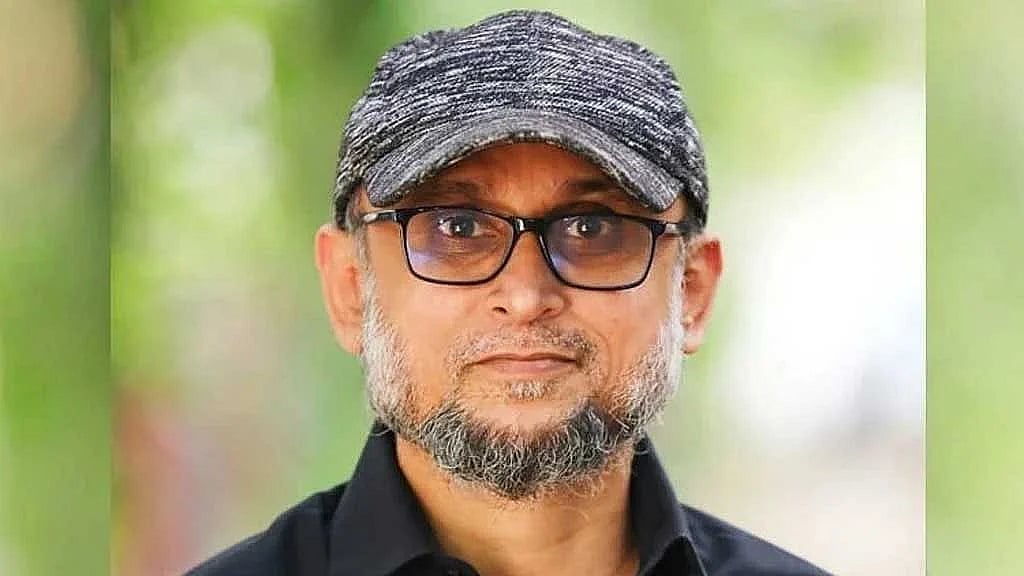
Mostofa Sarwar Farooki, filmmaker and cultural affairs advisor to the interim government, says India-Bangladesh relations have reached their “lowest point” and recovery is possible only through “honest introspection” and mutual respect.
In an exclusive interview with the Indian magazine The Week released online on Feb 15, he provided a detailed look at the current diplomatic and cultural landscape, according to the state-run news agency Bangladesh Sangbad Sangstha (BSS).
Farooki said rebuilding regional trust requires respect for Bangladesh's internal political choices and honest reflection on shared history, it added.
The advisor described the July Uprising as a "cultural event" where long-ignored fault lines finally caused the "political earth to shake”.
He noted that such revolutions offer a rare opportunity for a nation to reflect on its identity and direction, even if the process of addressing issues previously "swept under the carpet" remains a significant challenge.
Speaking about his filmmaking process, Farooki said his creative journey begins with a “trigger point”.
“If I look back and try to understand my creative process of making a film, it starts from a trigger point. It can be a singular image, a key moment in a story, or a certain condition of a character,” he said.
“When I am moved by these, it starts giving me anxiety and sleepless nights. I let this anxiety grow in me. After a period, if it fades and doesn't give me pain anymore, I know I don't need to make a film out of it.
“If the pain or anxiety or emotional distress still stays with me, I know I have to make the film and transfer the pain onto the audience's shoulders. This is my way of self-healing. Which is why I think my films are like my diaries. All my characters seem to have popped straight out of the world I live in, interact with, or come to know about,” BSS quoted him as saying.
On Bangladesh’s historical trajectory, he said: “We have a long history of living under oppression. We lived under double colonialism-of the British and the Zamindars.
“We saw how the dream of an independent state of Bengal was shattered and Bengal was divided, which left us with a singular option of having an independent state of our own, Pakistan. Soon, we realised that 'freedom' was still a far cry. So our history has been a complex one.”
He added that in recent years Bangladeshis were “forced to accept a one-sided narrative” of history.
“After the Uprising, it naturally resulted in some chaos, as has happened in many countries. But at the same time, it is also true that Bangladeshi people took control of things quickly, which is a sign that we are heading towards evolution. We will go through rough rides, but we will get there.”
Farooki emphasised freedom of expression as fundamental, noting arson attacks on media outlets like Prothom Alo and The Daily Star were despicable, and that authorities have arrested many suspects.
“Press freedom is not under any sort of threat under this government,” he said, adding that while some Baul programmes (a mystic folk music tradition of Bengal) were initially suspended, but were held at a later time.
According to BSS, Farooki claimed that Bangladesh has witnessed unprecedented cultural activity over the past year in terms of diversity and inclusivity. He said programmes ranging from shrine-based music to Baul, rock and rap have been organised by the ministry of cultural affairs.
He said for the first time in the country’s history, all ethnic groups joined the central Bengali New Year rally at Shahbagh, creating what he described as the “biggest and most colourful” rally in Bangladesh’s history.
“Earlier, it was reserved only for the dominant Bengali population,” he added.
Highlighting Lalon’s legacy, Farooki said the interim government declared his death anniversary as a culturally important national day at the highest-level alongside those of Rabindranath Tagore and Kazi Nazrul Islam.
Programmes were organised in all districts, with Kushtia and Dhaka as the main centres, he said, adding that the Kushtia Lalon Mela saw around one and a half million visitors.
He also noted that on Victory Day, Dec 16, songs from the Swadhin Bangla Betar Kendra were performed in all 64 districts to mark the Liberation War victory, BSS said.
Addressing criticism over attacks on media and Bauls, Farooki said such incidents did not begin under the interim government. “It is being presented as if all these changes began after the ‘fascist’ fled to India or as a result of the interim government's complicity. That is not true,” he said.
He cited past attacks on publications such as Shongram and Amar Desh, BSS reported, adding that no violence is justified but challenges must be understood in context.
Explaining those challenges, he said the interim administration inherited a “completely broken” system.
He added, “The entire police force went into hiding after the fall of the ‘fascist’ regime. There was virtually no police presence for a couple of weeks. Rebuilding a police force that had been heavily accused of mass killings during the July Uprising was not an easy task.
“I would say it will take several more years to make it fully functional.”
On bilateral ties, Farooki said: “India-Bangladesh relations have reached their lowest point, let us accept that. Let us also identify and accept the reasons that brought us here. Only then will we find a way forward.”
“The starting point of Bangladesh-India relations should be acceptance of the people's will, as expressed through the July Uprising,” he said, noting that India is hosting those who fled Bangladesh.
He added that Bangladeshis seek friendship with neighbours but without “interference”.
On Bangladesh’s withdrawal from the T20 World Cup, which triggered controversy involving Pakistan, Farooki said cricket “lost big time”, BSS said.
Bangladesh sought a venue change for valid reasons, he said, noting that similar requests by India, Pakistan and Australia had previously been granted.
The denial, Farooki argued, damaged trust in fairness.
“There is no doubt that India is the biggest player in the cricket economy. But that position also comes with responsibilities. I hope India plays its part and helps restore confidence in the cricketing world by placing the principle of fairness above everything else,” Farooki added.