Published : 15 Jul 2025, 05:13 AM
Updated : 28 Aug 2026, 01:23 AM


Political parties have been unable to reach a consensus despite long discussions on the representation of women in the parliament and the method of formation of a bicameral legislature.
Ali Riaz, vice-chairman of the National Consensus Commission, shared the development after a meeting with political parties at Dhaka’s Foreign Service Academy on Monday.
He said, “Women’s representation in the parliament and a bicameral legislature have been discussed multiple times before. Although some initial support was received, consensus could not be reached due to methodological disagreements.”
Riaz added that the commission’s initial proposal to enhance women’s representation in parliament suggested increasing the number of reserved seats for women, as outlined in Article 65 of the Constitution, from 50 to 100.
While this proposal was supported by many parties, he highlighted that disagreements arose over the method of nominating candidates.
He said the first proposal called for ensuring representation in women’s seats through direct elections, while another said the current proportional representation system could be expanded to 100 seats.
“Given the disagreement, the commission put forward an alternative proposal, suggesting that parties that field candidates for more than 25 seats will be obliged to ensure that at least one-third of their candidates are women,” Riaz said.
“However, this proposal also failed to achieve consensus.”
He said the second topic of discussion was the formation of a bicameral parliament. The commission recommended forming a lower house of 400 seats and an upper house of 100 seats. Almost two-thirds of the political parties had supported this proposal earlier.
“However, there is still disagreement over the method of forming the upper house,” he said.
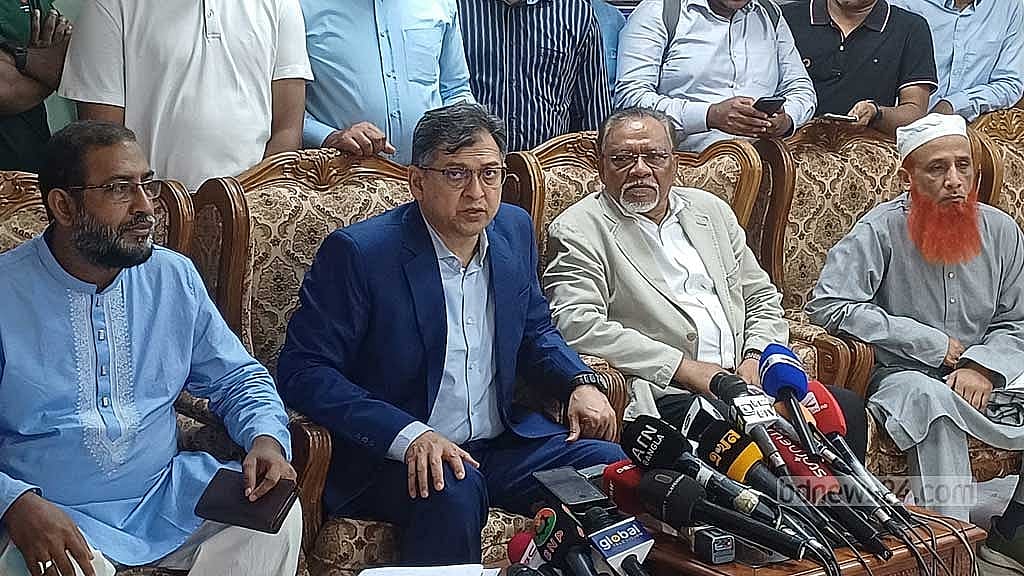
“One side argues that representation in the upper house should be determined based on the number of seats each party holds in the parliament.
“The other side proposes that proportional representation should be implemented according to the percentage of the national vote, which is also in line with the commission. However, here too, a final consensus has not been reached.
“We want the discussions to continue so that we can reach an acceptable process. Discussions on these two issues will continue tomorrow as well,” he said.
Riaz said further discussions on the caretaker government formation process were scheduled for Tuesday, but have been postponed.
“The discussions on women’s representation and the upper house are not over yet,” he said. However, some political parties have already submitted written proposals on the caretaker government, and the commission will meet separately on Wednesday or Thursday to discuss them.
“We still believe a National Charter will be finalised by July so that political parties can reach a consensus.”
He expressed hope, saying: “This dialogue will be successfully concluded with the cooperation of political parties ahead of the elections, and an acceptable national framework will be established.”
BNP AND NCP’S VIEWS
BNP Standing Committee member Salahuddin Ahmed said his party supports “realistic, step-by-step reforms” aimed at enhancing women’s representation and considering the formation of an upper house in parliament.
“We are committed to women’s empowerment and broader representation,” he said. “In line with that, the BNP has proposed increasing the number of reserved seats for women from 50 to 100. However, we believe these seats should be filled through elections under the current constitutional framework.”
Salahuddin cautioned against abrupt structural changes.
“It is not realistic to directly delimit 100 new parliamentary seats for women. Furthermore, there remains ambiguity around the proposed rotation mechanism and the demarcation of new reserved seats.”
A new proposal presented at the meeting suggested forming a 76-member upper house of parliament, with 64 members elected from each of the 64 districts and 12 members elected from the 12 city corporations.
“We are not going into the district council system. If an election is held to choose representatives for the upper house, how will that work?
“City corporations already have elected representatives. If those same people are elected again, they’ll be coming from the same city corporations. The same applies to the 64 districts. How is that even possible?
“What will be the function of power if these 76 people create a separate parliament? I think it is not an appropriate proposal.”
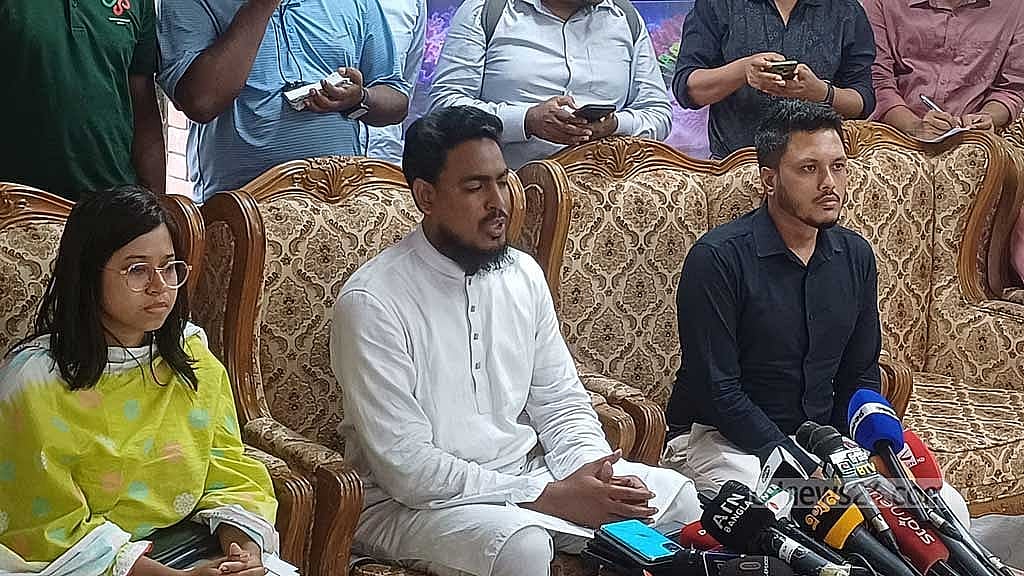
After the 13th day of discussions in the second phase of dialogue with political parties, National Citizen Party (NCP) Member Secretary Akhtar Hossain presented the party’s stance to journalists.
He noted that the NCP has pledged to ensure women's representation in 100 parliamentary seats through direct elections.
“The constitution currently provides for 50 reserved seats for women MPs, but the consensus commission proposed that political parties must field at least 33 percent women among their total candidates,” he said.
“However, the parties did not respond to this proposal.
“Although no procedural decision has been finalised yet, the NCP agrees in principle that 100 women will contest elections and represent the people in parliament.”