Home
+
Published : 26 Nov 2024, 05:23 AM
Attacks were carried out at colleges seven kilometres apart, following announcements made on two consecutive days. Over a hundred students were injured, and widespread vandalism and looting ensued.
Following these ‘organised’ and unhindered attacks and counter-attacks across the capital, the question remains: Why could this bloody clash not have been prevented, even with prior knowledge?
On the first day, the attack was dubbed "Super Sunday", followed by "Mega Monday" the next day.
Hundreds of students arrived at the rival college campus with such 'tagline' programmes, which eventually turned into intense clashes.
The colleges involved were located at opposite ends of the capital. One college was in Demra, at the city's edge, while two others were in Old Dhaka, with a seven-kilometre distance between them.
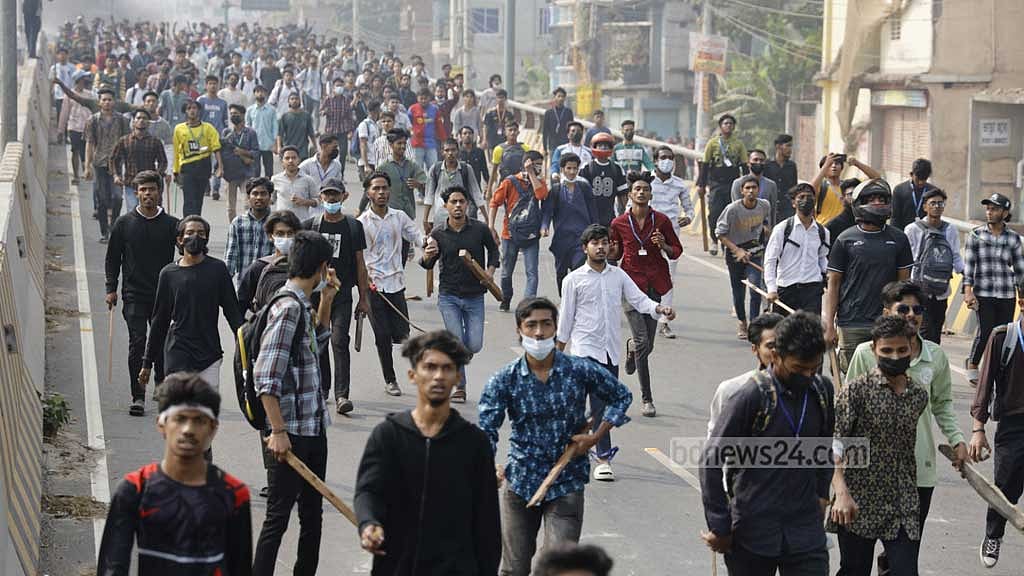
The night before, announcements were made, and groups of students travelled long distances to attack each other's colleges, leaving many injured and spreading panic in the surrounding areas.
The clashes and chases on the streets brought traffic to a halt, causing immense suffering for city dwellers.
Vehicles and educational institution equipment were vandalised, while the images and videos of bloodshed from the fights among teenagers and young adults spread anxiety.
In the wake of the attacks, questions have been raised about why such an incident, despite being known beforehand, could not be prevented.
Several factors, including ineffective police action, have been pointed out by those involved.
On Monday, students and teachers of Dr Mahbubur Rahman Mollah College, which was turned into rubble after the attack, blamed the government's weakness. They claimed they did not receive police assistance in time, despite requesting it.
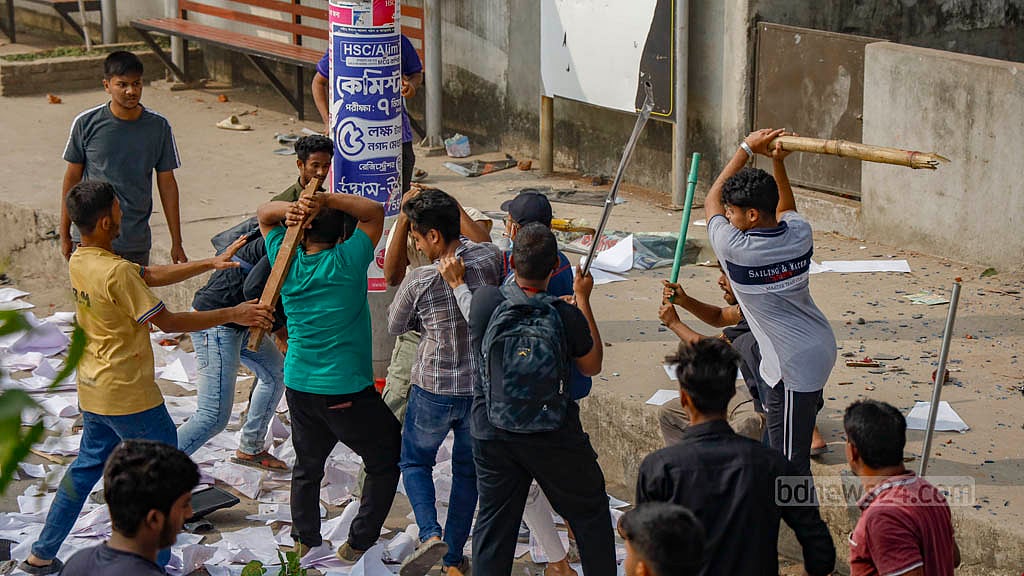
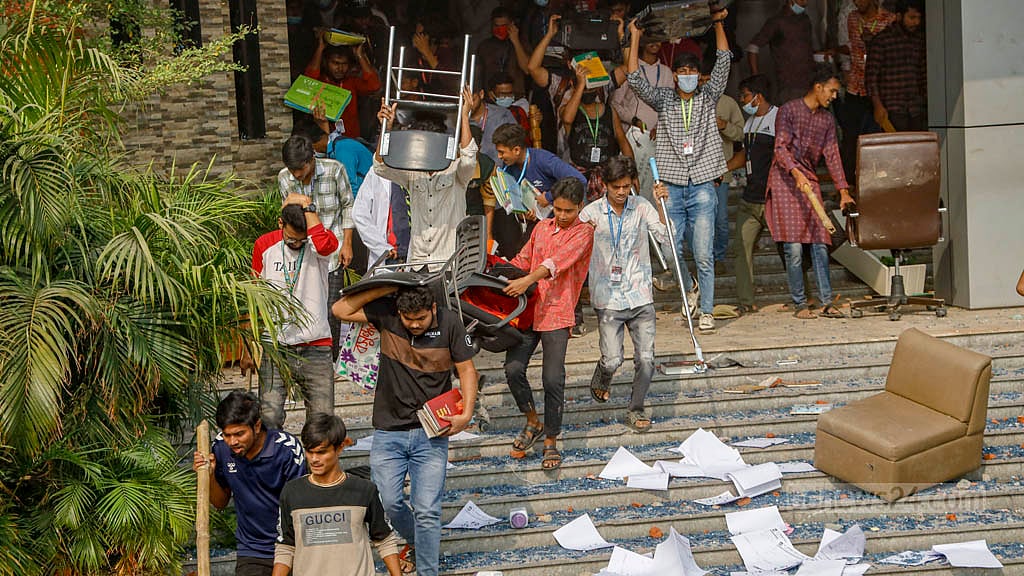
For nearly two hours, the attackers carried out indiscriminate beatings, vandalism, and looting, while police remained absent from the vicinity.
Police, however, admitted their failure, saying that with their limited resources, they were unable to stop the 15,000 to 20,000 attackers.
However, field-level police personnel expressed surprise that the issue was not resolved in a meeting with the college authorities on Sunday night. They believe that if action had been taken then, the incident might have been avoided.
Former inspector general of police Nurul Huda sees 'negligence' in the police's preventive measures, as they were unable to stop the incident despite being fully aware of the situation.
"Public trust diminishes in such situations. There should have been intelligence information available to police. Even if an attack is announced, preventive measures should have been taken, and there was an opportunity to do so. However, it seems that adequate measures were not implemented," said the former police chief.
Apart from the police, there has been criticism of the college authorities for failing to act.
Prof Md Fazlur Rahman, from the Institute of Education and Research at Dhaka University, highlighted the helplessness of educational institutions in such situations.
"In such situations, when students become emotional, there’s little that teachers can do. When faced with any unwanted incident, we inform the police or law-enforcing agencies. Universities or educational institutions do not have the forces to handle such situations,” he told bdnews24.com
Regarding the attack on the college, ICT Advisors Nahid Islam and Labour and Employment Advisor Asif Mahmud Shojib Bhuyain highlighted the need for police to take more proactive measures.
At a regular press conference at Dhaka’s Foreign Service Academy on Monday evening, Nahid said: “If police had confronted the students, the situation could have worsened. We are trying to identify any shortcomings on the part of police.”
Asif expressed a similar sentiment, saying: “Police did not want to engage in a direct clash with the students.”
BACKGROUND OF INCIDENT
The unrest began with the death of Abhijit Howlader, a student from Mollah College, who was receiving treatment at Dhaka National Medical College.
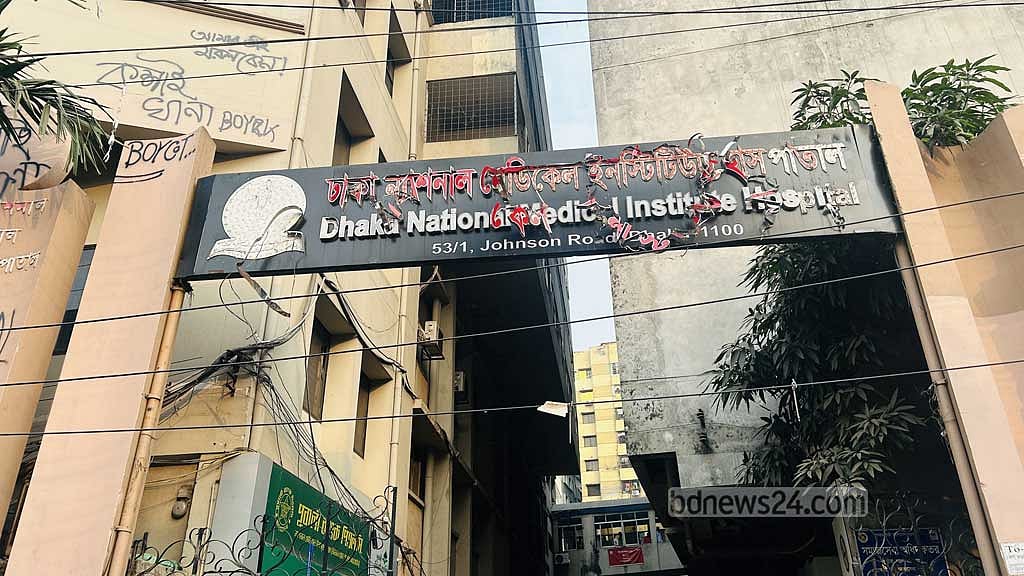
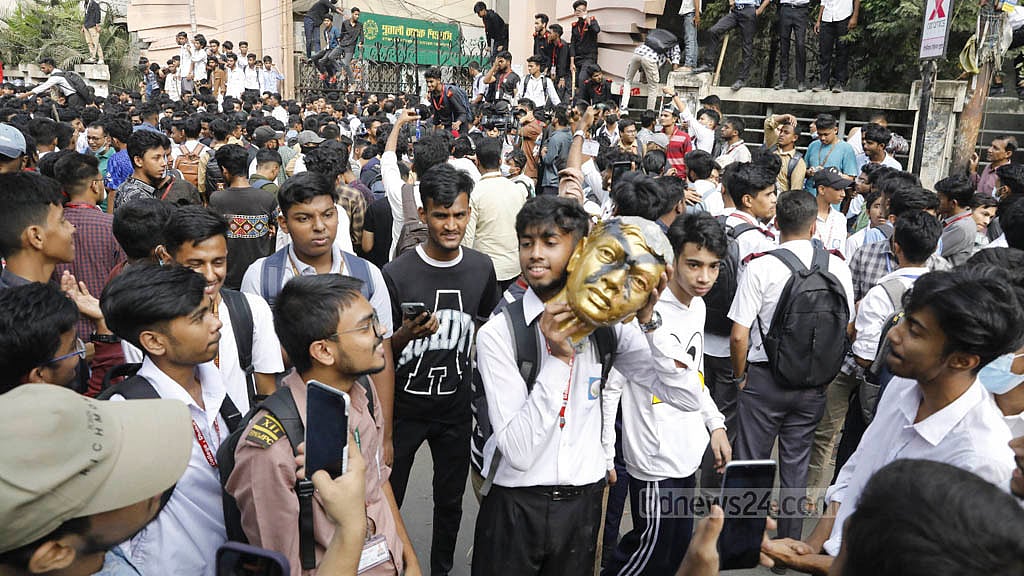
Enraged by the incident, students of the college gathered on Sunday and staged a protest at the hospital under the banner of the "Super Sunday" programme. Reports suggested students from 35 different colleges joined the protest.
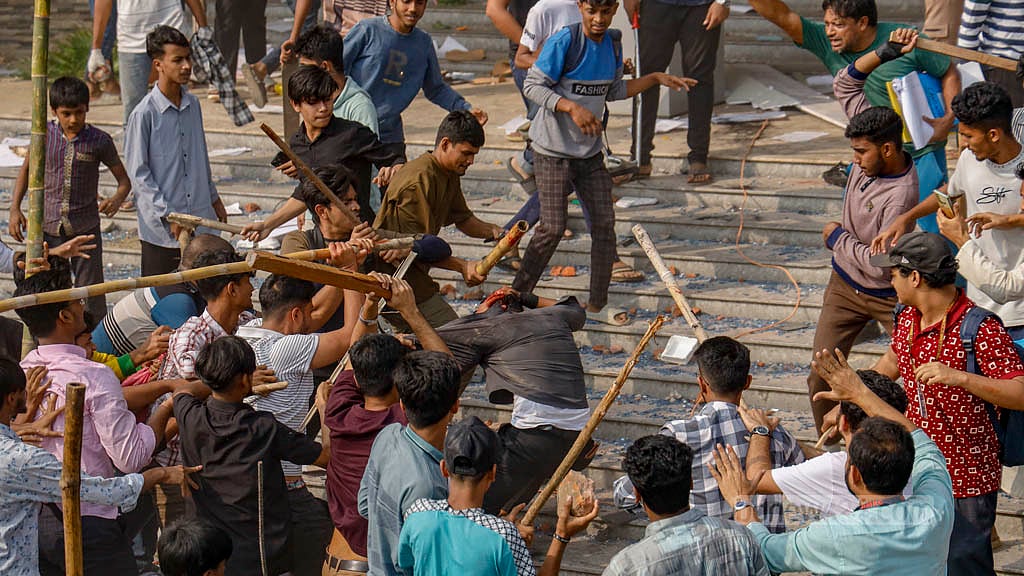
At one stage, a chase-and-counter chase broke out between the protesters and students of nearby Government Shaheed Suhrawardy College and Kabi Nazrul Government College.
During this, students from Mollah College, along with several other institutions, attacked Suhrawardy College, carrying out vandalism and looting.
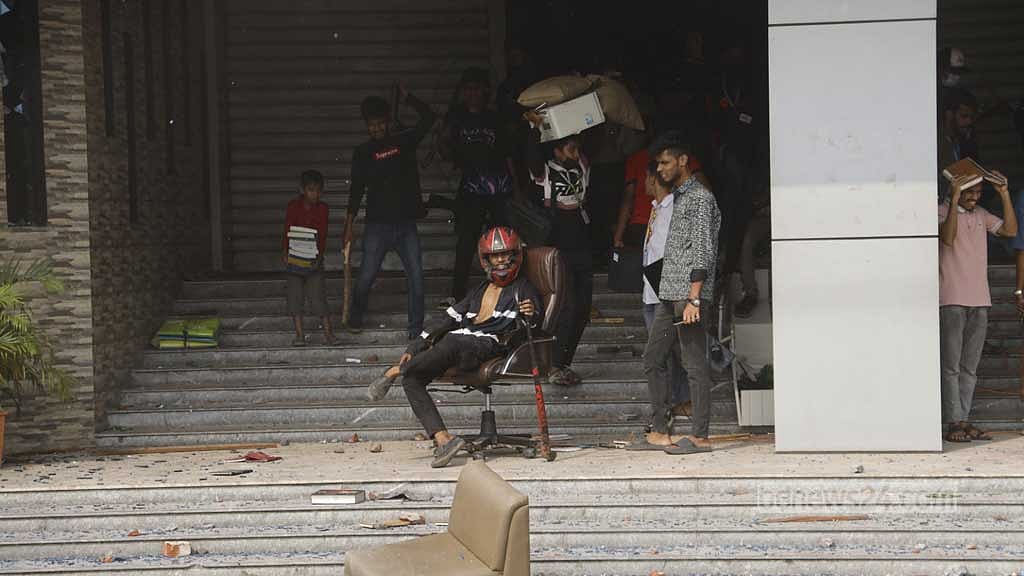
They looted and vandalised computers from the college's office rooms.
Videos circulated on Facebook showed several people carrying laptops and other items in their hands.
Entering the classrooms, the attackers smashed chairs, tables, and fans. They also vandalised a microbus, a private car, and two motorcycles, and were seen celebrating amidst the destruction.
In retaliation, students from Suhrawardy and Kabi Nazrul colleges announced a "Mega Monday" programme on Facebook, calling for an attack on Mollah College in Demra.
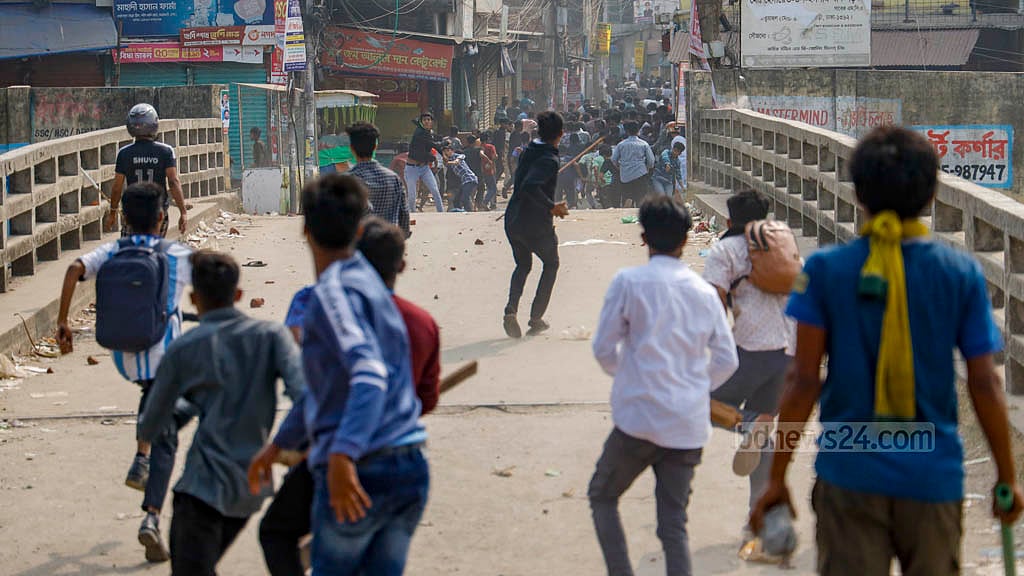
On Monday noon, a group of students, representing a coalition of seven colleges, bypassed police barricades and launched an attack on the college. For nearly two hours, they carried out an attack, causing widespread vandalism and looting.
The clashes resulted in injuries to nearly 100 students, who were admitted to hospitals for treatment.
The Dhaka Metropolitan Police said in a press release that a Facebook group named United College of Bangladesh, or UCB, comprising students from 35 colleges, was involved in the incidents.
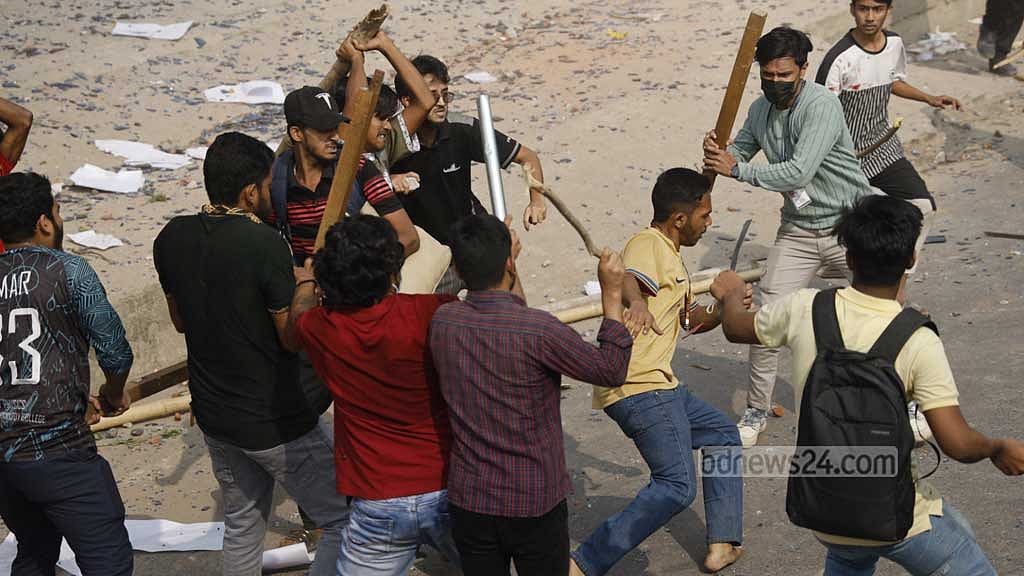
A coalition exists comprising students from seven colleges: Dhaka College, Eden Mohila College, Shaheed Suhrawardy College, Government Titumir College, Begum Badrunnesa College, Mirpur Bangla College, and Government Kabi Nazrul College.
Police claimed, based on analysis of various video footage, that students from multiple institutions affiliated with the coalition participated in the attacks on both consecutive days, alongside those from the directly involved colleges.
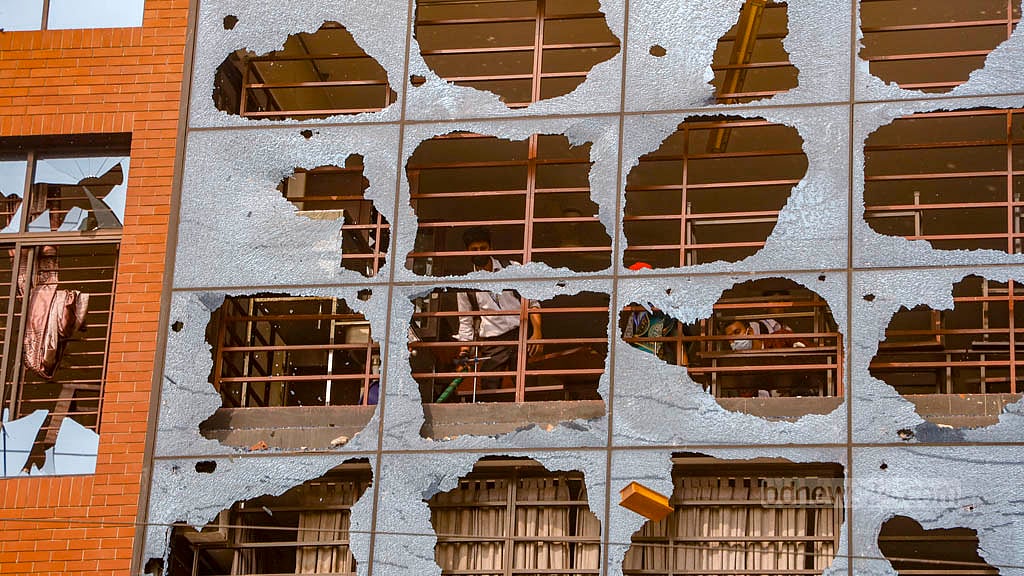
Ashraf Samir, the managing director of Mollah College, said, “They have destroyed everything from the 1st to the 12th floor, and set fire to the building. The damage has exceeded Tk 10 million.”
"Our chairman had reached out to the authorities for support last night, anticipating such an attack. Had the administration intervened, [Monday’s] devastation could have been prevented."
He claimed that over a hundred students from their college were injured in the attack and are currently receiving treatment.
The college’s Principal Obaidullah Noyon said, “We were informed on Sunday night that Suhrawardy College students had threatened to destroy our college and take everything, including bricks. [Monday], they did exactly that. We had informed police, but what difference did it make?”
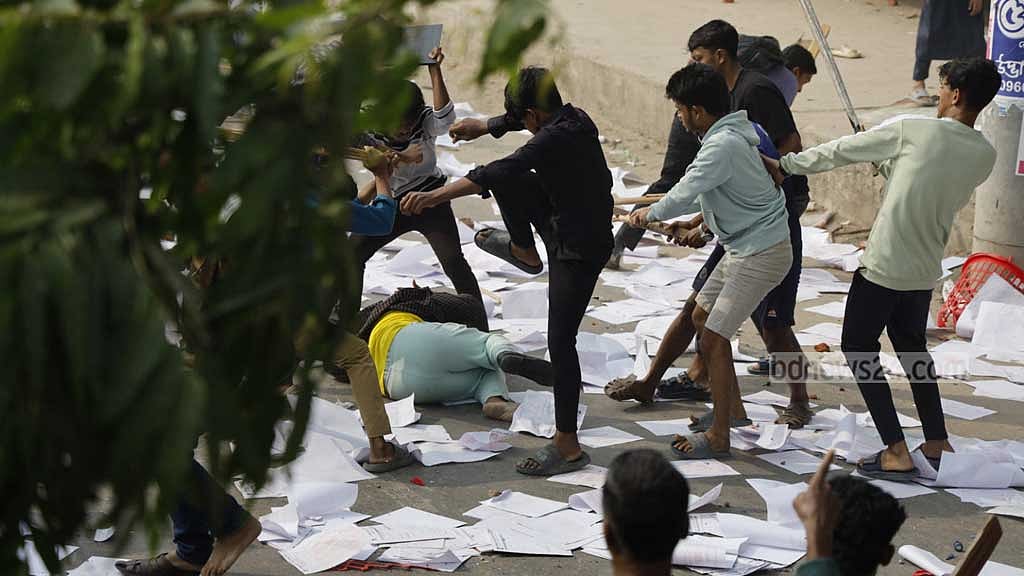
Mollah College student Ratul Sarkar told bdnews24.com, “They had announced it on Facebook — everyone knew about it. When the attack happened, we called the police on 999, but they arrived much later.”
He said the army arrived after 2:30pm, adding: "There were only a few policemen initially. They moved away at the start of the attack. If the army and police had arrived earlier, no damage would have occurred."
The glass on the front side of a 10-storey building, which was standing along the main road, was shattered during the attack. The majority of rooms in the three buildings at the back were also damaged, with benches, ceiling fans, CCTV cameras, chairs, and tables being destroyed. Among the damaged buildings were the principal's office, laboratory, and labs.
On behalf of Mollah College students, Sakib Howlader, a student from Sanarpar Rowshon Ara College, located 4 km away, spoke to bdnews24.com
He said, "We have a Facebook group for college students. It was announced there last night that an attack would take place at the college [on Monday]."
Describing the incident, Sakib said: "In the first wave of the attack, we were outnumbered. They were hundreds, even thousands.
"Police had left. Later, we, along with residents, fought back and they retreated. There were also outsiders [non-students] with them," he added.
However, Suhrawardy College student Tuhin, who gave a single name, told bdnews24.com: "[On Sunday], under the leadership of Mollah College, several colleges from Dhaka united and carried out attacks and vandalism at Kabi Nazrul and Suhrawardy Colleges. As a result, Suhrawardy College suffered significant damage. We had given the authorities time until 10am [on Monday] to resolve the issue, but no action was taken, so we were forced to march.”
He added, "Some of our students chased them and went up to the second floor of Mollah College, where they trapped many of our students and carried out a brutal rampage inside the room."
Md Fahim, another student from Suhrawardy College, said: “We went to demand justice, but the Mollah College students were waiting for us, prepared to attack.”
Mollah College student Abdul Hai Sikder told bdnews24.com, "The attackers were many, and some of them had their ID cards around their necks, while others didn’t. They came and attacked, destroying our college. They left nothing intact and threw everything down from the top of the building."
WHY COULD’NT POLICE PREVENT ATTACK?
DMP’s Wari Division Deputy Commissioner Saleh Uddin said, “Several thousands of students from some colleges, armed with sticks, were advancing toward Mollah College as per their pre-declared programme. With limited forces, we attempted to intercept them at Jatrabari but failed. They overpowered us and proceeded to the college.”
He added, “According to our intelligence, it appears that a vested group mingled with the students to execute this destruction and attack on the college for their own motives.”
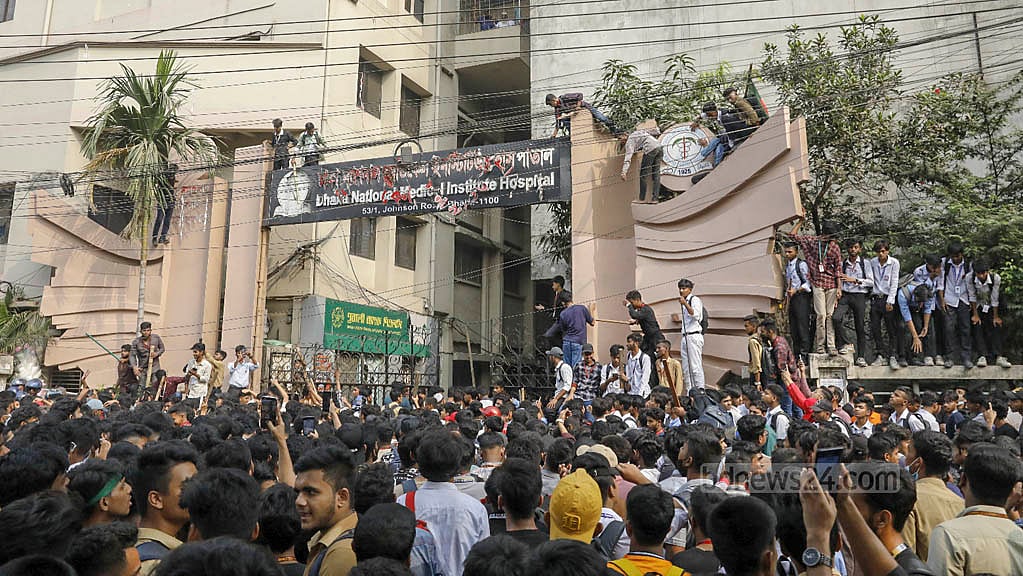
When asked why the police couldn not stop the attack despite having prior intelligence, the police official said: "Our police force was limited, while their numbers ranged from 15,000 to 20,000. Many of them were disguised as students and ordinary people."
In response to allegations from students that police assistance was unavailable, he said: “The events of the 5th of August caused significant damage to police, particularly in the Wari Division and Jatrabari area. We face several constraints. Deploying all forces to one location creates vulnerabilities elsewhere in Dhaka city.”
Former IGP Nurul highlighted the current limitations of the police, saying: "Given the present circumstances, it is not appropriate for the police to resort to hard action. Moreover, since the matter involves students, the police must deliberate more carefully before taking such measures compared to other groups."
Prof Fazlur said, "Educational institutions are currently in a state of unrest. The government must address these issues with urgency; otherwise, the education system will collapse. When a student is injured, it affects their academic journey, and no teacher ever wants to see the loss of a student's life."
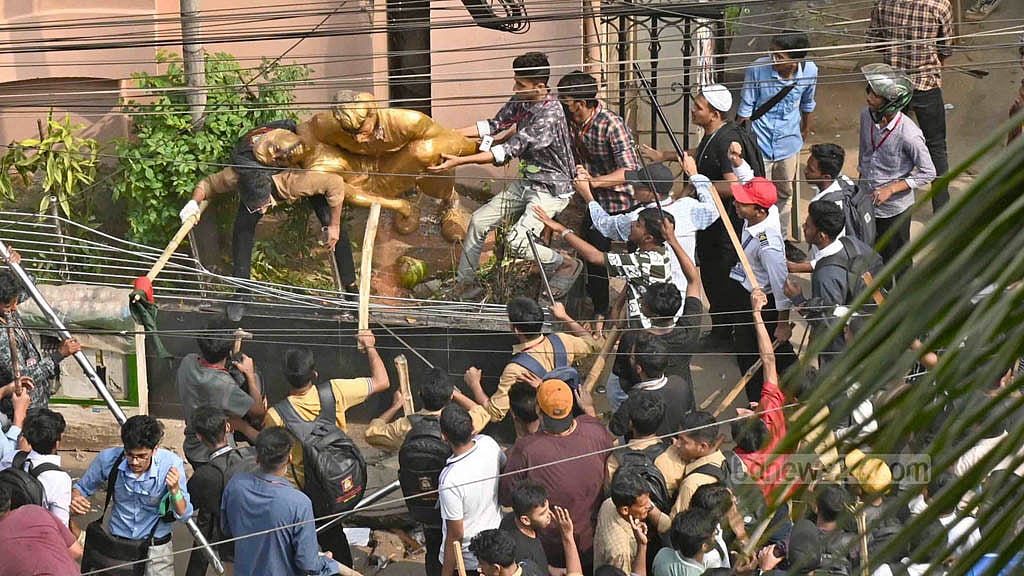
‘MEGA MONDAY’ BEGINS WITH CLASHES, VANDALISM
Around 11am on Monday, nearly 15,000 students from Suhrawardy College and Kabi Nazrul College gathered at Suhrawardy College and the Bahadur Shah Park before heading towards Mollah College in Demra.
Police had positioned themselves earlier at key locations, including Dhaka National Medical College and Suhrawardy College, but the students managed to break through the police barriers, armed with sticks and batons.
At Jatrabari intersection, police made another attempt to stop them, but the students overcame this obstacle as well.
By noon, they reached the college, where they carried out extensive vandalism and looting.
Regarding the situation, a police officer on duty at the scene said: “After the vandalism at Suhrawardy and Kabi Nazrul Colleges [on Sunday], the students had discussed their plans for [Monday’s] attack in their closed Facebook group. Based on this intelligence, we were prepared for the possibility of an attack.”
Based on advance information, additional policemen were deployed with barricades at Suhrawardy College and Jatrabari intersections.
However, police did not have enough manpower to stop the students, as they were in such large numbers.
The officer added, “At Jatrabari, nearly 1,000 officers were stationed behind the barricades. We thought we could convince the students to stop, but the crowd was so large, and it became impossible to hold them back.”
Upon receiving immediate reports of the situation at the DMP control room, additional forces were dispatched from the DMP and Dhaka district police. In total, nearly 4,000 police personnel and army members were mobilised to the site. However, it took significant time for them to reach the location, by which point the incidents had already occurred.
When asked whether any outsiders were involved with the students, the officer said: "Their numbers were so large that it was impossible to determine whether they were students or outsiders.”
ORIGIN OF INCIDENT
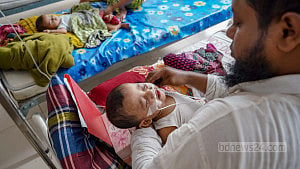
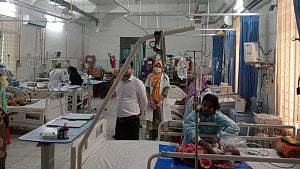
On Nov 16, Abhijit, a student of Mollah College, was admitted to Dhaka National Medical College and Hospital with dengue fever. He passed away on Nov 18 while receiving treatment in the Intensive Care Unit, or ICU.
That night, his family and some college students vandalised the hospital, accusing it of “medical negligence”. On Nov 20, over 500 Mollah College students returned to the hospital and conducted another round of vandalism.
As the situation spiraled out of control, the hospital’s director formed an investigation committee, including four doctors and two students, to look into Abhijit’s treatment. However, Mollah College students rejected the committee.
Amid these developments, no statements were provided by the hospital authorities regarding the accusations of medical negligence and the subsequent vandalism. The hospital administration has announced that it will hold a press conference on Tuesday to address the overall situation.
Students from Suhrawardy and Kabi Nazrul College joined in solidarity with the Mollah College students on Nov 20.
However, when the Mollah College students refused to accept this, a confrontation broke out between the two groups.
Two students from Suhrawardy College were injured, and the situation was brought under control by police intervention.
As a result of these events, Mollah College students declared a “Super Sunday” four days later.
WHAT POLICE ARE SAYING
According to a police statement issued on Monday, the clashes between students from the 35-college forum and the seven colleges occurred due to "tensions, chasing, counter-chasing, and mutual hatred" between the groups, all stemming from the death of Abhijit.
The statement said police refrain from using excessive force to avoid any unpleasant incidents. Acknowledging the risk of the situation taking a dangerous turn, the police attempted to manage the situation peacefully. Despite their efforts, "agitated students" became involved in chasing, counter-chasing, and violence, including vandalism and looting.
CASE FILED FOR SUNDAY INCIDENT
A case has been filed against around 8,000 students from various colleges, including Mollah College, for the attacks on the hospital and SUhrawardy College. The case was filed by Sub-Inspector AKM Hasan Mahmudul Kabir of Sutrapur Police Station.
The case accuses the students of carrying out an unprovoked attack with sharp weapons and sticks and batons, obstructing police duties, and damaging an armoured police vehicle.
In addition, the complaint includes allegations of seizing a pistol, along with eight rounds of ammunition and a magazine, which was reportedly in the possession of Constable Md Ashraful Islam of the Lalbagh DC office.
FALSE INFORMATION REGARDING DEATH AT MOLLAH COLLEGE
Molla College's Managing Director Ashraf claimed that three students from the institution were killed in the clash.
“The attack was part of a conspiracy by certain students, backed by the banned student group Chhatra League, to destabilise educational institutions. Most of the attackers were not students, but individuals involved in criminal activities,” he said in a statement.
However, he later clarified that the death toll reported earlier was based on incorrect information from students.
Speaking to bdnews24.com, Ashraf confirmed that no deaths had been confirmed and a corrected press release had been issued.
Md Talebur Rahman, deputy commissioner of the Dhaka Metropolitan Police's Media Wing, said: “There were chases, counter-chases, and clashes between the students of Suhrawardy College, Kabi Nazrul College, and Mollah College, resulting in injuries to about 25 students. Many have spread rumours on social media about two fatalities, but these reports are completely false."
STATEMENT FROM COLLEGE AUTHORITIES
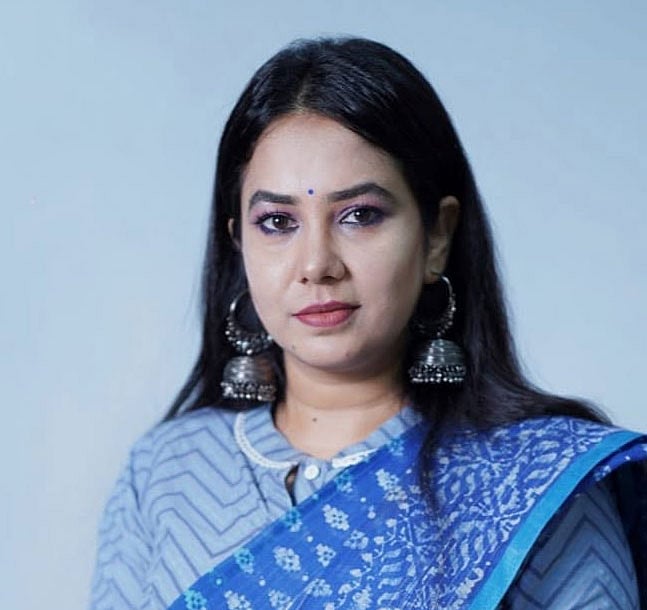
Suhrawardy College Principal Prof Kakoli Mukhopadhyay told bdnews24.com, “Upon hearing about the students' scheduled protests, we decided to close the college on Monday. However, students came to the campus after learning about the protests."
As news of the students' planned protest spread, all classes were suspended at Dhaka College and Suhrawardy College on Monday. However, Kabi Nazrul College remained open.
The college’s Principal Prof Mohammad Habibur Rahman told bdnews24.com, "After the attack on our college on Sunday, we repeatedly held discussions with our students. They assured us that they would not engage in any vandalism or violence."
He added, "We believe our students did not participate in the attack. Some locals may have been involved. Many of our students have been injured, and we are concerned about their treatment."
In light of the ongoing tension, both the Suhrawardy and Kabi Nazrul College principals declined invitations to attend a meeting with the Anti-Discrimination Student Movement.
Prof Habibur said he would not participate in any discussions until justice is served for the recent violence.
Prof Kakoli expressed her refusal, saying: "I cannot attend any discussions while standing on the blood of students."
‘HELPLESS’ EDUCATION ADVISOR
In the face of ongoing protests, clashes, and unrest in educational institutions across Dhaka, Education Advisor Wahiduddin Mahmud expressed a sense of helplessness regarding the resolution of these issues.
Speaking at a press conference following an Executive Committee of the National Economic Council, or ECNEC, meeting on Monday, he said: "How these issues will be resolved. I alone cannot solve them. However, I have urged the students to bring their justified demands forward. Those that are fair will be addressed, and they don’t need to take to the streets."
If protesters create disorder, block railways, or attack passengers, the public will turn against them. In that regard, we are at an advantage because, after some time, people will begin to resist them, and they already have," he added.
[ Writing in English by Sheikh Fariha Bristy]