Published : 09 May 2026, 01:08 AM
Updated : 21 Aug 2026, 03:42 PM


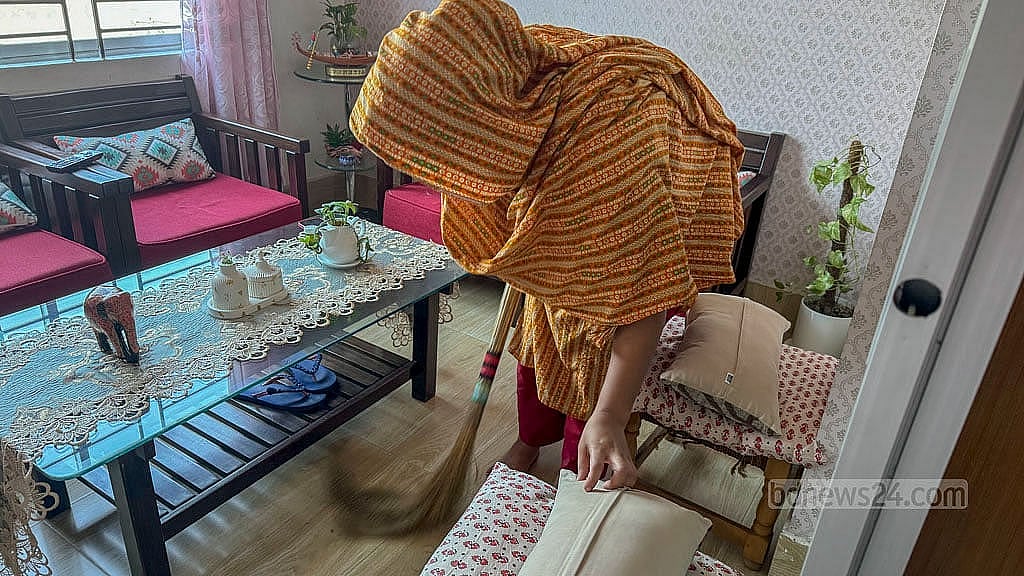
Women’s rights activists have called on the government to officially recognise the economic value of household work and ensure necessary budget allocations for women’s health, safety, and employment.
At a rally organised by the Samajtantrik Mohila Forum in front of the National Press Club on Friday, speakers argued that the lack of state recognition for household labour leaves women vulnerable, especially during domestic disputes and divorces.
Engineer Shampa Basu, president of the forum, noted that women perform 85 percent of household tasks required to run a family.
However, this immense contribution remains invisible in national accounts and in terms of social status.
"Because this work has no recognised economic value, housewives are often excluded from family decision-making processes," Basu said.
She argued that state recognition would not only change societal attitudes but also significantly reduce domestic violence.
Comparing Bangladesh with other nations, Basu pointed out that many countries have laws ensuring an equal split of assets upon divorce.
"In our country, despite years of physical and mental labour in building a home, a woman receives almost no share of the property after a divorce, leaving her completely helpless."
Manisha Chakraborty, organising secretary of the forum, linked the current healthcare crisis to the lack of dedicated facilities for mothers and children.
"The deaths of over 300 children due to a shortage of measles vaccines have exposed the dire state of our paediatric care," she said.
Student leader Mukta Barai highlighted that while women often excel academically, they fall behind in the professional world due to a lack of institutional support.
"The absence of daycare centres, safe public transport, and hostels for working women forces many to step back from their careers," Mukta said.
She urged the government to allocate funds in the upcoming national budget to establish daycare centres and hostels at the Upazila level.
The activists concluded that the state must take "effective initiatives" to remove the barriers preventing women from participating fully in society as equal citizens.