Published : 20 May 2026, 04:52 AM
Updated : 21 Aug 2026, 03:45 PM


The High Court has issued a rule asking the government to explain why it should not be directed to compensate the families of children who died of measles and to investigate the ongoing outbreak.
The court also questioned why effective measures should not be taken to prevent measles and other diseases threatening children’s health.
The bench of Justice Razik-Al-Jalil and Justice Debasish Roy Chowdhury issued the rule with directives on Tuesday after hearing two separate writ petitions.
Lawyers M Ashraful Islam and Humayan Kabir Pallab represented the petitioners, while Attorney General Ruhul Quddus Kazal and Deputy Attorney General Jamila Momtaz argued for the state.
After the order from the court, Kazal explained to reporters that two writ petitions were filed -- one seeking an inquiry committee into the measles outbreak, and another seeking the formation of a 10-member committee to prevent the disease.
The attorney general informed that they had immediately shared the development with the health minister and the health secretary.
He explained that one petition, filed by Ashraful, sought a rule on why an inquiry commission should not be formed under Section 3 of the Commission of Inquiry Act.
The second petition was filed by the Law and Life Foundation Trust.
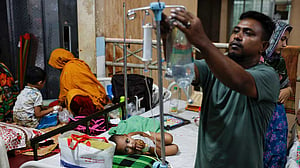
One issue raised by the court is why the families of 343 children reportedly died from measles and vaccine shortages should not receive adequate compensation if negligence or ineffective measures are proven responsible, he said.
The state's top law officer further noted that while the petitioners sought an interim order, he voluntarily assured the court that the state has no objection to presenting a comprehensive report on the government's ongoing response to the outbreak.
The court subsequently ordered a report detailing government actions taken so far.
Speaking to journalists, Humayan highlighted a sharp decline in the country's vaccination success.
"Between 2009 and 2015, Bangladesh received global awards twice for its vaccination success, effectively eliminating measles and rubella," Pallab said.
"Unfortunately, in September 2025, the then-interim government altered the existing procurement method to an open tender system to purchase the vaccines,” he said.
They, however, failed to procure them, and as a direct consequence, were unable to vaccinate our young children against measles and rubella, he pointed out.