Published : 01 Nov 2025, 08:59 AM
Updated : 28 Aug 2026, 01:28 AM


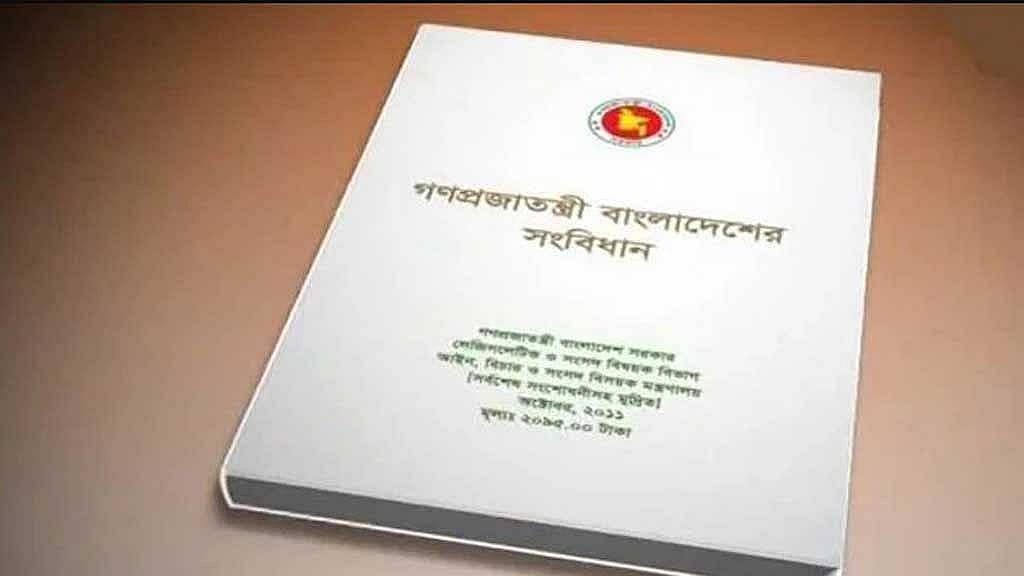
The National Consensus Commission’s proposal to issue an “implementation order” for the July National Charter (constitutional reform), and to hold a referendum on its basis, has triggered divisions among political parties, as well as disagreement among jurists over its legal foundation.
The dispute cuts two ways.
Politically, over whether the order should be issued by the president or by the chief advisor to the interim government; and legally, over whether such an order and referendum are possible at all under the current constitutional framework.
Although the constitution has no explicit provision to issue an order to implement the July Charter and then put it to a referendum, most political parties agree in principle on holding a vote. They are, however, split over when it should be held.
The Bangladesh Nationalist Party (BNP) has strongly protested the removal of parties’ “notes of dissent” from the draft implementation order, accusing the National Consensus Commission of “deception”.
Jamaat-e-Islami, whose dissent was also left out, says it still trusts the commission’s judgment. The National Citizen Party (NCP), formed by frontline leaders of the July Uprising, has taken a more assertive line, demanding that the July Charter implementation order be proclaimed from the Central Shaheed Minar.
The draft order itself says it will be issued “on the basis of the sovereign authority and intent of the people as expressed through the popular uprising”, even though such a path does not exist in the constitution.
It states: “Whereas, before such a referendum is held, and for the purpose of informing the people and facilitating the work of the said constitutional council, it is necessary to present to the referendum a draft bill prepared by the government on the basis of the proposals included in the July National Charter; and whereas, for the full implementation of the July National Charter 2025 as set out above, it is essential to issue a formal order; therefore, the government, on the basis of the sovereign power and intent of the people expressed through the popular uprising, hereby issues this order.”

Senior lawyer Ahsanul Karim says the present legal process does not actually allow this.
Referring to the French Revolution, he said: “A popular uprising does not, by itself, annul the constitution. A revolution may topple the government, but the laws, the legal order -- whatever exists -- continue to operate.
“If, after a revolution, it is felt that all laws must be scrapped, that is another thing. But this is not being described as a revolution.”
Asked about the dispute over whether the president or the chief advisor should issue such an order, the lawyer added: “The way the government is currently functioning is not constitutionally acceptable. This government was not formed under the light of the constitution. You cannot make law through an executive order.
“The president may issue an ordinance. But the incumbent head of the interim government has no authority under our law to issue a proclamation. Under military rule, a proclamation was possible, we had that in the past. But the current constitution no longer recognises such proclamations.”
The National Consensus Commission has proposed that the interim government issue the implementation order.
Asked whether this would be a “constitutional order”, the commission’s Vice-Chair Ali Riaz told reporters on Tuesday: “What we have said is that this order will be issued by the government, and it deals with one clear, specific matter -- the ‘July National Charter (Constitutional Reform) Implementation Order’. So it cannot be treated as an all-encompassing order, nor can it be treated as a mere limited order. We will, of course, draw on past experience and comparative constitutional history.
“But every political situation has a uniqueness of its own. We have to recognise that. We are in a kind of ‘state of exception’. We have to proceed with that in mind. Not everything can be forced back into an old box. Some things will inevitably fall outside the box,” Riaz added.
Jamaat-e-Islami’s lawyer Shishir Monir, criticising those who question the interim government’s authority, said: “If the government has no power to issue such an order, does the president have it? Under which law will the president issue such an order? Where does it say the president may do it?
“After such an uprising, the 'July National Charter (Constitutional Reform) Order’ must be issued by the government. How will the previous government’s president issue it? What authority does that president have after a popular uprising?
"He is the same president continuing from before. How will he, then, embody the spirit of a popular uprising and issue such an order? If the order is issued on the basis of the people’s constituent power, then it is the government that must issue it. The president will have no such authority.”
WHERE THE PARTIES STAND
On Tuesday, the National Consensus Commission handed its recommendations to the interim government on how to implement the July National Charter. It proposes issuing a constitutional-style order and then implementing the charter through a referendum, to be held either on the day of the general election or before it.
To execute this and give it legal cover, the commission laid out two alternative paths. One is for the interim government to draft and place before a referendum a full constitutional amendment bill based on the July Charter.
The other is to form, alongside the new parliament, a Constitutional Reform Council empowered to exercise constituent functions.
If the council fails to complete the reform within 270 calendar days from its first sitting, the bill endorsed in the referendum will “automatically” be incorporated into the constitution.
This is where the main fault lines have appeared. The disputes are broadly of two kinds: the mechanism for implementing the charter, and the timing of the referendum.
The BNP and several other parties want the referendum and the parliamentary election to be held on the same day, and they want the elected parliament to retain full control over implementing the charter.
Jamaat-e-Islami and some other parties want the referendum in November, before the election, and they want the implementation order to be issued by the chief advisor.
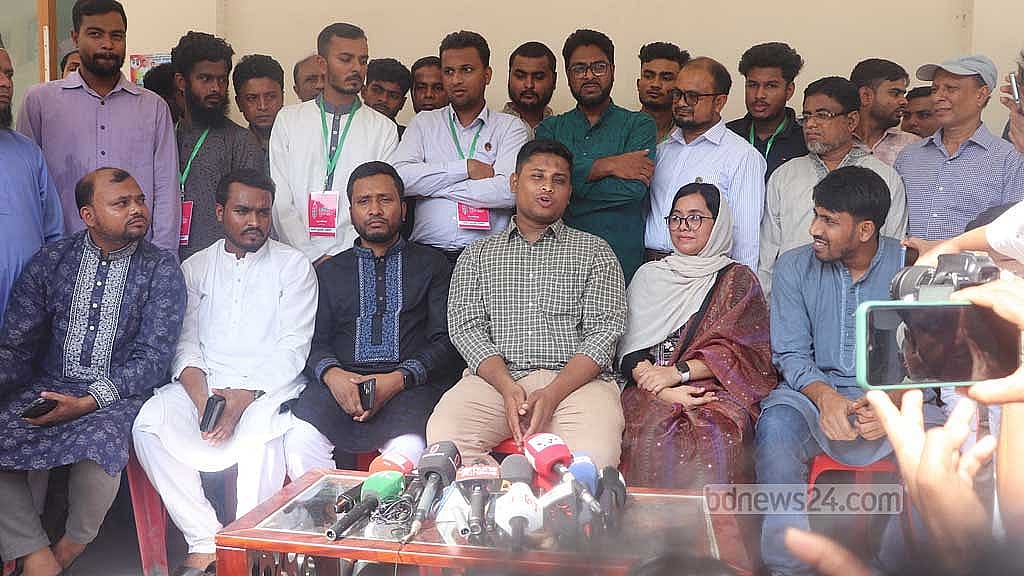
At a press conference on Thursday, the BNP said the recommendations the commission submitted to the government were “unacceptable”.
The party slated the commission for dropping the “notes of dissent” that parties had submitted during talks.
BNP's Secretary General Mirza Fakhrul Islam Alamgir said, “The National Consensus Commission has submitted its recommendations to give the July National Charter a legal basis. But it omitted the matters on which consensus was reached with dissenting opinions, and, instead, included issues that were never discussed during the long negotiations. We cannot agree to such recommendations.
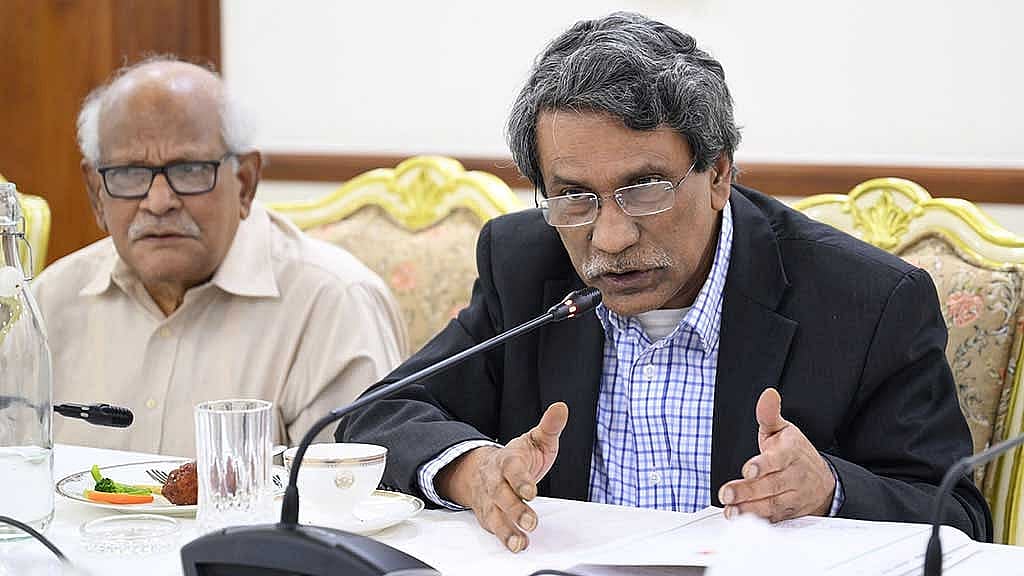
“We regret to note that these recommendations will only deepen divisions, not unity. Arbitrary reform proposals could cause long-term harm to national life.”
Standing Committee member Salahuddin Ahmed, who led BNP's engagements in the reform exercise, said the draft order contains a number of elements that “did not figure” in the Oct 17 signed charter, and accused the commission of “trying to create division instead of consensus”.
Pointing out that the constitution currently has no active, straightforward mechanism for a referendum, he said: “A general election is meant only to form parliament, not to amend the constitution. The Election Commission’s constitutional mandate is to hold parliamentary and presidential elections. Yes, if the July Charter gains a popular mandate through a referendum, then a constitutional council may be formed accordingly. But the charter cannot go to a referendum in a form different from what was signed.”
Salahuddin also said the idea of forming the upper house on the basis of proportional representation (PR) from the lower house had not been agreed. “The draft now says the upper house will be formed in proportion to votes received by parties in the lower house. No such decision or discussion took place.”
He called the 270-day “automatic insertion” clause “laughable”. “You cannot have an ‘auto-pass’ clause in a constitution. I've no idea how this got into the recommendations.”
Jamaat lawyer Shishir Monir, however, says dropping dissent from the final draft is logical.
“Why should a referendum go to the people with dissent attached?” he asked. “Those who want to send dissent to the referendum are actually rejecting the reform process. There were dissents on the national constitutional council, there were dissents on PR in forming the upper house, there was dissent on whether one person can be both prime minister and party chief.
“Jamaat also gave dissent on several points. We, and others, all gave dissents. The commission removed all dissents and, by a ruling, sent the package to referendum. That is what it has proposed.
Shishir added, “Our point is simple. If this proposal for July Charter implementation is not carried out in full, if the government does not issue the order, or if the full package is not endorsed in the referendum, then there will be no difference between having a reform process and not having one.
“You personally may disagree with a reform proposal. But the people may agree. Why should they not be allowed to decide? That is why we say it is the government that must issue the order. The government is the government of the popular uprising. It has the authority to issue it, and it will be a proper order.”
Law Advisor Asif Nazrul has said a decision on the implementation process and the referendum will be taken “very soon”.
At a programme in Pirojpur on Friday, NCP’s Chief Organiser for the South Hasnat Abdullah insisted the order must be issued before the parliamentary election.
He said, “Yes, there must be an election for democratic transition. But before that, a direct order in favour of a referendum must be issued. And it must be issued by the chief advisor, not by the president nominated by the Awami League.”

WHAT THE CONSTITUTION SAYS ON REFERENDUMS
The original referendum clause in Article 142 of the constitution, which allowed certain constitutional amendments to be put to a vote, was scrapped by the Awami League government in the 15th Amendment in 2011.
On Dec 17 2024, the High Court struck down parts of that amendment, including the abolition of the caretaker system and of the referendum clause. Lawyers now argue that, as a result, the referendum provisions have automatically reappeared in the constitution.
But Ahsanul Karim notes that, even so, the constitution still says amendments must first be passed by a two-thirds majority in parliament and then be sent to the president; only at that stage can a referendum be called.
“They want to bring the July Charter within a constitutional framework. But the constitution says: to amend it, parliament must be in existence, and it must pass the amendment with a two-thirds majority.
“Only when parliament has passed a bill with two-thirds support and sent it to the president may the president send it to referendum. The question of a referendum arises only when parliament exists and has taken a majority decision. Right now, there is no parliament, no two-thirds majority, no bill to send to the president.
Continued Ahsanul: “So, if a referendum is held now, it will have no effect. After that, it will still have to go to parliament. If the future parliament refuses to accept it, it may do so. It may say ‘I will not send this to referendum’. Or, if later another referendum is needed, why waste public money on an initial referendum that is legally ineffective?”
Before the 15th Amendment, Article 142 said parliament could amend the constitution by adding, altering, substituting or repealing provisions, but only if the bill clearly stated that it sought to amend the constitution and only if two-thirds of all MPs voted for it.
For amendments to the preamble or Articles 8, 48, 56 or 142 itself, the president was obliged to send the bill to a referendum within seven days.
Voters registered for parliamentary elections would then vote in the referendum, and if a majority supported the bill, presidential assent would be deemed to have been given.
THREE PAST REFERENDUMS
Independent Bangladesh has held three referendums. The first was on May 3, 1977, soon after Major General Ziaur Rahman took over as head of state, to test public confidence in his policies. The second was in 1985 under military ruler HM Ershad, again to seek approval. The third was in 1991 under Khaleda Zia’s government to ratify the 12th Amendment to the Constitution.
The first two were held by presidential order while the constitution was suspended, Ahsanul Karim noted. The 1991 referendum was held under the Referendum Act.
He said, “When those presidential orders were issued, the situation was different. There was no parliament, no constituent assembly operating. We now have a constitution. In 1978 and 1985, when referendums were held, the constitution was suspended.
“If the constitution had not been suspended, those referendums could not have been held. Because the referendum clause existed, but the constitution itself was on hold.”

WHY ‘NOTES OF DISSENT’ WERE DROPPED
The July Charter contains 84 reform proposals, 48 of which would require constitutional amendment. Sixty-one of those have some form of dissent from at least one party. Since some proposals have multiple stages, the total number of dissents is more than 100.
Leftist parties registered the highest number of dissents. The BNP dissented on 15 items, including nine “basic” reforms. Jamaat dissented on seven issues and the NCP on two.
The commission gave the government a draft “July National Charter (Constitutional Reform) Implementation Order” in which 48 items requiring constitutional amendment were listed in Schedule-1, but without a single dissenting note.
Asked why the dissents were not carried over, Badiul Alam Majumdar, member of the commission and head of the Electoral Reform Commission, said: “The decision was framed there. The decision had an overwhelming majority. A few parties held a different view and that has been recorded in the charter.”
He said the decision will now go to the people. “The constitution reflects the will of the people. We think this controversy is unnecessary. The parties reached consensus on the basis of a majority view and went to the people. If the people approve it, then it must be incorporated into the constitution.
“This is the people’s will. Article 7 of the constitution says so. You cannot disobey it. … The parties have reached consensus. These will automatically be incorporated. I don’t see any problem with that. The constitution is the will of the people. The rules of procedure will set out how it will be done.”
Badiul Alam said the proposed Constitutional Reform Council will make the necessary arrangements.
He called the fresh criticism from the BNP and others “unfortunate”. He also suggested the chief advisor could sign the order.
“This is a government of popular consent. This government is not in our constitution, it is an interim government. There was an uprising, and in that context a government was formed under [Muhammad] Yunus in line with the people’s wishes. So this is a government of popular intent. That is the source of its power. It is not in the text, but it is the people’s government.”
He rejected the BNP’s claim that it had been “cheated”.

WHAT ANALYSTS SAY
Former secretary AKM Abdul Awal Majumder says the chief advisor does not have the authority to issue an order to implement the July Charter. The order must carry the president’s signature, he said.
“For a constitutional or an executive order, the president’s signature is essential. It is not within the chief advisor’s authority.”
He said such an order would carry more moral than legal weight. “If the chief advisor issues an executive order, nobody is obliged to follow it. It has little legal value. The president can issue an ordinance. The chief advisor’s order, or no order, is the same.”
Abdul Awal Majumder also said the real precondition for implementation is political consensus, which he does not currently see.
“Of course, if we all agree that we have worked hard on this, then the chief advisor may issue an order, make a request and leave a marker, and we can follow up later. But we do not see that mindset.”
Because there is no parliamentary two-thirds ratification built into the process, the former bureaucrat said, even a presidential order or ordinance may not stand.
“Even if the president issues an ordinance now, I don’t think it will have great value. A future government could refuse to pass it or cancel it altogether. There is no need for two-thirds here. They could just drop it,” he added.
He believes implementation will only be meaningful if future elected governments also adopt it.
Parliamentary affairs researcher and former Chittagong University professor of public administration Nizamuddin Ahmed was even blunter. He said the commission “ended up creating disunity where it set out to create consensus”.
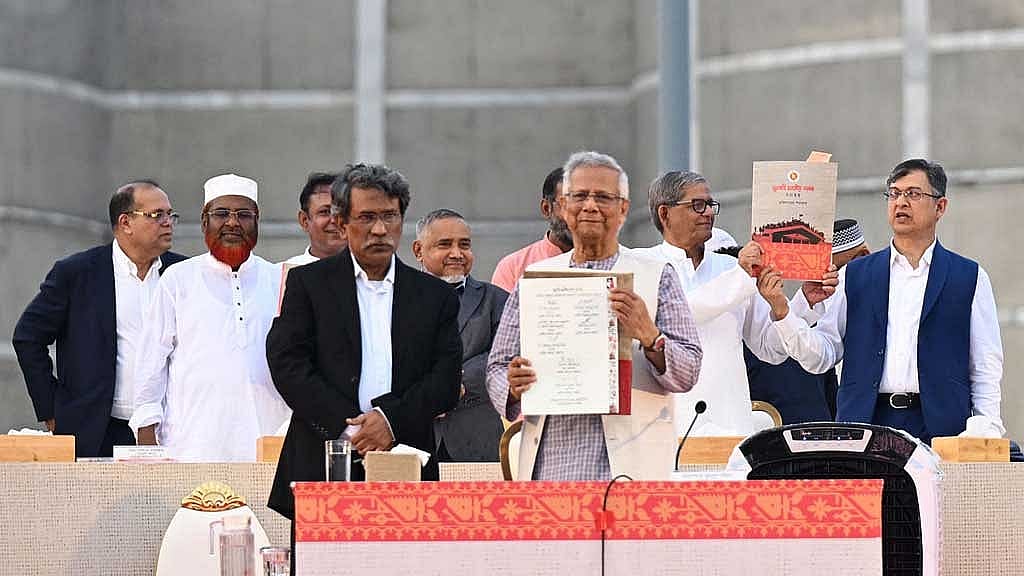
“They worked hard, consulted everyone, but in the end they did not keep in the final document that was signed on the 17th of October. Who gave them that authority?” he asked.
He said dropping the notes of dissent after collecting signatures was simply unfair to the parties. “If they had known, they might not have signed.”
Prof Nizamuddin warned, “Pressure on the government will increase now. The commission can only recommend but the government is not bound to accept it. Everything depends on the government’s decision now. The government will have to decide very carefully.”
He said political lines have already hardened. “There is now a clear split over the referendum, over public statements. You cannot impose this on the big political parties.”
He also said any constitutional or executive order must be issued by the president. “To say the chief advisor will issue it is chest-thumping. The president must sign. Everything is done under presidential order, as the constitution makes clear, though on the chief advisor’s advice.”

He called the clause that would automatically insert the reform into the constitution if parliament does not act within 270 days “unprecedented”.
“There is no such example in world history. Bangladesh is trying to create one. You may do it, but I doubt it will endure.”
In his view, tying the hands of a future parliament is itself questionable. “Nowhere do you have a system where something enters the constitution automatically. And the referendum, in any case, should come after parliament. You are now effectively binding parliament.”
Because the parties remain divided, he said, the government will now have to “minimise the crisis and move forward”.