Home
+
Published : 07 Jul 2026, 02:55 PM
A group of petitioners are pushing for the Supreme Judicial Council and the amendment to Article 102 of the Constitution to be maintained even after the 15th Amendment is repealed.
The plea was made during the Appellate Division’s hearings on the 15th Amendment on Tuesday.
In addition, the court has been requested to refrain from giving a verdict on the matter as another case regarding Article 116, which deals with the control of judges in lower courts, is pending at the top court.
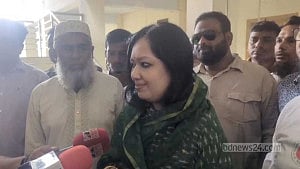
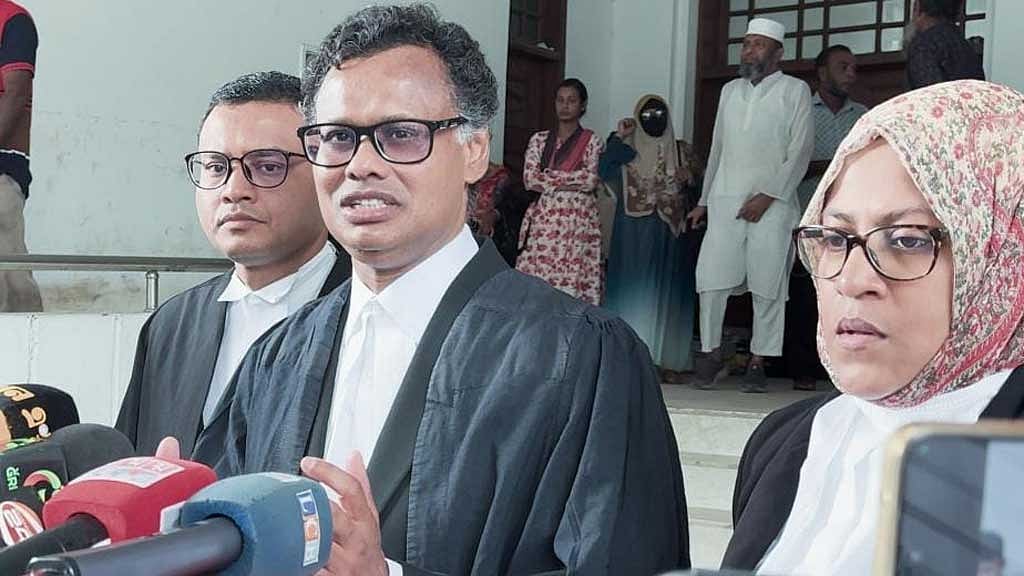
Lawyer Sharif Bhuiyan made the plea on the second day of hearings before the bench headed by Chief Justice Zubayer Rahman Chowdhury. He was accompanied by lawyers Karishma Jahan, Redwanul Karim and Asif Iqbal.
The Supreme Court has set Wednesday for the next hearing in the case.
After the hearing, Sharif called the 15th Amendment a “rewrite” of the Constitution and said, "This has changed the character of the Constitution of Bangladesh. It is a kind of fraud against the Constitution.
"Since the parliament has passed the amendment through such a process, the highest court should take a clear stand for the people. It is necessary to repeal it so that such anti-people amendments are not taken up again in the future and the democratic aspirations of the people are not thwarted. The purpose of this amendment was to destroy the Constitution."
Explaining the reason for seeking exceptions on certain issues rather than seeking the repeal of the entire law, the lawyer said: "The High Court Division did not repeal the entire law. But a petition has been made to the Appellate Division that it should be repealed in its entirety. However, repealing the entire law may create gaps or problems in a couple of places.
"The most notable of these is the Supreme Judicial Council, through which the misconduct of Supreme Court judges and office bearers of state institutions is investigated and action is taken."
He said the Supreme Judicial Council, which was included in the Constitution through a military decree, later became part of the constitution through the 5th Amendment. But the Appellate Division declared the Fifth Amendment invalid, making that provision unconstitutional. Then, the Supreme Judicial Council was re-included in the constitution through the 15th Amendment.
“Now, if the 15th Amendment is completely repealed, this system of accountability of judges will not exist any longer. Until parliament reintroduces it, there will be a void in the independence of the judiciary and judicial protection of the people.
“That is why a petition has been filed to declare everything else unconstitutional while preserving the relevant section (Article 96) of the 15th Amendment through which the Supreme Judicial Council was included in the Constitution and the changes made in Article 102 regarding writs to the Supreme Court to protect human rights. This prevents a legal void from being created.”
The High Court declared some parts of the 15th Amendment to the Constitution null and void on Dec 17, 2024, after finally settling the writ petition filed by Badiul Alam Majumdar, the editor of Citizens for Good Governance (SHUJAN), and others.
The 15th Amendment was introduced in 2011 to add, amend and replace 55 provisions of the Constitution. Among these, Sections 20 and 21 of the 15th Amendment Act, which related to the abolition of the non-partisan caretaker government system, were declared to be inconsistent with the Constitution and null and void in the High Court's judgment.
The observation of the full verdict of the High Court said that by abolishing the caretaker government system and making the election system party-based, the basic structure of the Constitution, “democracy” and the “sovereignty of the people”, had been destroyed.
As a result, citizens were deprived of their voting rights through the questionable elections of 2014, 2018 and 2024, which ultimately gave rise to the mass uprising of the students and the public in July and August 2024.
In addition, the judgment declared that Articles 7A, 7B, 44(2) -- added to the Constitution through the 15th Amendment Act -- were null and void.
Article 7(a) considered the unconstitutional seizure of state power as a crime of treason and added a provision for the maximum punishment for the person concerned. The court described it as vague and a tool to suppress dissent.
Article 7(b) was intended to make the fundamental provisions of the Constitution permanently inviolable. The High Court said that it took away the power of the next parliament to amend the Constitution and curtailed the judicial review power of the Supreme Court.
Article 44 of the Constitution dealt with the enforcement of fundamental rights. And Article 44(2) stated that “without prejudice to the powers of the High Court Division under Article 102 of this Constitution, Parliament may by law empower any other court to exercise all or any of those powers within the local limits of its jurisdiction.” The court struck it down as an interference with the independence of the judiciary.
The High Court ruling said Article 142 of the Constitution provided for a referendum, which was repealed by the 15th Amendment. Section 47 of the 15th Amendment Act, which abolished this provision, was declared null and void as it was considered “inconsistent” with the basic structure of the Constitution and Article 142 of the 12th Amendment was reinstated.
In its observation of the ruling, the court said that the 15th Amendment Act is not being repealed in its entirety. The remaining provisions can be amended, revised and changed by the next national parliament in accordance with the law, taking into account the opinions of the people.
The ruling paved the way for the return of the caretaker government system. However, not satisfied with that, the plaintiff in the petition appealed against the High Court ruling, demanding the repeal of the entire 15th Amendment.
BNP Secretary General Mirza Fakhrul Islam Alamgir and Jamaat Secretary General Mia Golam Porwar, who were parties to the case, also appealed separately. In total, three appeals are being heard by the top court.