Home
+
Published : 30 Oct 2021, 10:51 AM
According to one expert, rebranding is often used to update a company’s name to reflect cultural changes in consumer behaviour or values, as when Kentucky Fried Chicken became KFC, dropping the “fried” as consumers increasingly looked for healthier choices. In other instances, brands rename themselves after mergers or acquisitions, to signal a new direction, or to distance themselves from negative publicity.
“The success of a name change depends upon companies educating existing customers about the rationale for the name change in a way that is compelling,” said Jill Avery, a senior lecturer at Harvard Business School who focuses at brand management. “If the name change appears illegitimate, inauthentic or done for the wrong reasons, firms risk injuring their relationships with consumers.”
In the case of Facebook, which said Thursday that it was changing its corporate name to Meta, the downside risk was minimal for the company, she said, since it changed its corporate brand and not its product brand.
Here is a look at some major corporate rebranding efforts over the decades and how they fared.
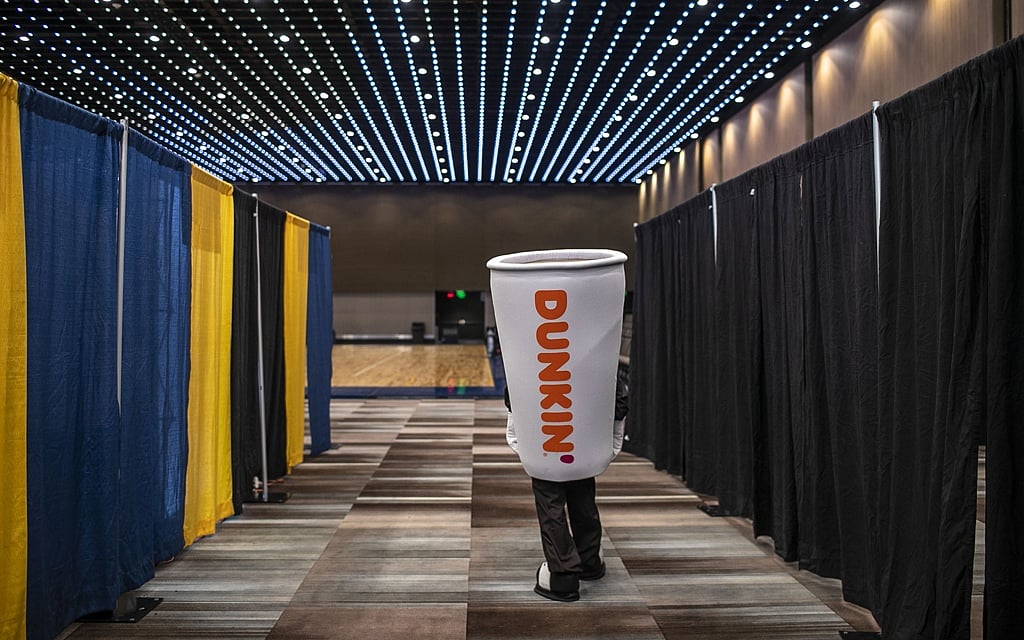
Dunkin’ Donuts (ARROW) Dunkin’
The company aimed to breathe fresh life into the brand in 2019, when it dropped the word “Donuts” from its name. Customers would still recognise its colours and font, but the company wanted to nod to the chain’s beverage sales, which accounted for more than half of its business.
The popularity of its longtime slogan, “America Runs on Dunkin’,” was also a compelling reason to simplify the brand name.
But the company said its focus on doughnuts remained in place.
Neeru Paharia, an associate professor at Georgetown University’s McDonough School of Business whose research focuses on brand signalling, said the rebranding allowed Dunkin’ to diversify its product offerings. “There was a huge opportunity in the breakfast market,” she said. “And yet, at the same time, everyone knows if you want a doughnut, that’s where you go.”
Just before the name change took effect, Tony Weisman, then-chief marketing officer of Dunkin’ Donuts in the United States, said the relationship the company had with customers was similar to that between friends who are “on a first-name basis.”
Philip Morris (ARROW) Altria Group
In 2001, Philip Morris announced it was changing the name of its parent company to Altria Group, part of an effort to shake negative associations with the lawsuits against its cigarette brands.
Steven Parrish, the parent company’s senior vice president for corporate affairs at the time of the name change, said Friday the company knew that a name change would not solve its problems.
“We knew that changing the name was not going to make all the lawsuits go away — it was not going to change the fact that people get sick and die from smoking and that it’s addictive,” Parrish said. “But we did think that changing the name would help us explain what the company was, which was a big consumer-products holding company, and not just a tobacco company.”
Google (ARROW) Alphabet
Companies rebrand for reasons other than to turn over a new page after public relations nightmares. In 2015, Google reorganised under a new name, Alphabet, as a way to separate its moneymaking assets from the unprofitable parts of its company. The company is now worth $1.5 trillion more than it was when it was called Google, DealBook reported. But it is difficult to separate how much of that increase may be attributable to its name change versus its changed corporate structure.
The Alphabet name change was not the first time Google rebranded. In 1996, Google’s founders, Larry Page and Sergey Brin, called their company BackRub — a reference to its ability to analyse links that direct users from one site to another.
Weight Watchers (ARROW) WW
Weight Watchers changed its name to WW in 2018 as it announced a major effort to turn the weight-loss company into a wellness company. It came at a time when the body-positivity movement was gaining steam, and the company faced increased competition from companies focused on self-care and nutrition.
“While WW remains the global leader in weight loss, it now also welcomes anyone who wants to build healthy habits,” the company said in a statement at the time.
British Petroleum (ARROW) BP
In 1998, British Petroleum PLC said it would acquire American oil company Amoco for $48.2 billion. Under its new name, BP Amoco became the largest producer of both oil and natural gas in the United States. After the merger, a new approach to branding aimed to position the company as an environmentally friendly retailer.
The “beyond petroleum” slogan was born, along with a new sunburst logo.
In 2001, BP Amoco became BP. The simplified name became freighted with political and environmental overtones after the Deepwater Horizon oil spill in the Gulf of Mexico in 2010, when officials in Washington used “British Petroleum” and “BP” interchangeably.
Invoking the old name was seen as a “backhanded slap at Britain” at a time when 39% of the company was owned by American shareholders and half of its board was American.
IHOP (ARROW) IHOb
Some name changes have been temporary gimmicks to promote a new product. In 2018, IHOP, known for its pancakes, fiddled with its name, pretending to change it to IHOb in a campaign to market a line of Ultimate Steakburgers.
The “b” stood for burgers. It got a lot of attention.
“We thought that people would have fun with this, but never did we imagine that it would grab the attention of America the way it did,” said Stephanie Peterson, a spokesperson for IHOP.
Valujet (ARROW) AirTran
In May 1996, a Valujet Airlines crash in the Florida Everglades killed all 110 people aboard the plane. A month later, the Federal Aviation Administration shut down the airline indefinitely, citing “serious deficiencies” in its operations. But a spokesperson for the airline said it would return.
As its public image struggled, Valujet announced in 1997 that it was buying AirTran Airways and that it would drop the Valujet name. The name Valujet receded further when Southwest Airlines announced in 2010 that it was buying AirTran.
Aunt Jemima (ARROW) Pearl Milling Company
The pancake-mix and syrup line formerly known as Aunt Jemima, which had long faced criticism that its name and likeness were rooted in racist imagery, replaced its 131-year-old name with Pearl Milling Company. The name comes from the company in St Joseph, Missouri, that pioneered the pancake mix.
The change was initiated last year, after the killing of George Floyd set off protests over racial injustice and a nationwide reckoning over symbols of the Old South and their meaning.
© 2021 The New York Times Company