Published : 06 Jul 2026, 02:45 PM
Updated : 08 Sep 2026, 09:22 AM


A red card at the World Cup has always meant one thing: an automatic ban for the next game.
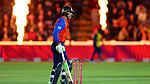
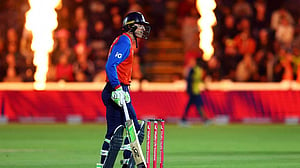
That rule now looks shakier than ever, after FIFA let United States forward Folarin Balogun off a suspension that should have kept him out of Monday's last-16 tie against Belgium, the BBC reports.
Balogun was dismissed in the US's last-32 win over Bosnia-Herzegovina and, by FIFA's own disciplinary code, faced a minimum two-match ban for serious foul play.
Instead, he will lead the line against Belgium as the tournament's joint top-scoring American, with three goals so far.
FIFA's explanation, or lack of one, is at the heart of the row.
The football’s governing body cited only Article 27 of its disciplinary code, the British broadcaster said, a broad clause letting FIFA suspend any punishment without meeting further conditions, and one that, per the British broadcaster, had never previously been used at a World Cup.
Pressed on its reasoning, FIFA pointed reporters only to an earlier, similarly suspended ban given to Cristiano Ronaldo, without addressing why Balogun's case qualified.
That precedent does not map cleanly onto this one, the BBC noted: Ronaldo's card came in World Cup qualifying, not the tournament proper, and FIFA had at least justified its leniency then by citing his clean disciplinary record across 225 caps.
No comparable justification has been offered for Balogun, leaving pundits and rival federations to draw their own conclusions.
Context matters here. Of the 189 red cards shown across World Cup history, only two have gone unpunished, the BBC said.
The other belonged to Brazil's Garrincha, sent off in the 1962 semi-final yet cleared to play in the final, a ruling that was, at the time, also clouded by claims of political meddling.
Belgium's football federation has reacted with fury, calling the decision "astonishing" in a Sunday statement and arguing it directly contradicts tournament regulations stating a sent-off player "will automatically be suspended from their team's subsequent match”.
Head coach Rudi Garcia was scathing at his pre-match press conference, joking that Jul 5 had apparently become April Fool's Day and insisting his team were standing up “for football”, not just for Belgium.
Former England defender Micah Richards, working as a BBC Sport pundit, went further, branding the ruling "a farce" designed purely to protect marquee names, and warning it had "left a bad taste in a lot of people's mouths”.
Other cases sit awkwardly alongside Balogun's.
The BBC highlighted Qatar's Assim Madibo, who received a five-match ban, three games heavier than the standard sanction, for a challenge that broke the leg of Canada's Ismael Kone, despite the broadcaster's assessment that Madibo barely made contact at all.
Then there is the political dimension.
Citing reports from Reuters and The New York Times, the BBC said US President Donald Trump called FIFA president Gianni Infantino on Wednesday, a day after Balogun's sending-off, to lobby for a review of the ban.
Trump later posted on Truth Social thanking FIFA for "reversing a great injustice”, a moment several observers have compared with the presidential involvement widely believed to have shielded Garrincha in 1962.
FIFA's timing could hardly be worse on this front: its ethics committee is already probing Infantino over allegations he breached the body's neutrality rules by handing Trump a FIFA Peace Prize, despite statutes that explicitly bar political interference in the sport, as per the BBC.
US Secretary of State Marco Rubio had already gone public before the reversal, telling reporters on Friday that the US "got screwed with that red card" and demanding an appeals mechanism be introduced.
In practice, Balogun ended up serving something closer to a sin-bin spell than a suspension, missing the last 27 minutes against Bosnia before being cleared to return.
Questions over FIFA's judgment, and any political hand behind it, are unlikely to fade quickly.
But for now, attention shifts to Monday's pitch, where Balogun will get the chance the rulebook once said he shouldn't have.