Published : 31 Jul 2025, 09:47 AM
Updated : 28 Aug 2026, 01:24 AM


The BNP wants the July Charter of Reforms to be pushed through the next parliament, while Jamaat-e-Islami and the National Citizen Party (NCP) insist on a clear legal grounding for the document before signing it.
Political parties raised questions over the implementation framework of the draft charter during the final phase of the ongoing dialogue with the National Consensus Commission, which has engaged 30 political groups in its reform discussions.
Several parties, including the BNP and its allies, are now pressing to know on what legal foundation the July Charter would stand, or how it would be enforced.
The commission has yet to provide a definitive answer, even though consensus has already been reached on a number of proposed reforms.
Parties were told they would need to sign the charter, but questions are now being raised about the legitimacy of signing a document with no binding basis.
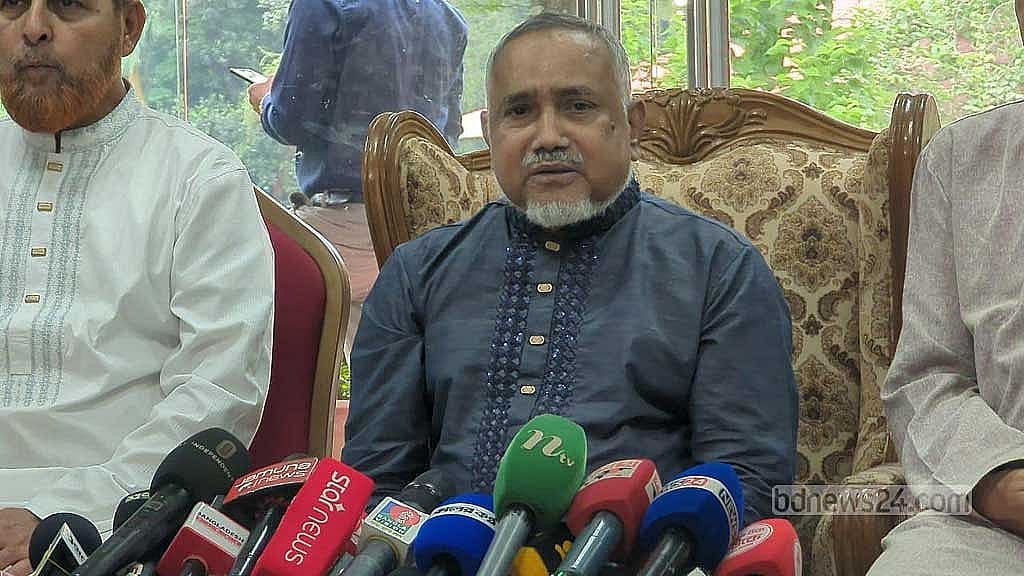
Jamaat-e-Islami deputy chief Syed Abdullah Mohammad Taher, said they asked the commission’s Vice-Chairman Ali Riaz about the legal status of the charter.
“He replied that it was not part of their terms. So we told him either get the mandate from the chief advisor or convey our position to him,” Taher said, adding that Riaz later assured the parties he would follow up.
The second phase of the Commission’s 22nd dialogue session with political parties took place at the Foreign Service Academy in Dhaka, beginning at 3pm and continuing until 7pm.
Seven unresolved issues were shown on screen at the start of the session. These included the principles of the state, the presidential election mechanism, and the structure of women’s representation in parliament.
The commission also discussed six other issues: appointments to the Public Service Commission, Anti-Corruption Commission, auditor General, and ombudsman; powers and responsibilities of the president under Article 48(3); electoral college structure; upper house framework and authority; expansion of citizens’ fundamental rights; and the constitutional principles of the state.
During a break in the session, Taher warned that without legal backing, the proposed reforms would remain unworkable. “The public won’t value a process that lacks enforceability,” he said.
“If these reforms are implemented properly, they could bring qualitative change to Bangladesh. But we were deeply disappointed by the draft charter sent by the commission.”
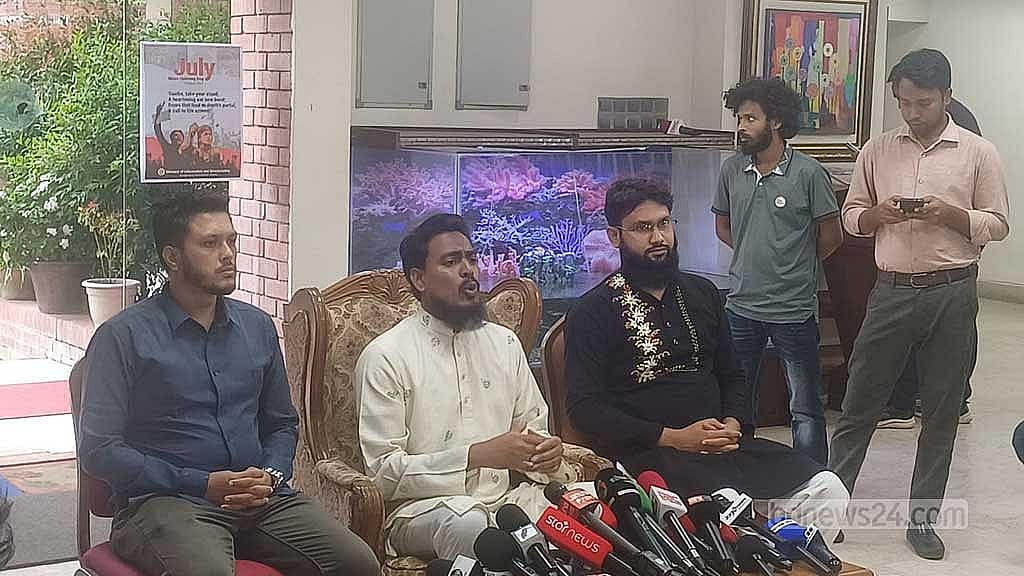
He noted that while the draft promises reform within two years, it sets no clear timeline for the government’s tenure or the commission’s authority.
“Does this imply the current government plans to stay in office for two more years?” he asked.
“If the next government has to implement these reforms, then what value does our effort hold if it’s merely advisory?”
He added, “From the beginning, we assumed the reforms would gain legal footing and become mandatory. If that doesn’t happen, it will simply remain rhetoric -- something the public won’t accept.”
Taher claimed that a written agreement had previously been made between the commission chair and the BNP leaders, but there has been no evidence of it on the ground.
“Breaking promises is not only deceitful, it’s a mockery of the people,” he said.
He pointed to previous political crises in Bangladesh’s 54-year history where legal loopholes were resolved through political negotiation.
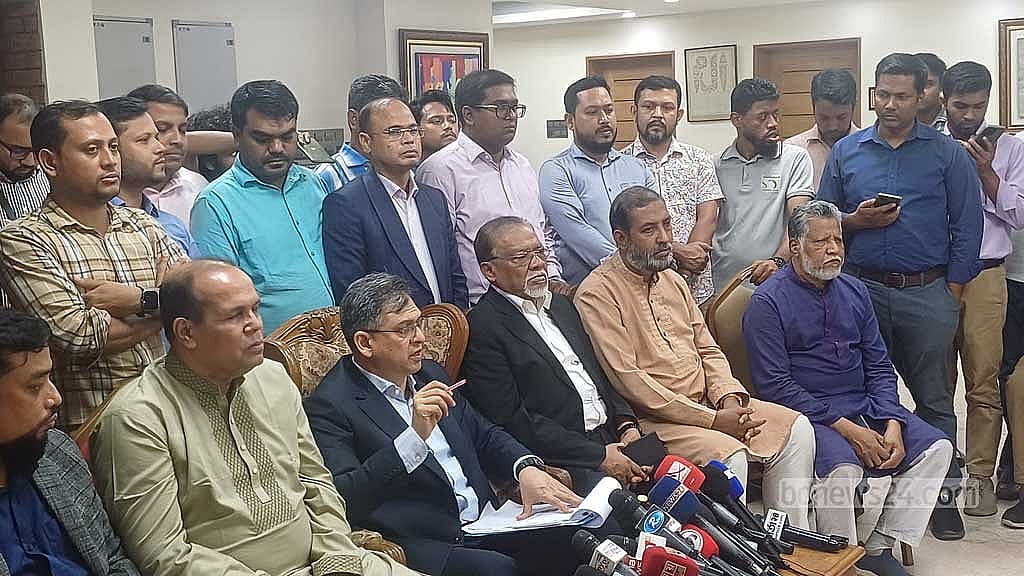
“We want a session with legal experts,” Taher added. “We must explore how these reforms can gain legal backing. If not now, then later -- but that space must be created.
“If the charter ends up being symbolic and lacks enforceability, we won’t sign it. Why sign something that holds no real value to the people?”
Supreme Court lawyer and Jamaat leader Shishir Monir supported this stance. “We want the Charter and Declaration to be issued as a constitutional proclamation.
“Once ratified by the next parliament, no court will be able to challenge it. That would establish a final legal foundation for national consensus,” he said.
NCP Member Secretary Akhtar Hossain echoed this concern. “If we cannot give the July Charter a legal foundation, it will become just another historic document -- like the three-party framework of 1991--with no functionality.
“We don’t want a dysfunctional, incomplete, reform-less charter,” he said. “The July Charter must be enforced through a Legal Framework Order.
“Legalisation is essential before we move forward. We want implementation of both the Charter and the Declaration by the 36th of July.”
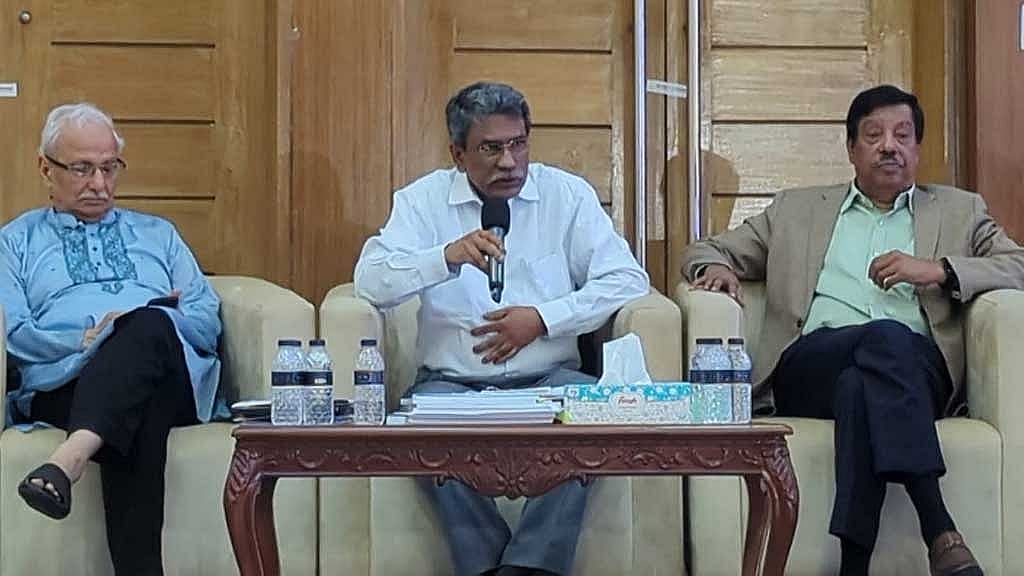
BNP’s senior leader Salahuddin Ahmed said his party would sign only once the full charter is ready.
“The next parliament will be the place for implementation,” he said, noting that several reforms could be rolled out now through ordinances.
He dismissed the idea that any party would deceive the nation. “I don’t believe any political group is planning to fool the people. National consensus will be the guarantee for the charter’s implementation.”
Salahuddin described the charter as “a historic pledge”.
“It will offer the nation a new direction, especially in this political and social context,” he said.
He noted that the charter’s final copy would be signed by the chief adviser, commission members, and political leaders before being made public.
Salahuddin also noted that the BNP had agreed to 659 of the 826 reform proposals, disagreed with 51, and held reservations on 116.
“Yet they say the BNP doesn’t want reform. The nation has seen the truth,” he added.
Riaz said on Wednesday that the acceptable draft of the July Charter would be handed to all political parties on Thursday.
“We’ll circulate a list of agreed points by Wednesday based on the consensus reached,” he added.