Published : 26 Dec 2025, 12:47 AM
Updated : 28 Aug 2026, 01:31 AM


When Tarique Rahman left Bangladesh in 2008, the country was under a military-installed caretaker government born of the “1/11” intervention. An election loomed, public faith in democracy was fragile, and power rested not with elected leaders but with an unelected authority promising reform and stability.
Seventeen years later, as he prepares to return home, the parallels are unmistakable.
Bangladesh is again being run by an unelected interim government, again waiting for a general election, again gripped by uncertainty over whether democratic politics can regain its footing.
What has changed is the scale of the rupture in between — fifteen years of uninterrupted Awami League rule, followed by the July 2024 mass uprising that toppled Sheikh Hasina’s government and shattered the political status quo.
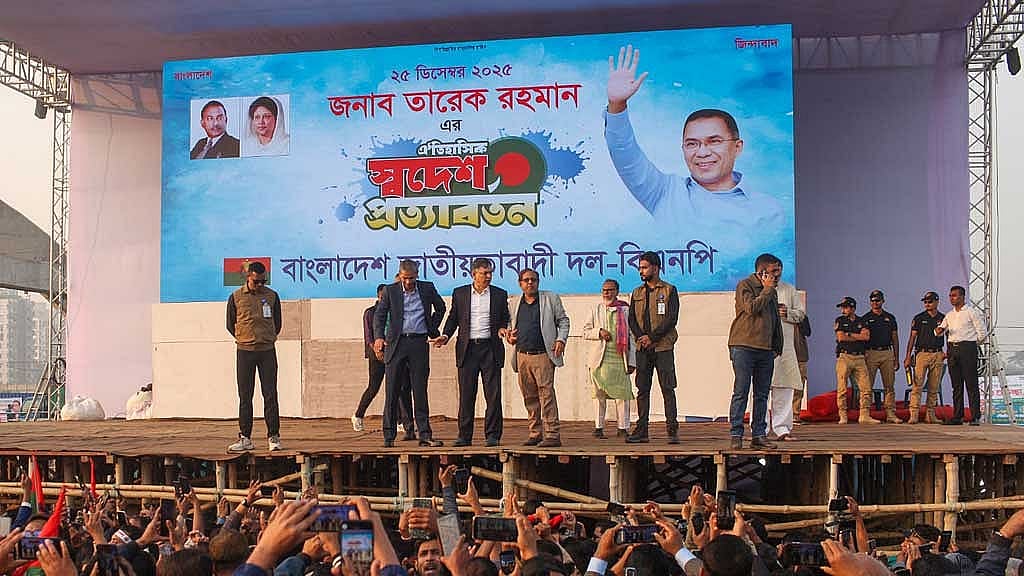
Tarique’s return, long speculated, endlessly debated and often doubted, is now imminent. On Thursday afternoon, he will land in Dhaka from London, accompanied by his wife Zubaida Rahman, their daughter Zaima Rahman, and even Zaima’s pet cat, Zebu — a detail that has humanised what is otherwise one of the most consequential political homecomings in recent memory.
The question now confronting Bangladesh is stark: can Tarique Rahman become a statesman for a changed country — or will he remain a factional leader shaped by the politics of the past?
FROM PRISON TO EXILE
Tarique’s departure from Bangladesh was never voluntary in the conventional sense.
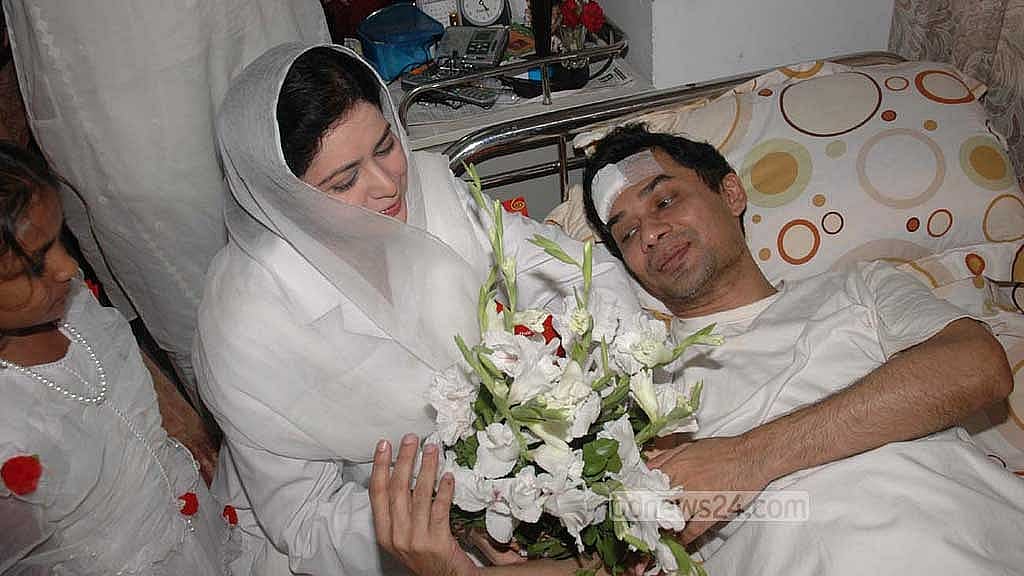
On Mar 7, 2007, during the emergency rule, joint forces arrested him at his residence on Shaheed Mainul Road in Dhaka Cantonment. Thirteen cases were filed against him. Allegations of torture followed. His health deteriorated rapidly, forcing hospitalisation at Bangabandhu Sheikh Mujib Medical University.
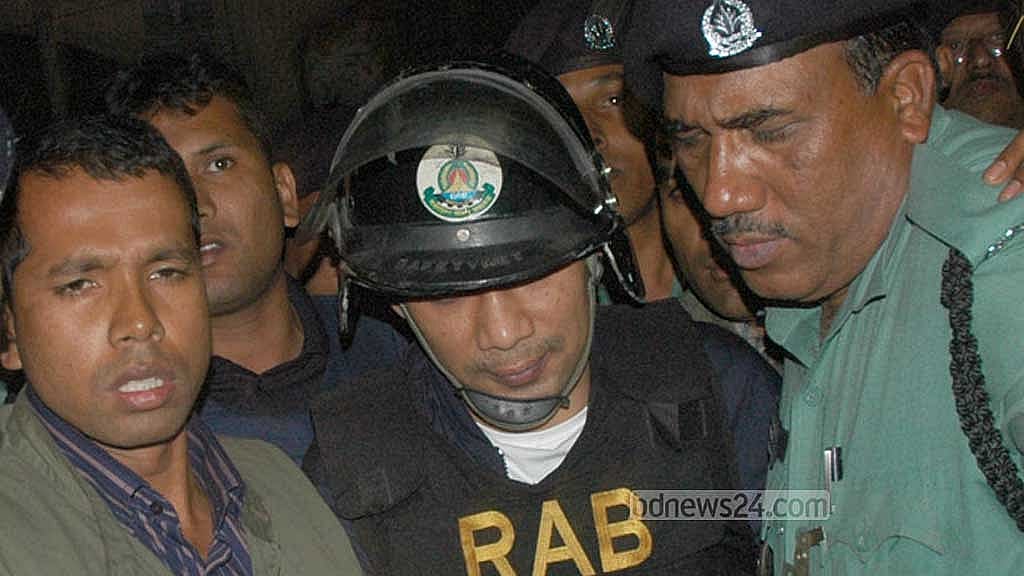
After more than a year in custody, he was released on bail on Sept 11, 2008. That same night, citing the need for advanced medical treatment, he flew to London with his family. What followed was not a temporary absence, but a prolonged exile.
At the time, reports had it that he had signed a pledge to withdraw from politics. In practice, he did the opposite.
BNP'S DARKEST YEARS
Tarique’s exile coincided with the BNP’s slow political collapse.
In 2010, his mother Khaleda Zia was evicted from her cantonment residence. In 2014, BNP boycotted the general election and found itself outside parliament. The streets became its primary battleground — and often its only platform.
Years of agitation failed to dislodge the Awami League. In 2015, Tarique suffered a personal blow with the death of his younger brother Arafat Rahman Coco. Even then, he could not return.
His passport expired. New cases were filed. He was declared a fugitive in multiple proceedings. Under Awami League rule, more than 70 cases were lodged against him. Courts handed down convictions in five, including a life sentence in the Aug 21, 2004 grenade attack case. The High Court banned on broadcasting his speeches.
Yet in exile, Tarique consolidated power inside the BNP.
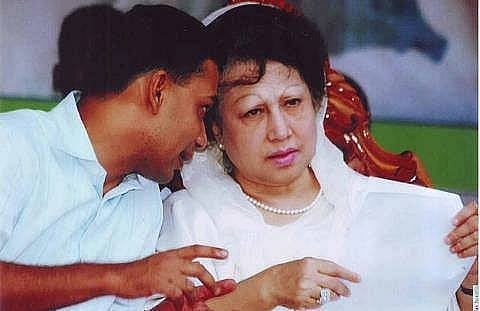
On Feb 8, 2018, the day Khaleda was jailed in the Zia Orphanage Trust case, the party’s policymakers tanding committee appointed Tarique as acting chairman. From London, via encrypted calls and video links, he began running the party — selecting candidates, approving strategies, and shaping messaging.
Senior leaders such as Mirza Fakhrul Islam Alamgir kept the organisation intact on the ground. Tarique kept control.
LEGAL BARRIERS FALL
Everything changed after the July Uprising.
With Sheikh Hasina forced from power and the Awami League sidelined, courts began revisiting politically sensitive verdicts. One by one, Tarique’s convictions were overturned. Legal barriers to his return collapsed.
BNP’s Legal Affairs Secretary Barrister Kayser Kamal later revealed that the government had offered to withdraw Tarique’s cases, which Tarique rejected.
“He could have accepted a political settlement,” Kamal said. “Instead, he insisted on full acquittal through the courts. That is what happened.”
Still, his return remained uncertain.
In January this year, Khaleda travelled to London for treatment and met her son after a long separation. She returned to Dhaka without him. Speculation intensified. Was Tarique seeking asylum? Did he lack travel documents? Was there political resistance?
The interim government said he had no passport but could be issued a travel pass on request.
The breakthrough came in February when interim prime minister Muhammad Yunus met with Tarique in London. According to multiple accounts, the two agreed that the next general election would be held in February 2026.
By late November, the pieces fell into place. Tarique obtained a travel pass from the Bangladesh High Commission in London in a single day. The BNP began preparing offices, residences, and logistics in Dhaka. On Dec 12, Mirza Fakhrul publicly announced that Tarique would return on Dec 25.
A CHOREOGRAPHED RETURN
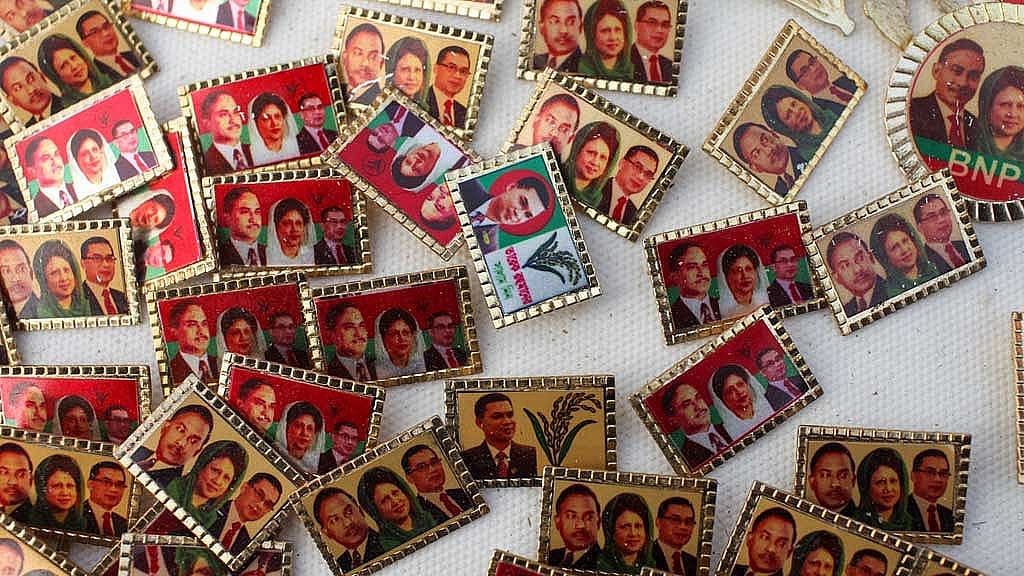
The BNP has planned a carefully choreographed reception, aimed as much at political messaging as celebration.
Tarique will arrive on Biman Bangladesh Airlines flight BG-102 at 11:55am. He will be received at the VIP lounge by senior BNP leaders, then travel in a bullet-proof Mercedes to a massive rally on the 300 Feet Road (July 36 Expressway).
The scale is unprecedented: 30 LED screens, more than 900 microphones, giant displays stretching from Gulshan to Jamuna Future Park, and live broadcasts on BNP-affiliated platforms. Nine special trains have been hired to bring supporters from up and down the country.
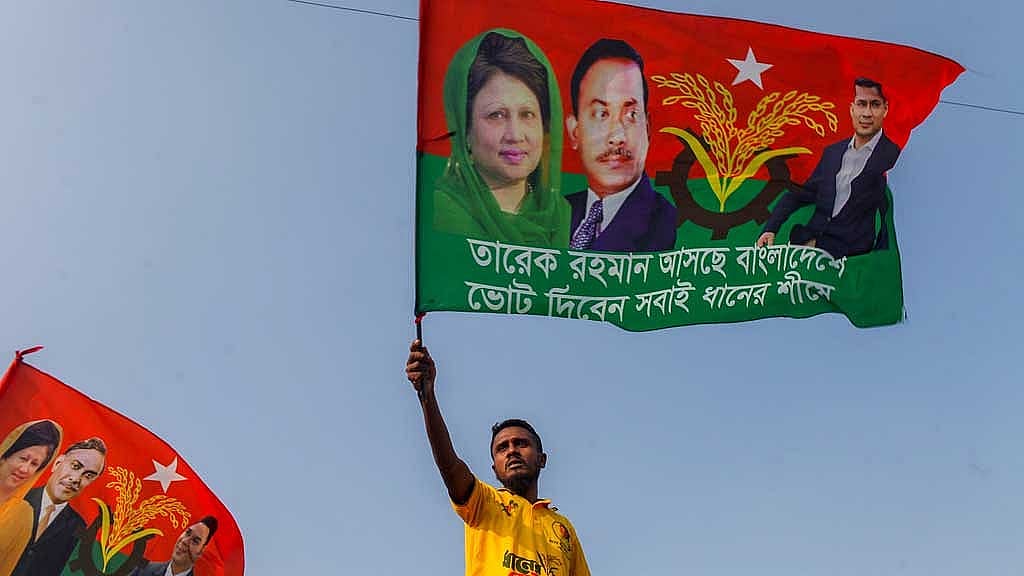
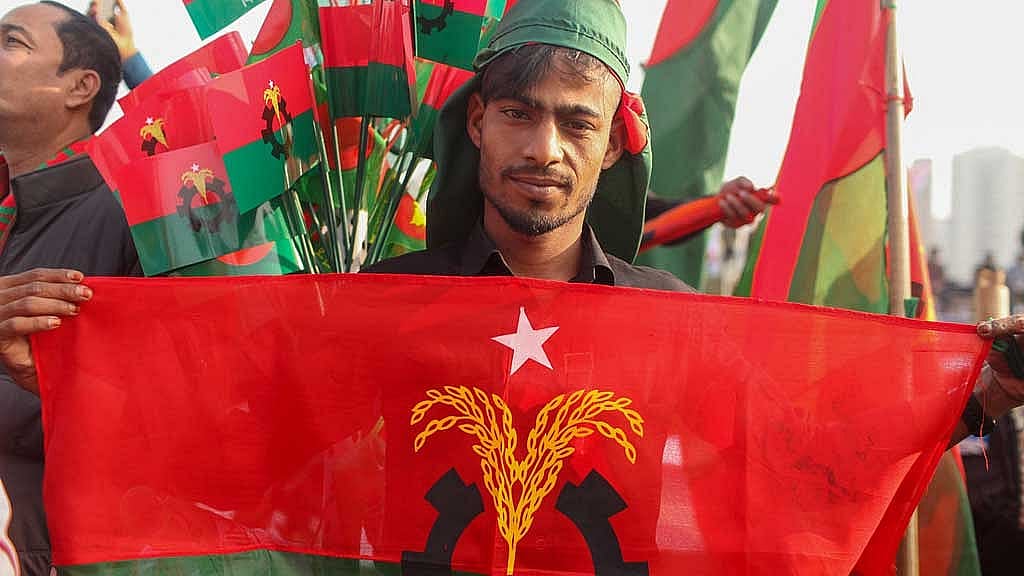
Crucially, BNP has instructed supporters not to carry the party’s election symbol, following the announcement of the election schedule — a signal that this is meant to be a national moment, not a campaign rally.
After the event, Tarique will visit his mother at Evercare Hospital, then stay at House 196, Gulshan Avenue.
A REVIVED PARTY, A FRAGMENTED COUNTRY
BNP is visibly energised.
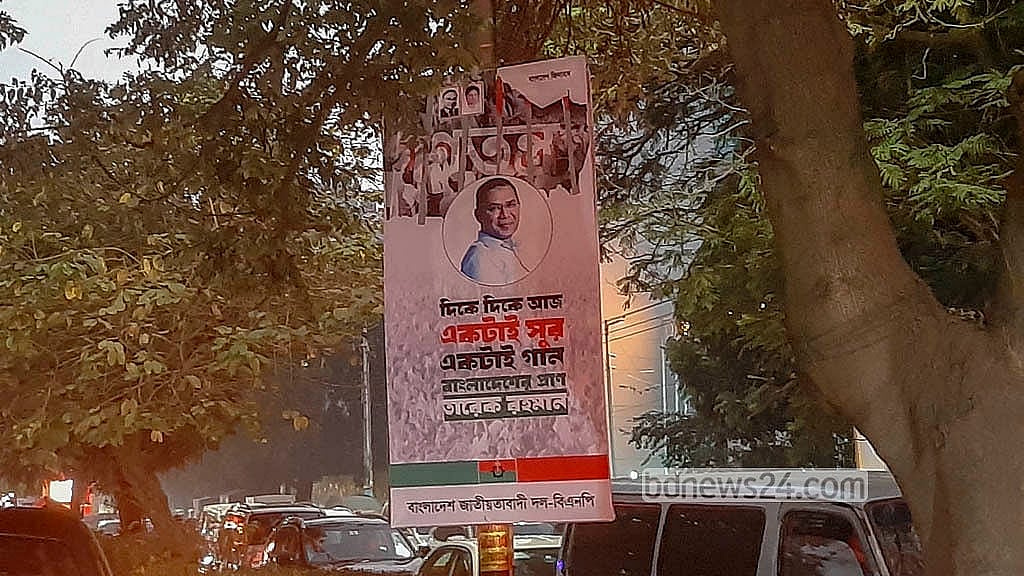
Banners across Dhaka proclaim: “Leader is coming”, “Tarique’s return, democracy’s awakening”. Activists speak of renewal, discipline, and electoral victory. The party has already announced that Tarique will contest the Bogura-6 seat in what will be his first attempt to enter parliament.
Offices in Gulshan and Naya Paltan have been refurbished. A new election operations centre has been rented on Gulshan Road 90, complete with briefing rooms and a research cell.
Yet the country Tarique returns to is deeply divided. The question is can he unite a divided country?
Sheikh Hasina is in exile in India. Khaleda is frail and largely absent from politics. The Awami League is organisationally damaged but not erased. Since the 2024 uprising, Bangladesh has entered a new phase of polarisation and division. Street politics has grown more volatile. Media houses and cultural institutions have recently faced attacks.
In a political arena without the Awami League, Jamaat-e-Islami has emerged as a new force. In the 17-and-a-half years that the BNP has been out of power, many of its senior leaders have died and others have become inactive. Like every major party, the BNP now faces pressure to make room for a new generation.
In such a landscape, can Tarique, returning home after breaking his exile, deliver any meaningful qualitative change in politics?
Political analyst Professor Asif Mohammad Shahan believes Tarique does have that opportunity.
“How can he do it? Look at what we saw on the 18th and 19th, attacks, vandalism and arson at media outlets and cultural institutions; the leap of the right wing; and the uncertainty this has created over whether an election will even be held,” hesaid.
“My sense is that his arrival, and then his submitting his nomination papers, will play a major role in removing that uncertainty. And it will have a positive impact on the instability we are seeing.”
But for that to happen, Prof Shahan, a member of the University Teachers’ Network and a citizens’ coalition, says the BNP’s acting chairman must send clear signals.
The Dhaka University Development Studies professor said: “Most importantly, if he wants stability, then after the election he must implement the areas of political reform that everyone has agreed on.
“Mobocracy has gone far beyond acceptable limits. If he can send a strong message that the government must actually perform the role of government. And if all political parties support the government in the sense that these kinds of acts can no longer be brushed aside, and that politics must move away from being pressure-group politics… if he can send that kind of strong message, I think that will create a lot of confidence and, in my view, it will have a positive impact.”
Tarique, Prof Shahan adds, will also need to focus on erasing the stigma of Hawa Bhaban from the BNP’s last time in office. And he will need to issue a tough warning to curb wrongdoing by his own party workers.
“If he can create the sense that he listens only to the people, then controlling his party becomes easier,” Prof Shahan said. “But if party activists feel Tarique Rahman is still weak, or that what he is saying isn’t resonating in that way, then I think the crisis will deepen.”
Prof Shahan’s argument is that the direction of the country’s politics, not just the BNP’s, now hinges on Tarique’s effectiveness and competence.
Vice-Chancellor of Jahangirnagar University Prof Mohammad Kamrul Ahsan believes Tarique can rise to that challenge.
“I hope he can work as a symbol of unity. Then the election will happen. Not only the BNP, the whole country will benefit from his presence,” he said. “Over the last one to one-and-a-half years, the divisions created in the name of diversity have done enormous damage.”
Election observer and political analyst Abdul Alim thinks Tarique will focus mainly on the election. But beyond the campaign, he may still have room to play a role in building unity among parties.
“Given the divisions among parties, perhaps he can play a role here, meaning he can bring everyone onto one platform and initiate consensus, which is very necessary,” Alim said.
Tarique’s return will have far-reaching consequences for Bangladesh’s politics, argues Professor Kazi Mahbobor Rahman of Dhaka University’s Department of Political Science.
“Because he was away from the country, he has had dreams he has carried with him,” he said. “Through his return, an opportunity will open up to turn those dreams into reality. People will become more united around the BNP.”
A MOMENT THAT MATTERS
For nearly two decades, Tarique Rahman shaped Bangladesh’s opposition politics from afar. Now, he returns at a moment when his choices will affect not just his party, but the trajectory of the state itself.
Bangladesh is no longer the country he left behind in 2008. Whether he can read that reality — and rise to it — will define not only his leadership, but the future of the country’s fragile democracy.