Published : 11 Nov 2025, 08:45 AM
Updated : 28 Aug 2026, 01:29 AM


Seven days after Bangladesh’s interim government asked rival parties to settle a row over when to hold a referendum on sweeping constitutional reforms known as the July National Charter, no compromise is in sight.
In the seven-day deadline, neither the government nor the parties announced any compromise. There has not even been any visible initiative for the parties to sit together.
The National Consensus Commission, which spent eight months brokering cross-party reforms, left the referendum timing open in recommendations submitted on Oct 28, saying it could be held on election day or before. Instead of making the call, the government on Nov 3 urged parties to deliver a unified position within a week. They did not.
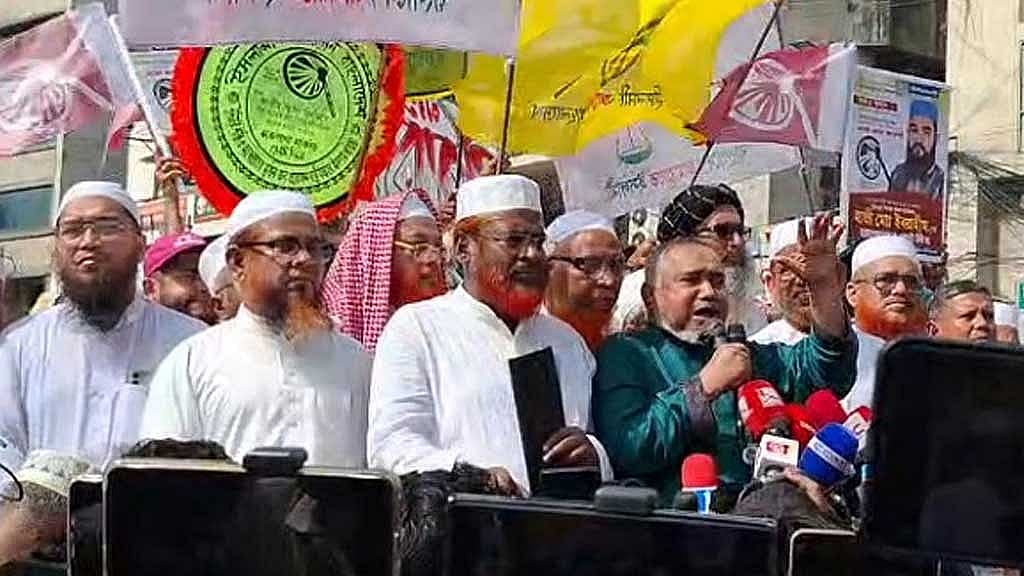
Positions have hardened. Jamaat-e-Islami, mobilising alongside seven religion-based parties, demands a November referendum. It says it tried to contact the BNP to sit for talks, but received no response.
Senior BNP leaders, by contrast, insist whatever consensus existed on the July National Charter has already been reached and that there was no further scope for discussion. If there is to be any new meeting, they say, the proposal must come from the government, not from another party.
Over the past week, neither side has budged from its demands. Jamaat has ratcheted up rhetoric, threatening to “bend the finger” if persuasion fails.
The BNP says the referendum must be held on the same day as the parliamentary election. If they take to the streets to press the demand, “conflict” could erupt in the country.
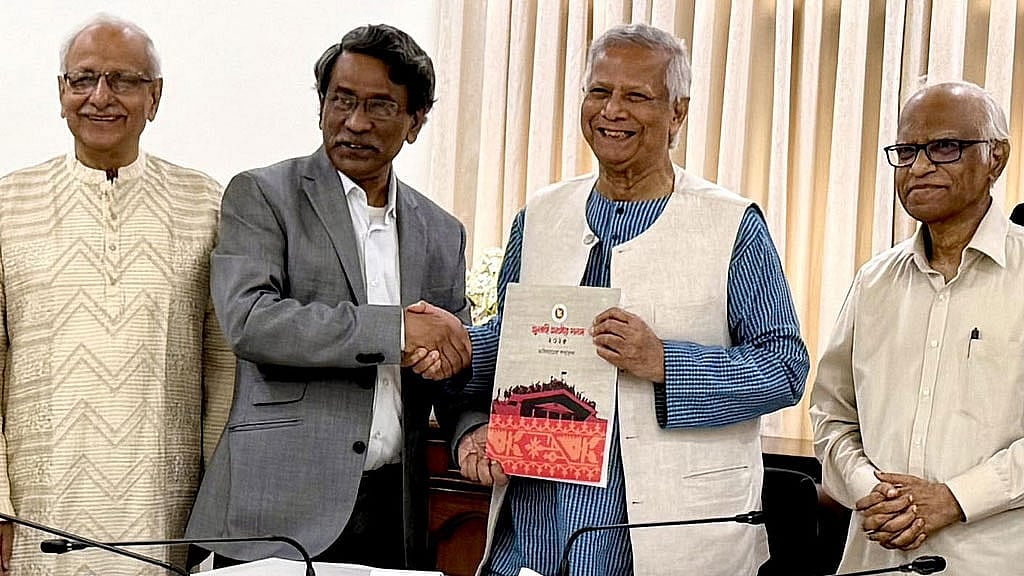
In this context, analysts believe Muhammad Yunus must now decide whether to accept Jamaat and like-minded parties’ demand for a November referendum, or to align with BNP and some others who want it held on election day.
They argue that if the parties must be brought back to the table, that responsibility lies with the government.
Despite the wrangling, 25 parties, including the BNP and Jamaat, signed the July National Charter on Oct 17. What remains unresolved is the calendar, and whether a fragile consensus survives the stress test of timing.
After an emergency meeting of the Advisory Council on Nov 3 , Law Advisor Asif Nazrul told a briefing that, in the council’s view, urgent final decisions were needed, based on the commission’s proposals, on when the referendum would be held, what its subject matter would be, and what steps would be taken regarding dissenting opinions noted in the July Charter.
“In these matters, the political parties that have long been allies in the anti-fascist movement have been urged to discuss among themselves on their own initiative and provide the government with a unified direction as soon as possible, preferably within the next week.”
At a seminar in Dhaka on Saturday titled “Use of technology in election manifestos”, Chief Advisor’s Press Secretary Shafiqul Alam said: “If the political parties cannot decide, the interim government will decide.”
And at a briefing at the Secretariat on Monday, Advisor Syeda Rizwana Hasan said the government would take a decision on its own regarding implementation of the July Charter, as the parties had failed to reach agreement.
She said: “The government gave the parties time to decide. No decision came. Since they did not sit for talks within seven days, the government will take a decision. I haven’t heard anyone say the government cannot decide.”
Jamaat leaders blame the BNP for the lack of any visible initiative toward compromise within the week set by the government.
Assistant Secretary General Hamidur Rahman Azad told bdnews24.com: “It is clear the BNP did not want it. They gave one kind of opinion to the Consensus Commission. They said there is no problem with a referendum. Why reverse position after the recommendations arrived?
“What the government does now is up to the government. We called on the BNP, the government called them too.”
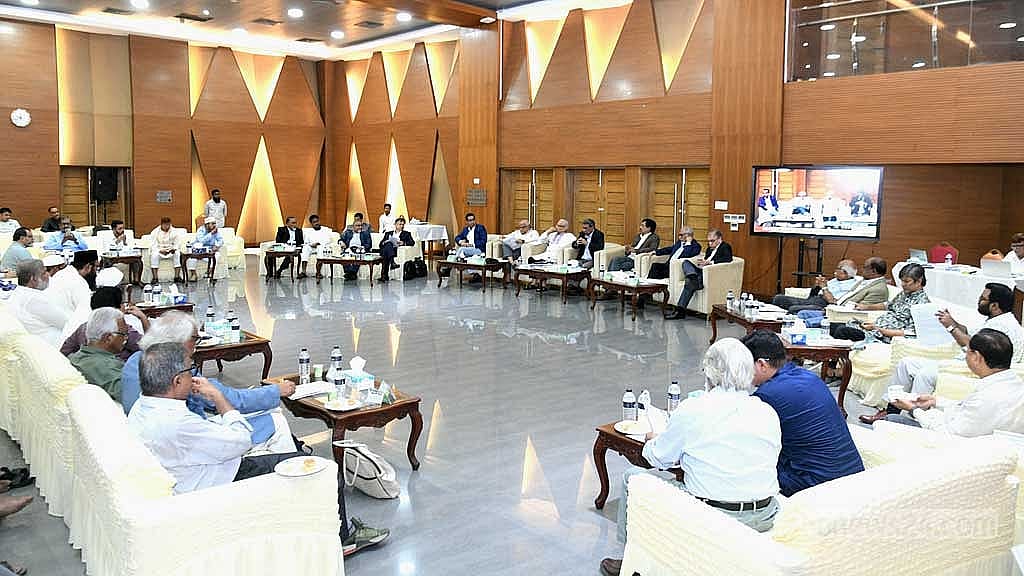
But the BNP says it will not enter fresh talks at the call of any party.
At a Dhaka discussion on Saturday, BNP Standing Committee member Salahuddin Ahmed said the party would join talks “if the chief advisor invites us,” adding there was no reason to attend a dialogue convened by another party.
Jamaat pushed back, arguing the only task now is to issue the July Charter order in line with the Consensus Commission’s recommendations and to hold the referendum before the election. It said it would join any government-led talks but insisted the referendum and the polls must fall on different dates.
Turning up the heat, Jamaat’s Naib-e-Ameer Syed Abdullah Muhammad Taher warned they would “bend the finger” if necessary to force a pre-election referendum.
The BNP, for its part, has branded the November referendum drive by eight religion-based parties, including Jamaat, as “dictatorial”. It cautioned that if the country’s "largest political party" answers with its own street programme, clashes are a possibility.
The party's heavyweight Amir Khosru Mahmud Chowdhury warned that tit-for-tat street action risks clashes. He added there is “no scope” to move beyond the agreed consensus, and not every demand warrants taking to the streets.
‘LITTLE SCOPE OF AGREEMENT’
Many politicians believe the government bears responsibility for pushing the country’s major political parties into such a confrontational stance.
Some have also questioned whether the government’s decision to give a seven-day deadline is a “strategic ploy”.
Ganatantra Mancha activist and Ganosamhati Andolan Chief Coordinator Zonayed Saki told bdnews24.com that parties involved in the simultaneous movement, including Jamaat-e-Islami, have called a rally in Dhaka on Tuesday with a five-point list of demands, including holding a referendum before the national election.
He said as the BNP and Jamaat remain firm in their respective positions, the possibility of a compromise has become increasingly slim.
Rastro Songskar Andolan Coordinator Hasnat Kaiyum believes the government must take the initiative if new discussions are needed.
He told bdnews24.com on Monday, "The initiative actually needs to be taken by the government; then it is possible to reach a settlement. This must be formally concluded.
"We believe that the political parties are coming somewhat closer, and whether they admit it publicly or not, they each want a solution. The government can achieve that if it takes the initiative."
However, he views the government leaving the responsibility of compromise to the parties as “irresponsible” behaviour.
Revolutionary Workers Party General Secretary Saiful Haque also described this attempt at agreement as a “ploy” by the government.
He told bdnews24.com, "Firstly, the crisis was created by the government and the National Consensus Commission. They have a role in this. The proposal they presented, which is outside the scope of consensus, is the source of the crisis.
"On the question of whether the government can issue any order on constitutional matters, most parties said the government cannot do so."
He continued, "Most parties said the referendum should be held on the election day in February. They (the National Consensus Commission) are offering two alternatives -- it can happen either before or after the election. This means they did not take the opinion of the majority of the parties into account. They kept the other alternative open.
"They are saying it will take nine months to incorporate these things into the constitution. This is ridiculous. There is no question of it taking nine months.”
He said there is no justification for such a timeline, and the provision that if the process is not completed within nine months it would automatically take effect is “bizarre, unprecedented, and ridiculous”.
According to him, such provisions appear to have been intentionally designed to give certain parties an advantage. “Since the government created the crisis, it should also find a way out of it,” he said.
The Revolutionary Workers Party leader criticised the government's decision to give one week's time, saying: "What they said about the parties reaching a compromise is a very poor quality trick.
"So, the course of action now is for the government to base its decision on the general consensus among the parties on certain issues. And as most parties believe the referendum should happen on the day of the election, the government should stand by that. Any order on this matter should be phrased in a way that does not appear to override the constitution.
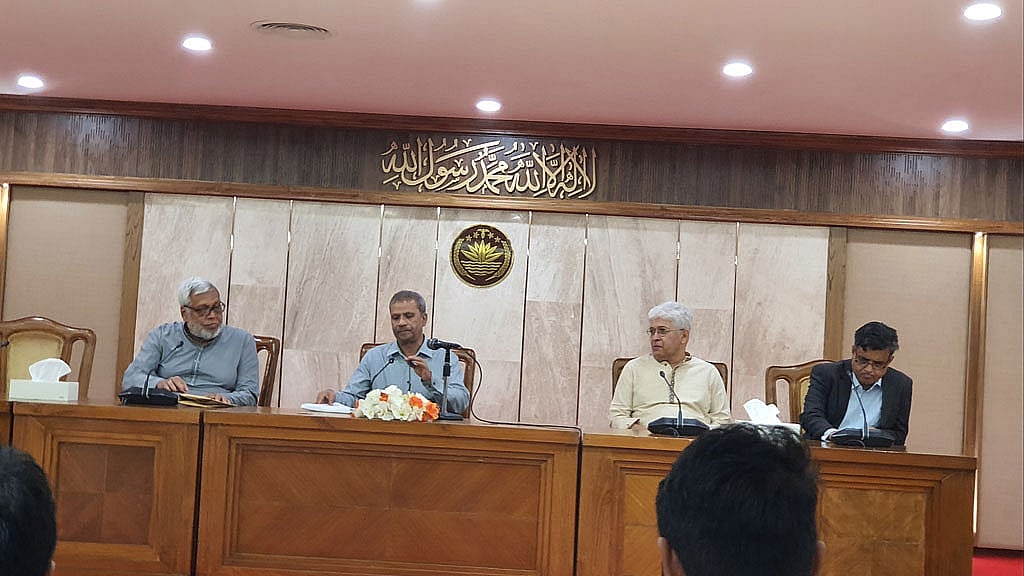
He said since all parties have signed the July Charter and agreed on holding a referendum, the government should simply instruct the Election Commission to arrange the referendum on polling day. That would fulfil its responsibility.
"If the government's sincerity and intent are correct, overcoming the crisis will be easy. But if there is a strategy in their integrity and political thinking, a new crisis will emerge."
He warned, "If it becomes clear that the government is leaning toward one side or the other, a new crisis will be created. This could lead to a political disaster. The next election could also be jeopardised by it.
"I believe it is still possible to emerge from this crisis if the government can show wisdom and foresight."
Political analyst Professor Kazi Mahbobor Rahman also urges the government to take the initiative on this matter.
He said, "The interim government has a responsibility. Hitherto, the National Consensus Commission has played the role of a referee. Since the commission has completed its work, the interim government must now play the role."
The Dhaka University political science professor said the parties will no longer be able to reach a decision through discussion, so the government itself must discuss with the parties and come to a decision.
"The government is here to play a coordinating role. The very job of the interim government is to coordinate among everyone."
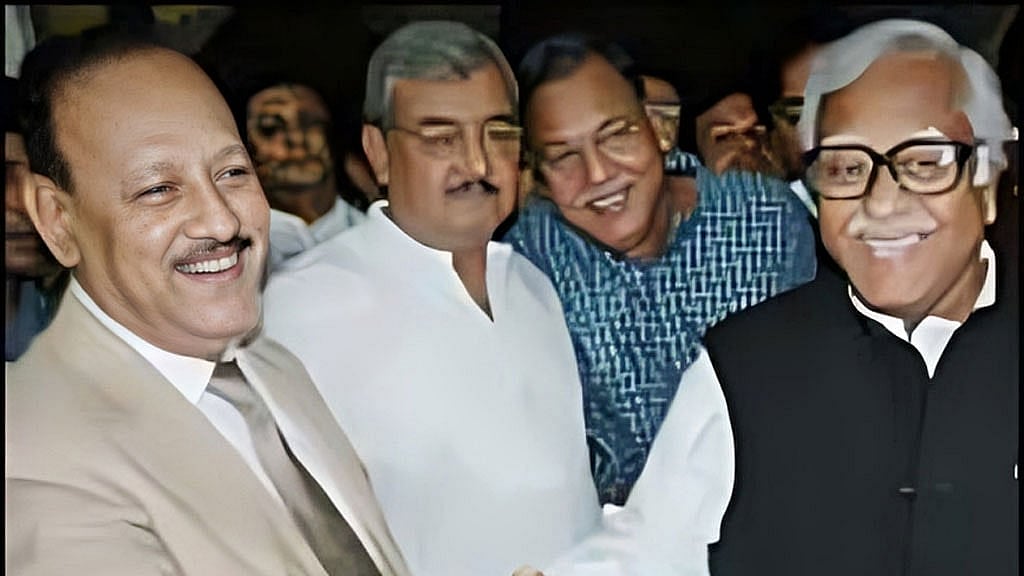
The country faced a major crisis in October 2006 when the dialogue between the then-ruling BNP's secretary general Abdul Mannan Bhuiyan and former Awami League general secretary Abdul Jalil failed.
A HISTORY OF FRUSTRATION
Political instability in Bangladesh has repeatedly led to formal and informal dialogues — in 1990, 1996, 2001, and 2006 -- without lasting solutions.
After the caretaker government system was abolished in 2011, elections held under party-led governments in 2013, 2018, and 2024 failed to resolve political crises due to the intransigence of the major parties.
During the Hussein Muhammad Ershad regime in the mid-1980s, political parties engaged in discussions to restore constitutional governance and hold elections following the withdrawal of military rule.
After Ershad’s fall in December 1990, informal talks among political parties took place over the appointment of an interim president.
The first formal dialogue in the country’s political history was held in 1994 under the mediation of Sir Ninian Stephen, initiated by the Commonwealth.
At that time, the Awami League and BNP were still in a standoff over the electoral process.
Following the Magura by-election, the Awami League called for a caretaker government.
Amid strikes and violence, Commonwealth secretary-general’s envoy Sir Ninian took the initiative to facilitate discussions.
A controversial and one-sided election was held on Feb 15, 1996, prompting the establishment of a caretaker government under pressure from the Awami League.
Under this system, two elections took place: the June 1996 vote brought the Awami League to power, and the October 2001 election installed the BNP.
In 2006, the caretaker government system became a point of contention, and political agitation mounted.
Before the elections, a formal dialogue was held between Abdul Jalil, the then general secretary of the opposition Awami League, and Abdul Mannan Bhuiyan, then secretary-general of the ruling BNP.
Despite several days of discussions, no agreement was reached.
Following the failure of talks, protests and violence culminated in a state of emergency declared on Jan 11, 2007.
Parliamentary polls were subsequently held in 2008 under a military-backed caretaker government.
In 2011, the Awami League government abolished the caretaker government system through constitutional amendments, making political crises over “pre-election governments” a recurring feature.
Before subsequent elections, letters proposing dialogue were exchanged between the then Awami League general secretary Syed Ashraful Islam and BNP acting secretary general Mirza Fakhrul Islam Alamgir.
However, even where dialogue occurred, no resolution was achieved.
BNP boycotted the general election in 2014 due to the absence of a neutral government.
Although they participated in the 11th parliamentary polls in 2018, allegations of rigging arose.
In the national election of 2024, both the BNP and its allies once again boycotted the vote.
International efforts have occasionally sought to mediate political disputes.
Before the 2014 election, UN secretary-general’s special envoy Oscar Fernandez-Taranco tried to bring the two sides to an agreement.
Ahead of the 2024 vote, Donald Lu, assistant secretary for South and Central Asia at the US State Department, visited Bangladesh.
Before the 2018 elections, as a result of dialogue with the then prime minister at Ganabhaban, the BNP and the Jatiya Oikya Front participated in the vote.
Despite these interventions, the three most recent elections were controversial for multiple reasons.
Political analyst Mizanur Rahman Shelley, speaking in 2013, noted that “all dialogues so far have remained unresolved. Their outcomes have been decided on the streets, through intense movement”.
Looking at the region’s history of dialogue, he referred to round-table talks during British rule involving Mahatma Gandhi and Muhammad Ali Jinnah.
In Pakistan’s era, during 1968–69, Bangabandhu Sheikh Mujibur Rahman also held round-table discussions with Ayub Khan after being released from prison.
Those talks, too, failed, paving the way for armed struggle and eventually the emergence of Bangladesh.