Published : 12 Jan 2026, 07:54 AM
Updated : 24 Aug 2026, 04:00 PM


They marched through tear gas and bullets in July. They toppled a government in August. Now, for the first time in their lives, they are preparing for a national vote.
As Bangladesh moves towards a parliamentary election just a month away, the country’s young people -- long excluded from meaningful participation in “rigged” or “uncontested” polls -- are poised to become the most decisive force in a contest that will shape the post-Uprising republic.
How many of them are there? And how far can they influence victory and defeat?
Those questions have moved from the margins to the centre of national politics, especially after the stunning results of recent student union elections at Dhaka University and four other campuses.
In those polls, a right-wing student organisation swept to power -- a result that has sparked intense debate over whether it signals a deeper shift in Bangladesh’s political landscape.
To some, the outcome shows that young people are welcoming a new kind of politics. To many others, it confirms that the youth vote could now become the single most powerful factor in the coming parliamentary election.
A THIRD OF THE ELECTORATE
Officials and analysts say the scale of this demographic shift is unprecedented.
Of the nearly 130 million voters registered for the national election, around one-third are young voters, aged between 18 and 35.
Election officials believe this group is far more politically conscious than previous generations -- and therefore far more likely to turn out.
Abdul Alim, an election analyst and member of the Electoral System Reform Commission, told bdnews24.com: “Many of [the youth] are first-time voters. So they will exercise their voting rights after considering everything.”
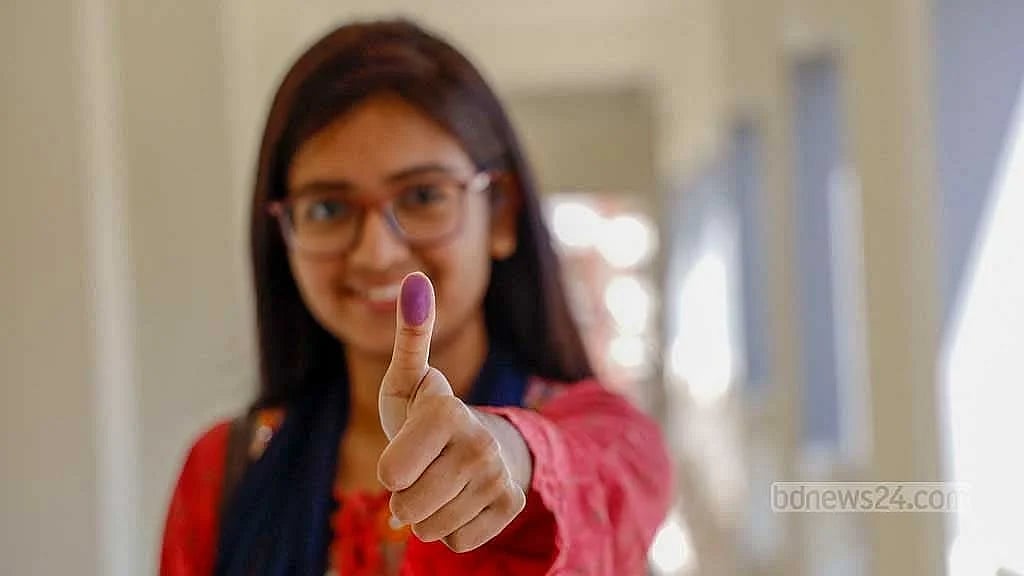
“This vote will therefore become extremely important. Whichever candidate they vote for will see their chances of victory rise significantly.”
Yet Alim is cautious about drawing a straight line between student elections and national outcomes.
“You cannot simply say that whoever wins the DUCSU election will win the national election. There is no scope to make such a claim.”
But on one thing he is certain: the youth vote will be decisive.
“There is no doubt that young voters will determine victory and defeat in this election.”
A GENERATION ‘DENIED’ THE VOTE
Before the fall of the Awami League government on Aug 5, 2024, Bangladesh had endured three consecutive national elections marred by allegations of one-sided contests, ballot-stuffing, vote theft, and even voting in the dead of night.
Public faith in elections had collapsed.
During the July movement, young people poured onto the streets in huge numbers, protesting against that system -- a mobilisation that culminated in a student-led mass uprising.
The last time Bangladesh saw a genuinely competitive election was in December 2008, when the country first adopted a photo-based voter list. At that time, the total number of voters stood at 81.09 million.
Over the past 17 years, deaths have been removed and new voters added. The voter roll has typically grown by 3 to 5 percent with each update, with an average death rate of 1.45 percent.
Between the ninth and 13th parliamentary elections, the total number of voters has risen by more than 46.7 million, reaching about 127.7 million today.
WHO ARE THE YOUNG VOTERS?
Under Bangladesh’s youth policy, anyone aged between 18 and 35 is considered young.
Election Commissioner Md Anwarul Islam says that nearly one-third of all voters fall into this category -- and that they are unusually engaged this time.
“We believe the casting of votes by this group will be good, and their turnout will be high.”
Out of roughly 130 million voters, he said, more than 40 million belong to the 18–35 age group.
“If a good portion of them vote, then wherever their votes go, they will have a strong impact.”
Mohammad Abdur Razzaque, chairman of the Department of Computer Science and Engineering at Dhaka University, agrees.
“For many years, people of almost all age groups were prevented from voting. But after the student-led movement of 2024, it has become clear that young people care deeply about how Bangladesh is governed and how the state is run. Those under 30 are the most influential.”
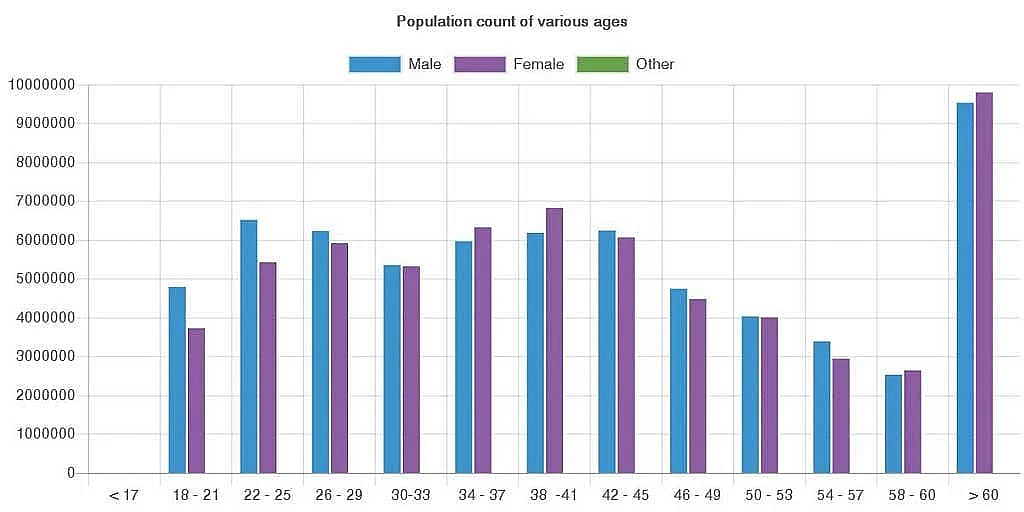
Overall, there are now more than 127.6 million citizens aged 18 or above. Of them, over 45 million are aged between 18 and 35.
Breakdown by age:
• 18–21: more than 8.53 million
• 22–25: more than 11.9 million
• 26–29: more than 12.1 million
• 30–33: more than 10.6 million
• 34–37: more than 12.3 million
LONG-LOST BALLOT
Alongside the parliamentary election on Feb 12, voters will also take part in a referendum on the implementation of the July National Charter.
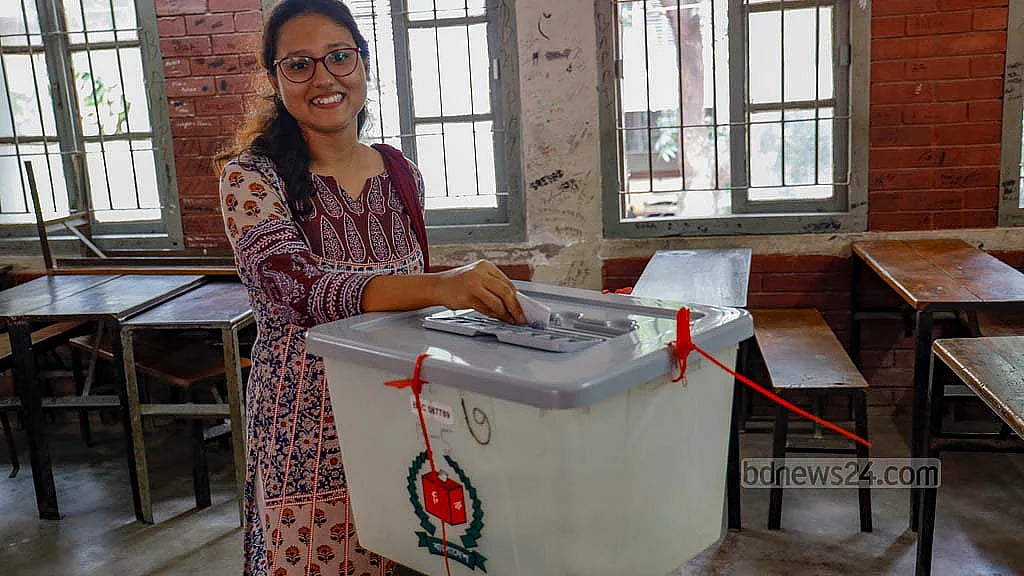
A student identified only as Nazim said, “My first vote in life -- if it becomes an example of a democratic journey -- I hope the government will not disappoint us.”
Dhaka University student Karib Chowdhury said, “Under the previous ‘fascist’ regime, people saw dummy elections. Even the Election Commission, a constitutional body, helped that regime become ‘fascist’ by legitimising its wrongdoings.”
“We hope this Election Commission will be impartial and transparent. After becoming a voter, I could not cast my vote in previous elections. This 2026 election will be my first in building a democratic Bangladesh.”
Chief Election Commissioner AMM Nasir Uddin has repeatedly said that the new commission’s core task is to restore voting rights to those who were deprived of them.
Last year, he said: “180 million people were deprived of their voting rights… We have taken responsibility, God willing, to remove that deprivation.”
After the Nasir Uddin-led commission took office, the first updated voter list was finalised on Mar 2 last year. A second phase of door-to-door registration ended in August, and a final phase to include new voters continued until Oct 31.
By November, the final roll stood at 127.69 million voters.
Of them, 64.81 million are men, 62,87 million women, and 1,234 transgender.
The Director-General of the National Identity Registration Wing ASM Humayun Kabir said, “The difference between male and female voters has also narrowed. Many rural women had not been registered for years.
“Now, after a long time, they are getting the festival of voting. Even those who were inactive for 17 years have shown interest and registered.”
He said 6.3 million voters were added through special inclusion drives.
WHAT YOUNG VOTERS WANT
Partha Pratim Mondol Shubho, a voter from Magura-1, now studying philosophy in Dhaka, said: “Every government is good for the first two years -- problems come in the next three. I want a government that will stay with the people for the full term.”
“I will support the party that guarantees security, freedom of speech and religious freedom -- and where minorities can live without fear.”
Nadia Zerin from Moulvibazar-2 said, “It’s exciting to vote for the first time, but there is also anxiety. The transitional country is stumbling at every step.”
“For those of us who want to study abroad, it is bad news -- many countries have reduced visa ratios.”
“Given the grave situation, we need an elected government. But it must protect our international standing. We will vote for those who think about the country and its people.”
DO STUDENT ELECTIONS SIGNAL NATIONAL VOTE OUTCOME?
After the Jamaat-e-Islami’s student wing Islami Chhatra Shibir won sweeping victories at Dhaka University and Jahangirnagar University, the national impact became a hot topic.
Jamaat leader Matiur Rahman Akanda said, “Students have signalled evolution through their votes. Its impact will be felt across the country and in the election.”
BNP leader Nazimuddin Alam argued that the party could still recover.
But on Jan 6, Shibir also won top posts at Jagannath University.
Sarwar Tusher of the National Citizen Party said, “Young voters have proven they want July-aligned politics -- and this will definitely affect the national election. Those who say it will not are wrong.”
Communist Party of Bangladesh President Kazi Sazzad Zahir Chandan disagreed: “Student elections do not decide national politics. People mainly want to vote after three elections where they could not.”
The young, he said, would decide for themselves.
And this time, for the first time in 17 years, they finally can.
[Jagannath University Correspondent Anupam Mallik Aditya and Dhaka University Correspondent Arfatul Islam Naim contributed to this report]