Published : 01 Dec 2025, 10:02 AM
Updated : 28 Aug 2026, 01:30 AM


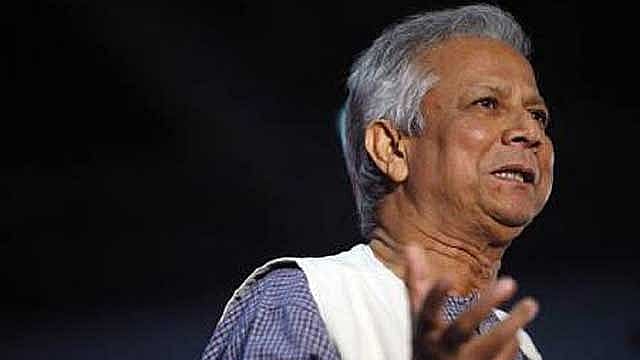
Writer and political thinker Farhad Mazhar has accused Chief Advisor Muhammad Yunus of forming a “pact” with the military and international powers by "ignoring" the people who along with students installed him in power through the July Uprising.
Speaking on bdnews24.com’s discussion programme Inside Out, he said Yunus was “abandoning” citizens by moving towards elections without resolving the political ruptures exposed after the regime change.
Mazhar also said the rise in mob violence, shrine vandalism and attacks on Bauls since the uprising was “inevitable”, arguing that the government’s failure to embark on a process of “rebuilding the state” had fuelled these tensions.
Mazhar described what he called “religious fascism” as the other face of the coin in opposition to “secular fascism”, comparing it with an Islamic version of Hindutva.
“This religious fascism has taken shape in Bangladesh,” he said.
“You’ll see its direct links with Hindutva, because their primary objective is to belittle Islam.”
He argued that religious extremists were attempting to “nullify” the Uprising.
“Confronting this religious fascism has become our central political duty,” he said: “It must be dealt with.”
The programme, aired on Sunday on bdnews24.com’s Facebook page and YouTube channel, also featured Mazhar’s criticism of the chief advisor, his analysis of Baul culture and music in Islam, and his views on the role of Islamist parties.
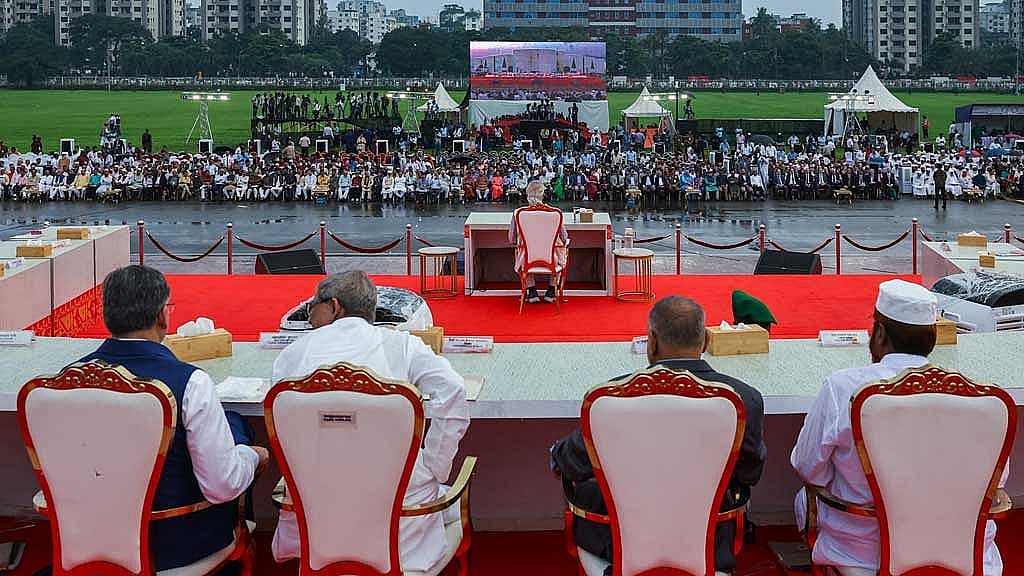
‘A GRAVE MISTAKE?’
Mazhar said Yunus was presenting "elite compromises as national will” under the rhetoric of “national unity”.
“He must listen to the people,” he argued. “Because the Uprising was carried out by citizens, not by political parties. So why is he bringing together the same political parties, the looter-mafia class, who only want to return to power to plunder again?”
Mazhar accused Yunus of failing to address conflicts and cultural fissures exposed after the upheaval.
“He has done nothing to address society’s questions and contradictions. Did he form any culture commission to address cultural conflicts? No. He did nothing to rebuild the state or help society understand itself. That is why we are in this crisis.”
Instead, he said, Yunus rushed towards elections, a move Mazhar believes will not resolve the rise of extremist forces.
“Will elections solve the surge of ultra-religious forces? I ask Dr Yunus directly through you: answer this publicly.”
Farhad Mazhar repeated his long-stated view that the chief advisor had made a “grave mistake” after Aug 5.
Mazhar alleged that Yunus, who "was not the hero of the Uprising, but its result" had built a government “supported by the Army” and formed "understandings with the military and international superpower”.
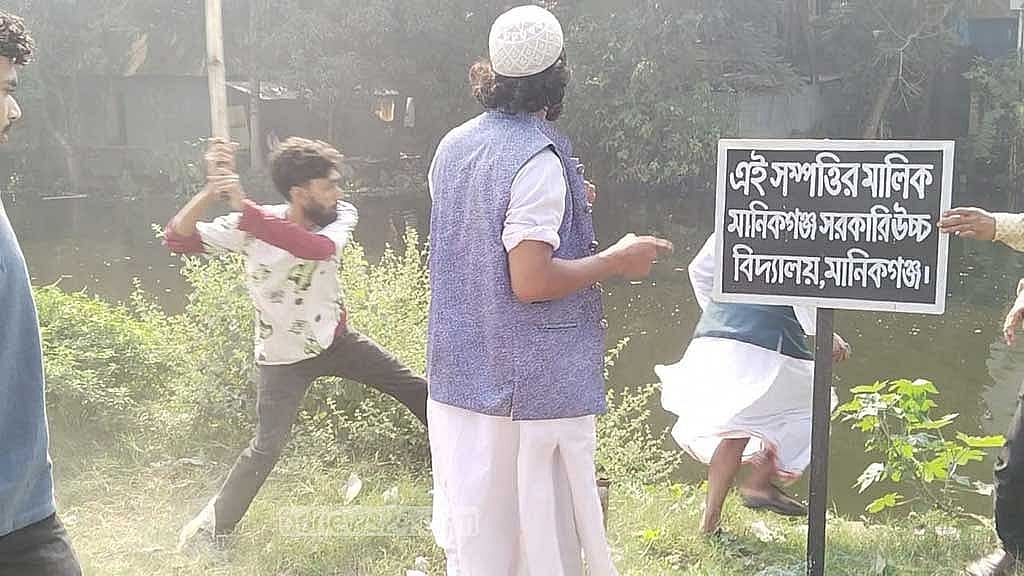
“Your pact was supposed to be with the people. Why did you not align with the people?" he asked.
Mazhar also raised questions about whether Yunus was seeking parliamentary endorsement to legitimise the interim government.
He said, “We had expected [Yunus] to play a role in rebuilding the Bangladeshi state anew. But he hasn’t been able to play that role. Today he is leaving us in danger. So this election you say you will hold -- why hold an election at all?”
“To legitimise this government, you need a two-thirds majority in the next parliament. So will you engineer an election to bring in those who will legalise you? Will the (military's intelligence) DGFI do that job? Who will?”
Mazhar clarified that he was not opposed to elections, but said they must be elections to a Constituent Assembly, not a regular parliament.
“We also want elections, but they must be Constituent Assembly elections,” he said. “Those elected should decide the future constitution of Bangladesh. The debates from the reform commissions should happen there.”
He questioned why a government accused of “excluding the people” should be granted constitutional legitimacy. “Why should this government be legitimised when citizens are absent from the process?” he asked.
Mazhar concluded by accusing the chief advisor of systematically sidelining the public. “He has continuously ignored the people. And now we are all suffering the consequences.”
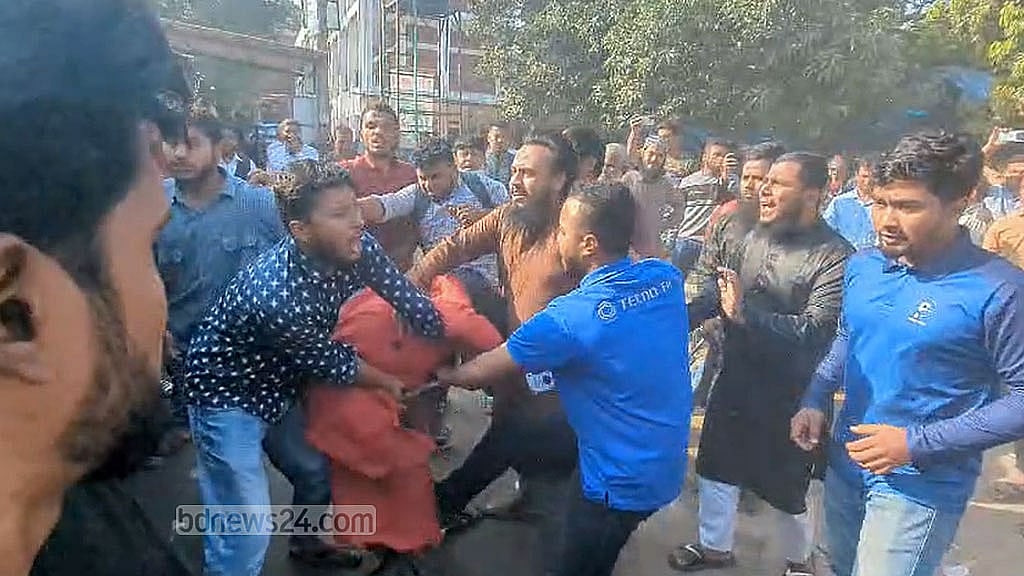
‘RELIGIOUS EXTREMISM’, YUNUS’S ‘LACK OF MORAL COURAGE’
As a consequence of sidelining the people, Mazhar observed that “militant religious groups” were seeking to assert themselves. The role that the head of government ought to have assumed in confronting them, he said, was absent -- and that absence amounted to “a lack of moral courage”.
In his words, Yunus "does not have the moral courage to stand against these extremist religious groups. But we are standing up to them".
“We know the people of Bangladesh do not like this extremism. This extremism, this violence, this brutality -- we do not tolerate it. So yes, if some of us must endure criticism, attacks, and injury so that our 170 million citizens survive, then of course we are ready.”
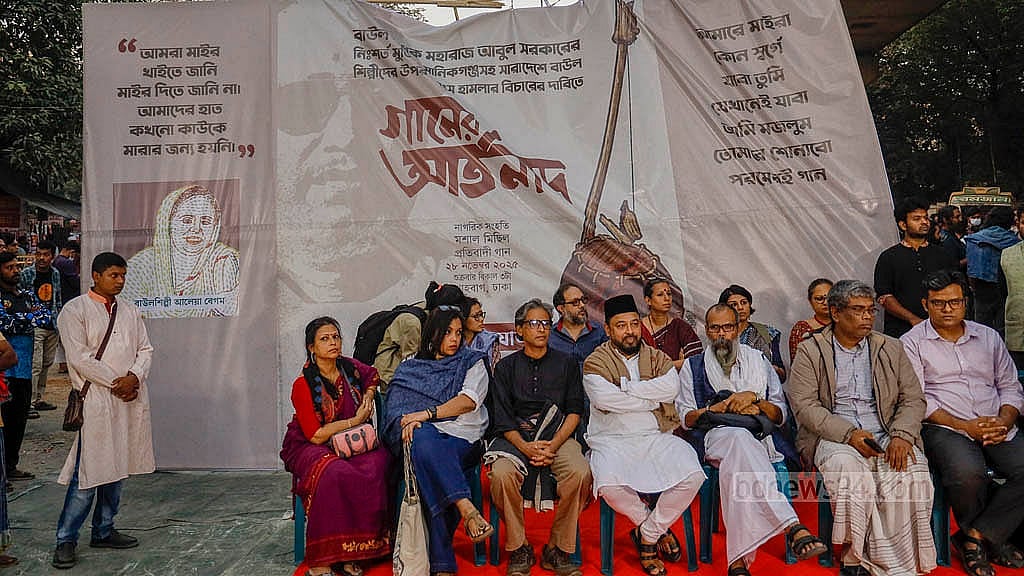
‘ALLAH FORGIVES, RELIGIOUS FASCISTS DO NOT’
Following Hasina’s downfall in last year’s July Uprising, a phrase quickly gained currency across Bangladesh: “mob justice”.
Under the banner of the so called Towhidi Janata, the country witnessed a surge in attacks -- shrines were vandalised, corpses exhumed and burned, gatherings of Pala Gaan forcibly shut down, and Baul communities assaulted.
Mazhar interprets these events as the embodiment of “religious fascism”, highlighting one of its defining traits: an utter absence of forgiveness, in stark contrast to the path of mercy exemplified by Allah and the Prophet.
He said, “Islam, in its universal dimension, has a greatness; in its effort to build society, it has a long ethico legal tradition. But a religious ‘fascist’ wipes all of that out. On what basis? By stripping people of the right to express themselves. By accusing others of Takfir (apostasy), by declaring someone a Murtad (apostate) with just a few words.
“These things do not exist in Islam. The Prophet forgave everyone, no matter how much mockery, insult, torture, and oppression he suffered. That is why I repeatedly say -- Allah forgives, but they (the religious fascists) do not. It is very easy to recognise these fascists. Allah forgives, but these religious fascists do not. They behead someone, smash someone’s skull, beat people.”
Farhad attributes the increasing frequency of these attacks to the “weakness” of the interim government.
He said, “They say they will shave off my beard -- haven’t you seen? They are openly saying this. They can say such things because in this situation, this government, especially this advisor led government, is weak… extremely cautious in every step.
“We are criticising them too. In some ways, we are putting the government in difficulty. But we are raising a different question -- after the mass uprising, how do we build the state? These people (the religious fascists) do not want that. They want to nullify the entire mass uprising.”
IS MUSIC FORBIDDEN?
In several districts, those involved in attacking Baul artistes claim that music is forbidden in Islam.
Rejecting that claim, Farhad said: “Music does not become haram by any interpretation of the Quran. That is your interpretation. At one time, music was banned because the kind of entertainment associated with music was not bringing people closer to Allah.
“Notice -- why was music considered haram? If it does not bring one closer to Allah. But music is a spiritual act, a ruhāni act. Through it, you call upon Allah. Then why do you, during the Azan, sing? Why is the Azan recited in Sindhu Bhairavi? Sindhu Bhairavi is a raag. So why must the Azan be sung in that raag?
“You sing, and yet you say music is haram. This contradiction -- this continuous contradiction in favour of extremism, this injustice against the people -- how can anyone accept it?”
Mazhar added, “From Akram Khan onwards, there are countless tafsirs [interpretations of the Quran]. They have clearly said: music in Islam is not inherently haram. Only that music -- indeed anything -- that leads one away from religion is haram.
“Today, those who are committing these acts of extremism, that extremism is haram in Islam. Why only single out music as the one forbidden thing?”
SCHOLARS IGNORANT OF SCIENCE, POLITICS ‘DANGEROUS’
Mazhar highlights how many students emerging from the madrasa system, after studying hadith (the sayings of the Prophet) and tafsir, offer doctrinal interpretations without grounding in political theory, science, or philosophy -- making such interpretations, he argues, “dangerous” for the state.
He said, “Some people claim they studied in a madrasa, so their claim that music is haram must be accepted. Brother, you studied in a madrasa -- that is fine. But when the Quran says ‘Alem’, it means a knowledgeable person. Does it refer to someone who has only memorised texts from a madrasa?
“Today you do not study philosophy, science, politics -- nothing. You have no concept of political theory, no understanding of the structure of the state. What kind of Alem are you? You have memorised hadith, very good, Alhamdulillah. For hadith, I might even put you in a competition. But when it comes to the matters of the state, law, the building of society -- you are dangerous.”
Those who, armed with this limited interpretation of religious education, threaten Bauls or others from different traditions, issue death threats, or take the law into their own hands -- Mazhar offers harsh criticism of them, arguing instead for an intellectual contest.
He said, “You are not interested in speaking to them from the place of Islam’s greatness. You make no effort to bring them into the fold of Islam. Look around the world -- Christian theology became powerful because of philosophy, because of its intellectual tradition. Without knowing it, we have all become Christians.
“All our behaviour -- habits, clothing, homes, architecture, food, even our bathrooms -- everything is Western. So you are already a Christian. To come out of this, you need a long struggle. A cultural struggle, an intellectual struggle -- a battle of ideas.”
GOVERNMENT ‘IGNORANT’ IN ENFORCING THE LAW
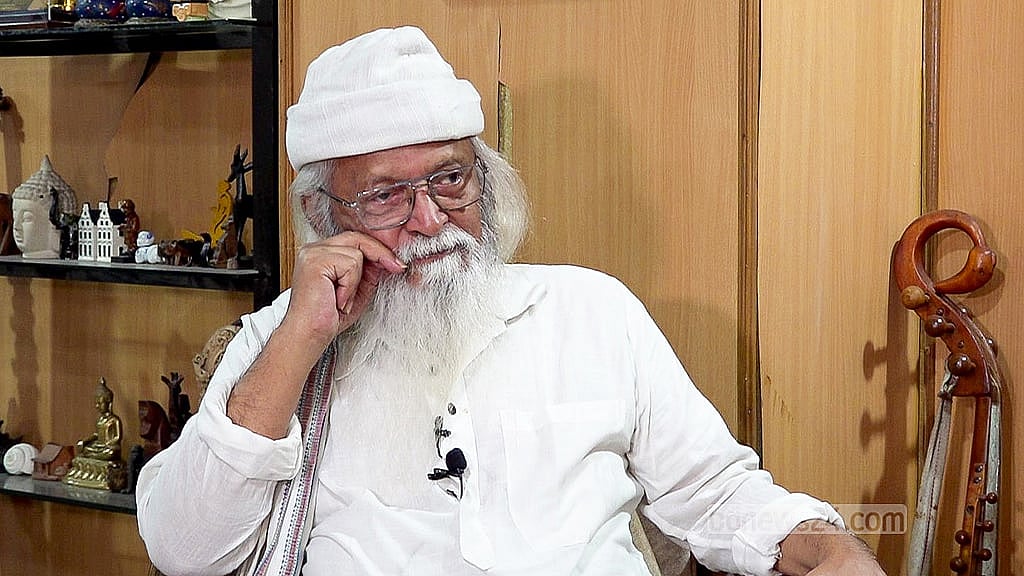
Standing against what he calls “religious fascism” through a cultural struggle, Mazhar said he does not believe this extremism can be suppressed through law enforcement. At the root of the problem, he argued, lies the government’s “ignorance” of the law.
Drawing on his own experience, he said: “I have told the intelligence agencies. I have even told our IGP Baharul Alam. I asked the home advisor to tell him. And our Advisor Jahangir Alam -- he is a good man, a very generous person -- but he does not understand the law. He cannot protect me.
“This talk of shaving my beard off, killing me, demanding the right to order murder -- where is he taking action against that? You only use the law against us. But you refuse to bring these ultra religious fascists under the law -- Jahangir Bhai, that cannot be. That simply cannot be.”
“That cannot be solved by law,” he continued. “Suppose you arrest Enayetullah Khan today -- this Abbasi, this kind of extreme, violent and vicious person. Then a huge wave of public sympathy will form around him unnecessarily. There is no need for that.
“And in any case, we are capable. We can face people like this. It is not a problem for us.”
Asked why he was not pursuing legal action against those who threatened to kill him, Mazhar said: “The issue is not the law; the issue is ignorance. The person making these threats is utterly ignorant. He knows nothing about Islam. If he had even the minimum understanding of Islam, would he be using such language?”
“…This entire issue belongs to our cultural revolution. That is why I do not believe this is a legal battle. Your question is very important. This will not be solved by law. If the law enforcing agencies pick up such an extremist terrorist, it brings me no benefit. You are turning him into a hero, unnecessarily. He is no hero. He is vile… I have no need for that.”
‘SURPRISED’ AT HIFAZAT’S ROLE
Mazhar said the role of Islamist political groups in confronting “religious fascism” during the interim government has been “negative”.
He said he was “surprised” by Hifazat-e Islam’s current stance, despite publicly supporting the group in 2013.
“Because I was with Hifazat-e Islam in 2013. When repression was carried out against them, when their human rights were violated, they certainly had the right to speak in a bourgeois democratic state. Whether you accept their 13 point demands or not is another matter. But you must allow them to speak.
“They walked to the city with chira gur in hand because they were aggrieved. They protested. You must allow them their right to protest. But what did you do? You used sound grenades, bullets, and sent those madrasa children back. And even now, Hifazat-e Islam has not given a list of which child died where. That means they had joined hands with fascist forces before.”
Criticising the cancellation of a planned “memorial” for the victims of that crackdown “in the name of Islam”, he said: “They are now targeting the Bauls. Catch the Bauls one by one, slaughter them -- that is what they are saying. Then why did you not let us build a memorial at Shapla? Where in Islam does it say that building a minar or keeping a memorial is forbidden -- where did you find this?
“This destruction of memorials comes from Judaic practice. If you want to destroy Islam, then the only way is to destroy the memories and markers of how Islam was established in different countries. You have seen this in Israel.”
Accusing Hifazat of attempting to “rehabilitate the politics of Hasina”, he said: “Now, after the mass uprising in Bangladesh, they want to nullify it and then rehabilitate [Hasina]. That is their politics.”