Home
+
Published : 02 Nov 2025, 12:23 AM
These are hard times for the media in diverse parts of the globe, for it is an age when for governments and regimes any mention of truth is grating to the ear. Of course, it sometimes cheers people when the media are referred to as the fourth estate. But how much of the truth is there in that statement?
In an era where political leadership has been going all-out to assert its dominance over journalism, where even elected governments are tempted to resort to authoritarianism, there can be no illusion that the press, that freedom of the press, is of any consequence. Add to that the silence of the media in conditions where political illegitimacy runs riot. Add too the fear generated by a rise of mobs, enough to push nations down the road to disaster.
It is in the fitness of things, therefore, that a discourse on the role of the media in our times assumes critical importance. For all the shrinking space in which the media operate, or are unable to operate, without fear and without inhibition—in Turkey, Pakistan, Bangladesh and in large parts of Africa and Latin America—the role of the media in the present-day world cannot be ignored or overlooked. Indeed, this role has been manifesting itself over the last many decades, not just in Bangladesh but around the world as well.
It is history we travel back to. Back in March 1971, a few days after the crackdown on an unarmed Bengali population by the Pakistan army, the young British journalist Simon Dring exposed the ugly truth arising in occupied Bangladesh through reporting to the world the unfolding genocide launched by the occupation Pakistan army. That was the beginning, a time when the world began to take notice of what was going on in East Bengal, soon to be Bangladesh.
In June of the same year, the Pakistani journalist Anthony Mascarenhas, having observed conditions in military- dominated East Bengal as part of a media team sent over to the region by the Yahya Khan junta, flew to Britain and submitted his revealing article to the Sunday Times newspaper. It was an explosive piece, one that laid bare Pakistan’s atrocities before the world fully and absolutely. From then on, the media, especially in the West, focused unwaveringly on the genocide in Bangladesh and continued to do so until December 1971.
That was journalism playing its stellar role. It informed the world of a grave wrong being perpetrated in an important part of the globe. And the world paid attention. Step back into the present, an age when Donald Trump and ilk unabashedly charge the media which uphold the truth and which reveal the hollowness in them with disseminating fake news.
The extent to which the media in the past exercised a huge degree of influence on the issues, anywhere in the world, is seen through a study of the career of the reputed American journalist Walter Lippmann. Initially, a supporter of US President Lyndon Johnson’s policies on Vietnam, Lippmann at one point decided to visit Vietnam and study the actual situation there. What he saw there did not please him.
Lippmann came back home and in his regular newspaper column made it clear that America was not winning the war in Vietnam. President Johnson read the article and went into deep reflection. If Lippmann thought America was losing the war, the President told his aides, then America was truly losing the war.
Of course, the old cliché that the media is the fourth estate still stands, though in a rather tottering state. In recent years, until the anarchy which descended on the nation over a year ago, here in Bangladesh, journalism took on greater significance given that a proper, strong and productive parliamentary system is yet to develop. Despite everything, though, it remains a matter of regret as also encouragement that where people should be approaching their local lawmakers to apprise them of their individual and collective problems, they rather turn to the media for a redress of the issues they confront in life.
Stories of corruption and malfeasance and myriad instances of wrongdoing are reported to the media and by it, more as a way of emphasising the need for wrongs to be righted than as mere pieces of information for people. We can cite here the very constructive and positive role our media have historically played in the past many decades especially in highlighting the need for some of the darkest laws and some of the most difficult of impediments before us to be removed.
For years the media in Bangladesh struggled for a repeal of the notorious Indemnity Ordinance. A time came when a people’s government responding to public expectations and media calls as well as the call of conscience, did away with this black law.
The media waged a long battle for the killers of the Father of the Nation to be brought to justice. They have been brought to justice. For years together, the Bangladesh media focused on the crimes committed by a number of rehabilitated collaborators of the Pakistan army in 1971. Despite the fact that two military regimes and a quasi-military regime in the country gave those collaborators high places in national politics, the media consistently emphasised their old crimes and the need for them to be brought to justice. They have been brought to justice. Citizens have breathed a sigh of relief.
The silence of the media in these times is therefore disconcerting. But that is again natural. When journalists are herded into prison and slapped with spurious charges of murder or abetment to murder, the media are condemned to be in a straitjacket. The role of the media in present times is, therefore, a demanding one. Observe the world around us. Journalists have put themselves under enormous pressure while trying to come upon the truth.
But journalists loyal to the calling of their profession, in this difficult day and age, know that their moral responsibility is one of keeping aloft the banner of courage and truth. The media are a guarantee that governments will not stray from the task of upholding the public interest. Newspapers and news outlets which advocate an imposed political system from the top do no service to themselves or to the country.
The responsibility of the media in the present-day world is simple and yet complex. It is not, it must not be, a challenge to government. But it must never recoil from the responsibility of pointing out the flaws of authority, indeed of any individual or organisation which is seen to be going beyond its remit or committing plain wrong.
In these days of growing, nauseating illiberalism around the world, the media must be keepers of people’s conscience. Their job is to peel apart the lies dished out by medieval outfits. Equally necessary is the need for the media to expose demagoguery and chicanery wherever they threaten to undermine democracy and decency in private and public life.
The media do not play God. Nor do the media remain true to their cardinal principles when they kowtow before forces more powerful than they. The media are in their true selves when they hurl fear and favouritism aside and move on to unearth the truth behind everything. The media must dig deep. They cannot be shallow if they mean to make an impression on people’s minds and lives.
That is the power of the media in our world. That is their role in the times we inhabit.
In our times, we have the very vivid examples of how the media have delved into such issues as Iraq. There is little question that some media outlets in the West have indulged in embedded journalism in such volatile regions as Iraq. But observe the larger picture. It was the media which exposed the lie of the WMDs through relentless investigative reporting. No more was there a complacent media, ready to take information handed down by the establishment.
Last but not least, here in Bangladesh--- where journalism has played an expansive role in these past many decades and continues to explore newer and larger avenues for itself---the media have consistently and persuasively drawn attention to the menace posed to national security by extremist outfits out to undermine the fundamental principles of the state. They have roundly condemned terrorism and have consistently sought to draw public attention to the danger, even when their practitioners have been confronted with the wrath of dark forces.
The media keep, and continue to keep, watch over the entirety of affairs related to the functioning of the state. Any attempt to browbeat the media into submission or silence in the long run proves disastrous for regimes which arrogate to themselves the questionable right to define the parameters of politics and governance. The media, truth be told, are a twenty-four-hour articulation of popular aspirations around the world.
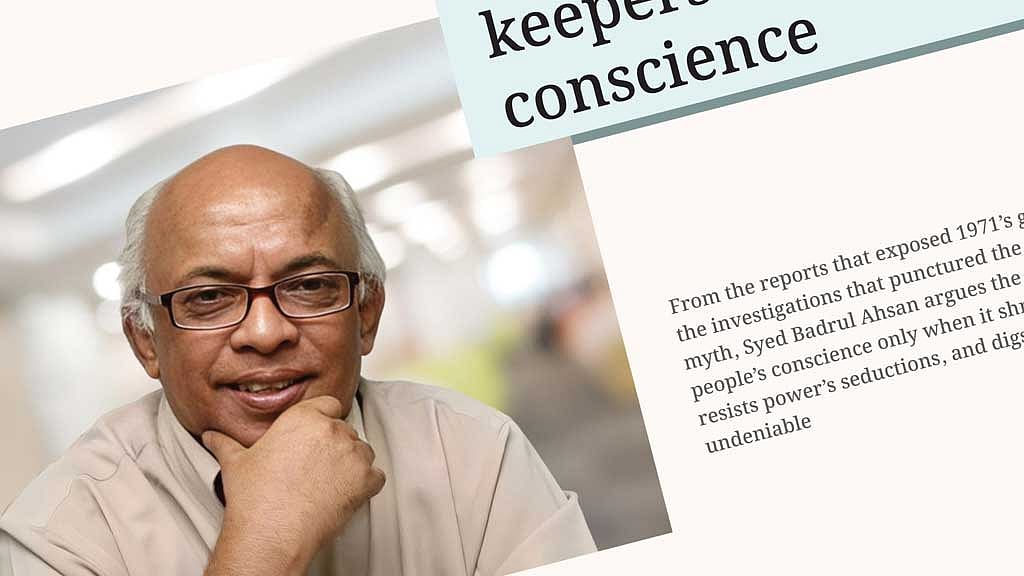
[Syed Badrul Ahsan is a journalist, columnist, author, and a former executive editor of bdnews24.com]