Published : 05 May 2026, 07:55 AM
Updated : 21 Aug 2026, 03:41 PM


Bengal Verdict Flashpoints
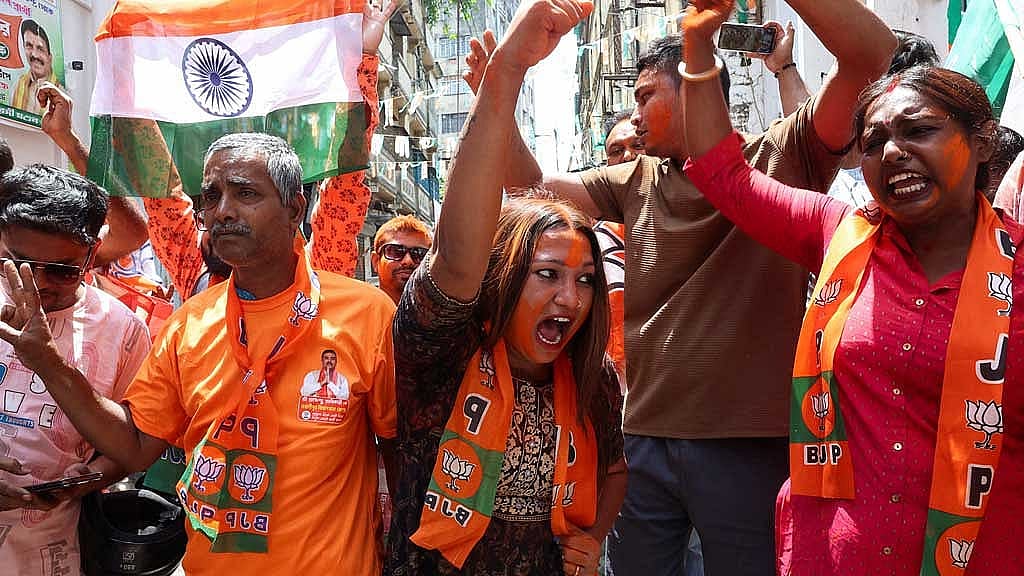
Saffron surge: The BJP secured a historic mandate with 206 seats, dismantling the TMC’s 15-year rule, marking the first time a national party has governed the state since 2011.
Rejection vote: Analysts view the result as a categorical rejection of Mamata Banerjee rather than just a BJP wave.
Electoral records: A record 93 percent turnout defined the polls. The election followed a contentious revision where nine million names were removed, a move the TMC called "illegal" but the Election Commission upheld.
"Game Over": The TMC’s count plummeted from 214 seats to 81, losing 133 constituencies. The BJP surpassed a two-thirds majority, symbolically reversing the TMC’s slogan.
Demographic shifts: Core TMC blocs, including women and the Matua community, shifted to the BJP. Concerns over safety, governance, and the return of migrant workers home to vote fractured Mamata’s grassroots dominance.
What exit polls only hinted at has now been decisively confirmed. West Bengal’s Assembly election has delivered a saffron tidal wave, sweeping away the Trinamool Congress’s (TMC) blue fortress and ending nearly 15 years of Mamata Banerjee’s rule.
In its place rises the Bharatiya Janata Party (BJP), which, for the first time, has been entrusted by voters to govern India’s culturally distinct eastern powerhouse.
Analysts describe the result not merely as an electoral upset, but as a political rupture of structural proportions.
For NDTV’s Research Editor Ajit Kumar Jha, it represents a “collective rearrangement", while journalist Shiv Sahai Singh of The Hindu describes it as an “ideological triumph” for Narendra Modi’s party.
Others, like Anandabazar Patrika’s Anindya Jana, go further -- framing the outcome as a “rejection vote” against Mamata herself.
“Does this mean West Bengal has become pro-BJP? I think this election was ‘Mamata or no Mamata’. The people voted ‘no Mamata’,” he said.
A Verdict Written in Numbers
Voting took place in two phases on Apr 23 and Apr 29 across a 294-seat Assembly. A record 93 percent turnout added intensity to an already charged contest.
Ahead of polling, nearly nine million voter names were removed during a revision of electoral rolls -- a process the TMC viewed with suspicion, alleging it was part of a larger BJP push to reshape the electorate.
The Election Commission, however, maintained the process was lawful.
Following irregularities, voting in the Falta constituency of South 24 Parganas was annulled, and results were declared for 293 seats.
The outcome was decisive:
● BJP: 206 seats
● TMC: 81 seats
● Congress: 2 seats
● CPI(M): 1 seat
● AJSU: 1 seat
The TMC’s collapse is stark. From 214 seats in 2021, it dropped to 81 -- losing 133 seats. Mamata herself lost her seat, along with at least 17 ministers.
The BJP, which had 77 seats previously, gained 129 more, crossing a two-thirds majority and securing power with overwhelming strength.
The Politics of “Rejection”
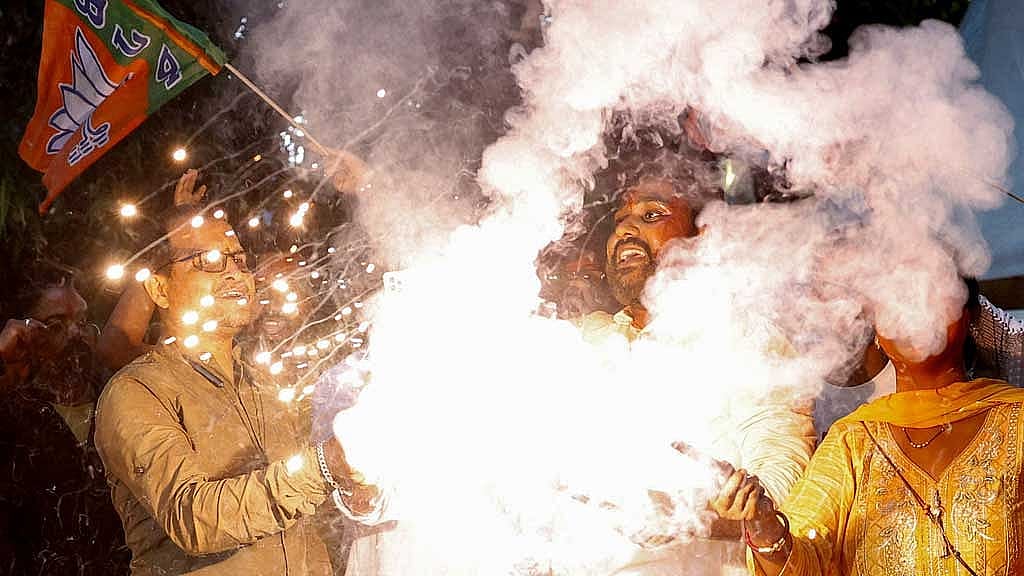
By afternoon on counting day, BJP offices in Kolkata were already celebrating.
The party needed 147 seats to form government; by evening, it had crossed that threshold.
Social media echoed the sentiment with two words: “Khela Shesh” (Game Over) -- a pointed reversal of the TMC’s iconic slogan “Khela Hobe” (The game will be played).
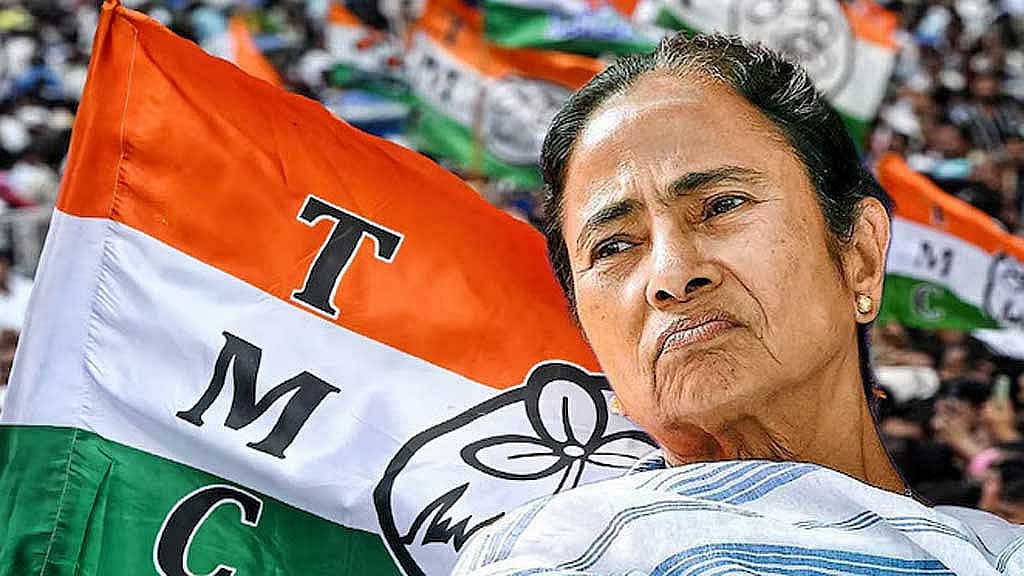
Mamata Banerjee rejected the result outright.
“What kind of victory is this? It is an immoral victory, not moral. It is completely illegal. They have won by force. Loot, loot, loot. We will bounce back,” she said.
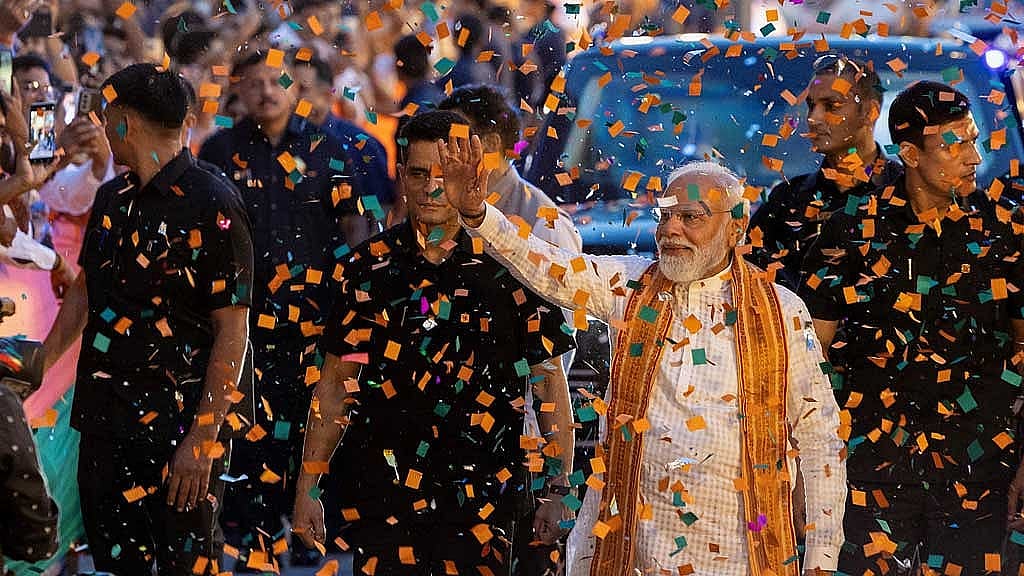
Modi, meanwhile, invoked a symbolic arc of political geography -- “from Anga to Bengal” -- and thanked voters in Bihar, Odisha, and West Bengal for supporting the NDA.
In Delhi, he celebrated in traditional Bengali attire, declaring: “From Gangotri to Gangasagar, the lotus has bloomed everywhere.”
He added, “Change has come to Bengal. From now Bengal is free from fear. Political violence has destroyed many lives here; now it is not revenge, but change.”
The Five Key Factors
While Mamata once defeated the left using her “Ma, Mati, Manush” slogan, analysts say the outcome was shaped by five new forces:
1. Women voters
The TMC’s welfare-driven women support base, built through schemes like Lakshmir Bhandar and Kanyashree, eroded amid concerns over safety and governance. A high-profile rape and murder case intensified political debate, and the BJP fielded the victim’s mother as a candidate.
2. Muslim voters
With Muslims forming 27 percent of the electorate, districts like Malda and Murshidabad showed visible shifts. Allegations of governance failure, alongside Congress and AIMIM fragmentation, weakened TMC dominance.
3. Migrant voters
Fear of being removed from voter rolls led thousands of migrant workers to return home, injecting volatility into the electoral landscape.
4. Matua community
Accounting for 17 percent of the population, the Matua vote consolidated behind the BJP, reinforcing its electoral strength in key constituencies.
5. BJP machinery
The party deployed a highly coordinated organisational structure -- combining central leadership, booth-level precision, and digital campaigning -- to match TMC’s grassroots dominance.
A Structural Collapse, Not Just a Defeat
Political scientist Bhanu Joshi argues that TMC’s governance model -- once built on welfare and organisation -- gradually lost its transformative appeal. Welfare became routine, not aspirational.
Meanwhile, the BJP reframed dissatisfaction into ideological mobilisation.
“Even governance benefits could not withstand the tide of polarisation,” Joshi was quoted as saying to Sharebiz.
NDTV argues that the BJP’s victory is not merely electoral -- it is symbolic of ideological consolidation in eastern India.
Beyond Mamata: A National Shift
The result is expected to accelerate BJP policy priorities, including debates on the Uniform Civil Code and infrastructure expansion.
Ahmedabad University’s Nilanjan Sarkar says opposition weakness lies in its failure to build a stable ideological base.
Critics, however, point to voter roll revisions and delimitation exercises as contributing factors. The Election Commission insists procedures were transparent.
From Rejection to Rupture
Jha describes West Bengal as historically resistant to fixed ideological identities.
“This is not merely loss; it is displacement, a kind of collective rearrangement,” he wrote on NDTV.
He calls the BJP win a “silent tsunami” -- a transformation that redefined political loyalty in a state once considered resistant to national currents.
Anindya Jana is even blunter: “It is a total rejection of Mamata Banerjee and her government. A complete rejection.”
He traces parallels to 2011, when Mamata herself led a “No CPM” wave that ended 34 years of left rule. That movement, he argues, required a unifying alternative -- which Mamata once provided.
This time, he says, BJP filled that vacuum.
Why the Tide Turned
Jana argues that over time, the TMC drifted from its grassroots identity. Allegations of local corruption, financial extraction, and disconnect from poorer voters eroded its base.
Voters who once tore away from the left for Mamata, he says, now left Mamata herself.
He added that the rejection “is so sharp that it produced this extraordinary result for the BJP”.
West Bengal, long seen as politically distinct and ideologically self-contained, has now entered a new phase.
The BJP’s victory is more than a change of government -- it is a reordering of political identity in eastern India.
For Mamata, it marks the most severe setback of her political career. For Modi, it closes one of the last major gaps in his national map of dominance.
And for West Bengal, it signals the end of one political cycle -- and the beginning of another.