Home
+
Published : 17 Feb 2026, 10:40 PM
The Bangladesh Nationalist Party’s (BNP) return to power, led by Tarique Rahman, marks a new chapter, but the road ahead is daunting.
Ministers say the government faces crises in nearly every sector -- from a battered economy to fragile law enforcement, trade, and education systems.
Mirza Fakhrul Islam Alamgir, the party’s secretary and minister for local government, said: “Everything must be rebuilt anew.”
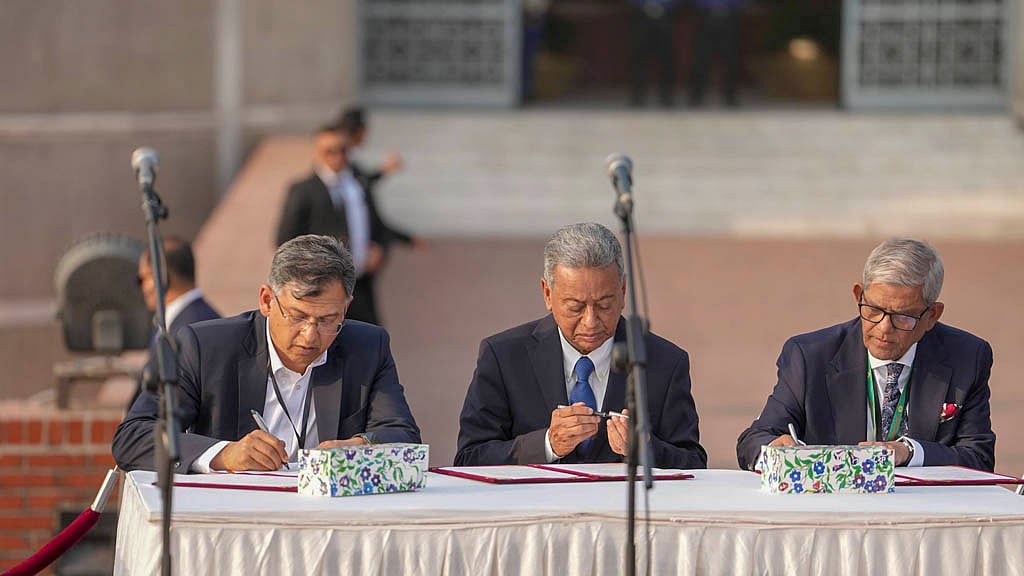
On Tuesday, newly elected MPs took their oaths, followed by the swearing-in of Tarique’s 50-member cabinet at the South Plaza of parliament before President Mohammed Sahabuddin.
The government comprises 25 ministers and 24 state ministers, blending first-timers with seasoned leaders.
Several ministers said the economy had deteriorated under the Awami League’s 16-year rule, and law-and-order issues remain unresolved after the interim government’s 18-month tenure.
Fakhrul said, “The new government faces nothing but challenges. Everything must start afresh. While the outgoing interim government made some progress, repaying accumulated debt and restoring the economy is a major task.
“Law and order must be fixed. There is a lot to do. Business and trade must expand, education requires focus, and we must ensure a conducive environment for commerce.”
He added, “With Zonayed Saki and Nurul Haque Nur in government, it must be called a joint administration.”
Power Minister Iqbal Hasan Mahmud Tuku said, “There are massive challenges in the power and energy sector. This is a very difficult task. I will try to fix the broken systems left by the Awami League.”
The BNP last led the nation in 2001–06 through a four-party coalition. While the Jamaat-e-Islami was a coalition partner then, the party now returns from the opposition benches to confront decades of structural decay.