Published : 04 May 2026, 06:34 AM
Updated : 21 Aug 2026, 03:40 PM


Stopgap Shock: Escalating Outbreak
Two-decade high: With 280 deaths in six weeks, this surge is the deadliest in 20 years. 38,000 suspected cases have forced the WHO to label the national situation as “high risk”.
Critical stockouts: Central stores have run out of measles-rubella and polio jabs. Procurement delays and political instability have created a fragile gap in life-saving supplies.
Prevention gap: Scrapped immunisation campaigns in 2020 and 2024 have left millions vulnerable. Experts blame these skipped cycles and routine failures for the current epidemic.
Advice sidelined: Formal recommendations are being ignored or delayed. Experts warn that a refusal to declare a public health emergency has resulted in a disjointed, "stopgap" response.
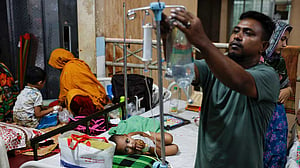
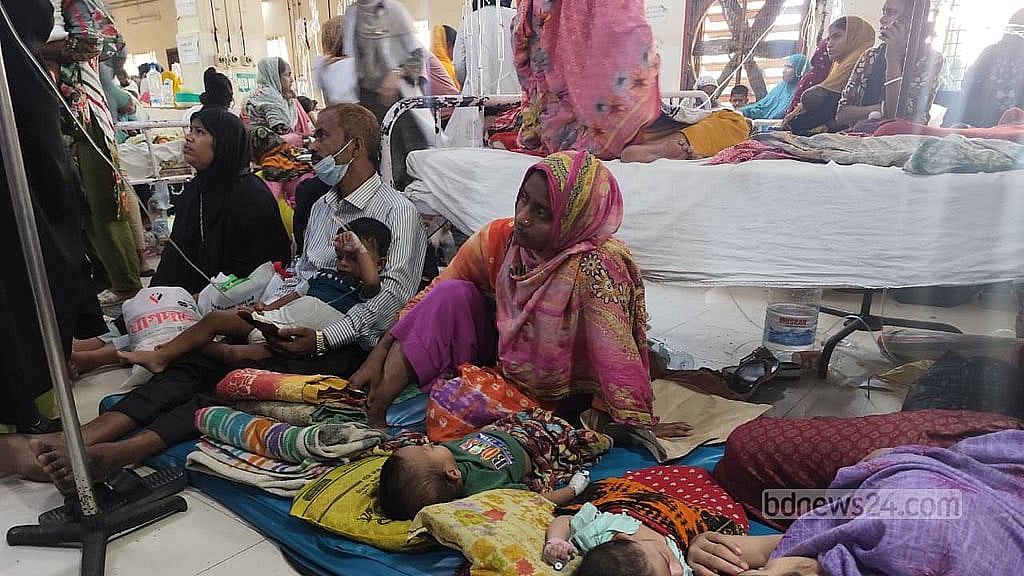
Logistical strains: Wards are overflowing, yet staff lack the oxygen and space needed for isolation. Simply reassigning beds is failing to curb deaths in high-risk areas like Rajshahi.
The numbers read like a warning that went unheeded.
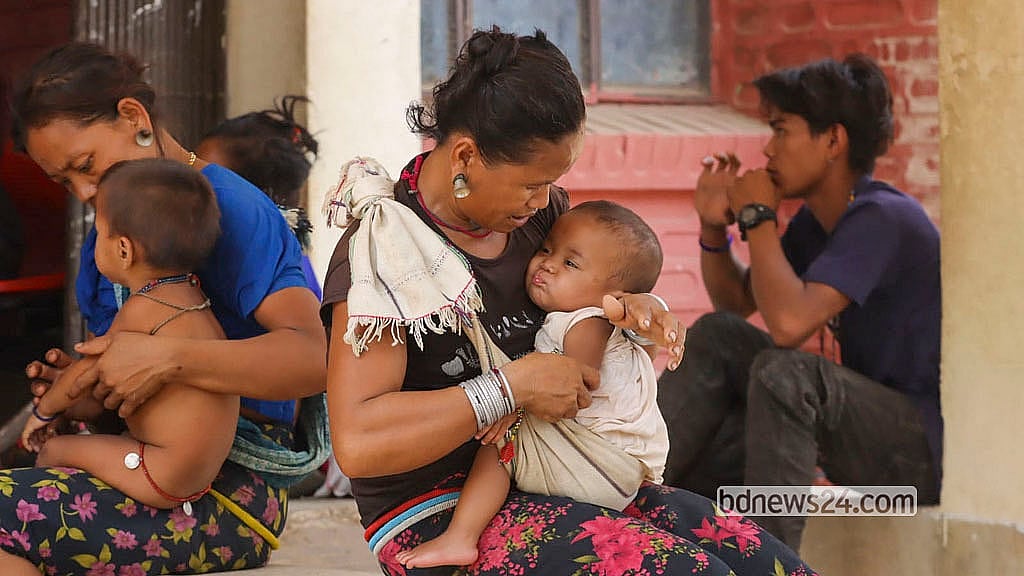
In just a month and a half, measles and its symptoms have claimed 280 children across Bangladesh, with more than 5,000 confirmed infections and over 38,000 suspected cases.
The World Health Organization (WHO) has labelled the situation “high risk”. Some experts go further, calling it an epidemic in all but name.
Yet, even as the outbreak spreads, those on the front lines describe a response held together by improvisation -- decisions delayed, advice sidelined, and coordination fraying.
“We are working with the utmost sincerity to prevent child deaths,” Pravath Chandra Biswas, the director general of health, said.
But conversations with doctors, hospital directors and health officials suggest a system struggling to keep pace.
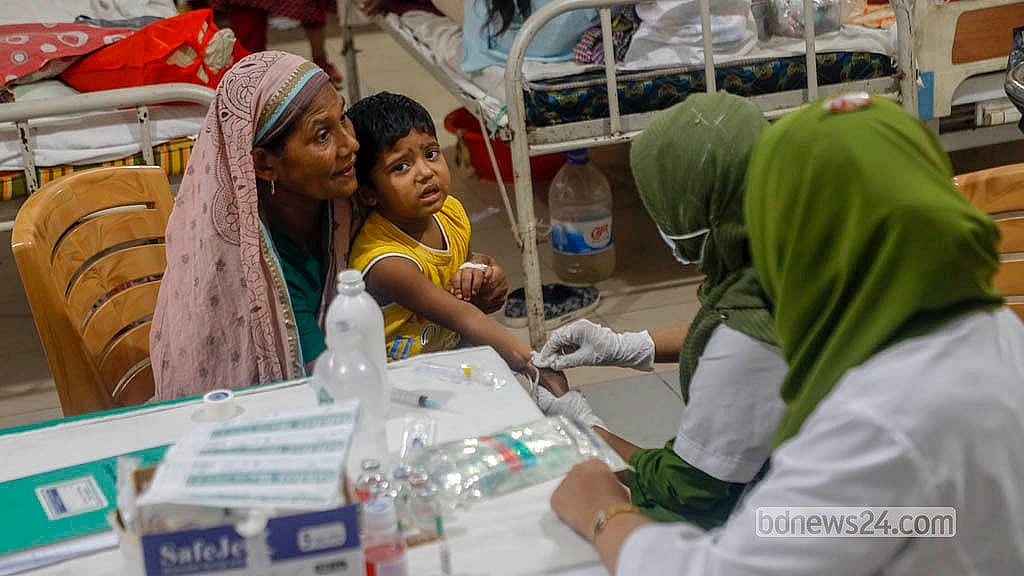
A Crisis Unfolding
The surge began quietly at the start of the year, first detected in Rohingya camps and later in Dhaka’s slums. By late February, it had spread nationwide. On Mar 15, the Directorate General of Health Services (DGHS) began formally recording data.
Since then, nearly 300 children have died -- more than at any time in the past 20 years. In 2005, over 25,000 infections and more than 100 deaths were recorded; no year since has seen such a toll.
Doctors and public health experts point to gaps in immunisation, malnutrition and inadequate breastfeeding.
Although children aged 9 to 15 months are meant to receive two doses of measles vaccine, supplementary nationwide campaigns -- once held every four years -- were skipped in 2020 due to COVID and again in 2024 amid political instability. Routine immunisation also faltered that year.
A doctor at Bangladesh Shishu Hospital said early infections were first reported in Rohingya camps, then in Dhaka’s slums, before spreading wider.
Alarm intensified after reports from Rajshahi, where 33 children died amid an ICU shortage -- more than 10 of them reportedly infected with measles.
Warnings and Missed Steps
As the crisis deepened, the National Verification Committee for Measles and Rubella Elimination (NVC), formed in 2017 and led by Prof Mahmudur Rahman, met on Apr 8.
It recommended that once cases are detected in an Upazila, further testing is unnecessary. Instead, anyone showing symptoms should be isolated -- first at home, then in hospital if needed.
On Apr 12, the National Immunization Technical Advisory Group (NITAG), chaired by Emeritus Scientist Prof Firdausi Qadri, endorsed the recommendation and urged the formation of a specialised committee of paediatricians, epidemiologists, virologists and laboratory experts to guide evidence-based decisions.
That committee was formed on Apr 27.
But a member said they have yet to be formally informed.
“After a fire breaks out, we are trying to put it out,” said public health expert Mushtuq Husain. “Even after COVID, we did not learn how to respond to a pandemic.”
He argued that a formal public health emergency should have been declared but was avoided over concerns about authority and control.
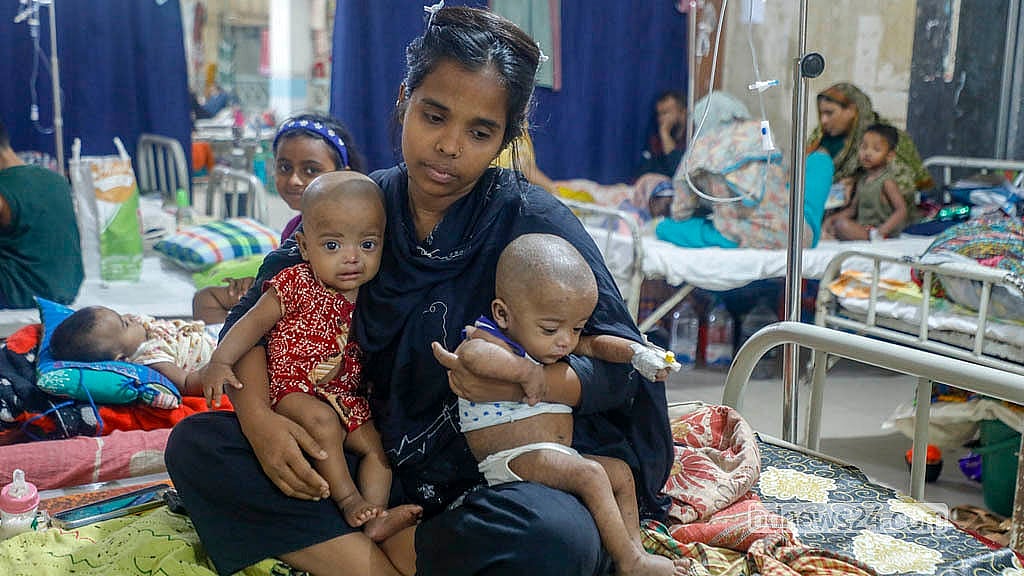
Hospitals Under Strain
Authorities have instructed that no measles patient be turned away from any hospital and that bed capacity be increased where needed.
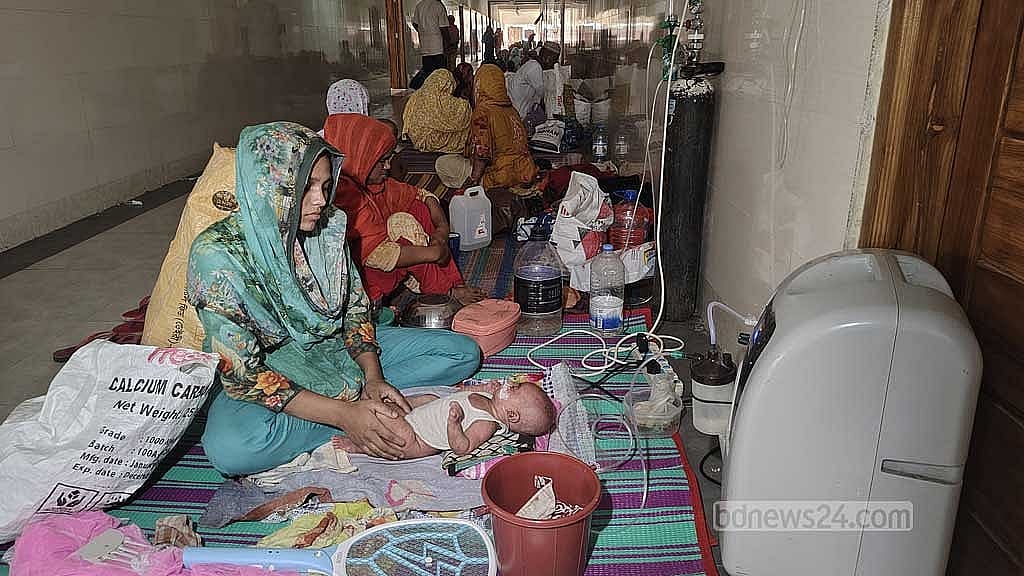
But hospital heads say expansion requires oxygen, space and logistical support -- none of which has been sufficiently provided.
At Bangladesh Shishu Hospital, Director Prof Mahbubul Alam said new beds cannot be added quickly, but existing ones are being reassigned. “We are trying not to return patients,” he said.
Doctors say treatment follows WHO guidelines, including vitamin A supplementation. In Rajshahi, officials say additional nutrition is being provided to boost immunity.
Yet experts warn that simply adding beds is not enough. More hospitals must be equipped to admit measles patients, alongside expanded facilities and staffing.
Vaccines, Shortages and Silence
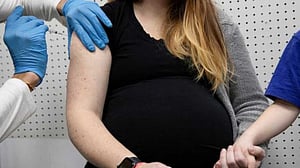
An emergency vaccination drive is under way, with 21.9 million doses expected to cover more than 18 million children.
But multiple vaccines have run out at central stores.
As of Apr 16, stocks of pentavalent, oral polio, pneumococcal and measles-rubella vaccines had fallen to zero, while BCG and tetanus-diphtheria supplies were nearly exhausted.
• Pentavalent: Protects against diphtheria, whooping cough, hepatitis B, tetanus and pneumonia
• OPV: Oral vaccine against polio types 1 and 3
• PCV: Prevents pneumonia, meningitis and sepsis
• MR: Protects against measles and rubella
• BCG: Protects against tuberculosis
• TD: Booster against tetanus and diphtheria
Officials say field-level supplies remain sufficient for now, but procurement delays during the interim government -- amid confusion over purchasing procedures -- have created a “fragile situation”.
New vaccines are expected in May, though no confirmed date has been given.
Allegations of irregularities and corruption in vaccine procurement have also been raised, with a Supreme Court lawyer seeking an anti-corruption probe.
At the same time, staffing shortages are compounding the crisis. Key posts in the Expanded Programme on Immunization remain vacant, while some officials have been reassigned or made officers on special duty.
Several officials say there is an “unwritten restriction” on speaking publicly about vaccines and health matters.
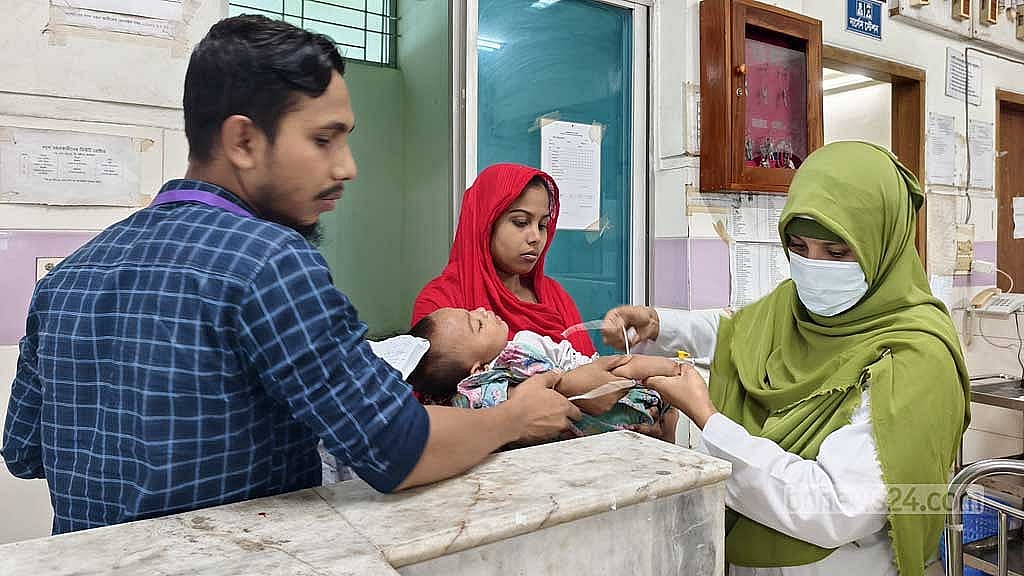
Coordination in Question
Experts say the response has been inconsistent.
Despite recommendations, testing continues in many areas while isolation measures remain weak. Public awareness campaigns have been limited, even as infections spread rapidly in densely populated communities.
“Vaccination is crucial, and it has begun,” said Prof Mahmudur. “But public health messaging has not matched the urgency.”
Local health workers -- central to vaccination drives -- have faced delays in payments and operational planning, particularly as key operational plans (OPs) remain suspended.
Where It Stands
Officials say efforts are being guided by NITAG recommendations. Health Secretary Md Kamruzzaman Chowdhury said vaccination began in 30 high-risk Upazilas from Apr 5, though he acknowledged delays in receiving formal decisions.
The DGHS Director General Pravath said dedicated measles units have been ordered in all hospitals and stressed the need for isolation in densely populated areas.
“Many parents are unaware,” he said, noting that some children have not received even their first vaccine dose.
Behind the policy debates lies a stark reality: children continue to fall ill, and some continue to die.
Experts say many of these deaths could have been prevented with timely action -- stronger surveillance, coordinated planning and decisive leadership.
For now, the response remains urgent but uneven -- a system reacting faster than it is organising.