Published : 11 Jul 2026, 12:05 AM
Updated : 08 Sep 2026, 09:21 AM


Stubborn Scourge: Defying the Data
Statistical puzzle: A 3.9-million child gap between two same-age health campaigns fuels doubt over the state's 103 percent coverage claim
Planning deficit: Rushed by a severe outbreak, officials bypassed vital village-level microplanning to hit the ground early
Herd immunity missed: Experts warn true vaccination coverage remains well below the 95 percent threshold needed to halt transmission
Fatal consequences: Flawed data and missed children allow the outbreak to persist, leaving death tolls rising nationwide
Bangladesh is battling one of its worst measles outbreaks in years. Yet behind the government's emergency vaccination drive lies a statistical puzzle that public health experts say cannot be ignored.
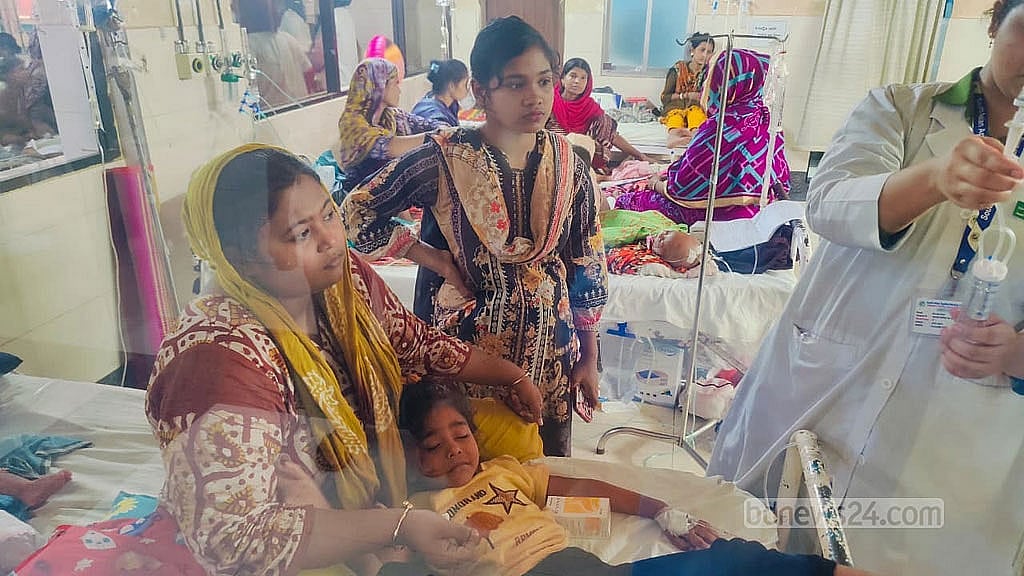
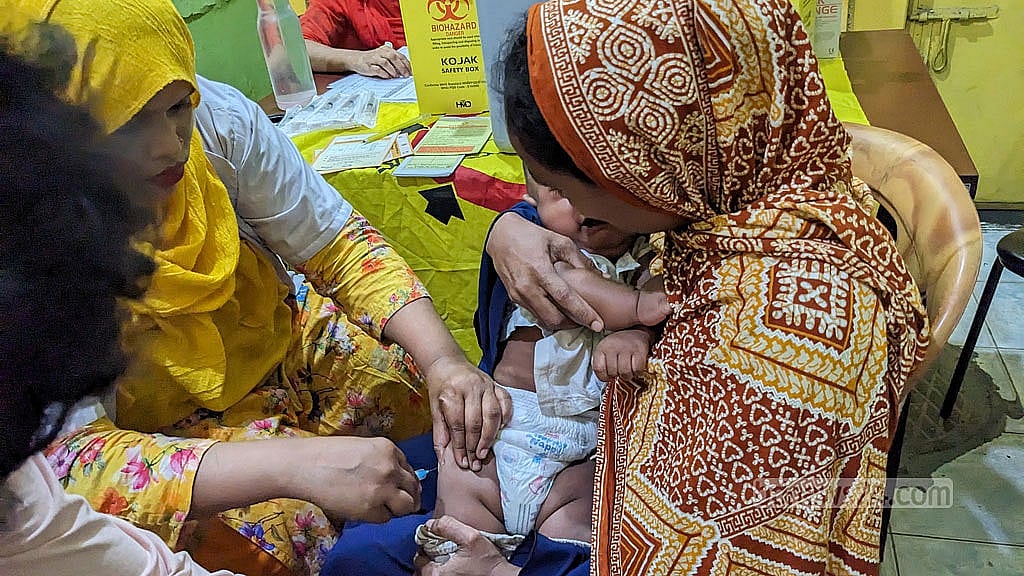
Within weeks of each other, two nationwide programmes targeted exactly the same group of children -- those aged between six and 59 months.
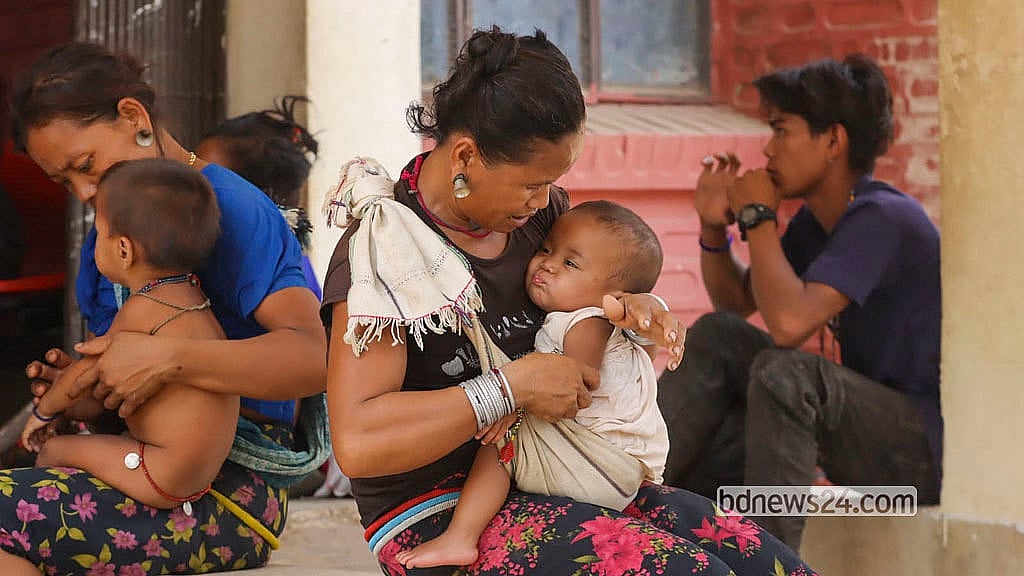
One administered measles-rubella vaccines, the other distributed Vitamin A capsules. But according to official figures, nearly 3.9 million more children received Vitamin A than the measles vaccine.
The discrepancy has fuelled questions over how the government can simultaneously claim 103 percent vaccination coverage while vaccinating almost four million fewer eligible children than another campaign serving the same age group.
Adding to the confusion, the health minister, the state minister and senior officials have each cited different targets and achievements for the Vitamin A campaign.
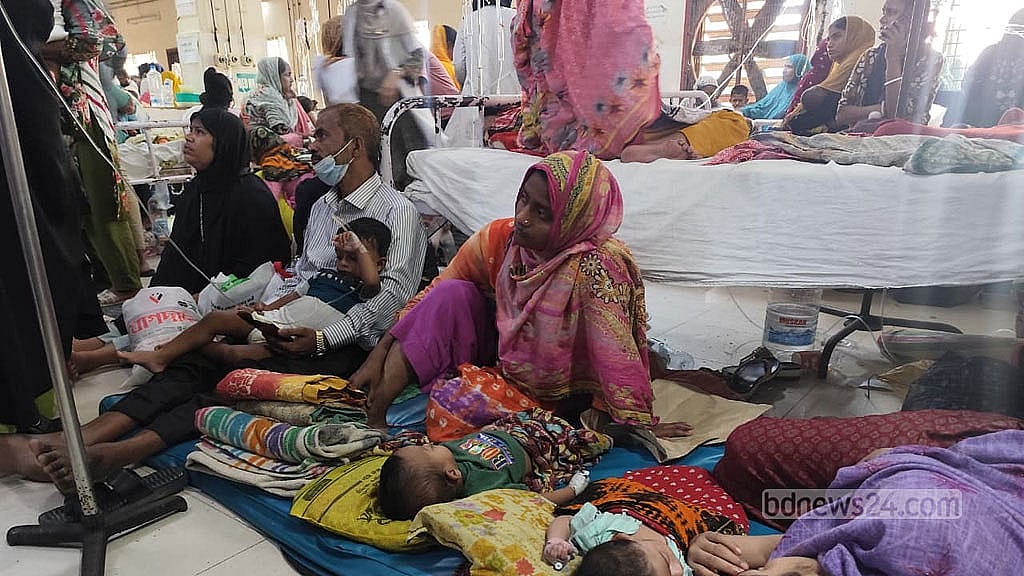
Meanwhile, Bangladesh continues to struggle to bring the measles outbreak -- and the deaths linked to it -- under control.
An official with the Expanded Programme on Immunization (EPI) acknowledged the mismatch.
"The EPI target population was underestimated, while the Institute of Public Health Nutrition's target for the Vitamin A Plus campaign was overestimated," the official said.
Conflicting Numbers
The emergency measles-rubella vaccination campaign, carried out about two months ago, initially set a target of vaccinating 18.02 million children.
According to Friday's measles bulletin, 18.48 million children have now received the vaccine -- equivalent to 103 percent of the campaign's official target.
Just over a month later, on Jun 28, Bangladesh held its nationwide Vitamin A Plus Campaign, with activities in remote areas continuing for another four days.
Asked how many children had ultimately received Vitamin A capsules, Institute of Public Health Nutrition Director Dr Mohammad Yunus Ali told reporters on Thursday: "Our target was to provide Vitamin A capsules to 22,661,564 children. Against that target, 22,360,509 children have received the capsules."
But those figures differed from earlier government announcements.
Before the campaign, State Minister for Health MA Muhith told a press briefing on Jun 25 that 24 million children would receive Vitamin A capsules under the national programme.
At the campaign's inauguration last Sunday, Health Minister Sardar Md Sakhawat Hossain gave yet another figure.
He said 3.5 million children aged 6 to 11 months would receive blue Vitamin A capsules, while 22 million children aged 12 to 59 months would receive red capsules.
"In total, more than 25.5 million children will receive Vitamin A capsules," the minister said.
|
Programme |
Target |
Achieved |
|
Vitamin A Plus |
22,661,564 |
22,360,509 |
|
Measles-Rubella Vaccine |
18,015,064 |
18,477,616 |
|
Difference |
|
3,882,893 |
According to the Institute of Public Health Nutrition, 22.36 million children received Vitamin A capsules.
The measles bulletin, meanwhile, shows 18.48 million children vaccinated -- a gap of 3.88 million children despite both programmes targeting the same age group.
Where Did the Numbers Go Wrong?
Asked how the target for the Vitamin A Plus campaign had been determined, Institute of Public Health Nutrition Director Dr Yunus said the institute had collected data on eligible children from civil surgeons across the country before compiling the national target.
"We asked every civil surgeon to provide data on children in their respective districts. Based on those figures, we prepared our list of children eligible to receive the capsules."
Asked why the number of children receiving Vitamin A was so much higher than those vaccinated against measles, he said: "I don't know how the Expanded Programme on Immunization (EPI) collected its data. We prepared our list using our own methodology."
Three officials and experts involved in the measles vaccination and Vitamin A campaigns said the emergency immunisation drive had been launched before sufficient time was available to prepare the detailed microplans normally used to estimate target populations.
Such planning, extending to village level, usually requires two to three months.
This year's campaign had originally been scheduled for May, but the worsening measles outbreak forced the government to bring it forward. As a result, preparations began on Apr 20.
One expert said, "The EPI was not in favour of holding the campaign before June. But given the government's decision and the deteriorating situation, the vaccinations began earlier."
Following mounting criticism over rising infections and deaths, the government launched emergency measles vaccinations in 30 high-risk Upazilas on Apr 5 for children aged six to 59 months.
The campaign expanded to four city corporations on Apr 12 before going nationwide on Apr 20, ending on May 20.
A Directorate General of Health Services (DGHS) official familiar with the programme said the compressed timeline meant field-level microplanning could not be completed properly.
"Because of the emergency, there wasn't enough time for proper microplanning. So the vaccination target was based on Bangladesh Bureau of Statistics data from 2022."
The official added that roughly 21 million vaccine doses had been procured for the emergency campaign.
"By that calculation, even more children could have been vaccinated."
Former Institute of Epidemiology, Disease Control and Research (IEDCR) Director Prof Mahmudur Rahman said Gavi generally relies on Bangladesh Bureau of Statistics population estimates.
"The latest population figures show fewer children than previously estimated. That alone may explain part of the large difference between the vaccination and Vitamin A targets.
"Secondly, this year's vaccination campaign may not have been supported by sufficiently detailed microplanning."
He stressed that vaccinating every eligible child remained essential.
"Without that, it will not be possible to control measles transmission."
Questions over 103% Coverage
Public health specialists say the discrepancy also casts doubt on the government's claim of 103 percent vaccination coverage.
Officially, 724 people had died from measles and related complications as of Friday, with new deaths continuing to be reported.
Public health expert Mushtuq Husain questioned whether the government's target population reflected the country's actual number of eligible children.
"The official coverage only reflects the government's target population. It may not include every child in the country.
"Because there wasn't enough time before the campaign, many children may have been left out of the microplans. But in an epidemic, everyone needs to be vaccinated."
Prof Be-Nazir Ahmed of the health directorate expressed similar reservations.
"If vaccination coverage exceeds 95 percent in any area, measles transmission can be brought under control."
Referring to the government's claim of more than 100 percent coverage, he added: "The official figure may not be accurate.
"If coverage had truly reached that level, measles transmission should by now have come under control. Since that has not happened, it suggests there are problems with the coverage."
However, Director General of Health Services Prof Pravath Chandra Biswas defended the campaign.
On Jun 18, he said: "Measles infections, confirmed cases and deaths have all declined. Measles will not disappear overnight. The outbreak has already begun to subside, and we expect it to fall significantly by the end of June."
Health Services Division Secretary Md Quamruzzaman Chowdhury suggested another explanation.
"One reason for the large difference could be that children in some parts of the country had already received measles vaccines through World Health Organization-supported programmes."
He insisted there should be no error in the vaccination coverage figures.
"International organisations, including the World Health Organization, help determine our target population. Nevertheless, we will review the matter again."
Public health and immunisation specialist Tajul Islam A Bari disagreed, arguing that the flaw lay in the target itself.
"The vaccination coverage being reported officially is not correct. The Vitamin A figures are more realistic. Achieving herd immunity requires 95 percent vaccination coverage, and we are still far from that.
“That is why measles transmission is not declining. The remaining children must be vaccinated quickly."
Health Minister Sakhawat maintained that both initiatives had correctly estimated their target populations.
"Some children did not receive the vaccine because of fear surrounding vaccination. That is why fewer children were vaccinated, while more received Vitamin A capsules.
"Although the campaign has officially ended, vaccinations are continuing for children who were missed. We hope those left behind will also be brought under the programme."