Published : 26 Oct 2025, 08:34 AM
Updated : 21 Aug 2026, 02:38 PM


The coastline along the Bay of Bengal, renowned for its breathtaking sunrises and sunsets, is losing its lustre. The beauty of Kuakata -- known as the “Daughter of the Sea” -- is fading under the weight of pollution and mismanagement.
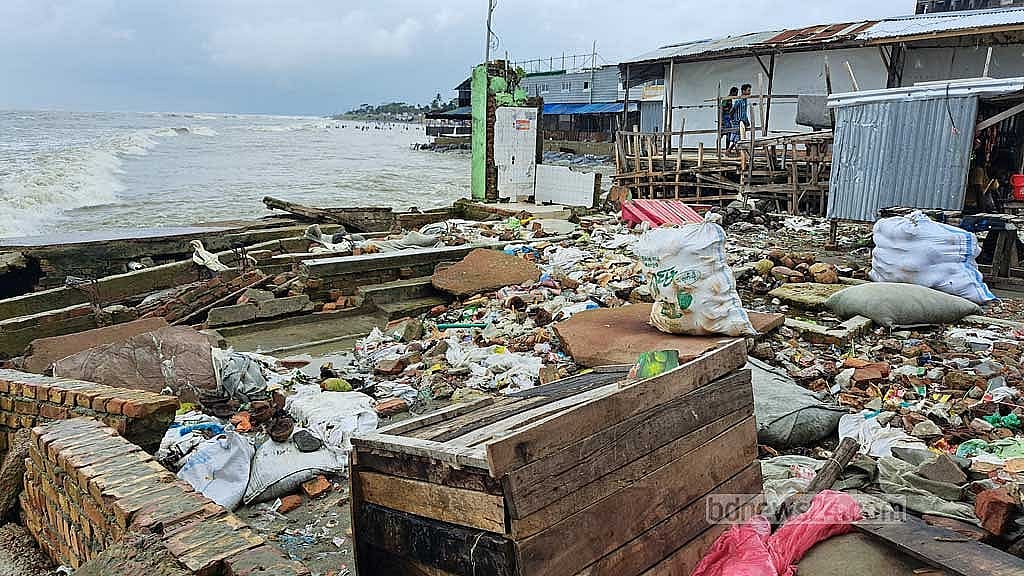
From its golden sands to the iconic views of sunrise and sunset, Kuakata was once a coastal jewel. Now, broken concrete, plastic waste, and collapsing GEO bags have turned the beach into a dangerous stretch, leaving tourists disillusioned and locals worried about their livelihoods.
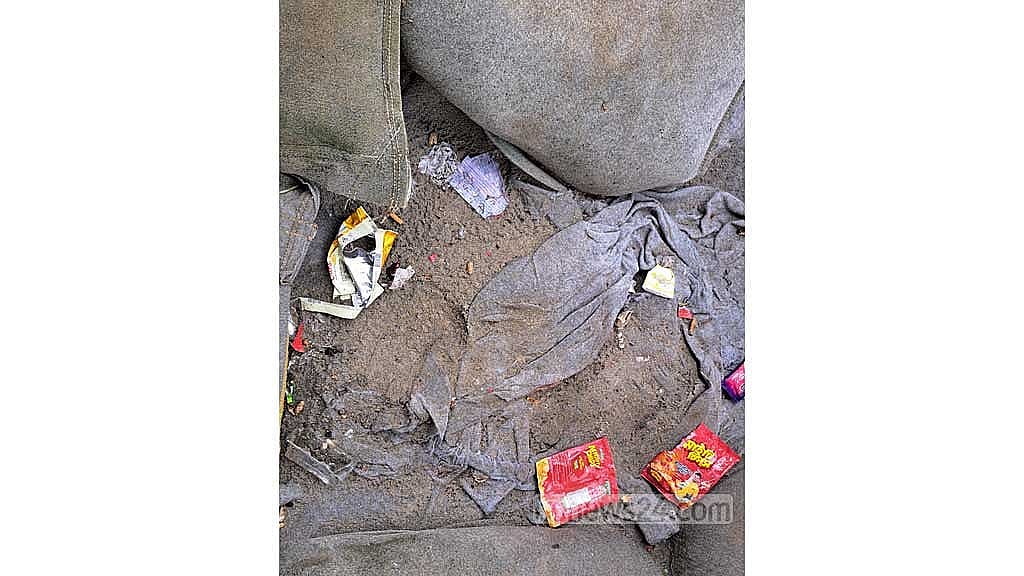
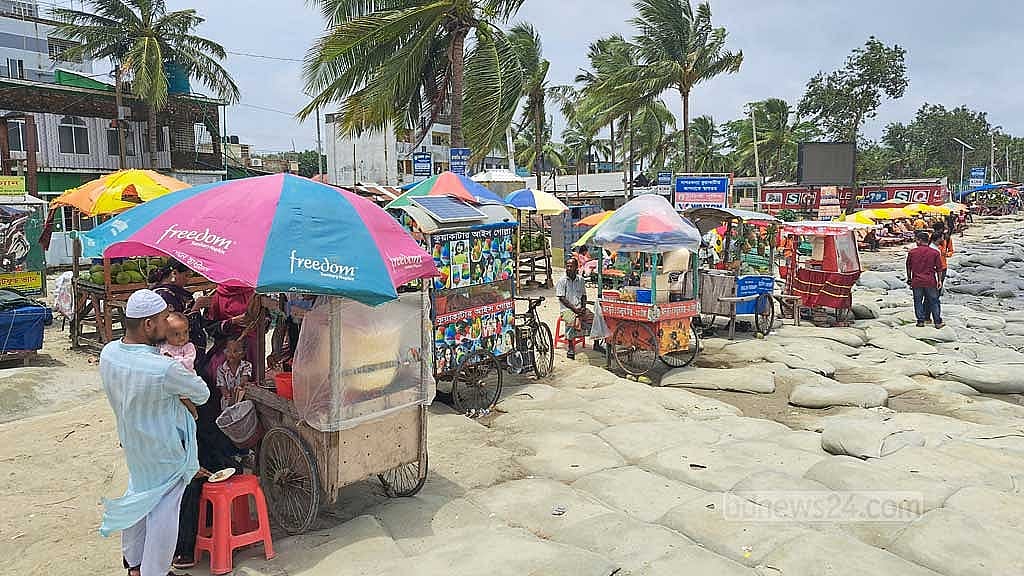
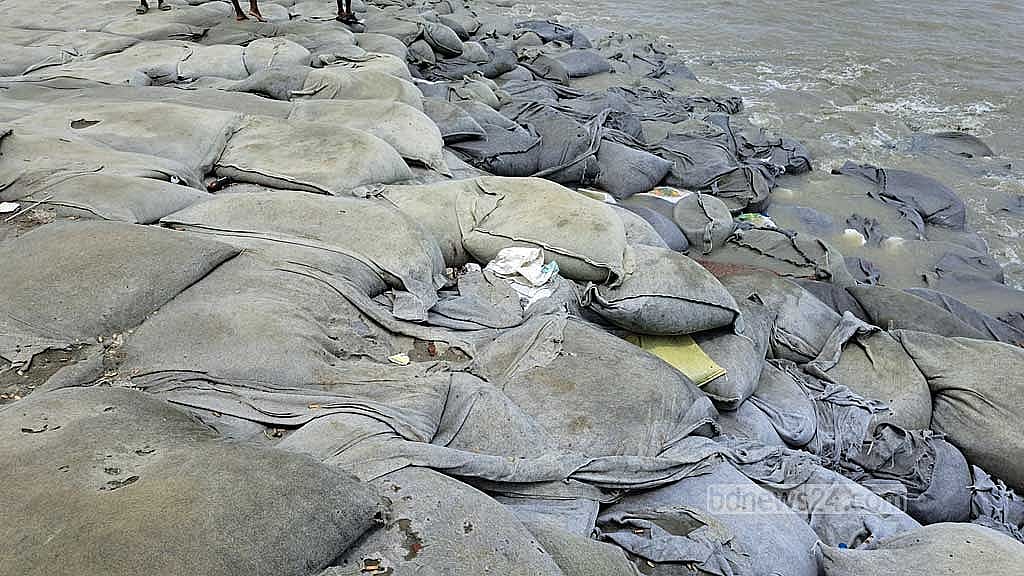
During a recent visit, bdnews24.com observed several casuarina trees felled along sections of the beach. At Zero Point, or the main beach area, GEO bags placed to prevent erosion were riddled with gaps, exposing discarded plastic bottles and other waste.
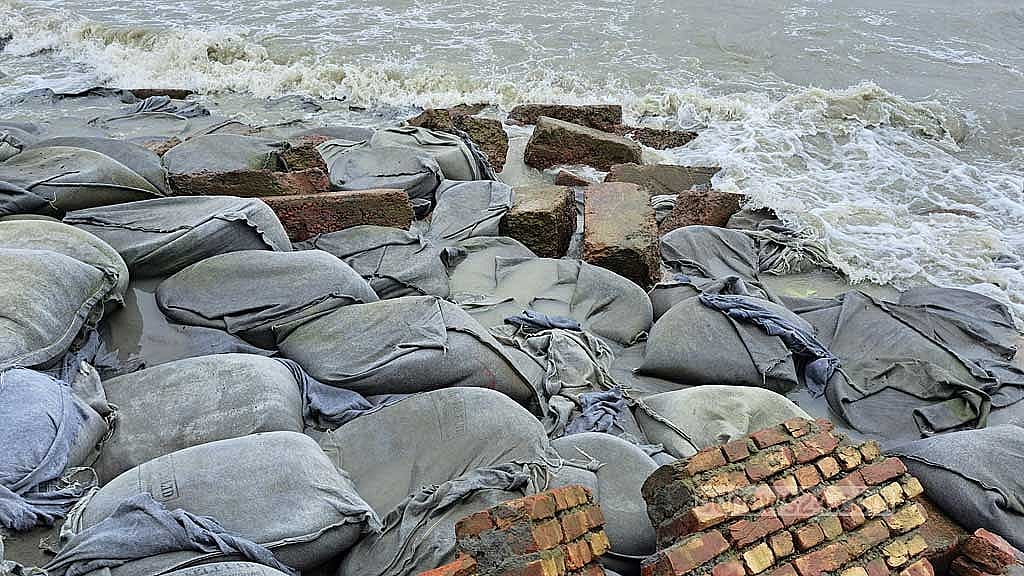
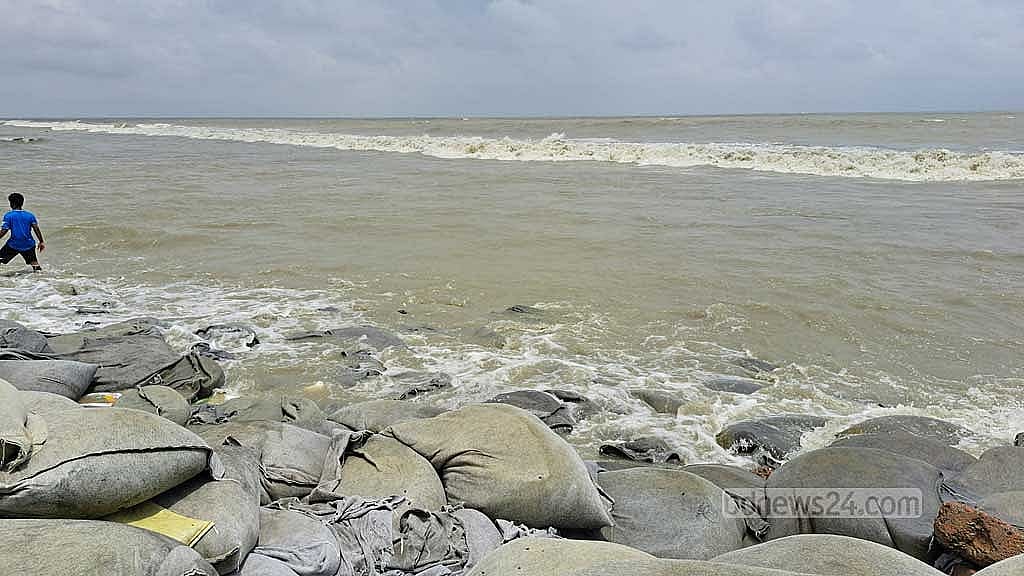
Rows of temporary shops line the sand, while remnants of illegal concrete structures erected near the entrance litter the area, broken pieces washing up with the waves. Along the shoreline, some GEO bags have split, allowing sand to escape, and slippery seaweed-covered bags frequently cause injuries among tourists.
Tourist numbers have dwindled. Many visitors, once enchanted by the beach’s natural charm, now leave disappointed, some swearing never to return.
WHAT DRAWS VISITORS
Located roughly 300km from Dhaka, Kuakata Beach stretches nearly 18km. Sunrises and sunsets are best viewed from the Gangamoti Forest to the east.
In winter, migratory birds visit, adding to the scenic appeal. The combination of open space, gentle waves, and casuarina groves has long attracted tourists.
According to Banglapedia, the name “Kuakata” originated when the Rakhine people fled Arakan after the Burmese occupation in 1784. They sailed across the Bay of Bengal, settling in Rangabali, digging wells in the sand to access fresh water, and naming the area Kuakata for these wells.
Visitors can now explore Rakhine culture and heritage, archaeological sites, indigenous settlements, and Buddhist temples. The beach also serves as a pilgrimage site for Hindus and Buddhists, with religious events during Raas Purnima and Maghi Purnima.
FRUSTRATING VISIT
Arun Saha from Magura visited Kuakata with his family, only to leave disappointed.
“We went to Digha in Kolkata before. It’s beautiful -- well-paved with seating along the sea. Even Cox’s Bazar has better arrangements,” he said.
“Kuakata needs development and beautification. I brought my wife and children here, but we left feeling frustrated.”
His wife Rimpi Saha added, “The beach isn’t in good shape. We had to cross slippery GEO bags, which are dangerous. Even Cox’s Bazar is better maintained. I don’t want to return here.”
Local shopkeeper Noor Mohammad said, “Where we are standing, the beach used to extend another 2km away. Now it’s swallowed by the sea. This area has been eroding for a long time. We live at risk. At any moment, this place could collapse. We hope the Water Development Board pays attention.”
He added that tourists often slip and injure themselves on the seaweed-covered GEO bags. Fewer visitors now also mean lower sales for vendors.
Professional photographer Arian from Ward No. 8 of Kalapara said, “Erosion has been happening for years, yet I haven’t seen long-term solutions. Blocks or durable embankments would have been more effective than these bags.
“The bags obstruct tourist movement, especially near the entrance. Sand has been washed up close to the GEO bags, preventing visitors from freely exploring. Broken concrete from old structures also poses a serious risk. These need complete removal.”
Faruk, a resident of Ward No. 6, said: “Several casuarina trees have fallen along the beach for a long time. Tourists can’t walk freely. I don’t think these GEO bags have achieved anything beyond financial gain.”
DECADES OF EROSION
Mang Cho Thin Talukdar, president of the Barishal region of the Bangladesh Indigenous Peoples Forum, said the beach has shrunk over time.
“When we used to visit years ago, the beach extended at least 3km further into the sea. A government rest house also existed; the sea has consumed that too,” he said.
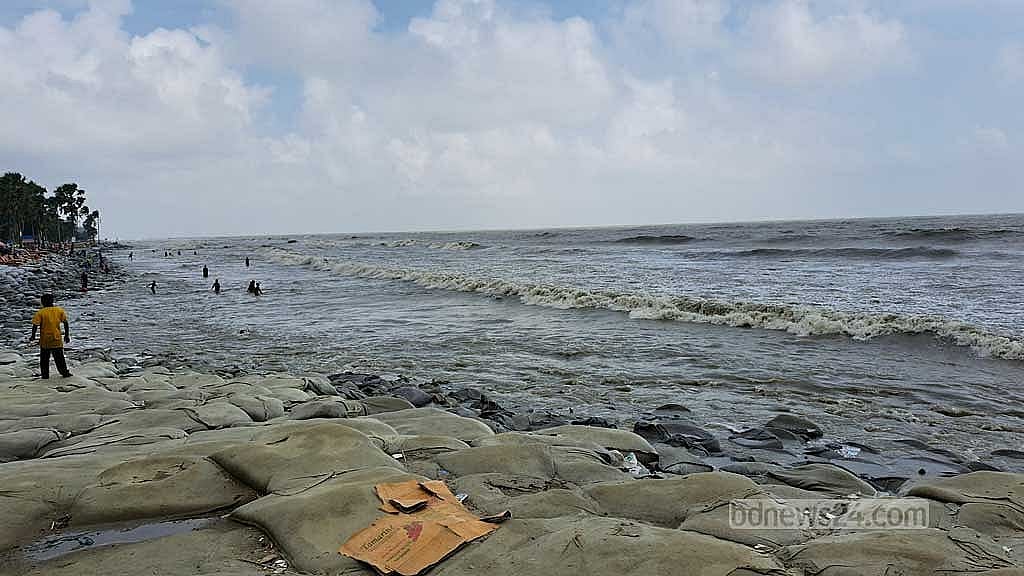
Talukdar added that erosion has been ongoing for many years. GEO bags placed to prevent sand loss are largely ineffective. “More durable measures are required,” he said.
Erosion is not limited to Kuakata. Climate change has intensified coastal degradation across the country’s seaside towns, forests, and islands. Rising sea levels are accelerating shoreline loss.
According to locals, the coastline of Patuakhali has been eroding unusually rapidly for nearly two decades, particularly after Cyclone Sidr struck in 2007. Over 2,000 acres of land have been lost, including 400 acres of casuarina forest meant to protect the coast.
A research report published four years ago in the Switzerland-based journal Frontiers in Marine Science examined Kuakata’s coastline between 1989 and 2020. The study found that an average of 0.32sqkm of coastline disappeared annually, totalling 13.59sqkm lost, while 3.27sqkm of new land emerged.
GEO BAGS
Local resident and President of the Tour Operators Association of Kuakata, Ruman Imtiaz Tushar, who has been involved in journalism and environmental activism for many years, was asked whether the Water Development Board’s (WDB) GEO bags can prevent coastal erosion.
He said, “We are uncomfortable about this issue as well. We are frustrated and angry here. The sand has been eroding for several years, and there should have been a proper coastal protection project to stop it, which has long been our demand.
“But in the name of beach protection, it has become a commercial game in recent years. WDB is involved, along with many others. Their influence is so extensive that they manage it themselves. Every year during the monsoon, these GEO bags are used in a game, implemented at a time when the weather is bad, and funds are allocated instantly.”
Tushar claims that the main reason behind the placement of GEO bags is “financial embezzlement”.
“In one year, Tk 30 million was allocated for placing these bags. We received news that only Tk 5 to 5.2 million was actually spent. Since then, we have been opposing this.”
Tushar, also the president of Kuakata Press Club and member of the Beach Management Committee, said: “I believe the main reason for using GEO bags is that the cost is very high, but the work can be completed in a very short time -- within 15 days.”
When asked if they had proposed alternatives to GEO bags, he said: “Our proposal was to adopt an aesthetic, durable, and long-term plan to protect the beach instead of GEO bags, which would have prevented sand erosion.
“It would also have been visually appealing. But instead, WDB immediately removes sand from the beach and places the bags there again.”
He said, “What happens here in Kuakata is sand erosion. If three feet of sand is lost from the base of the trees on the beach, the trees fall.
“There are two rivers on either side of the beach -- Andharmanik and Agunmukha. Water flows in from these rivers, and the rounded shape of the sand slabs has been eroded from the main point to this condition.”
Tushar suggested that a project similar to the “Coastal Protection” programme currently running in Cox’s Bazar could be implemented in Kuakata.
He claimed that over the years, GEO bags have spread across 300 to 500 feet of the beach. Torn, seaweed-covered, decayed, and dirty bags have disfigured the entire beach.
Tushar added, “Tourists are frequently injured by these GEO bags, and there have even been fatal incidents. Yet WDB does not withdraw the GEO bags. Some corrupt local journalists, politicians, and officials are involved. The purpose is to share profits.
“This will never protect the beach. If GEO bags must be used, they should be made with coarse sand and prepared in consultation with experts to ensure durability.”
WHAT GOVT AGENCIES SAY
Some locals have demanded concrete blocks instead of GEO bags, but water resources ministry Senior Secretary Md Mokabbir Hossain believes that even this carries risks.
“If blocks are placed, seaweed will still accumulate there, posing a risk of injury, he said. “There are also technical issues. I will discuss this with the Water Development Board.”
On plans to enhance Kuakata Beach’s beauty, Chief Executive Officer of the Bangladesh Tourism Board (Additional Secretary) Nuzhat Yasmin said: “We have a master plan. It identifies several existing recognised tourist centres and many additional locations.
“The plan outlines how to make all of them more tourist-friendly. It is awaiting final approval. Once approved, we will start work.”
She added, “The Tourism Board alone cannot implement everything. Other stakeholders also have a role. Nevertheless, we will all work together. We will look into the mismanagement of the beach.”
Fatema Rahim Veena, additional secretary (Tourism Division) of the Ministry of Civil Aviation and Tourism, said: “I will personally discuss this with the deputy commissioner. The main responsibility for management lies with the district administration.
“The information you have provided will be useful, and I will certainly look into it.”
She requested photos of the beach’s mismanagement and promised that action would be taken once they were received.
WHAT LOCAL ADMINISTRATION SAYS
On the issue of beach management, bdnews24.com spoke with Patuakhali Deputy Commissioner Mohammad Shaheed Hossain Chowdhury on Oct 2. He said he had recently taken charge of the district.
“After I arrived, I visited the beach. The stakeholders there shared several problems and possibilities. Considering these, we have planned our work. It may take some time.”
He added, “We asked them for proposals on how they would like the area to be arranged. We believe in consultative participation with stakeholders.
“In this way, development will occur while keeping in mind the local environment, surroundings, and the type of tourism desired by visitors.”
Asked if there is a concrete plan, Shaheed said: “Some hotels outside the listed areas will be included so that tourists are not harassed and their safety is ensured. That is the first priority.
“We do not want to build concrete structures, which could harm tourism. We want a balanced development approach that is eco-tourism friendly and convenient for visitors.”
Shaheed emphasised that the administration aims for development that is “blended with nature”.
According to him, plans include constructing a few small rest houses, regularly monitoring and reducing plastic waste on the beach, and providing mobile washrooms on Gangamoti Char, where no facilities currently exist.
Overall, the measures are designed to enhance tourist convenience while minimising environmental impact, he said.