Published : 07 Sep 2025, 09:01 AM
Updated : 28 Aug 2026, 01:26 AM


In 2019, two students died of alcohol poisoning at Rajshahi University’s residential halls. One of them was from the Department of Law, the other from the Department of Economics.
In the 2020-21 academic year, a woman from a middle-class family was admitted to a respectable department at the university. She finished her first year as one of the top five students in the department. She then became involved in drugs and fell behind by a year. Now a fourth-year student, she has yet to fully recover from her ordeal.
A case was filed against a student from the 2016-17 academic year after he was caught with drugs. He was eventually forced to leave the campus after several more cases were filed against him. But his family still did not learn about the situation. A few days ago, he was seen consuming marijuana and selling it to students at the Binodpur Mandal intersection near the university.
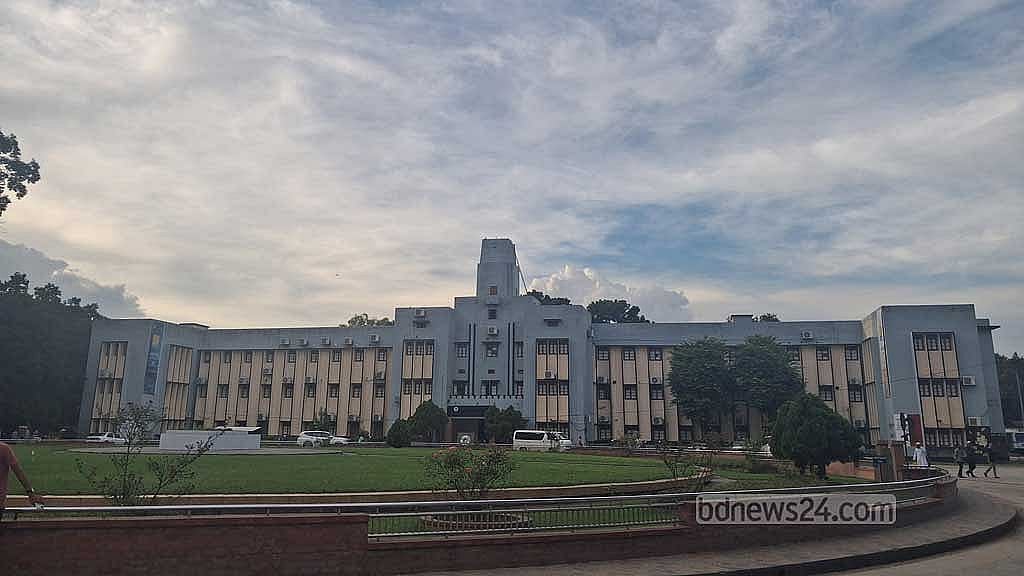
These are just some of the stories of university students falling into the clutches of drug addiction. Many of them eventually drop out. Some of them go on to suffer from mental health issues or even become involved in crimes. Despite this, little action is taken against them. In most cases, they are released on bail.
Under the circumstances, the Election Commission for the Rajshahi University Central Students’ Union has made dope testing mandatory for all candidates.
Although dope testing is mandatory for admission to some universities and for hiring at certain jobs, this is the first time dope testing is being carried out on candidates in student union elections. The decision has given rise to discussions on campus. Although most students consider the dope testing a “positive”, they have also raised various questions.
WHAT THE MENTAL HEALTH CENTER SAYS
According to information from the Rajshahi University Mental Health Center, more than a hundred students come for consultations every year due to drug addiction. In the past year, the center has advised at least five people to go to a drug rehabilitation centre for advanced treatment.
Apart from this, several thousand students regularly use drugs. However, they do not seek support because they do not feel they have addiction issues.
There have been reports of drug use among the teaching staff as well. At various times, complaints have come forward that drugs were found in the private chambers of many teachers at the university. Students complained about a former department head, and afterwards, several bottles of Phensedyl were found in his chamber next to the window.
Another teacher was accused of trying to sexually harass a female student while intoxicated at the Rajshahi University’s Club Zubery Bhawan. An investigation committee is still probing the incident. No particular disciplinary action has been taken over these incidents according to the university guidelines.
Enamul Haque, director of the Mental Health Center and professor of psychology, told bdnews24.com: “Unless someone close to a drug-addicted student brings them in, they do not seek help themselves. In the case of female students, the hall principals or department heads bring them in. The number is not very high, but there have been one or two incidents where we have been able to help them overcome their trauma through treatment.”
397 NOMINATION PAPER TAKERS DIDN’T SUBMIT DOPE TESTS
On the night of Aug 27, RUCSU Chief Election Commissioner Prof F Nazrul Islam issued a notification making dope tests mandatory for candidates.
Initially, the deadline for the tests was from Aug 28 to Sept 1. Later, due to the distribution of nomination papers and the inclusion of first-year students in the voter list, it was extended to Sept 3.
According to the Election Commission, a total of 1,304 people picked up nomination papers for the posts at the RUCSU, hall unions and student senate representatives. Of these, 907 have submitted dope test samples, while the remaining 397 did not. As a result, these 397 people will not be able to contest the polls.
However, not all of these 397 are drug addicts. Many are also reluctant to run for the posts due to concerns over “personal safety”, “bullying” on social media, and the current situation on campus.
It is not yet clear how many candidates will be dropped from the polls due to their failure to submit a dope test sample. The Election Commission is scheduled to publish its finalised list on Sunday.
DOPE TEST PROCESS
Dope tests can be carried out on different human samples to detect the presence of drugs.
For the RUCSU election candidates, urine samples are being collected.
Vice-president candidate and former coordinator of the Anti-discrimination Student Movement, Mehedi Sajeeb, told bdnews24.com:“Dope testing could be one way of screening candidates. We have no objection to it. But if it were done through hair or blood samples instead of urine, it would have been more acceptable.”
On the issue of bullying faced by female candidates, Mehedi said: “Bullying is not limited to dope testing, it happens in all areas. If a cyber cell were made effective, I believe this could be reduced significantly.”
Another candidate said: “Drugs have spread alarmingly across our campuses. Many are using drugs, that’s not untrue. A student knows very well which of their classmates or seniors are addicted. The number is not small.
“Even with dope testing, it is often not possible to identify users. This is because, after a certain period, traces of drugs disappear from the body.”
He added: “What has happened because of dope testing is alarming. Out of fear of social bullying and personal safety, many candidates who are not drug users also avoided giving samples. Bullying on this campus is a serious issue.”
Assistant general secretary (AGS) candidate Shah Poran said: “I welcome the decision to carry out dope testing. But I have serious complaints about the method. Urine tests only detect drug use within a very short timeframe.
“On top of that, this method is easy to manipulate with fake samples. A hair follicle test would have been much more effective.”
Shaheed Habibur Rahman Hall’s AGS candidate Enamul Haque said: “I doubt whether urine testing will bring accurate results. The administration is just doing a nominal dope test. Female candidates are constantly victims of cyber bullying. The university authorities have not taken any visible action against cyber bullying. So, it is normal that many women are unwilling to undergo the tests.”
Drama student Rafia Islam Toma said: “If any student representative is a drug user, then I don’t think they can work for the students.”
She also felt that some “non-political” students looking to stand were drug users themselves, which meant they too could not be considered as proper representatives.
MEDICAL CENTRE REVIEW
Head of the university medical centre, Mafruha Siddiqa Lipi, said: “There are limitations in dope testing. Many times sleeping pills or allergy medication can also cause a positive result. We are only collecting the samples. The tests are being carried out by a team from Rajshahi Medical College Hospital. Results have been prepared and handed over to the election commission.”
The election commission, however, remains firm on making dope testing mandatory for nomination submission.
Chief Election Commissioner Nazrul said: “No candidate will be allowed to submit nominations without a dope test. There is no option to take the test outside.”
Quazi Lutful Kabir, chief consultant at the Central Drug Addiction Treatment Centre of the Department of Narcotics Control told bdnews24.com that urine, blood and saliva samples are tested using strips. The presence of drugs can be detected from 72 hours up to one month, depending on usage.
“Regular use of cannabis can leave traces in the body even after a month. It depends on the amount consumed,” he said.
He added that in long-term users, drug traces can also be detected in hair and nails.
CONTEXT
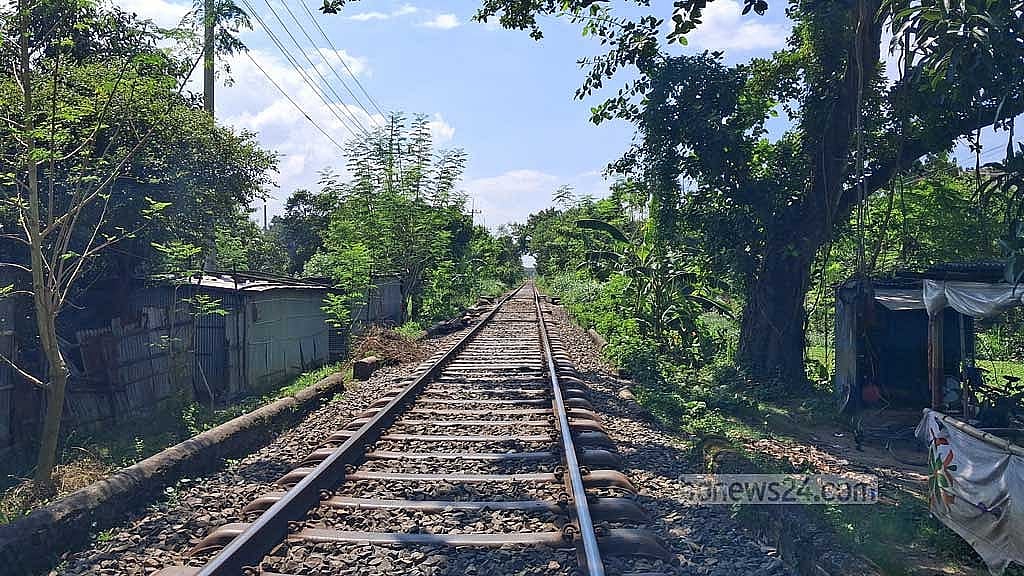
Rajshahi is a district near the India border where drugs often enter the city through smuggling routes.
Areas such as Panchabati and Padma’s Chars regularly see illegal drugs entering the urban centre, with law-enforcing agencies seizing several consignments.
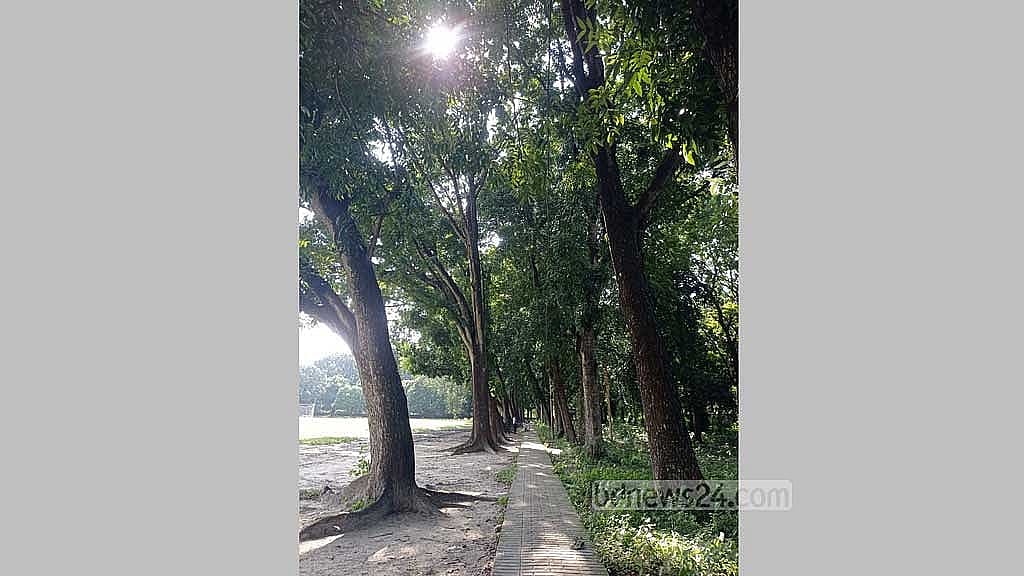
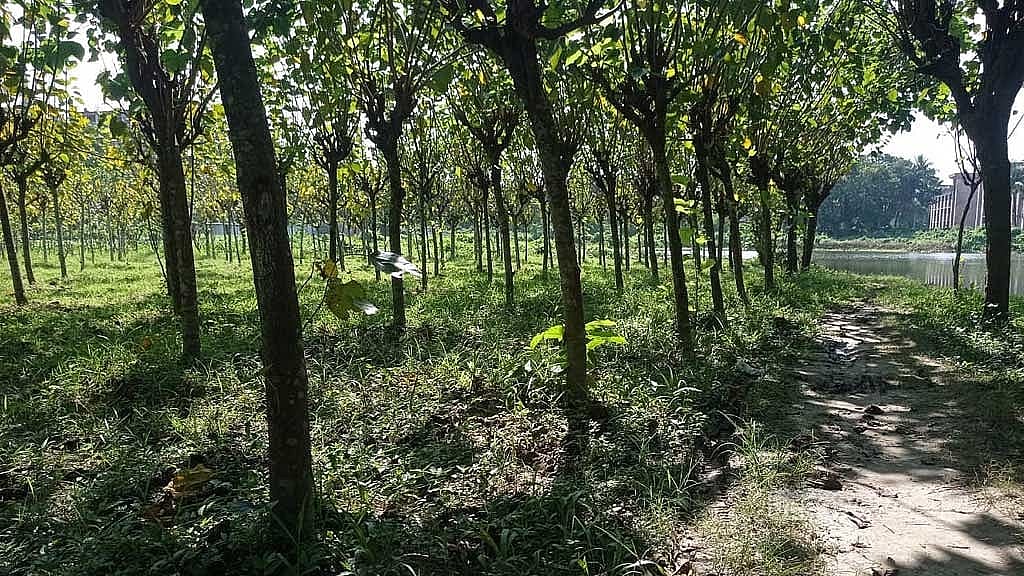
Students say drug use on campus is rampant at night. Common spots for drug gatherings include Iblish Field, the garden behind the Science Building, the Model School field, and the helipad beside Syed Amer Ali Hall. Rooftops of residential halls are also often used as safe spots for drug consumption.
Popular drugs include cannabis, phensedyl, yaba, and alcohol, according to them.
The university’s proctorial team oversees security on campus. Proctor Mahbubur Rahman told bdnews24.com, “Since we took charge, the number of drug users has reduced significantly. According to university rules, students caught with phensedyl, yaba, or marijuana face cancellation of their student status. However, cannabis is mostly found, and in most cases, students are released on bond.”
INITIATIVES
Despite announcements on reducing drug use, visible actions remain limited. The university’s only mental health centre is understaffed and struggling to meet demand.
Though there have been calls to establish a specialised drug prevention counselling cell, no concrete steps have been taken.
Vice-Chancellor Saleh Hasan Naqib said, “The university cannot intervene in criminal matters; law- enforcing agencies are responsible for that. However, within the university’s jurisdiction, we take action when necessary.”
He added, “Students need more than punishment; raising awareness is crucial. Counselling can play an effective role. We plan to establish a dedicated cell for drug-addicted students.”
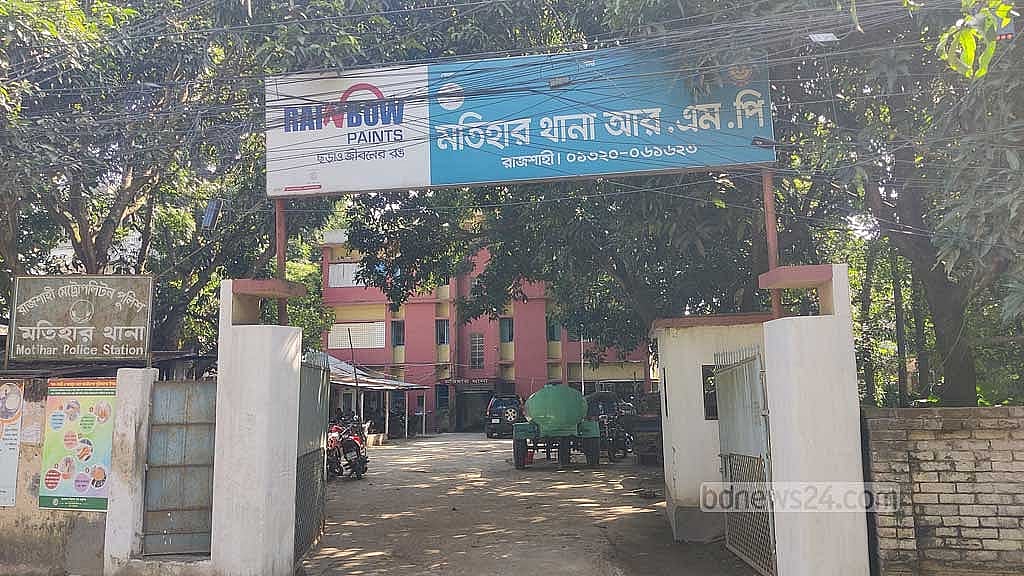
Abdul Malek, chief of Motihar Police Station, said: “Students do use drugs, but they are not involved in trafficking. Since I took charge on the 5th of August, no drug cases have been filed against students.”
[Writing in English by Shoumik Hassin and Sheikh Fariha Bristy]