Home
+
Published : 10 Jul 2025, 03:08 AM
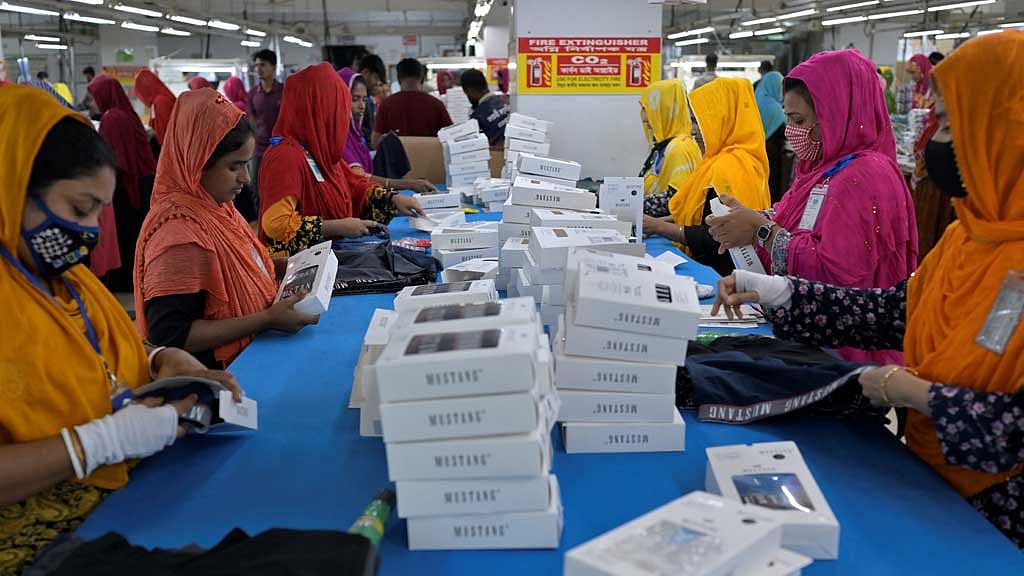
Bangladesh’s readymade garments (RMG) sector exporters are bracing for a potential hit to their largest market, as a new 35 percent tariff on all goods headed to the United States is set to take effect from Aug 1 under a directive from President Donald Trump.
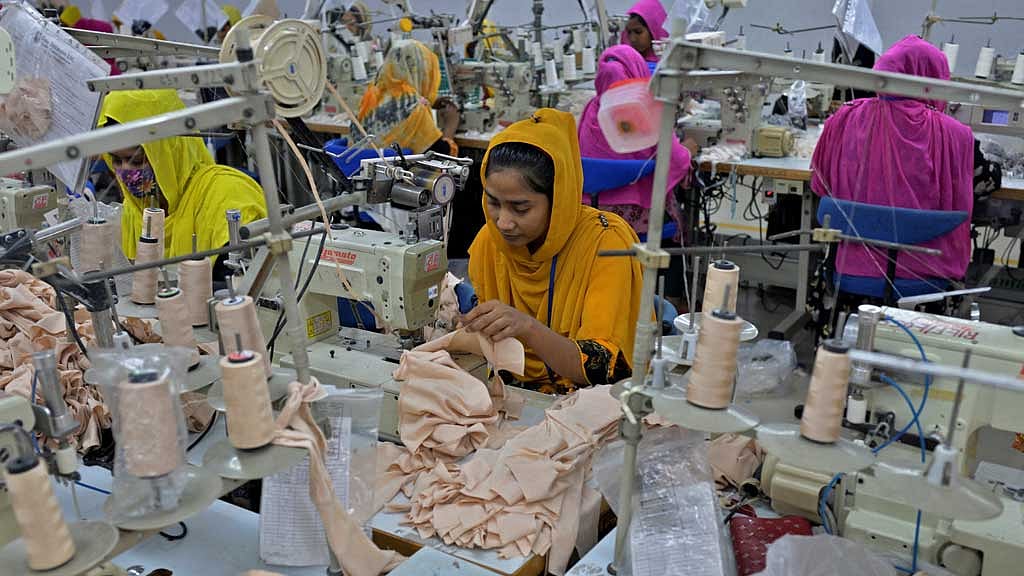
In 2024, Bangladesh exported ready-made garments worth $7.34 billion to the US.
With an existing average duty of 15.5 percent, importers already paid about US $1.14 billion in tariffs.
If the new 35 percent hike is added, the US buyers would be facing an additional $2.57 billion in costs, according to export data and estimates.
Exporters say such a steep rise in duty will make products from Bangladesh significantly more expensive than its competitors.
The key concern is that buyers may look elsewhere, especially those who operate exclusively in the American market.
Many exporters and analysts believe the government has been too slow in responding. With no resolution in three months, even American buyers are growing uncertain.
“If prices go up due to the new duty, they may consider alternative sources -- it’s only natural,” said one exporter.
Although the tariff is due to start from Aug 1, Trump has left the door open for negotiation.
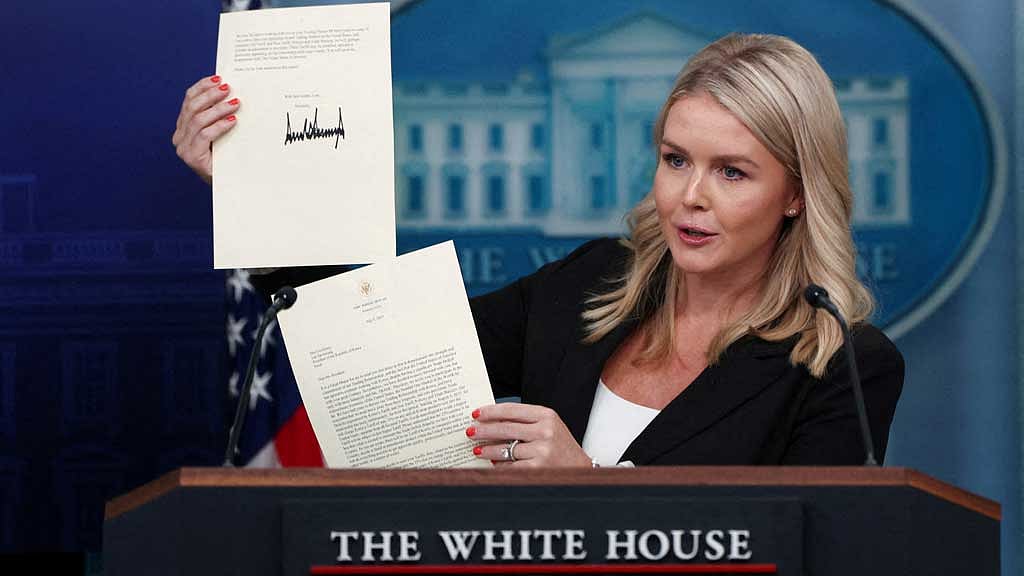
In his letter sent earlier this week to Chief Advisor Muhammad Yunus, he confirmed the additional 35 percent duty on all Bangladeshi goods but noted, “Adjustments may be possible depending on each country’s willingness to make concessions... We will not be unfair.”
Exporters and economists are urging the Bangladeshi government to seize this window by engaging in aggressive diplomatic efforts.
They also recommend consulting all stakeholders to avoid long-term damage to the country’s export sector.
“If this tariff goes into effect, it will be very difficult to hold onto our $8 billion export market,” said Faisal Samad, managing director of Surma Garments and director of the Bangladesh Garment Manufacturers and Exporters Association (BGMEA).
“The government needs to calculate the potential impact and act accordingly. A settlement effort is ongoing.”
When asked what steps should be taken now, Faisal said it’s too early to define a roadmap.“We expect everyone to act wisely and steer this in the right direction.
“The BGMEA is maintaining contact with the government.”
“For at least a week, communications have been regular,” he added. “Earlier, we didn’t even receive the necessary paperwork from the US side to begin work.”
Trump first announced the sweeping tariffs on Apr 2, targeting over 100 countries, claiming it was necessary to strengthen US domestic industries.
For Bangladesh, a 37 percent additional duty was proposed.
This blanket tariff policy -- which came to be known as the “Trump tariff” -- rattled the global economy, triggering a new wave of trade tensions.
Trump later suspended implementation until Jul 9, offering a window for negotiations and removal of non-tariff barriers.
Two days before that deadline, Trump wrote to the heads of government in 14 countries, including Bangladesh, confirming the decision to move ahead.
Despite last-minute talks, Bangladesh could not secure a deal.
Only the United Kingdom and Vietnam managed to strike agreements before the deadline.
The US officials also indicated India was close to one.
Trump’s letter to the interim prime minister confirmed that all Bangladeshi goods would now face an extra 35 percent duty.
The same letter was sent to other nations hit by the new tariffs, including Laos, Myanmar, Thailand, Cambodia, Serbia, Indonesia, South Africa, Bosnia and Herzegovina, Malaysia, Tunisia, Japan and South Korea.
Myanmar and Laos are facing the highest hike -- 40 percent.
For Bangladesh, the new hike will push the overall tariff on exports to the US from an average of 15 percent to 50 percent.
The impact will fall hardest on the ready-made garment sector -- Bangladesh’s top export -- with the US its single largest market.
Vietnam, one of Bangladesh’s key rivals in the sector, has already reached a deal.
Under that agreement, the US will apply a 20 percent duty on all Vietnamese goods, down from 46 percent in April.
In return, US goods will enjoy duty-free access to the Vietnamese market.
The deal, however, includes a clause: if Vietnam is used as a transshipment route for Chinese products, a 40 percent tariff will apply.
Vietnamese traders are currently unsure how much Chinese input would qualify a shipment as transshipped.
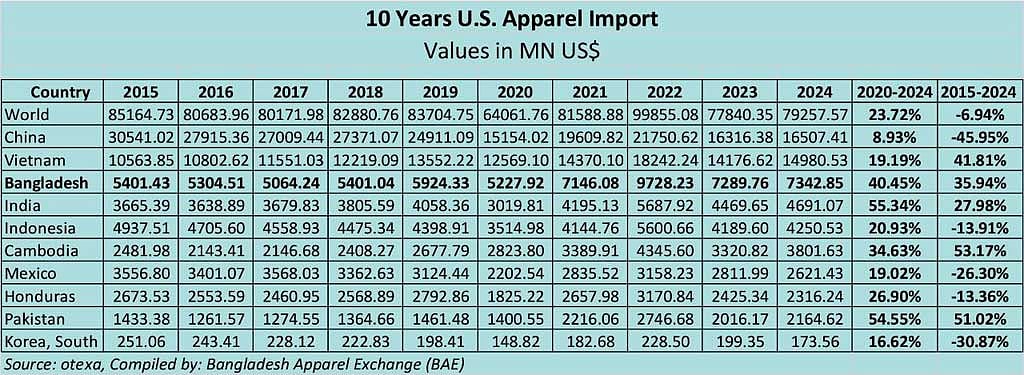
According to the US International Trade Administration’s 2024 data, Bangladesh was the third-largest apparel supplier to the US with a 7.11 percent share and $7.34 billion in shipments.
China led with 16.51 billion dollars, accounting for 21 percent, followed by Vietnam with 14.97 billion dollars or 19 percent.
India came fourth with 4.69 billion dollars or 6 percent, followed by Indonesia at 4.25 billion dollars or 5.36 percent, Cambodia 3.80 billion dollars or 4.8 percent, Mexico 2.62 billion dollars, Honduras 2.31 billion dollars, and Pakistan 2.16 billion dollars or 2.73 percent.
Mohiuddin Rubel, managing director of Bangladesh Apparel Exchange, warned that the new tariff would have wide-reaching effects across the supply chain and also influence consumer behaviour.
“This affects all supply chain partners and could also change how end consumers shop,” he said.
“If other countries offer lower prices, some orders may shift there. Customers might also reduce purchases if prices go up.”
He also urged exporters not to focus only on price, but to look at Bangladesh’s overall capacity and growth opportunities.
“We need to work on reducing the applied tariff and bring it in line with our competitors.
“There’s also an opportunity now to improve internal cost management, product innovation and diversification -- key drivers of competitive strength.”
Meanwhile, the government is now rushing to restart talks.
A delegation led by Commerce Advisor Sheikh Bashir Uddin and National Security Advisor Khalilur Rahman was already in Washington when Trump’s latest letter arrived.
Commerce Secretary Mahbubur Rahman has travelled to Washington to join the fresh round of discussions, while Khalilur has already returned.
BGMEA Director Faisal reminded that the window for negotiation has not yet closed.
“We are currently conducting a survey among exporters,” he said. “Once that’s in, we’ll have a clearer picture.
“Right now, we’re somewhere in the middle. Nothing is certain.
“We must not give up. Government and businesses must keep working together.”
Asked if businesses are being properly involved in the government’s response, Faisal said: “For the past week, the government has been in full contact with exporters. That wasn’t the case before.”
He also said exporters are now waiting to see what kind of tariff deals the US strikes with other competitors, including India, after Vietnam has already secured a trade agreement.
[Writing in English by Shiekh Fariha Bristy]