Published : 11 Jan 2026, 01:02 AM
Updated : 21 Aug 2026, 03:00 PM


Bangladesh is aiming for US tariff relief “proportional” to the volume of cotton, yarn, and other raw materials imported for apparel exports.
Following discussions with the United States on the duties imposed on Bangladeshi goods, the interim government is now hopeful of a scheme that would allow tariff reductions in line with the quantity of raw materials used, the Chief Advisor’s Office (CAO) said on Saturday.
The CAO in a statement described the development in ongoing trade talks as a “significant achievement”.
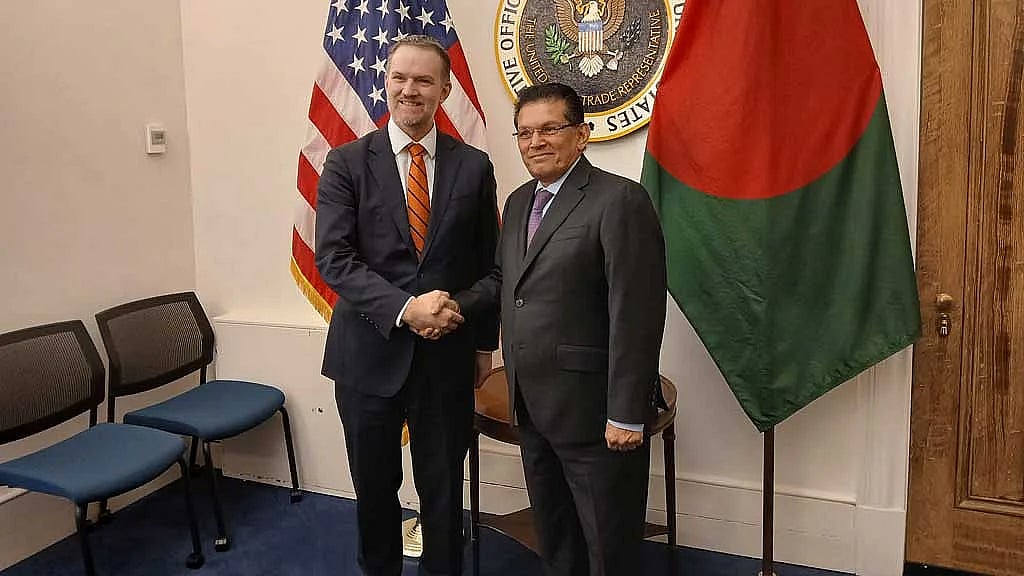
Khalilur Rahman, national security advisor, currently on a visit to Washington, met with US Trade Representative Ambassador Jamieson Greer, and the office said the talks yielded positive progress regarding additional duties on Bangladeshi exports.
The statement noted that Ambassador Greer agreed to raise with President Donald Trump the possibility of reducing Bangladesh’s current 20 percent reciprocal tariff, potentially bringing it closer to parity with regional competitors.
In his second term, on Apr 2, 2025, Trump imposed high reciprocal tariffs on over 100 countries, with Bangladesh initially facing 35 percent, later reduced to 20 percent after bilateral discussions. US duties on Bangladeshi products stand at 35 percent.
Bangladesh earns around 20 percent of its total export revenue from the US, 87 percent of which comes from readymade garments.
The CAO said both countries have agreed on an “innovative and forward-looking” scheme to support Bangladesh’s export priorities. Under the proposal, Bangladeshi apparel and textile exports to the US would receive tariff-free access equivalent to the volume of cotton and man-made fibre imported, measured on a square-metre basis.
The initiative, the statement said, will strengthen bilateral trade, support Bangladesh’s garment sector and workers, and deepen supply-chain ties with US producers.
It reflects growing momentum and goodwill in US–Bangladesh economic relations and marks a promising new chapter for Bangladesh’s global trade prospects, the statement added.