Published : 04 Jul 2026, 02:38 AM
Updated : 08 Sep 2026, 09:21 AM


Prices of spices and other essential commodities have barely moved despite tax cuts announced in the national budget, with several items even costlier than before.
Traders say the recently imported spices set to benefit from the new duty cut will take a few more weeks to arrive, meaning buyers may not see relief until mid-June.
The BNP government unveiled its first budget on Jun 11, cutting tax on 63 essential commodities.
The budget scrapped a 5 percent regulatory duty on all imported spices entirely, while other spices saw the applicable tax cut from 5 percent to 0.5 percent.
Chief Whip Md Nurul Islam Moni, addressing a post-budget press conference at the LD Hall of the parliament building on Thursday, said the government wants prices to fall for goods that saw tax cuts.
Tax was not raised on any of the 63 essential items, he added, noting that products taxed at 5 percent now attract only 0.5 percent, which should translate into lower prices.
A visit to Moulvibazar, one of the capital's largest wholesale spice markets in old Dhaka, has found prices holding at their earlier high levels, with some spices even dearer.
Whole cumin cost Tk 550-650 a kg before the budget; by Friday, its price had climbed by up to Tk 50, taking it to Tk 600-700.
Cashew nuts are selling at Tk 1,500 a kg, having risen by Tk 100-150 in the space of a month.
Cloves have edged up slightly, while cardamom and cinnamon remain unchanged.
Retail cardamom costs Tk 4,400-5,500 a kg and cinnamon Tk 500-600.
Moulvibazar wholesale and retail trader Mohan Molla told bdnews24.com that most prices had held steady, with some even climbing.
"Cloves are still fetching Tk 1,500 a kg, cinnamon Tk520, cumin Tk 600, black pepper Tk 1,300 and cardamom Tk 5,500," he said.
Mohammadpur's Town Hall Market retail spice trader Md Atiul Ahsan said prices had gone up for most spices at smaller shops, with cinnamon, mace, poppy seed and cashew nuts all fetching higher rates.
But Md Mahi, owner of the neighbouring Mahi Store, said some spice prices had begun to ease after earlier sharp rises.
The market has yet to fully normalise, he said, adding that prices could fall further once new consignments arrive, since current stock was bought before the budget.
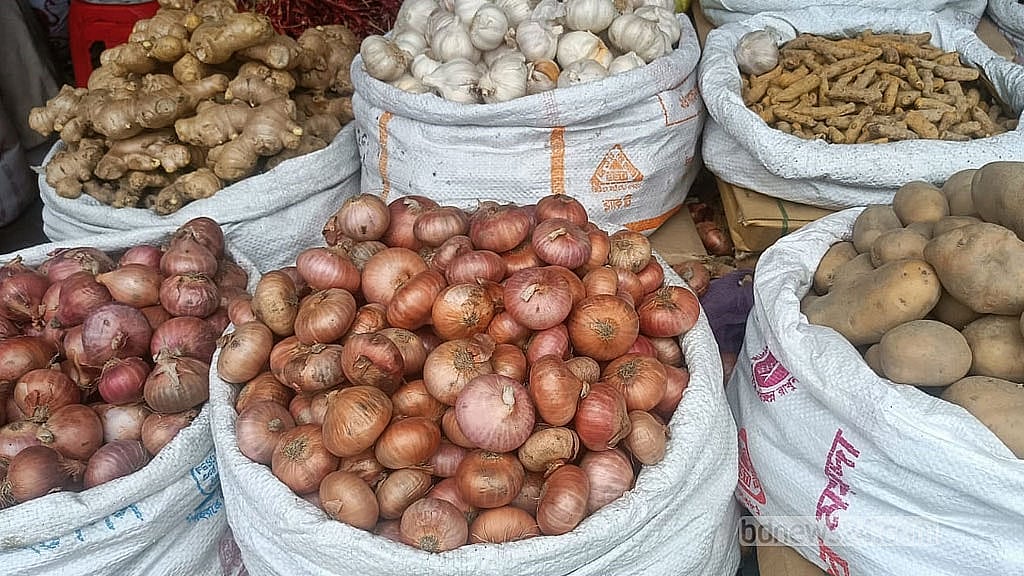
Imported garlic has become cheaper over the past month, now selling at Tk 180-220 a kg.
Domestic garlic, however, costs buyers Tk 90-140 a kg depending on quality.
Data from the Trading Corporation of Bangladesh (TCB) shows the price of domestic garlic has risen 15 percent over the month, while imported garlic has fallen 8.5 percent.
Ginger prices have fallen by about Tk 20 since the budget as supply has increased, with a kg now selling at Tk 180.
Onion prices remain normal, traders say.
Aman Ullah, a seller at Town Hall Market, said he was selling onions at Tk 40 a kg, though good-quality garlic and ginger cost slightly more; prices could fall further once fresh imports arrive.
Mohan Molla expects prices of duty-cut items to start falling from mid-June, with new import consignments likely to reach the market from next week and prices easing gradually from mid-month.
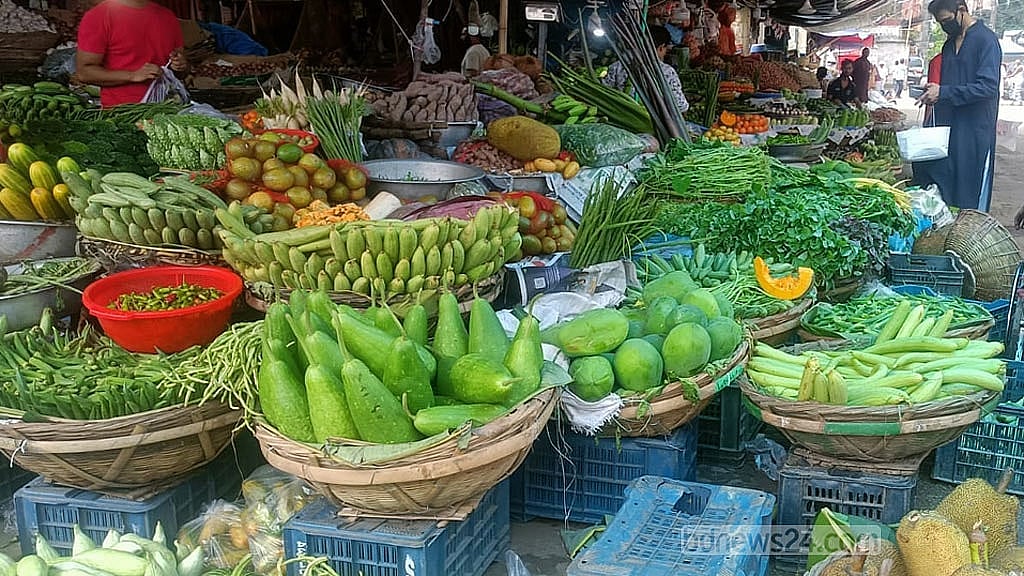
Tax cuts were also announced for agricultural products, with the source tax on rice, wheat, potato and other items reduced from 5, 2 and 1 percent to just 0.5 percent.
The change, however, has had no impact on market prices.
Retail rice prices have instead risen by Tk 2-3 a kg across the board.
According to TCB's latest data, coarse rice meant for low-income buyers has gone up by Tk 1-2 a kg in the past month, to Tk 50-60.
Medium-grade varieties such as Paijam and BR-28 have risen Tk 2-3, to Tk 55-68, while Nazirshail and Miniket have gained Tk 2 a kg, now selling at Tk72-85.
Potatoes cost Tk20-25 a kg before the budget; by Friday, a kg was selling for Tk30.
TCB data shows potato prices have risen 22 percent over the month, while green chillies have gone up 10 percent and aubergine 28.5 percent over the week.