Published : 13 Oct 2025, 08:47 AM
Updated : 21 Aug 2026, 02:35 PM


Foreign operators will manage three major container terminals in Bangladesh -- Chattogram’s New Mooring Container Terminal, Laldia Terminal, and Keraniganj’s Pangaon Inland Container Terminal -- by December, the Shipping Ministry Secretary Mohammad Yousuf has said.
He added that the Laldia Terminal will be leased for 30 years, while the other two terminals will operate under 25-year contracts.
He shared the details on Sunday at a seminar organised by the Economic Reporters Forum (ERF) in Paltan, Dhaka, titled Investment Potentials in the Ocean-going Shipping Industry.
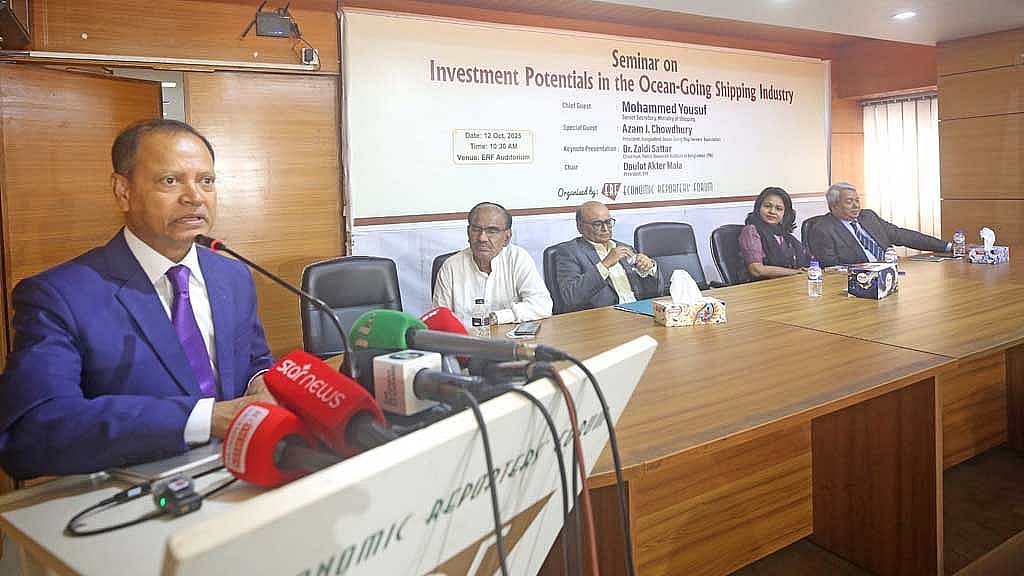
“We will not compromise on national interests. Negotiations are ongoing at the highest level, and we hope to finalise a contract by December,” Yousuf said.
Earlier, the ministry had indicated that agreements could be reached by October.
Explaining the delay, he said: “These involve foreign companies. Extensive negotiations are required. We have made significant progress and expect completion by December.”
Highlighting regional precedent, Yusuf said that foreign operators run ports in India, Myanmar, and Sri Lanka.
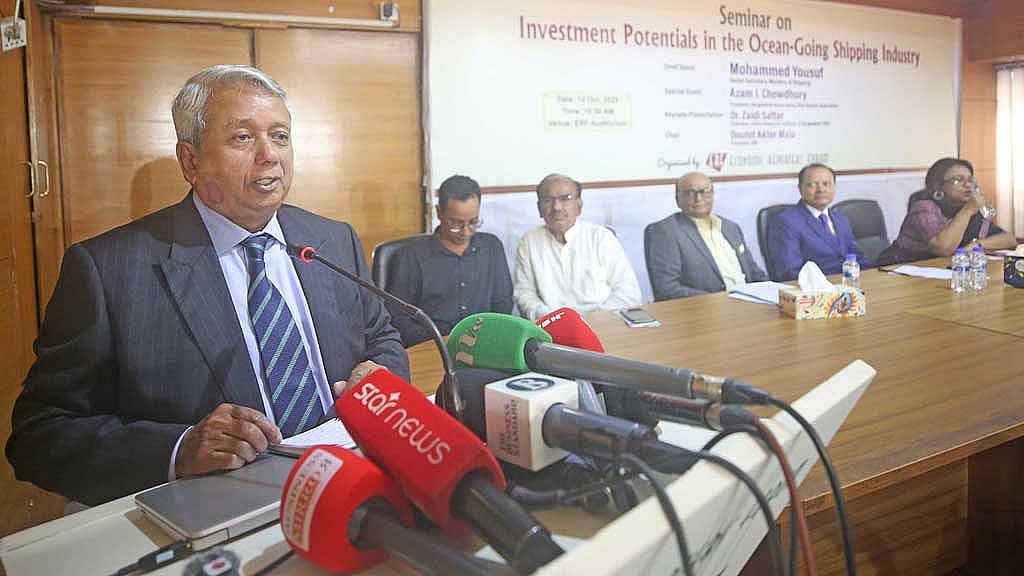
“If it works there, why would it be an issue here? Strategically and geographically, handing over Chittagong to foreign operators is manageable,” he said.
He emphasised cost savings for local businesses: “Now, a ship pays $15,000 per day in waiting fees. It takes three to four days to unload cargo. Reducing that time by half will cut costs for businesses and avoid unnecessary waiting charges.”
Concerns have been raised by traders that foreign management of Bangladesh’s ports could increase service fees.
Yusuf said, “The port has charged the same fees since 1980. Over the decades, fees have not increased. The government also needs revenue, so modest increases are justified.”
He added that regular five-year adjustments would have been ideal but were not implemented.
Yousuf said higher fees would be offset by faster turnaround times, reducing overall costs for businesses. He also called for a “multimodal” approach connecting ports with road, rail, and river transport to improve efficiency.
At the moment, Chattogram Port has six scanners, but three to four are often out of service, creating congestion.
“While all gates have scanners, they are not always operational. Unlike global practice, we open containers for delivery. We aim to change this,” he said.
Yousuf said disputes over scanner control between customs and port authorities would disappear under foreign operators, who would deploy modern scanning techniques, accelerating import-export operations and reducing lead times. Faster cargo handling would increase ship traffic, boost duties, and attract foreign investment.
The secretary also highlighted maritime fuel regulations effective after 2030, which will require ships to use ammonia or biofuels, with fines of 30 percent of revenue for non-compliance.
Azam J Chowdhury, president of the Bangladesh Ocean-going Ship Owners Association, said incentives for domestic ship ownership should continue to expand the fleet and employ marine academy graduates, supporting remittance inflows of $1.7 billion annually.
Chattogram’s NCT was previously run by Saif Powertech Limited, but after its contract ended in July, the interim government initiated a transition to foreign management, with DP World under consideration.
Chittagong Dry Dock Limited manages a six-month interim operation before the foreign operator assumes responsibility.
Policy experts emphasised that customs and import facilitation reforms, along with tariff exemptions on raw materials for shipbuilding, could position Bangladesh as a regional hub for maritime construction.