Published : 06 Nov 2025, 06:32 AM
Updated : 21 Aug 2026, 02:41 PM


After the government’s implementation of mandatory handset registration, some “grey market” traders have warned that mobile phone prices could rise.
Local manufacturers, however, dismiss these concerns and assure that not a single taka will be added to handset prices. On the contrary, they say full-scale operations in domestic factories could reduce prices and even open opportunities for exports.
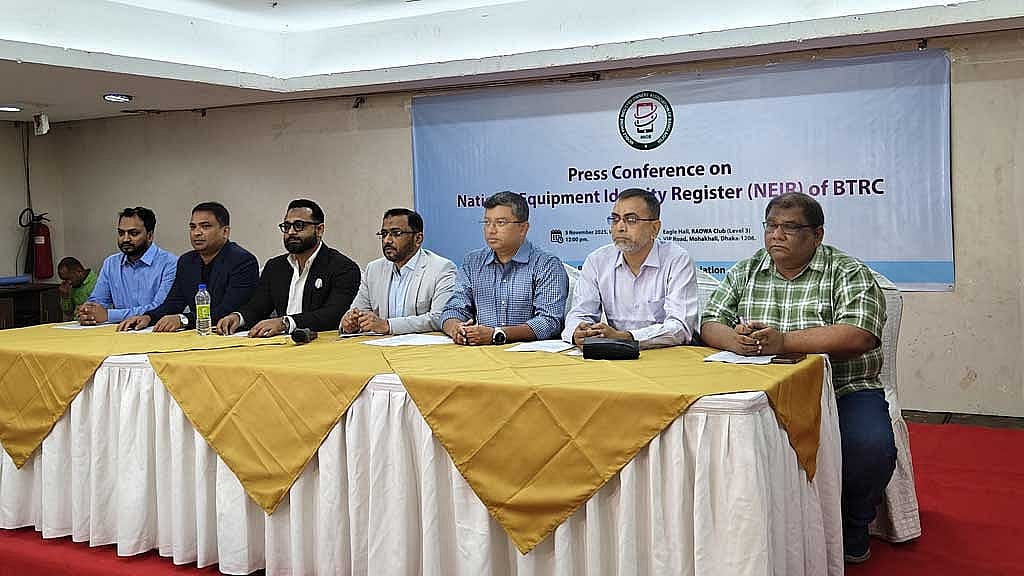
These comments came on Wednesday at a press conference at Raowa Convention Centre in Dhaka, organised by the Mobile Industry Owners of Bangladesh (MIOB), where President Jakaria Shahid addressed the media.
From Dec 16, Victory Day, the government will launch the National Equipment Identity Register (NEIR), which will require every handset, like SIM cards, to be registered.
According to the Bangladesh Telecommunication Regulatory Commission (BTRC), more than 60 percent of handsets in the country come from the grey market -- that is, imported illegally without paying taxes.
Grey market traders claim they control 90 percent of the handset market. They warn that NEIR will harm thousands of businesses and increase mobile phone prices.
Local producers counter this, noting that apart from iPhones, nearly all global brands are manufactured domestically. Once registration curbs tax-evaded imports, domestic handsets’ market share will expand, and increased local production will help reduce prices.
MIOB Vice-President Rizwanul Haque said, “Our factories have the capacity to meet domestic demand and even export. When we began, the grey market was smaller; now it exceeds 60 percent.
“Globally, mandatory handset registration is a prerequisite for sustaining the mobile manufacturing industry. Implementing NEIR is essential.”
He cited Pakistan as an example: “We started NEIR in Bangladesh seven years ago. Two years later, Pakistan learned about it and implemented it nearly four years ago. Today, 99 percent of Pakistan’s handsets are legal, with just 1 percent from the grey market.”
Zahirul Islam of Smart Technologies highlighted Bangladesh’s export potential: “We earn through ready-made garments, and the government allowed mobile phone production so we could gain skills and eventually export.
“With factories now operational, unscrupulous traders started grey imports, endangering local investors who have invested their life savings.”
Jakaria, also managing director of Edison Group (Symphony Phones), added: “Earlier, NEIR became inactive twice due to certain interests claiming it would create a monopoly or hardships. None of that will happen.
“Handset prices will not rise. Locally produced phones remain cheaper than international prices. Even with a 60 percent increase in dollar and component costs over two years, local producers controlled expenses without raising prices.”
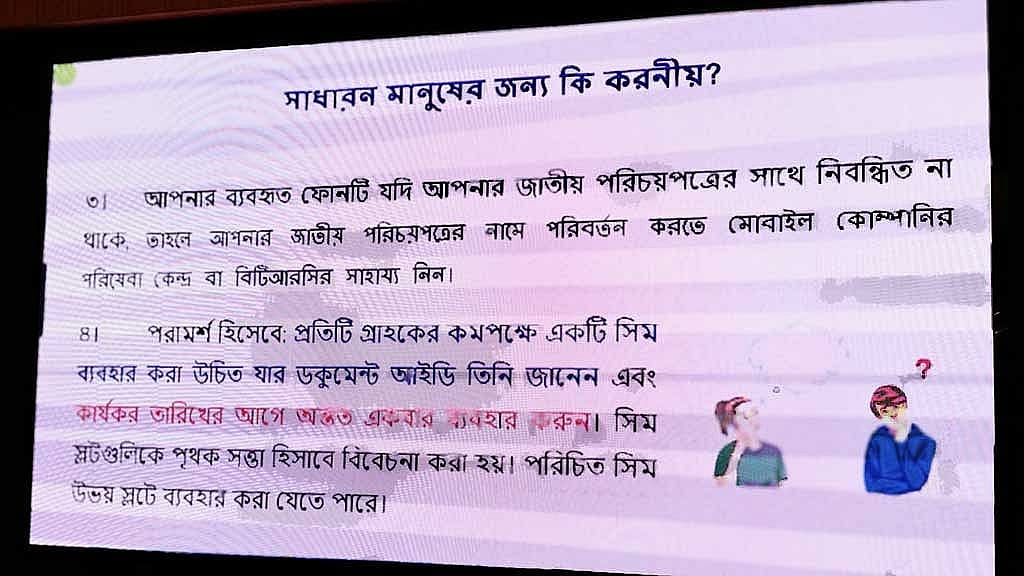
On simplifying registration, Jakaria said: “We are streamlining the process so customers can complete it almost instantly. About 100,000 staff across 20,000 retail outlets will be trained for this task, ensuring no hassle.”
He also addressed grey market traders: “We will request the government to reduce import tax disparities and find solutions for previously imported stock. There is no reason for panic. We aim to create a legal market in the country for everyone’s benefit.”
In a written statement, Jakaria noted that around 17 mobile phone factories -- both local and foreign -- are now operating in Bangladesh, with over Tk 25 billion invested and employment for hundreds of thousands.
Locally produced phones are not only meeting domestic demand but are also preparing for export opportunities.
He also highlighted the ancillary industries developing around mobile production, including modern packaging, printing, batteries, chargers, headphones, data cables, and other components, which are creating further investment and jobs.