Ratnadeep Choudhury
bdnews24.com Correspondent
AGARTALA, Tripura, Dec 6 (bdnews24.com)—Thirty-six years after his martyrdom, a Bangladesh war hero is going to get a martyr's salute Monday.
Bangladesh government has recently decided to take back the mortal remains of Bir Shrestha Hamidur Rahman, buried until now in Tripura, back to his homeland.
Born on Feb 2, 1953 in Khardo Khalishpur village in Jessore, Hamidur Rahman, better known as 'Shaheed Sepoy Hamidur Rahman' was a Sepoy in the army during the Independence War.
He had joined the army on Feb 2, 1971, enrolling himself for the Infantry Corps. Later he joined the Mukti Bahini or liberation forces in a bid to free his homeland from the clutches of Pakistani occupation forces.
In a brave attempt to capture the important Dhalai post from the Pakistan Army, Hamidur Rahman, aged only 18, was killed on Oct 28, 1971 at Dhalai. It was for his sacrifice that Mukti Bahini captured the Dhalai post.
He was posthumously awarded the Bir Sreshtha, the highest recognition of bravery. After his death his fellow comrades buried Hamidur in Tripura's Hatimarachara town in Dhalai district, some 125 km north of the state's capital Agartala.
For the past 36 years Hamidur was more of a forgotten war hero both in his own country and in Tripura where very few knew about him.
It was only recently that the Bangladesh government took initiative to take back his mortal remains.
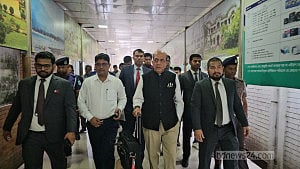
A five-member delegation led by Mohammad Humayun Kabir Khan, joint secretary at the Ministry of Liberation War Affairs, recently visited Tripura and finalised formalities with the India authorities for taking back Rahman's mortal remains.
In September, a three-member advance team consisting of Major (retd) Kamrul Hassan Bhuiyan, Lt. Col. (retd.) Quaji Sajjad Ali Zahir and Capt. (Retd) Tazul Islam Bhuiyan visited Hamidur's grave, which now lies submerged under water after development of a pond in that area.
"About a hundred soldiers of the First Bengal Regiment were killed while trying to capture the Pakistani army base. But Hamidur was an exception.
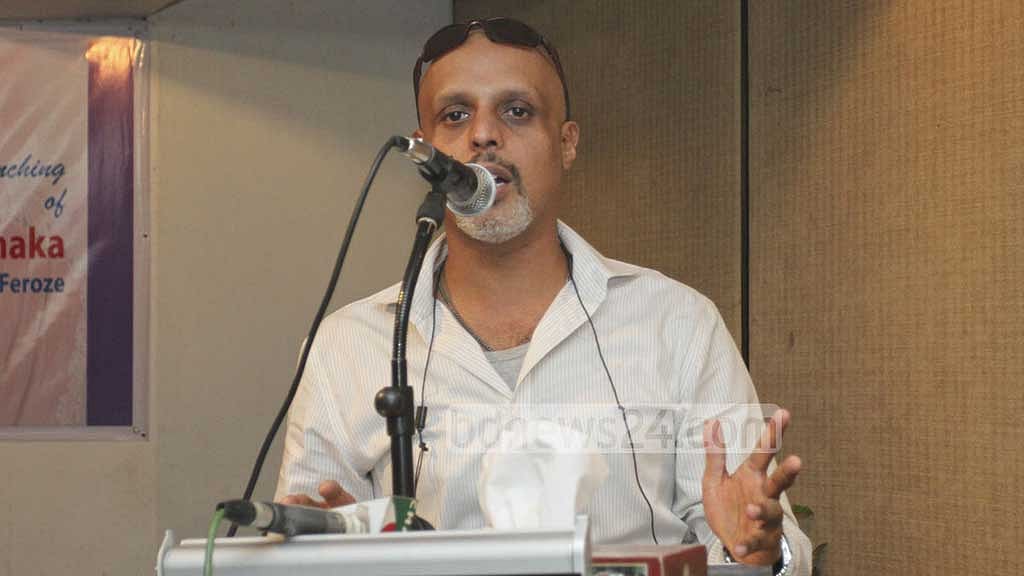
"He single-handedly captured a post. In Bangladesh we remember him as a great hero of the nation, so we want to take back his mortal remains and honour him in rightful manner," Lt. Col. Zahir told reporters at Agartala.
Hamidur's heroics were decisive for the fate of the Liberation War. Though the Mukti Bahini came very close to the border outpost in Dhalai, they found it difficult to capture the post because of the Pakistan Army's light machine gun (LMG), which was continuously firing from the southwestern corner of the border outpost.
The LMG needed to be neutralised and the responsibility of doing so was reposed on Hamidur. He crawled very close to the LMG post undetected by the Pakistanis.
The hard ground underneath his chest and the volume of fire in all directions from either side could not for a moment discourage this illustrious son of the soil from accomplishing the task.
Not caring for life, a determined Hamidur jumped into the LMG post and engaged in hand-to-hand fight and neutralised the gun at the cost of his life.
Hamidur never knew that it was because of his ultimate sacrifice that the mission was achieved.
India is keen to quickly hand over Hamidur's remains to Bangladesh after the government, freedom fighters and family members of the martyrs urged New Delhi to allow the mortal remains to be taken back.
"On our part we are ready to provide all necessary assistance to recover Rahman's mortal remains and hand it over to Bangladeshi authorities," Dhalai District Magistrate B.B. Das told the Agartala-based The Northeast Today newspaper.
Bangladeshi sources said that the government wanted to get back Hamidur's remains by December.
"We want to take back the remains of Rahman in the first week of December ahead of the 37th Bijoy Dibas (Victory Day) celebrations on December 16," one of the members of the Bangladeshi delegation said.
Last year, Bangladesh had taken back the mortal remains of another gallantry award recipient and war hero Flight Lieutenant Motiur Rahman from Pakistan. He was later reburied at the Martyred Intellectuals Graveyard at Mirpur with full state honour.
The northeastern frontiers saw intense battle as the Mukti Bahini supported by the Indian Army took on the Pakistan Army in the 1971 war. The Mukti Bahini had then set up hundreds of base camps along the India-East Pakistan (now Bangladesh) border with Tripura.
"People of the northeast, especially of Tripura, played a big role in 1971 and we are always indebted and even happier that India had maintained the grave of our war hero for so many years," said a Bangladeshi delegate.
With New Delhi taking up this issue seriously, it remains clear that when it comes to Independence War issues, both India and Bangladesh turn nostalgic.
bdnews24.com/rc/bd/2022hours