Home
+
Published : 12 Nov 2021, 12:25 AM
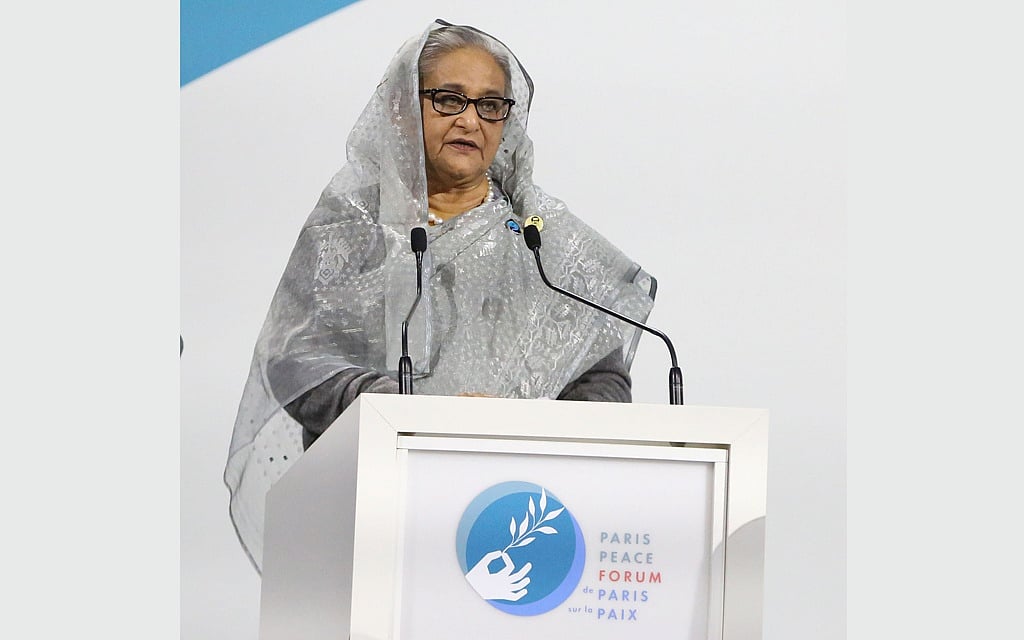
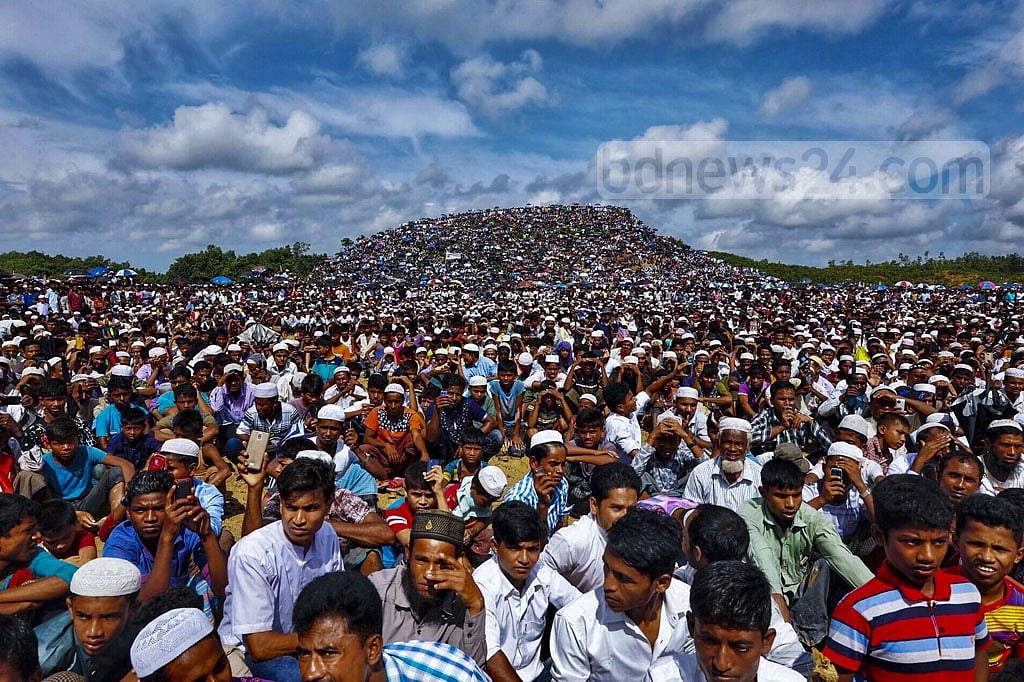
Bangladesh helped avoid a major regional crisis by giving temporary shelter to more than 700,000 members of Rohingya ethnic minority group after Myanmar’s military crackdown triggered an exodus in 2017, the prime minister said at the Peace Forum in Paris on Thursday. Over 1 million Rohingya refugees live in Bangladesh now.
“The world must act seriously to make sure that these people can go back to Myanmar soon. Otherwise, the security risks from the crisis will not just remain confined within our borders. We already see signs of that,” she said, referring to recent killings at the refugee camps.
“The Indo-Pacific region must be an area of peace and prosperity for all. Our vision for the region is to have it free, open, peaceful, secure and inclusive.”
Referring to China and India, Hasina said the major actors in the region should “learn from the past, and work responsibly in the present” to ensure a sustainable future.
She offered help to solve the crisis and said France is “uniquely placed” to promote international peace and security as a permanent member of the UN Security Council.
During her ongoing visit to France, the two countries decided to enhance partnership, Hasina said. “Our shared values of fundamental rights and freedoms will remain the basis of our common pursuit of peace.”
French President Emmanuel Macron discussed geopolitical and security issues in the Indo-Pacific region with Hasina in their meeting on Tuesday. “France and Bangladesh shared the same vision for a free, open, peaceful, secure and inclusive Indo-Pacific region, based on international law and with shared prosperity for all," Macron's office said.
File Photo
Her father, and the Father of the Nation Bangabandhu Sheikh Mujibur Rahman placed peace at the centre of Bangladesh’s foreign policy, the prime minister said. “He showed us the way to reach out to the world in friendship. He knew that malice and hostility served no purpose in international relations.”
She quoted Bangabandhu from his address to the UN General Assembly in 1974: “Our total commitment to peace is born of the realization that only an environment of peace would enable us to enjoy the hard-earned fruits of our national independence and to mobilize and concentrate all our energies and resources in combating the scourges of poverty, hunger, disease, illiteracy and unemployment.”
“In other words, he was talking about global inequities and injustices as real threats to international peace,” Hasina said.
In Bangladesh, a home-grown, inclusive development model gave it better and faster results for most social indicators. “This was no miracle. We identified the gaps, paid attention to them and kept working at them – one by one,” the prime minister said.
The COVID-19 pandemic has exposed the fault-lines running deep within the international health and financial systems, she said, calling for efforts to close the rich-poor gap.
“Our world is still ridden with too many conflicts. Following the pandemic, there needs to be a surge in international peace diplomacy. We have a shared responsibility to seek just and lasting solutions to old and new conflicts.”