Home
+
Published : 01 Nov 2024, 02:18 AM
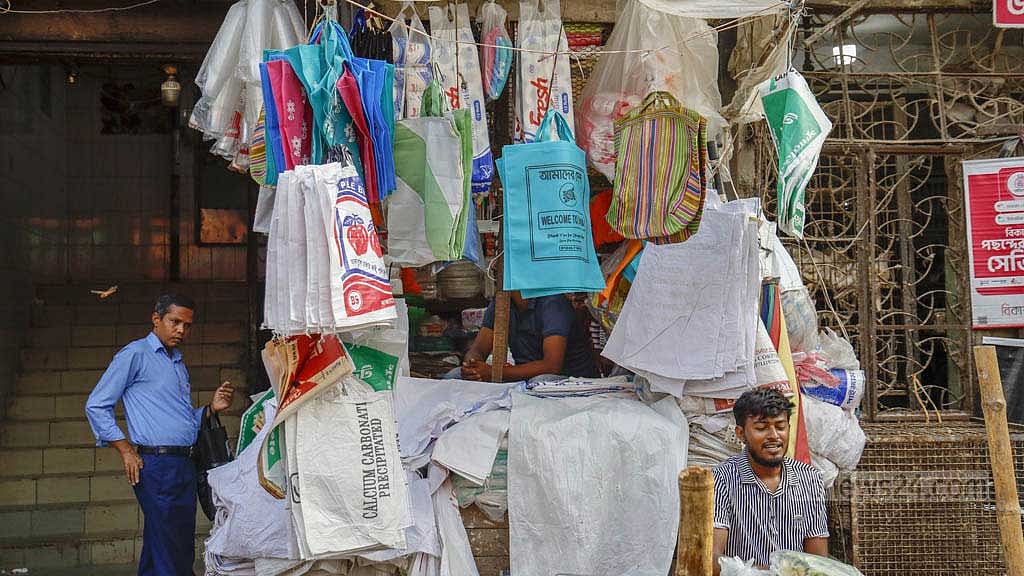
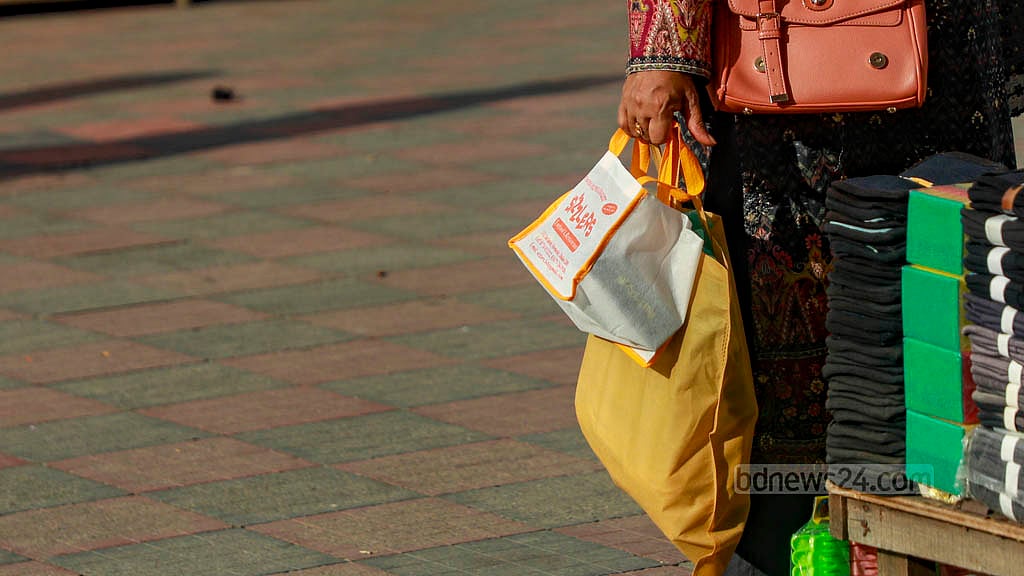
In Dhaka's Madhubazar, a woman shopping for essentials handed a cloth bag to a grocery shopkeeper along with her list, asking him not to put the stuff in a polythene shopping bag.
Shopkeeper Halim Rahman appreciated her choice. “You are doing the right thing. Everyone should be as aware as you. From [Thursday], polythene bags will be banned, and you must come to the market with bags like yours.
“Even if you ask for polythene, I cannot give it to you; keeping them in the shop will incur a fine,” he added.
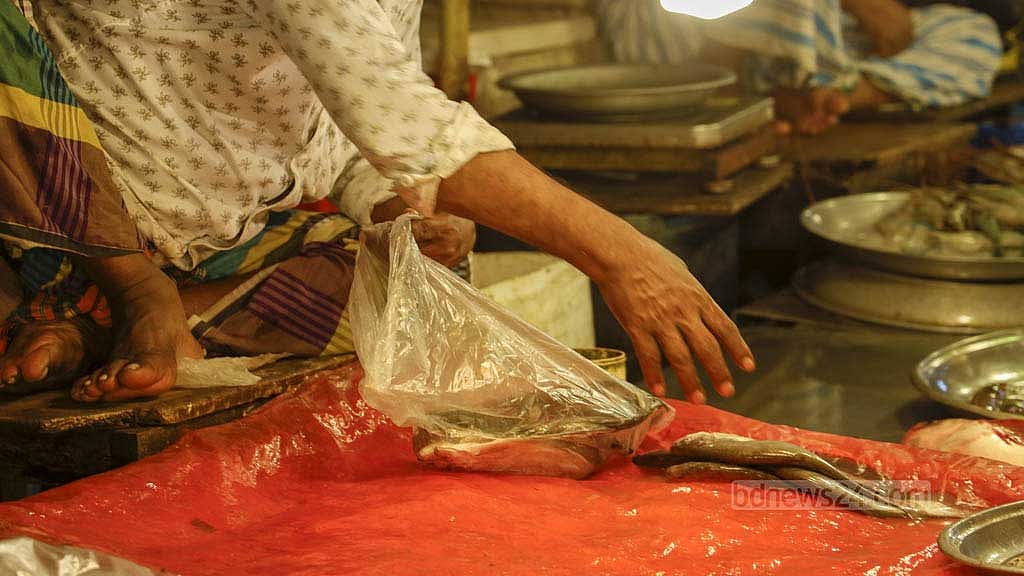
Sabuj Sheikh, a fish vendor at Mohammadpur Town Hall North City Corporation market, echoed a similar sentiment but for different reasons.
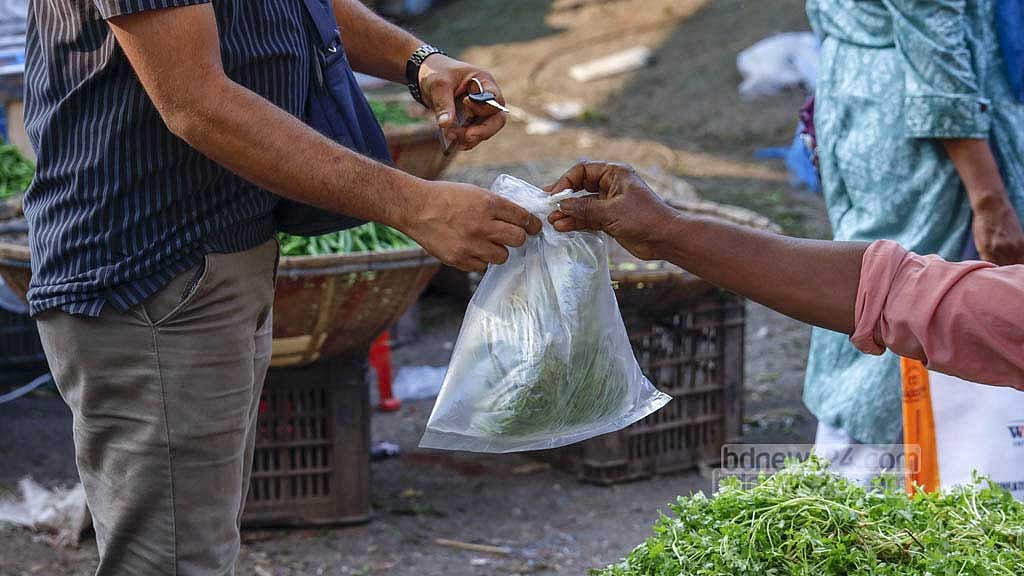
“A polythene ban is good for us. We spend thousands every day on polythene. People come to the market and get these bags for free. This ban will lower our expenses,” said Sabuj.
A segment of urban shoppers is aware that, starting from the first day of November, polythene or tissue bags will no longer be provided with their market purchases.
They understand the dangers of single-use plastic items and agree that the use of such materials should be entirely phased out.
Some, however, are less concerned about the change. Accepting a more complicated life without polythene bags is uncomfortable for them. Some are even pondering how they will dispose of daily kitchen waste without polythene.
There is more to consider. After a week of visiting markets and talking to vendors, it is clear that the supply of genuinely eco-friendly alternatives to polythene bags is still lacking, and a quick boost in availability does not seem likely.
Environment, Forests and Climate Change Advisor Syeda Rizwana Hasan said ‘sufficient time’ has been given to stop the use of polythene and polypropylene bags.
The government, she added, is working to ensure alternative supplies become available.
The use of tissue bags, like polythene, is also prohibited.
WHAT WILL HAPPEN FROM FRIDAY?
Bangladesh legally banned the production, marketing, and sale of standard polythene in 2002, yet the regulation largely remained on paper.
Instead, the excessive use of polythene has become a threat to the environment.
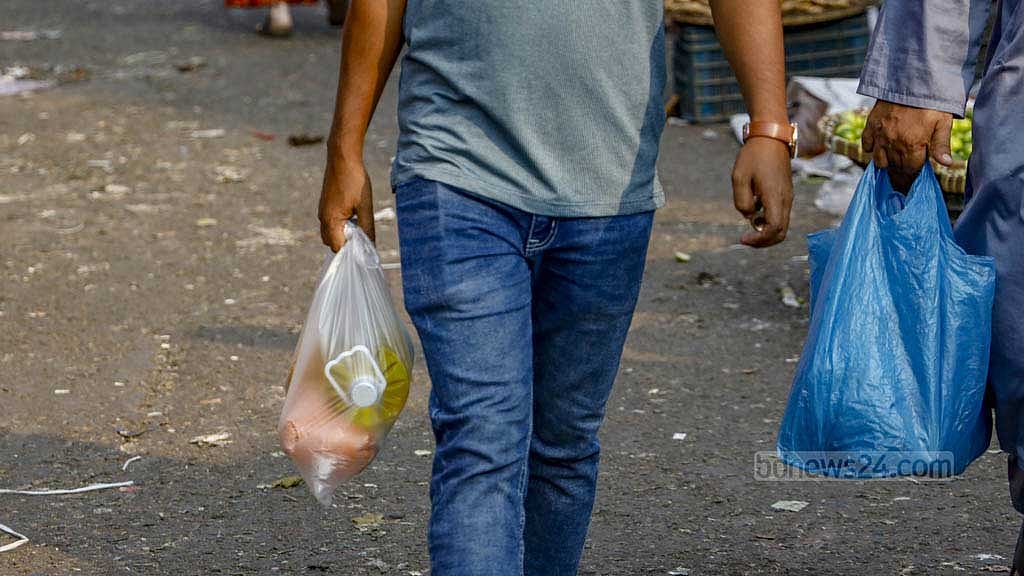
Polythene shopping bags are non-biodegradable. Piles of polythene block drainage systems, leading to waterlogging during rains, which has become a common issue.
After the interim government took power on Aug 8, Environment Advisor Rizawana announced a strict enforcement of the ban on polythene. As part of this, the use of these bags in superstores was banned from Oct 1.
From Friday, Nov 1, the use of polythene and polypropylene bags [tissue bags] will also be prohibited in kitchen markets.
To enforce this ban, mobile court operations will be conducted in the markets. At the same time, raids will continue in factories that illegally produce polythene.
According to the law, the sale, display for sale, storage, distribution, transportation for commercial purposes, or use for commercial purposes of polythene can result in a maximum punishment of one year in prison or a fine of Tk 50,000, or both.
For the same offence committed a second time, the penalties increase to two to ten years in prison, fines ranging from Tk 200,000 to Tk 1 million, or both.
The ban on the use of polythene and polypropylene bags in supermarkets was announced with a warning that there would be no further opportunity for 'discussion' after one month.
Inspections will be carried out in factories to enforce the decision.
Advisor Rizwana said, “The time for warnings is over; penalties and fines are in place for this operation. However, our goal is not punishment but to stop the use of these harmful bags. This announcement should raise awareness.”
Tapan Kumar Biswas, an additional secretary at the environment ministry, told bdnews24.com: “The ministry will monitor the operation, which will be managed by the department. However, the mobile court will follow specific regulations in conducting the operations.”
HOW PREPARED IS THE MARKET?
The government previously banned the use of polythene and polypropylene bags in superstores as a trial measure.
The approach allows for easier observation and provides an opportunity to address any shortcomings before implementing a large-scale decision.
The environmental advisor said, “It will be easy to assess how well this decision has worked in a specific number of superstores in Dhaka. If there are any errors, there will be a chance to correct them before the law is enforced in the raw markets on the 1st of November.”
A study conducted by the Environment and Social Development Organization, or ESDO, in 2023 revealed that over 25 million polythene bags are discarded after a single use in Dhaka city each day.
On average, a family in Dhaka uses around five polythene bags daily. More than 3.5 million tissue bags are produced and marketed across the country daily.
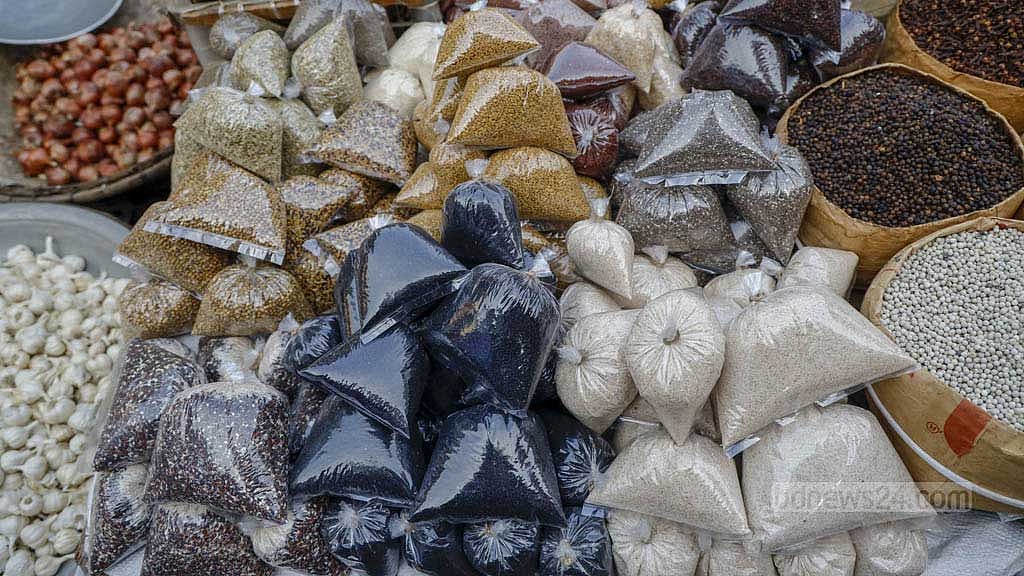
Although these bags are made from synthetic fibres, they are often marketed as fabric bags.
The environment advisor said alternative bags would be supplied by 20-25 organisations, including the Bangladesh Jute Mills Association, to meet the demand following the ban on polythene and tissue bags.
She added that about a month ago, the Jute Diversification Promotion Centre, or JDPC, reported receiving orders for one million bags from superstores and companies.
After the ban on polythene in superstores, bdnews24.com sought to find out whether there has been a sufficient supply of alternative bags.
Sabbir Hasan Nasir, managing director of Swapno, said: "We require about 100,000 bags daily, which amounts to Tk 3 million per month. Currently, we are only able to meet one to two percent of that demand."
He explained that they are in contact with suppliers, both large and small, as well as jute mills to fulfill this demand.
“Our jute mills generally produce jute sacks, but the industry for making bags from jute has not developed accordingly. If these industries are developed, we will be able to meet our demand. I believe we will be able to secure a supply of jute bags that meets our needs by January,” said Sabbir.
Tapan Kumar said, “Efforts are under way to explore other potential alternatives. More options will be introduced in the future, which will increase supply according to demand.”
"However, not all problems can be solved overnight. Changes will occur gradually. It is not that no changes have happened; rather, there has been a lot of positive feedback in the past month," he added.
Meanwhile, several supermarket employees said that entrepreneurs have suddenly increased the prices of jute and cloth bags due to rising demand.
The issue was also discussed in a meeting with the Business Owners Association held at the Department of Environment on Oct 21.
During that meeting, Advisor Rizwana said: "After the ban on polythene bags in superstores, customers are no longer willing to take them. However, shopkeepers are selling jute bags at higher prices, claiming that jute product entrepreneurs have increased their prices. This is our country; we do not live in a different one. Regardless, we will use jute and cloth as alternatives to polythene. This will boost our domestic industry."
Nazmul Hasan, brand manager of Design by Rubina, a member company of the Jute Mills Association, suggested considering the pricing from a different perspective.
"Many people think that jute is very cheap and can be obtained for Tk 5 or Tk 10. This misconception needs to be corrected. Polythene can only be used once, while a Tk 50 jute bag can be washed and reused for 2-3 months. If we calculate this way, the benefits of using jute bags will be clear,” he said.
Nazmul believes that the current amount of jute available in the market is sufficient to meet the demand.
He said, "If demand increases, the price of jute bags will decrease. Moreover, increased usage will lead to the innovation of different types of bags"
Sujon Chowdhury, general secretary of the Karwan Bazar Wholesale Fresh Market Business Owners Association, told bdews24.com: "Everyone must conduct business in accordance with the law and protect the environment. To do this, business owners must either pay Tk 5 or Tk 10 more to keep jute and cloth bags in their shops or bring bags with them. The collective decision of all is essentially the crux of the matter.”
WHAT IS THE EXPERIENCE AT SUPERSTORES?
Most superstores have not managed to completely eliminate polythene usage over the past month.
Shops like Shwapno and Meena Bazar have resorted to using net bags, plastic shopping bags, plastic wrapping, and foam trays due to a shortage of jute bags.
Large chains, including Unimart, Meena Bazar, and Shwapno, continue to use polythene to cover fresh fish, meat, fruits, molasses, and vegetables.
At Unimart's Dhanmondi outlet, meat from Bengal Meat is sold in polythene-wrapped, foam trays designed to be waterproof.
When asked about its environmental impact, Bengal Meat’s in-charge Nehal Uddin said: “We have a license. These are food-grade and not harmful. We’ve been packaging meat in these since the beginning.”

The license presented by the official showed that the foam tray is made of polystyrene, a type of synthetic plastic polymer.
Parvez Alam, Meena Bazar’s operations and outlet in-charge at Dhanmondi, told bdnews24.com: “For the first three days, we used no polythene. But without it, everything spoils, and flies and insects are attracted, which is harmful to health. Customers don’t want to buy such items, so we are using polythene wrap.”
WHAT ARE THE ALTERNATIVES?
The idea of jute-based "Sonali Bags" as a substitute for polythene has been under discussion for years, but they have yet to reach commercial markets.
Md Abdur Rouf, secretary of the Ministry of Textiles and Jute, said: “The government has held discussions with innovator Mobarak Ahmad Khan about Sonali Bags. Some tests will be conducted, and pilot production will begin upon receiving approval.
“Currently, the available Sonali Bags are lab-produced and not approved for sale or commercial production,” he said.
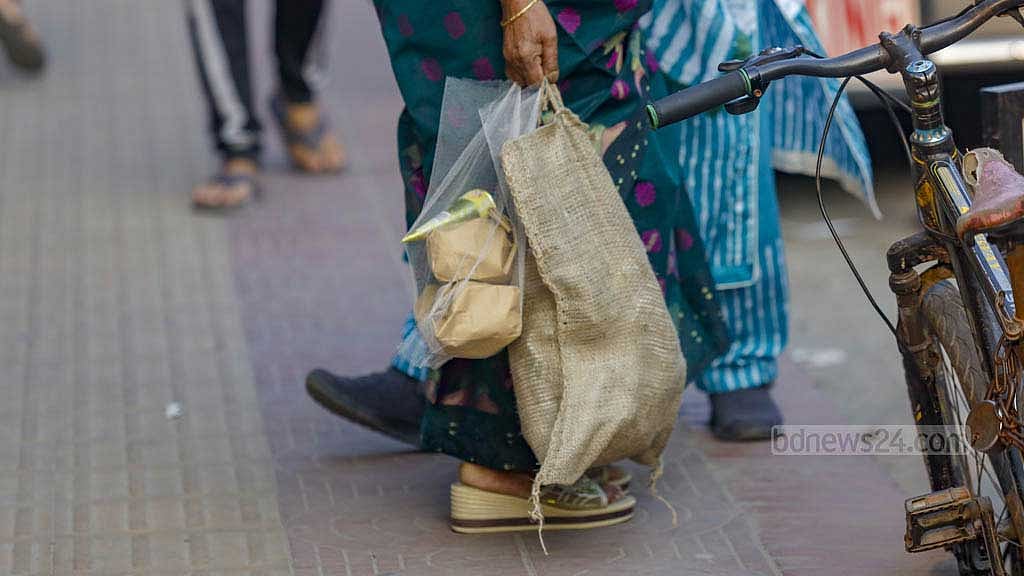
Environment Advisor Rizwana told bdnews24.com: “There have always been alternatives to polythene. For now, priority should be given to bags made from jute, cloth, and cotton.
“Degradable bags that resemble plastic or polythene are not currently considered viable alternatives,” she said.
After the polythene ban in superstores, alternatives like wax-coated paper bags, brown bags, cloth bags, and jute bags have been introduced.
Although the government has suggested other options, such as bags made from cotton, wool, cane, and betel nut husks, they have not yet appeared in superstores.
Meena Bazar offers bags in four sizes, priced between Tk 13 and Tk 20, while Shwapno’s bags range from Tk 6 to Tk 14. Unimart’s least expensive jute bags start at Tk 29, with medium-sized ones at Tk 145 and large, premium-quality bags at Tk 450.
Reactions to these alternatives vary among customers and shopkeepers.
Customer Ayesha Khanam said, “Paper bags aren’t suitable for carrying raw fish and meat over long distances. However, reusable bags are an advantage.”
Superstore representatives said high-volume shoppers, spending Tk 70,000 to Tk 80,000, sometimes need to purchase bags worth several thousand taka, which has led to customer dissatisfaction.
[Writing in English by Arshi Fatiha Quazi and Fariha Bristy]